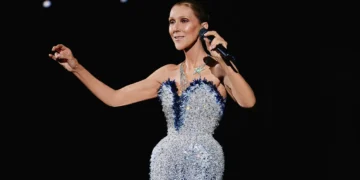



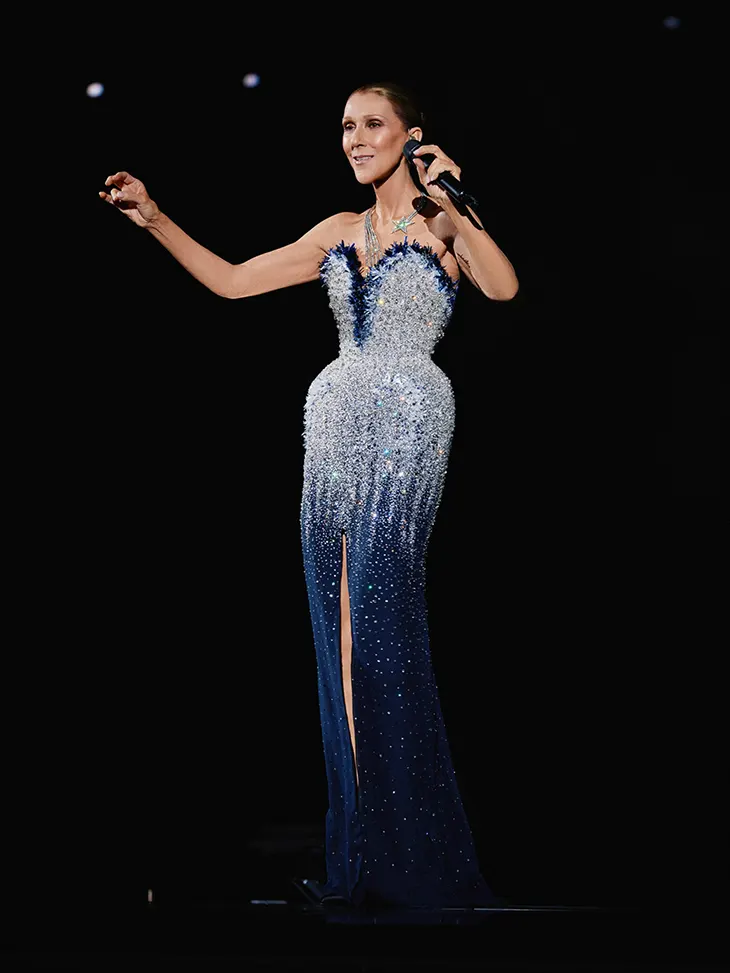
Some finales are designed to be remembered, and this one arrived with the weight of a full concert season behind it. Céline Dion ended her final Paris show of 2026 wearing a jacket and belt from the CHANEL Fall Winter 2026 Haute Couture collection. She had opened the evening in a custom Haute Couture dress, both pieces created by Matthieu Blazy, the house’s creative director. The pairing turned a concert night into a fashion statement, and it confirmed what anyone watching the residency has already noticed: Dion has become one of the most influential style figures in the room, on stage or off.
Star Whose Wardrobe Never Clocks Out
Dion’s influence over fashion has never been limited to the stage lights. Her arrivals and departures from her hotel in Paris during the concert run drew photographers, stylists and fans who wanted a closer look at what she would wear next. Each appearance carried the same message: tailoring, texture and colour can be worn with confidence by someone who knows exactly who she is. That kind of consistency is rare, and it has given fashion houses a reason to pay close attention to her choices.
Her styling for the Paris residency is led by Annie Horth, Dion’s longtime stylist and creative director. Horth has shaped the singer’s public image for years, balancing dramatic gowns with pieces that feel personal rather than costume-like. Her work on the Paris dates shows a clear strategy. Each look is built to serve the performance, but it also works as a standalone image that fans, editors and designers can study. You can follow Horth’s work and her behind-the-scenes perspective on her Instagram, which offers a useful window into how these looks come together.
The Dress Behind the Dream
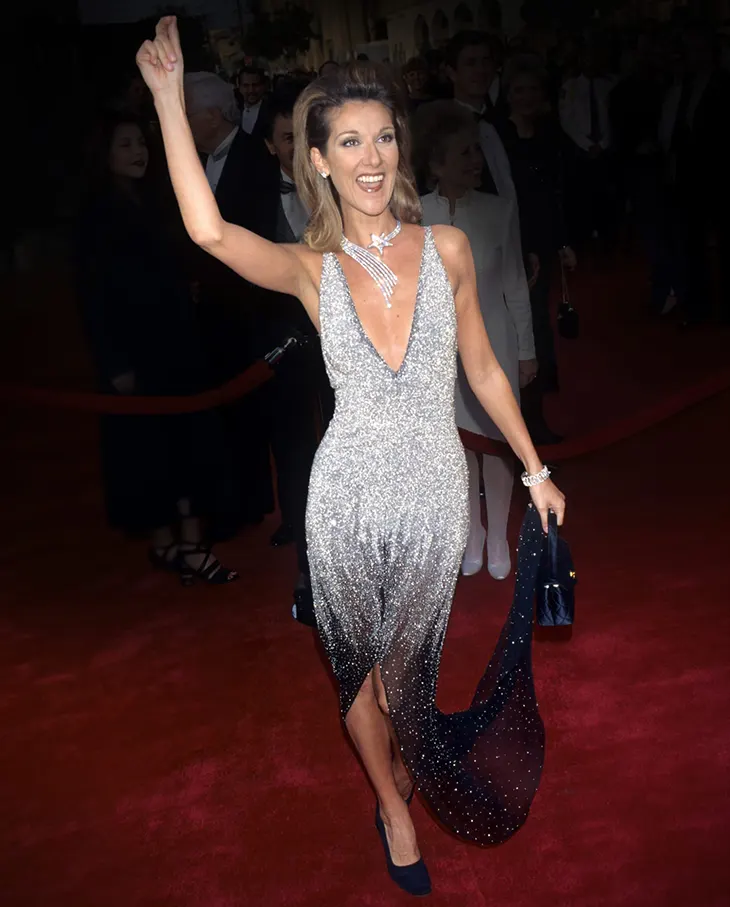
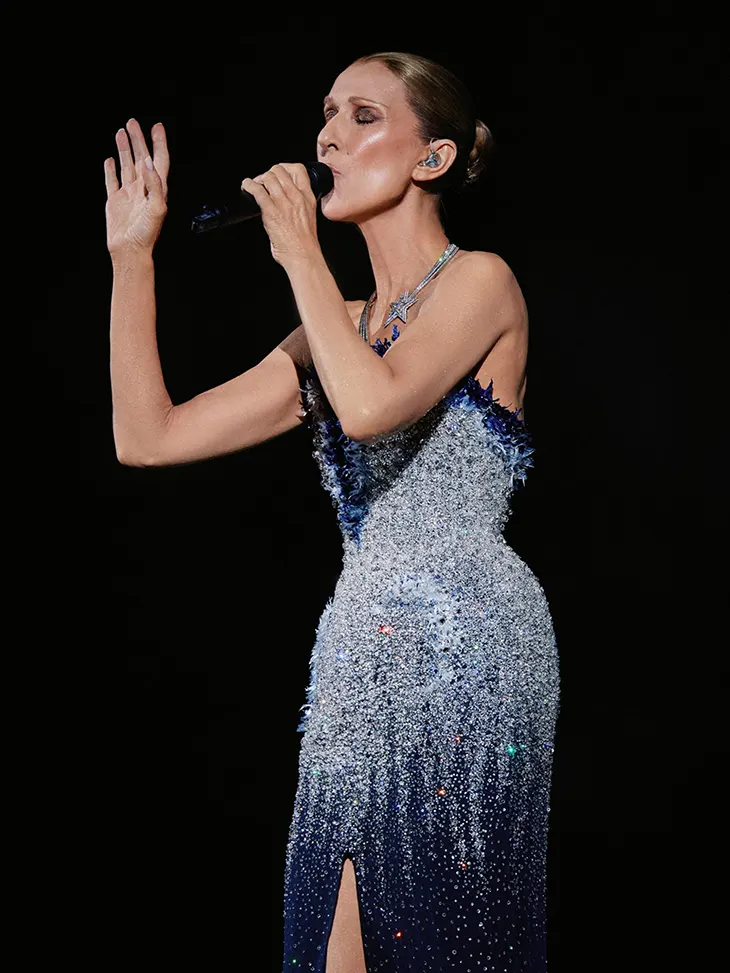
The custom Haute Couture dress paid tribute to a Spring Summer 1997 look Dion wore on the 69th Academy Awards red carpet in the same year. Rather than recreating that earlier moment, the Chanel atelier reworked it with ideas drawn from the Fall Winter 2026 collection. The result feels like a memory retold with a sharper edit, which is exactly the kind of dialogue between past and present that couture does best.
The base of the gown is embroidered muslin draped over a padded, corseted toile bustier. Its neckline is finished entirely in raffia, a material more commonly linked to warm-weather pieces. Against the structure of the bodice, the raffia softens the silhouette and adds an organic, slightly rough texture that contrasts with the polish of the embroidery. It is a subtle choice, and it gives the top half of the gown an unexpected character.
Each jewel and bead was placed by hand, and that labour is what gives the piece its glow. Atelier Montex, a Maison d’art resident at le19M, built the surface using glass-crystal rhinestones, each framed by a delicate trim of seed beads and glass bicone beads. The Lunéville technique and needlework bring the surface together into a gradient that moves from light to shadow, resembling stardust caught in a long exposure. Across the gown, 6,000 jewels and 5,000 beads were applied, and the full look required 1,380 hours of work from start to finish.
Black satin pumps from Massaro, another Maison d’art resident at le19M, anchor the outfit. Their simplicity keeps the eye on the upper half, where the embroidery does most of the talking. It is a reminder that the most dazzling outfits often rely on a restrained foundation.
1932 Icon Returns to the Spotlight
To echo the starlit gown, Dion wore a High Jewellery necklace inspired by the one she wore in 1997. The COMÈTE necklace is set in platinum and 18K white gold with 1,080 diamonds totalling more than 67 carats. Its design dates to 1932, when it appeared in Gabrielle Chanel’s one and only High Jewellery collection, “Bijoux de Diamants.”
The choice says a lot about how the house thinks about its archive. Chanel is not treating its heritage as a museum display. It is pulling a nearly century-old design into a contemporary moment and letting it sit comfortably beside couture embroidery. For readers following the brand’s jewellery story, the necklace is a clear example of how the Maison connects its founding ideas with its present ambitions. You can explore more of the house’s direction in our Chanel coverage on DSCENE.
Closing Jacket and the Magpie’s Treasure
Dion closed the show in a black tweed jacket with a bead-embellished check pattern. Every element was handmade in the Haute Couture ateliers at 31 Rue Cambon, where tweed, beadwork and tailoring are handled with the same care found in the evening pieces. The jacket and belt are finished with a chain braid made in the galon (braiding) atelier, a technique the house describes as the only one of its kind in the world.
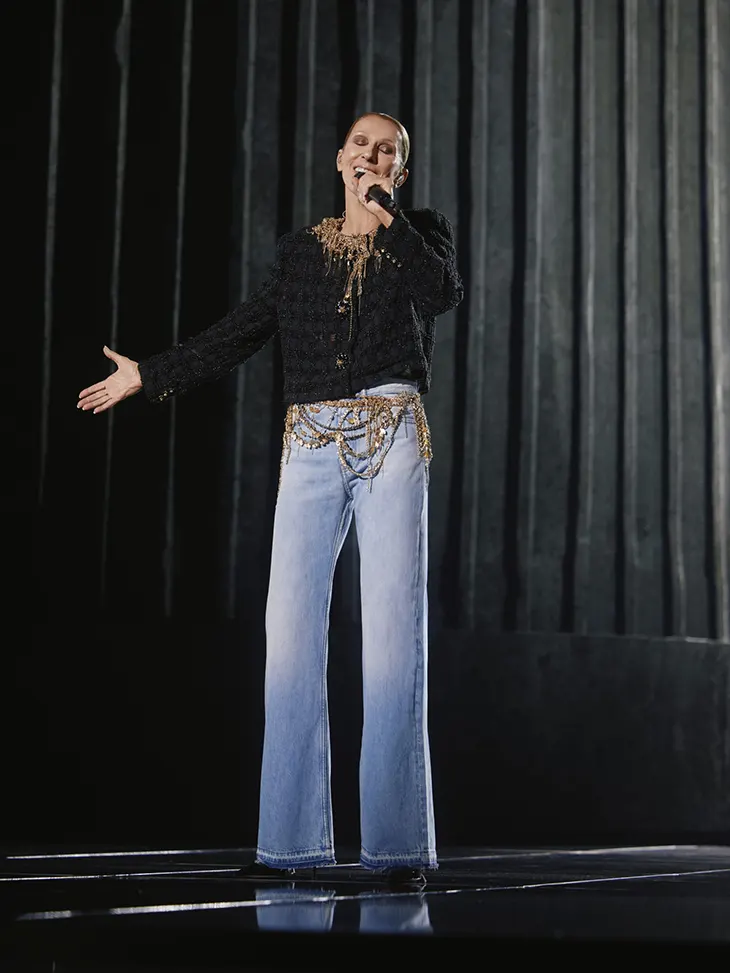
The braid takes its cue from the magpie, a recurring symbolic figure in the Fall Winter 2026 Haute Couture collection. In this story, the bird gathers glittering objects and carries them away, and the chain braid reads like a collection of stolen treasures woven into a single line. It is a playful motif, and it gives the finale a spirit of mischief that balances the formality of couture. The closing look leaves the stage with that same energy, which makes it feel less like a costume change and more like the last word in a conversation.
Why This Finale Resonates Beyond Paris
Chanel has had a strong stretch this year. Blazy’s arrival as creative director has given the house a fresh voice, one that moves comfortably between the archive and the runway. Pairing that direction with a performer whose global following spans generations has pushed the brand’s message well beyond the fashion calendar. A concert audience, a fashion audience and a heritage audience all saw the same look, and each read it through a different lens.
That reach matters for the industry as a whole. Designers and stylists constantly look for ways to connect couture with real life, and Dion’s presence offers a clear example. Her appearances, from the stage to the hotel entrance, have shown that high craft can be worn with ease and personality. Houses that understand this are building relationships with performers who can carry their work into new rooms.
Discover more of the looks in our gallery:
For fashion lovers, the takeaway is both emotional and practical. Couture at this level depends on hours, technique and institutional knowledge, from the Rue Cambon ateliers to the Maisons d’art at le19M. When a finale is this deliberate, every stitch, bead and braid tells part of the story. For more on the artists and performances shaping this season, explore our music coverage on DSCENE.