


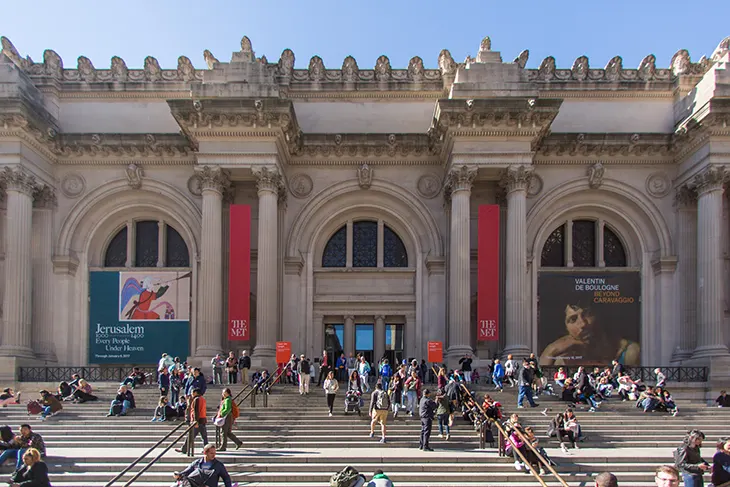
With the planned John Galliano exhibition no longer moving forward, the Costume Institute has an unusual opportunity. Rather than rushing toward another broad red-carpet concept, the Met could use the moment to give serious attention to a designer whose influence stretches far beyond a single season or recognizable visual code.
The possibilities are considerable. Some could produce spectacular clothes on the Met steps; others could open deeper conversations around authorship, construction, identity and the changing meaning of luxury. Here are six names DSCENE would like to see considered.
View this post on Instagram
Cristóbal Balenciaga:
The Architect of Fashion
If there is one designer whose work seems almost made for a Costume Institute exhibition, it is Cristóbal Balenciaga. He was famously private, rarely gave interviews and avoided the spotlight. The Met honored him posthumously in 1973 with The World of Balenciaga, curated by Diana Vreeland. More than five decades later, a new exhibition could reconsider his legacy through a contemporary lens.
His understanding of volume, proportion and construction fundamentally altered twentieth-century fashion. The sack dress, cocoon shapes, sculptural eveningwear and extraordinary manipulation of fabric moved clothing away from simply following the body and toward creating entirely new forms around it.
There is also a small detail that has made us particularly curious: DSCENE spotted Andrew Bolton at the Balenciaga show last season. That may mean absolutely nothing, of course, but when the Costume Institute’s curator in charge appears at a house with this much museum history behind it, we notice.
A Balenciaga theme could also move beyond biography and examine his enormous influence on designers who came after him. The Gala itself could become an exercise in silhouette, proportion and architectural dressing rather than straightforward archival imitation.
Vivienne Westwood:
Fashion in Revolt
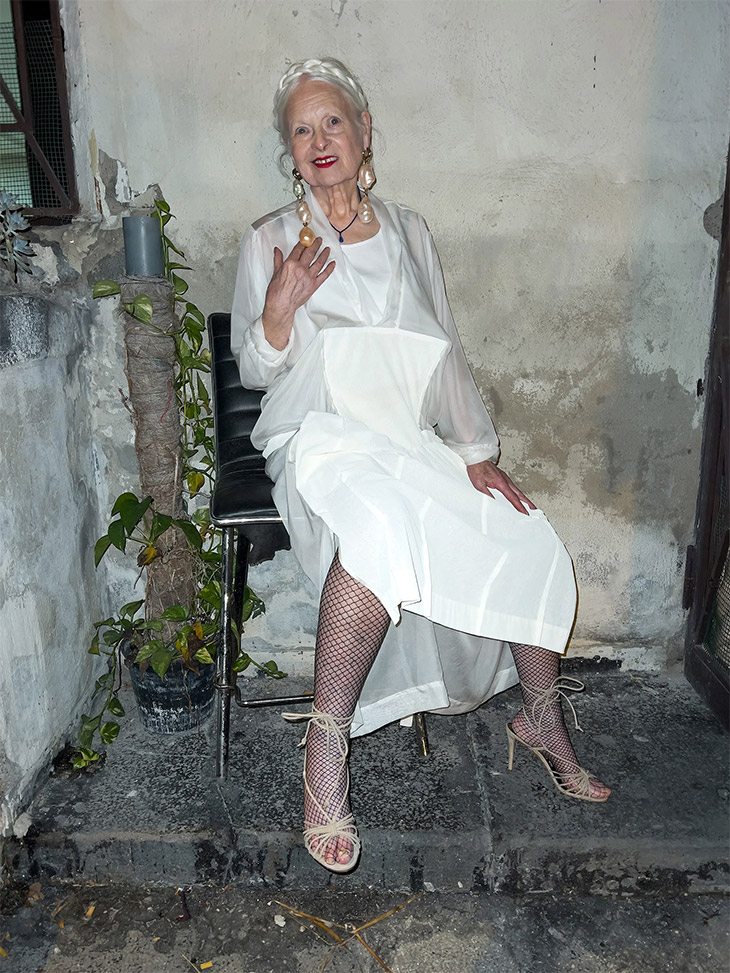
Few designers offer as much material as Vivienne Westwood. Punk provides an obvious entry point, but her career extended into corsetry, historical dress, tartan, sexuality, political activism and a constant interrogation of British identity.
A Westwood exhibition could look at the designer’s ability to take historical clothing apart and return it with entirely different cultural meaning.
The Met Gala possibilities would be equally strong: exaggerated corsetry, punk, eighteenth-century references, tailoring and deliberate disorder.

Azzedine Alaïa:
The Architecture of the Body
An Azzedine Alaïa exhibition would bring the focus back to the physical intelligence of clothing.
Alaïa understood the body through cut, tension, stretch and construction. His clothes could appear remarkably simple before revealing just how precisely every seam and proportion had been considered.
For a red carpet increasingly dominated by spectacle, a theme centered on the body and the construction of clothes around it could produce a more sophisticated interpretation of drama.
Issey Miyake:
Clothing in Motion
Issey Miyake would give the Costume Institute a chance to explore fashion through movement, technology and the relationship between fabric and the body.
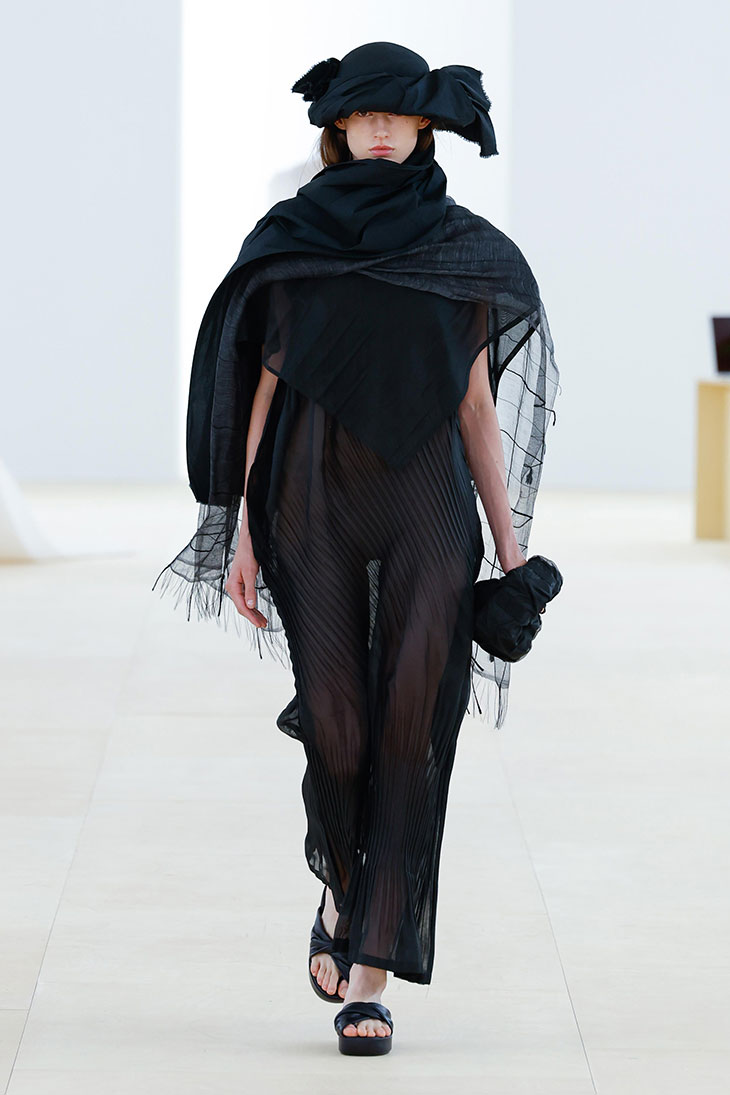
His work consistently challenged the idea that clothing had to be constructed through conventional tailoring. From pleating techniques to experiments with a single piece of cloth, Miyake treated garments as systems that could expand, fold, collapse and respond to movement.
A Met exhibition could trace that thinking across decades, from early body-focused experiments to Pleats Please, A-POC and the broader research culture that defined the house. It would also allow the Costume Institute to examine fashion as industrial design, material innovation and performance rather than biography alone.
The Gala dress code could be incredible: movement, pleating, transformation, geometry and clothes that change with the body.
View this post on Instagram
Thierry Mugler:
Fashion Beyond Human
If the Met wants spectacle, Thierry Mugler offers almost limitless possibilities.
His work repeatedly transformed the body into something unfamiliar: insect, machine, superhero, animal, alien. Shoulders became enormous, waists almost impossible, and materials associated with industrial design entered couture-like constructions.
A Mugler exhibition could examine fashion as transformation and fantasy rather than simply clothing.
And the red carpet would almost certainly deliver.
View this post on Instagram
Dapper Dan:
Who Owns Luxury?
Perhaps the most interesting choice would be Dapper Dan.
His Harlem practice transformed the monograms of European luxury houses into clothes for a clientele those brands largely ignored at the time. Hip-hop artists, athletes and figures within New York street culture took luxury imagery and reassigned its meaning.
A Costume Institute exhibition could use Dapper Dan as the beginning of a much larger conversation about hip-hop, aspiration, appropriation, copyright, race, authorship and who gets to decide what luxury means.
It would also bring the story firmly back to New York.