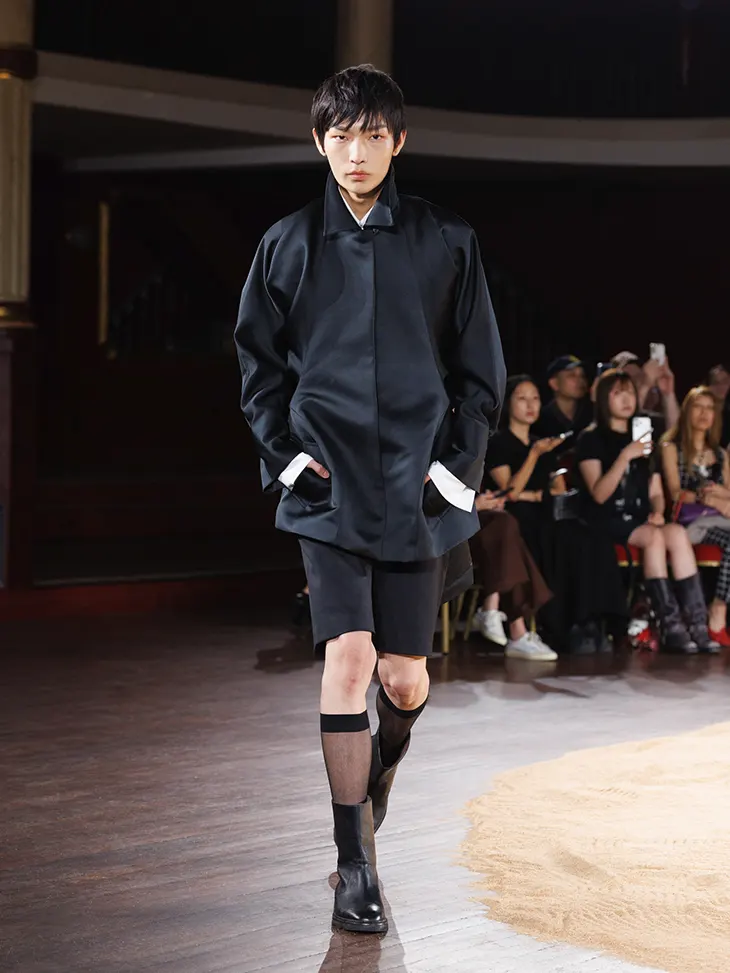



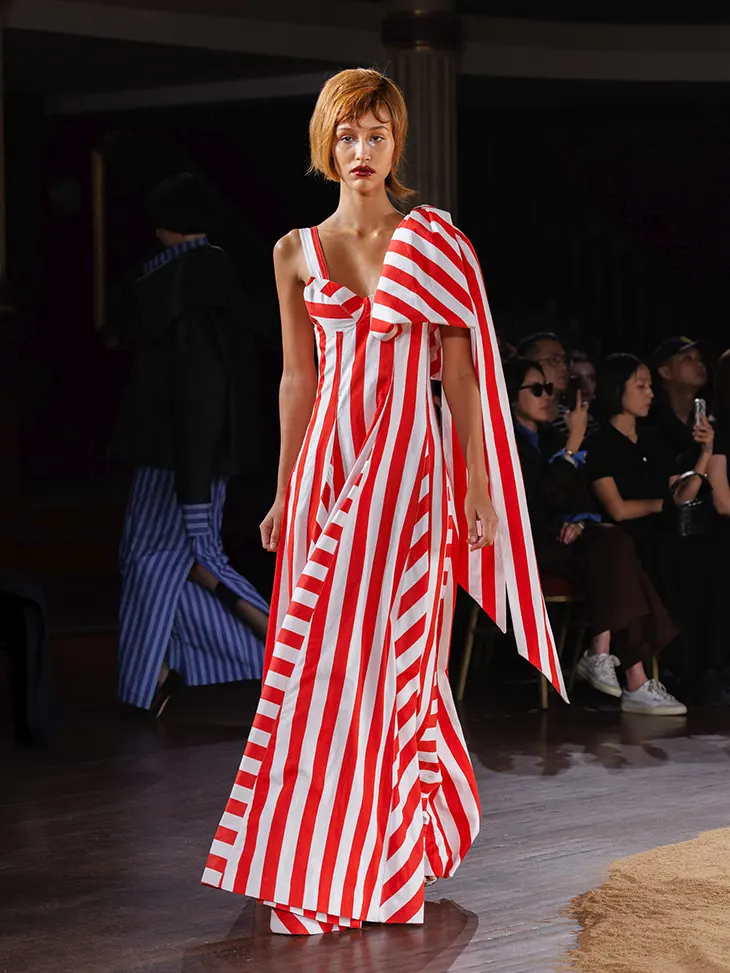
Torishéju frames its Spring Summer 2027 collection through the circus, using spectacle, distraction and constructed identity as its central ideas. Titled “Panem et Circenses,” the collection takes its name from the phrase used by the Roman poet Juvenal in 100 AD to describe a population fed and entertained into distraction.
SPRING SUMMER 2027
Torishéju brings that idea into the present through clothing. The collection considers what spectacle allows people to see, what it helps conceal and how easily entertainment can divert attention from what lies underneath. This time, the crowd does not simply watch the performance. The people become part of it.
Each look functions as its own character, performer and ringmaster. Clothing becomes a tool for shaping perception, allowing the wearer to construct, distort, hide or reveal parts of the self. A garment can operate as armour, disguise, costume or escape. It can direct attention toward one image while keeping another one out of view.
The collection treats deception as an active process. Torishéju considers the identities people create for others, the versions of themselves they build around social situations and the ways clothing can help someone enter a room, disappear inside it or become someone else for a moment.
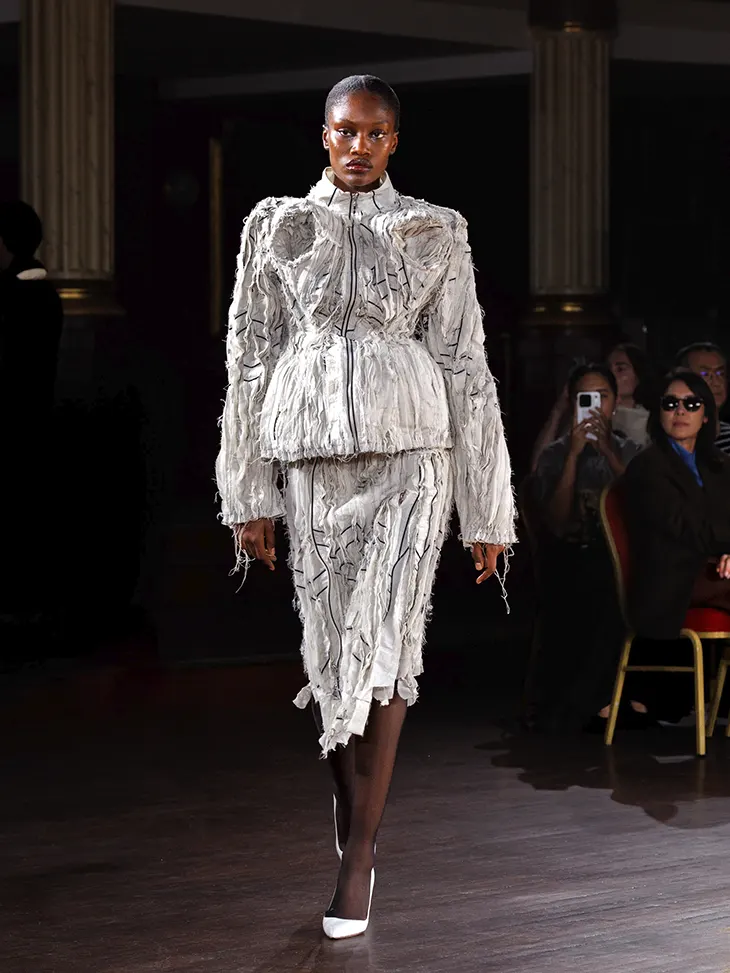
That idea develops through the visual language of the circus. Beauty slowly begins to break down. Lace fades, forms unravel and polished surfaces lose their control. The clothes move from attraction toward instability, allowing the spectacle itself to appear less secure as the collection progresses.
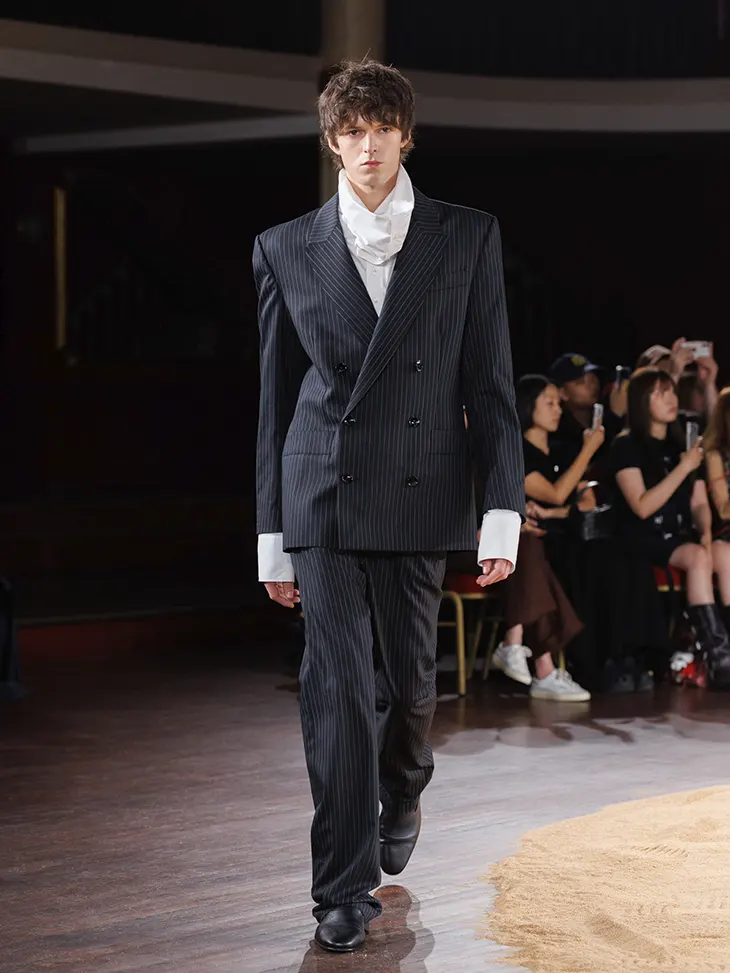
What first looks composed gradually exposes signs of deterioration. The collection uses that shift to question how long an image can maintain its authority before its construction becomes visible. The circus begins as a controlled performance and slowly reveals its mechanics.
Material transformation plays a central role in that process. Torishéju works with Nike deadstock, taking existing garments and materials apart completely before rebuilding them into new fabrics, surfaces and textures. The process fractures familiar forms and gives them another function within the collection.
These reconstructed materials support the wider idea that appearances remain unstable. A piece can begin with one identity and move into another once it has been dismantled and rebuilt. The method mirrors the collection’s interest in performance, where clothing can shift the way a body reads while concealing how that image came together.
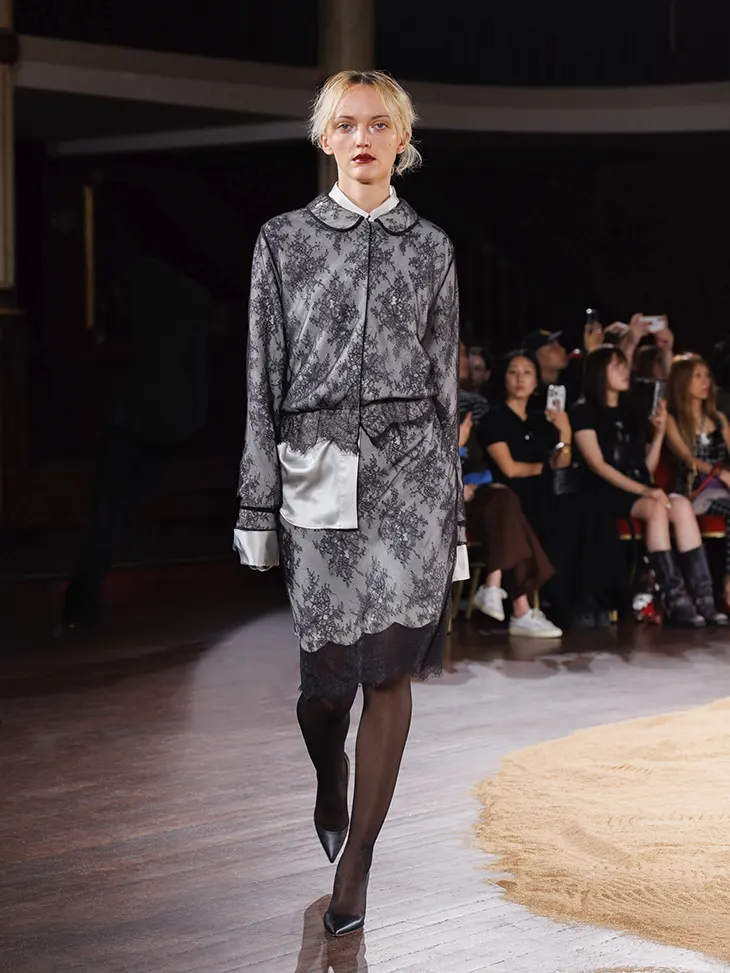
“Panem et Circenses” looks at the distance between performance and reality. Torishéju studies the choices people make about what to show, what to hide and what to ignore when spectacle takes over.
The circus provides the collection with its central image because it depends on attention. It asks the audience to keep watching while movement, character and display fill the space. Torishéju uses that structure to question what remains once the performance loses its power and the spectacle begins to fall apart. Spring Summer 2027 leaves that question open, ending with the image of the circus after the lights go down and the performance disappears.