


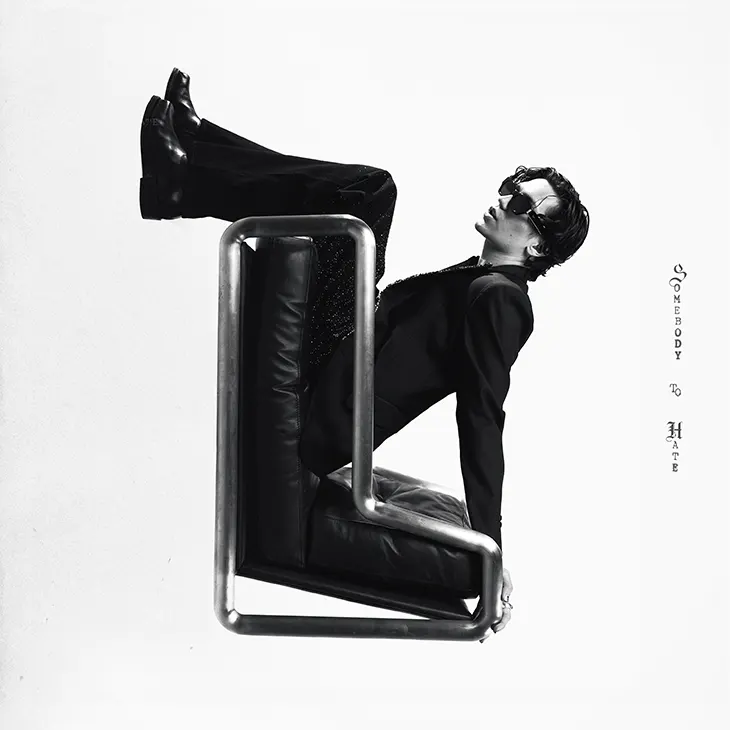
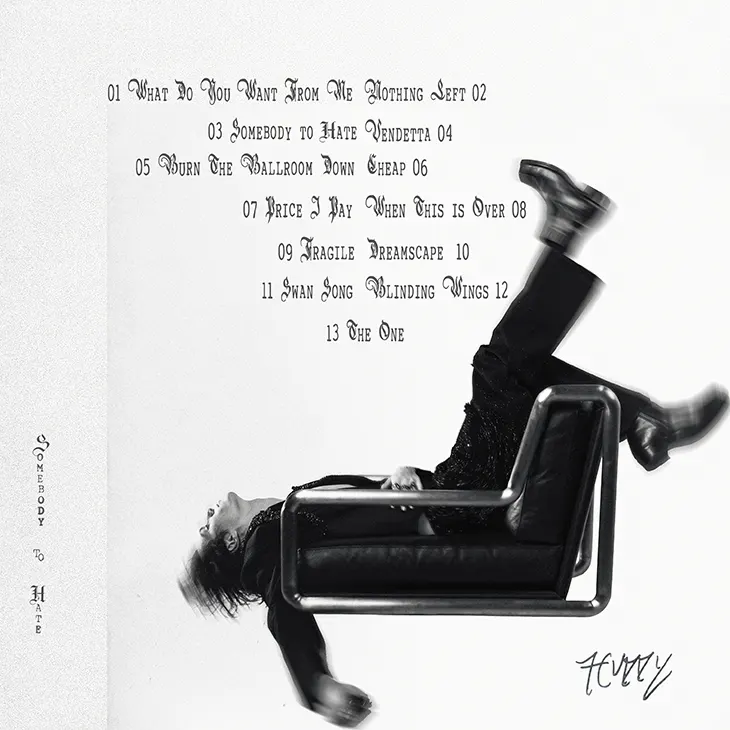
Huddy, the artist born Chase Hudson, returns with his sophomore album Somebody to Hate, released five years after his 2021 debut Teenage Heartbreak. Across 13 tracks, the record pushes further into alternative rock while marking a new phase in his career as an independent artist. Created with collaborators including Erik Ron, Keith Varon, Travis Mills, Curtis Peoples and Jayden Seeley, the album includes previously released tracks “Cheap,” “Vendetta,” “Burn The Ballroom Down” and “Fragile.”
INTERVIEWS
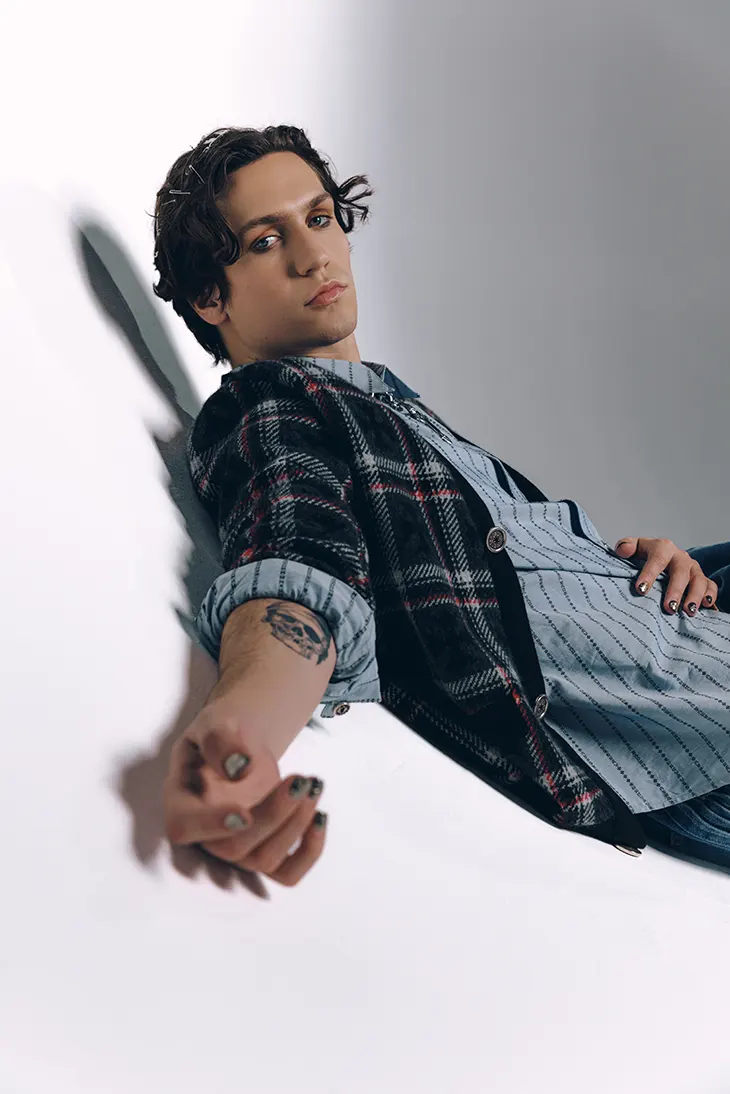
Beyond music, Huddy has continued to build a presence across fashion, film and television, with front row appearances at Dior, Saint Laurent, Amiri and Rabanne, while also serving as a Rabanne ambassador. In an interview with DSCENE Editor-in-Chief Zarko Davinic, Huddy discusses the making of Somebody to Hate, the process of defining his sound, independence, public perception and the creative freedom he wants to carry into the next stage of his career.
Five years between albums is a long time. What was holding you back from releasing sooner, and what finally clicked to make “Somebody to Hate” happen now?
It took me some time to really find my voice and be able to define it. To truly know what my style is as an artist isn’t something that happens overnight, and I’m very intentional about what people hear and see. I had to deal with issues on the label side of things multiple times, so I ended up self-funding the project because I believed in it so much.
The title track confronts being labeled “somebody to hate.” How much of that narrative was external (what critics/people said) versus internal (your own doubts about yourself)?
It’s a bit of both. If the critics tell you that you are something, eventually you will start to believe them, but you know that they don’t really know you, so I wanted to show them who I was behind the labels they tried to create.
I wanted to show them who I was behind the labels they tried to create.
You worked with Erik Ron, Keith Varon, Travis Mills, and others known for heavier alt-rock production. Why this specific lineup of collaborators, and how did their approach push you in a different direction than “Teenage Heartbreak”?
My sonic direction with this project was something I knew I wanted, we just needed people who spoke the same language about it. The producers and writers we worked with for the project crushed it. When writing a new album, you have to forget everything about the old one and paint a completely different painting, so I guided everybody along with me throughout the process.
“Burn The Ballroom Down” and “Fragile” feel like they’re in complete conversation with each other, defiance and vulnerability back-to-back. Was that intentional sequencing, or did it happen organically?
The two songs being back-to-back as singles was a coincidence. However, the record as a whole holds the same merits when talking about the things I’ve gone through. There’s a very similar perspective throughout that is hopeful that the listener will understand my pain.
The album deals with “struggle, confusion, hopelessness, grief, heartache.” Which of those emotions surprised you most when you were writing, and which one do you think listeners will connect with hardest?
I think the emotion they’ve connected with the most is hopelessness. When there is nowhere else to go, you try to find someone that understands you with their music, and this is where I’ve connected with my audience the most.
Going independent on this record, was that a creative freedom move, a business move, or both? How does it change what you can say and do as an artist?
It’s both. I want to be the artist that I am now without limitations. If this works out well, then I can say I did this by myself, so I could see it as a business move that way. It changes everything as an artist because you can set your own rules and boundaries.
The artist that doesn’t fold to the system wins every time.
You’ve got 40 million followers and mainstream visibility. Does that kind of reach make it harder or easier to write something raw and defiant? In daily pressure do you ever feel you’re writing for the algorithm or for yourself?
My social media doesn’t even cross my mind when writing a song and it shouldn’t for anyone else. You always have to do things you find cool first, then worry about how to display it for everyone secondary. It does make it harder in the sense that what you say and how your message will come across will be seen by a lot of people, so I try and have something very honest to say.
“Cheap,” “Vendetta,” and “Price I Pay” all seem to tackle transactional relationships, people, industry, fame. Are these specific stories or composite observations from your time in music?
Yes, they are observations of my time as a musician and even a little before that. I’ve always felt that transactional friendships were something I had to look out for. When it comes to love, a lot of people want what you have. The industry wants to take pieces of you until there’s nothing left to take and you are left with nothing and no one. Your mental health is the most important part of being an artist because it’s so often being challenged.
Musically, where does this land for you on the spectrum between pop-punk and alternative rock? Does that distinction even matter to you anymore?
I think in 10 years from now I’ll be considered an alternative artist and that itself is a spectrum, but I really just want to be an artist. I’m so many things and I have so many ideas, but I don’t want to box myself in. I need to be free without labels.
You’ve got Travis Barker and Machine Gun Kelly cosigns. Are you consciously trying to cement yourself in the rock world, or does that happen naturally based on what you’re making?
I want to become a household name in music and be a unicorn to the world.
I’m so many things and I have so many ideas, but I don’t want to box myself in. I need to be free without labels.
Fashion, acting, music, you’re moving across mediums fluidly. Does being an artist today require that multihyphenate approach, or is it just how you’re wired?
This is how I’m wired. I have ADHD and I need a lot of creative passions to stimulate me all of the time. There’s pressure to do everything to maintain your artist career, however I enjoy it so there’s no pressure at all for me.
If “Somebody to Hate” is Chapter Two, what’s the story you’re building across your career? Where does this album sit in a larger narrative?
This album sits as a get to know me project, the things I’ve been through, and the moment I found my voice all defined.
You came up with almost 40 million followers across social media, the beat of the algorithm is something you must already feel without even giving much attention to. Now that AI is reshaping music creation and distribution, how do you think about authenticity as an artist when everything can be generated?
Honesty as an artist is at an all time high because AI music is so terrible that you have to show the viewer something beautiful to make them believe it isn’t AI. The artist that doesn’t fold to the system wins every time. Being your authentic self is more timely than ever before, so make sure that’s the core of your artistry.
Listen to Huddy’s new album Somebody to Hate below.