


Tom Ford Spring Summer 2027 takes seduction into more dangerous territory under Haider Ackermann, who builds the season around mirrors, exposure and the tension that comes with being seen. The designer approaches sexuality as something controlled from within, giving the body agency over the gaze that follows it.
SPRING SUMMER 2027
A mirror provides the collection with its central image. Ackermann describes it as a placeless space where reflections appear and disappear, turning the act of looking into something reciprocal. The runway extended that idea through glass panes positioned across the darkened space. Models stopped in front of their reflections, watched themselves and observed one another through the glass.
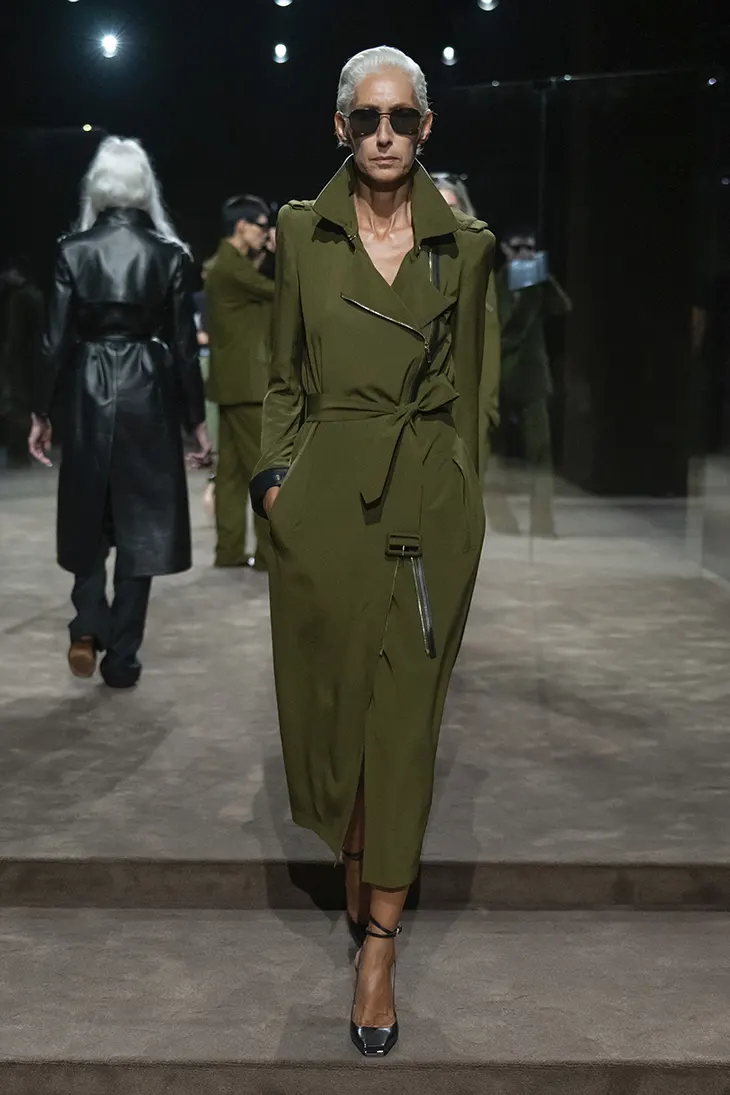
Ackermann places freedom close to danger. He considers what happens when someone stops asking for attention and begins acting without seeking permission from the person watching. For him, the possibility of crossing a boundary gives that freedom its intensity.
Seduction remains fundamental to Tom Ford, yet Ackermann pushes it toward greater exposure this season. He describes sexuality through a body that reveals itself without making an invitation. That attitude shaped the clothes and the way models carried them on the runway.
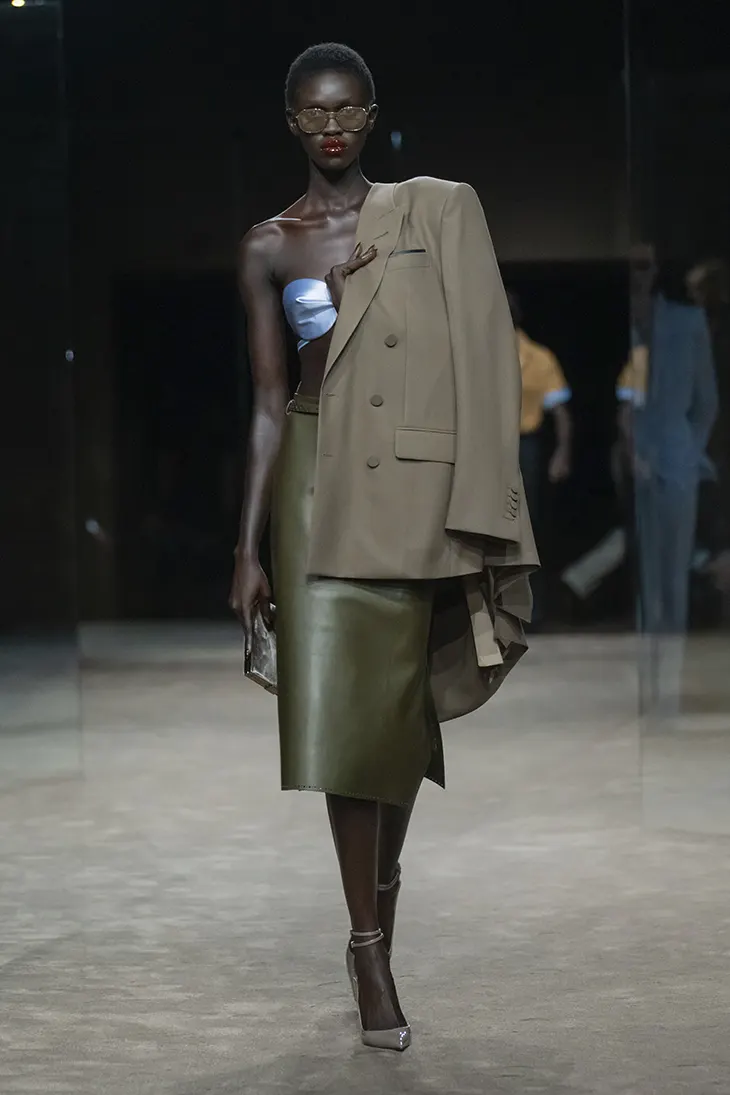
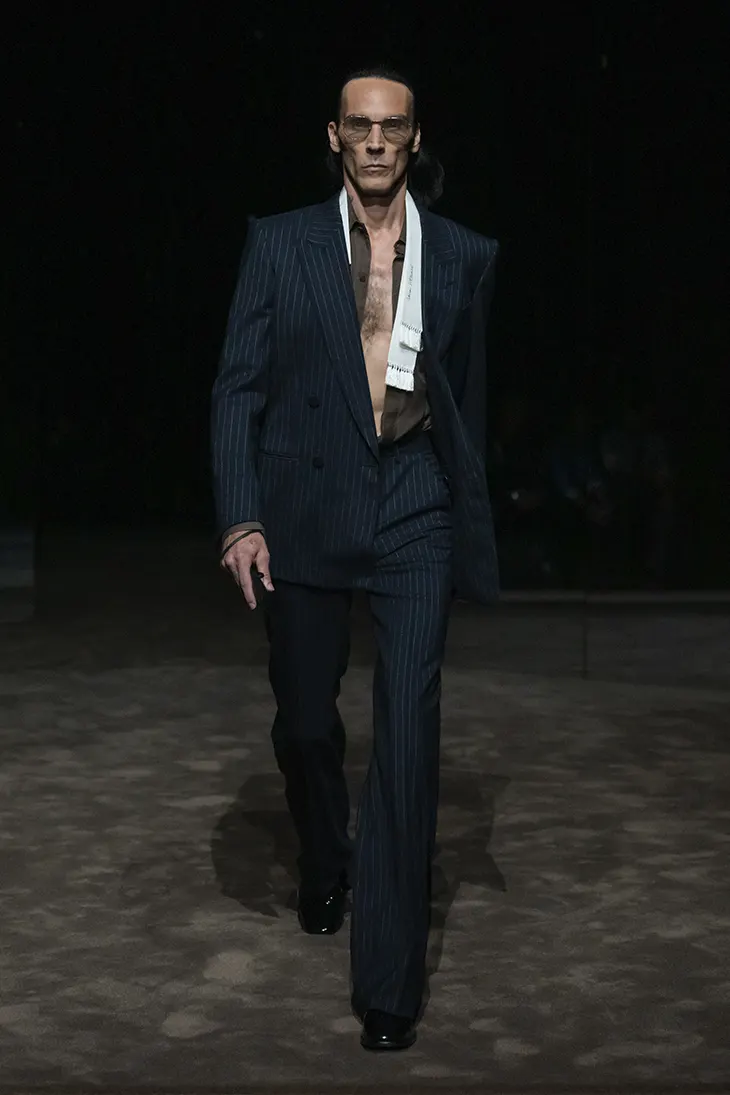
The collection opened with sharp pinstripe tailoring. Scott Barnhill appeared in a fitted suit with an olive shirt left open across the chest and a thin personalized scarf. Pinstripes continued into womenswear, while fishnet, exposed skin and leather shifted the mood toward something more provocative.
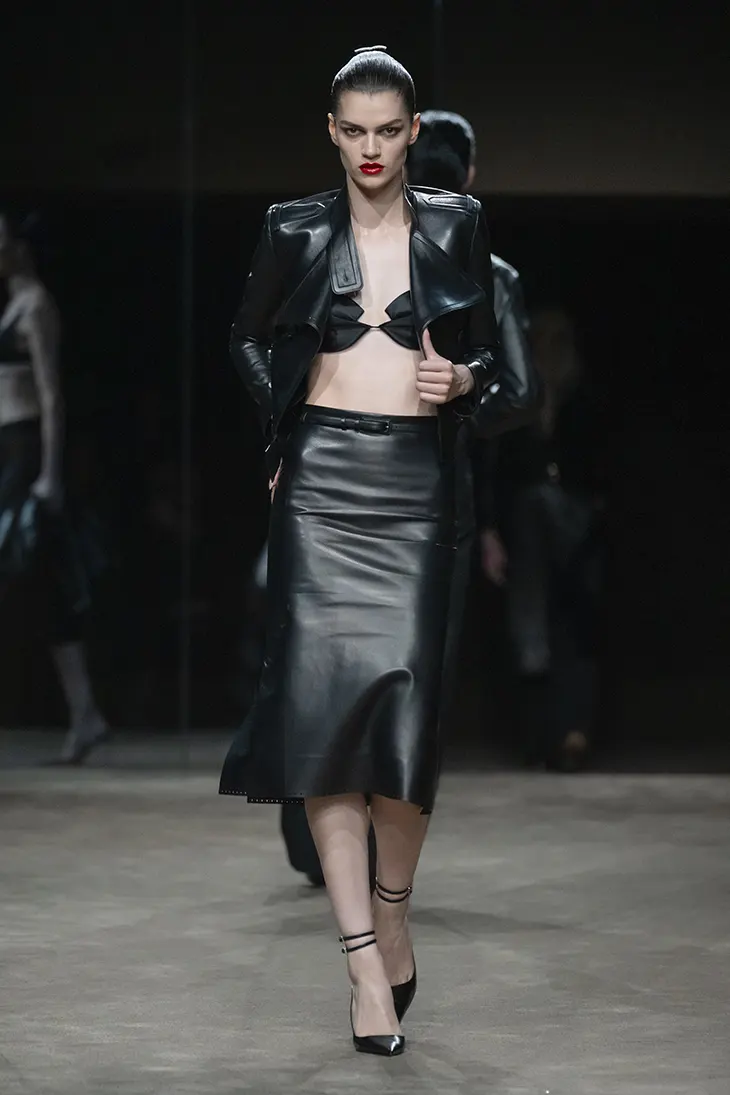
Black leather appeared across cocktail pieces, including a sleeveless top cut with the Tom Ford logo. Military green entered through trench coats and flysuits, while faded denim and cargo trousers brought a rougher texture into the collection. Short shorts pushed the proportions further.
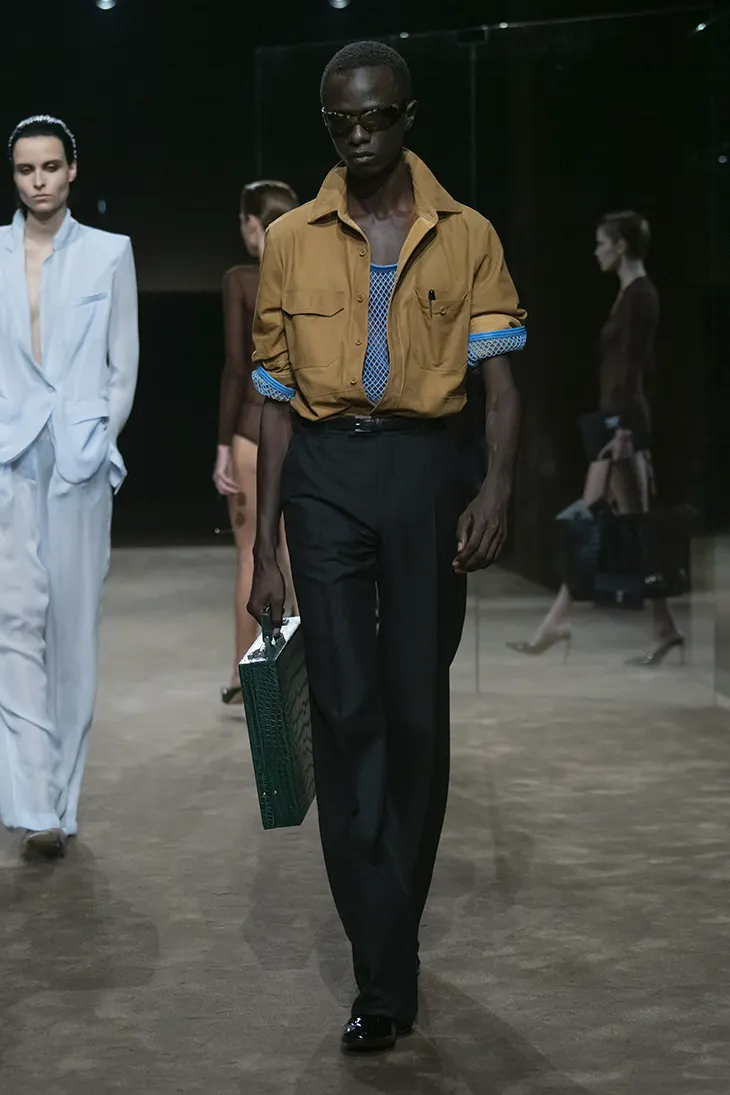
Eveningwear continued the focus on exposure. Red gowns used cut-outs and high slits, while rhinestones covered halter tops and jackets. Menswear moved through tuxedos and low-cut tank tops that exposed the chest. Ackermann kept returning to the idea that sexuality can operate without excess, allowing a gesture, opening or fragment of skin to carry the tension.
The final sequence took that approach furthest through minimal black swimwear designed around exposure. The looks reduced clothing to narrow areas of fabric across the body, placing confidence, vulnerability and risk in close proximity.
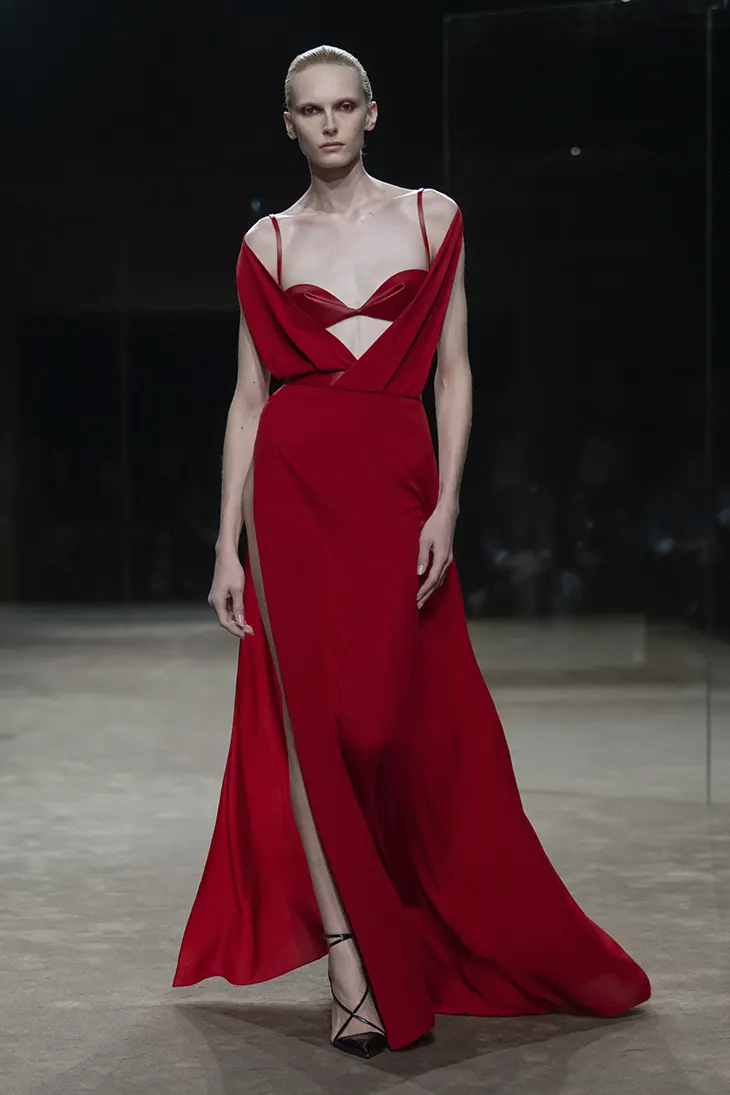
Ackermann also connects fragility with strength. He rejects the idea that one must cancel out the other, suggesting that vulnerability can carry its own authority. That tension runs through Spring Summer 2027, where exposed bodies meet controlled tailoring and deliberate presentation.
Freedom becomes the collection’s larger subject. Ackermann describes decadence through staying out too late, opening the wrong door and following curiosity beyond comfortable limits. He leaves those situations unresolved, interested in the moment before something happens and the evidence left after it does.