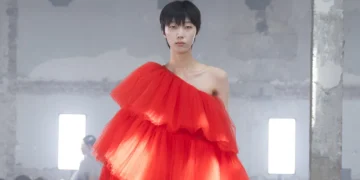



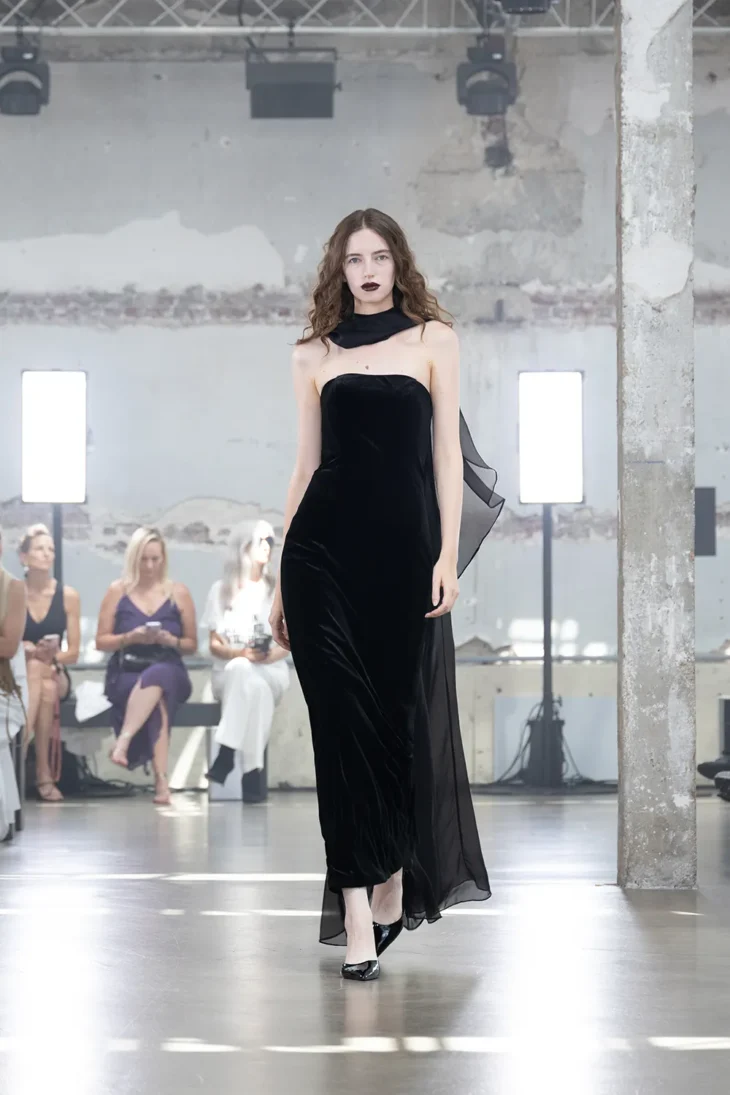
RVNG approaches Fall Winter 2026 Couture through a simple but demanding idea: transformation never reaches a final point. Presented at Palais de Tokyo in Paris, Jordan Hyatt’s collection rejects the familiar image of change as a clear departure followed by arrival. Instead, it locates transformation inside movement, tension, and the gradual accumulation of choices.
COUTURE COLLECTIONS
That thinking gives the collection its structural logic. Hyatt treats couture as a form of living architecture, building garments that rely on the body to reach their full expression. A silhouette never settles into one fixed shape. It changes as the wearer moves, revealing different proportions and successive states from one angle to the next.
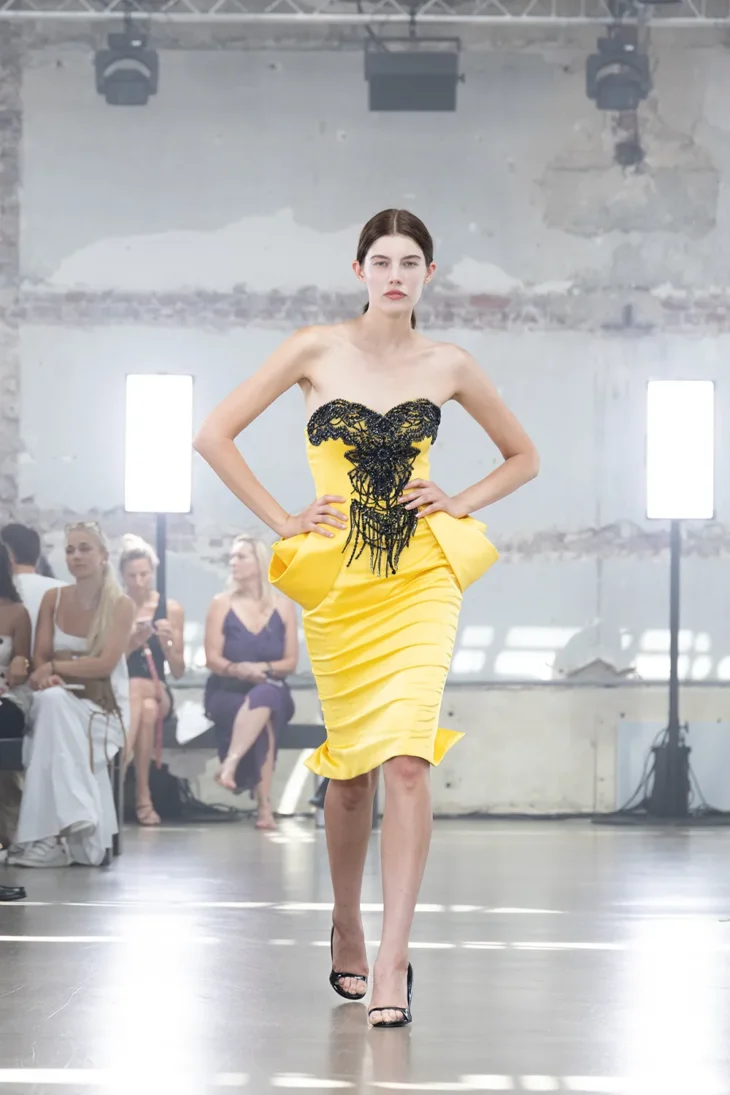
Construction begins beneath the visible surface. Hidden wire frameworks, internal armatures, and integrated support systems provide the collection with its architecture. These devices allow softer fabrics to retain volume without appearing heavy. Silk tulle and velvet hold air between layers, creating sculptural forms that maintain precision while responding to movement.
The strongest pieces appear to balance on the edge between control and release. Volume expands beyond familiar proportions, then returns to order through careful draping and disciplined construction. Hyatt uses scale to disturb the eye before restoring balance. This process gives the collection tension and prevents its theatrical forms from becoming static.
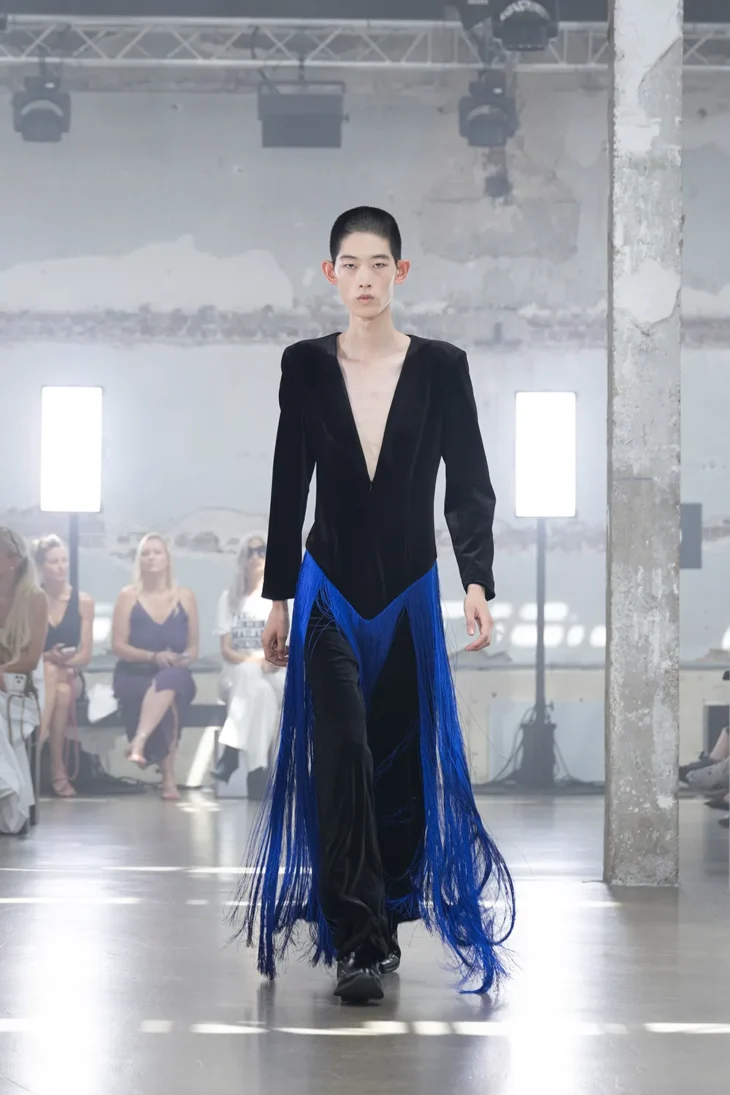
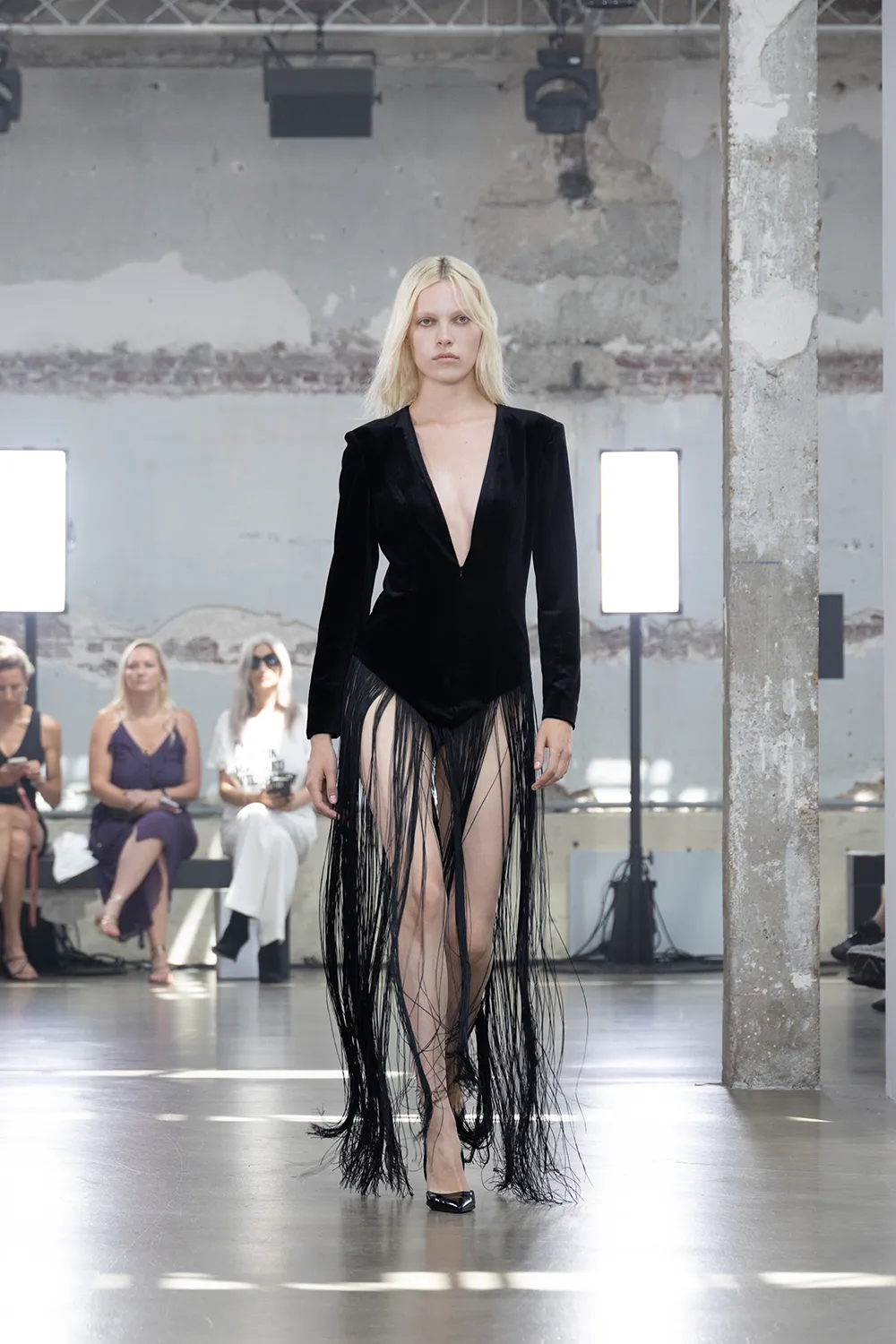
Glass-beaded fringe introduces another register of movement. The fringe responds directly to gesture, extending the rhythm of the body and making each step visible. Instead of functioning as surface decoration, it records motion. The garment changes from second to second, shaped by speed, direction, and the wearer’s presence.
Black forms the collection’s primary visual language. It sharpens line and proportion, allowing structural decisions to remain clear. Within this controlled field, saturated color arrives with calculated intensity. These interruptions give individual looks a distinct charge and prevent the collection’s architectural focus from becoming severe or emotionally distant.
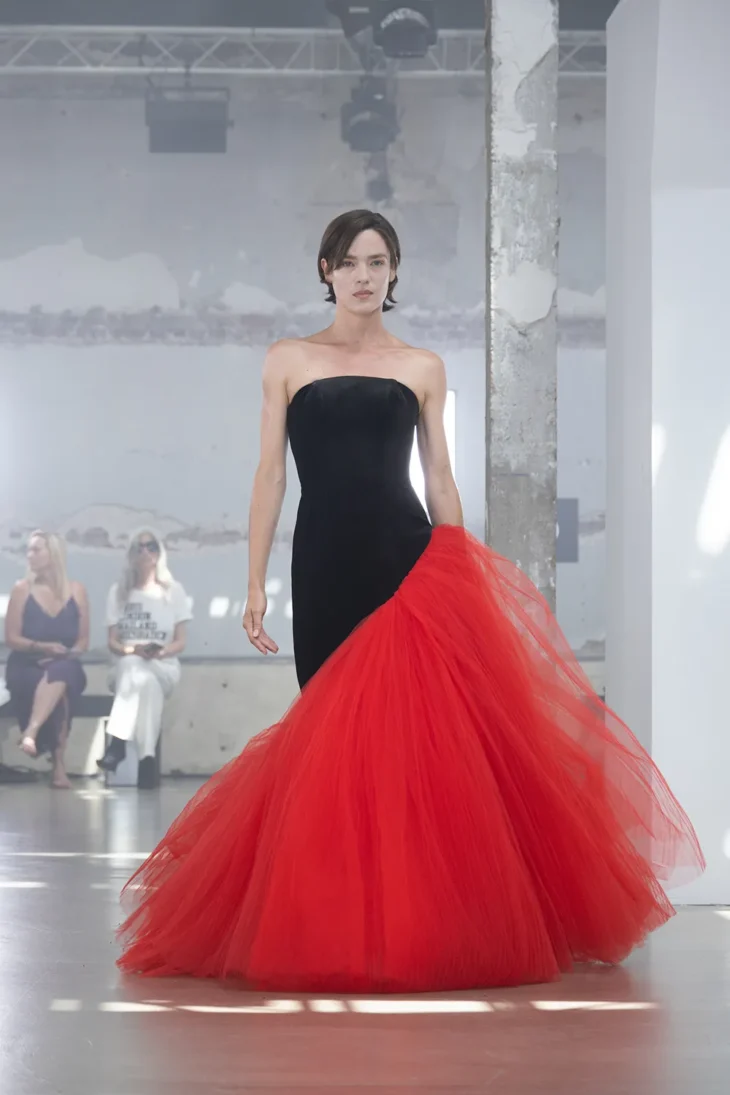
RVNG builds the collection through a series of dependencies. Structure requires softness. Weight relies on air. Control gains meaning through release. The clothes never exist as independent objects because the body completes their form. This relationship gives the collection its conceptual clarity and its strongest visual effect.
Hyatt also questions couture’s traditional pursuit of permanence. Exceptional handwork often aims to preserve an ideal silhouette, yet Transformation proposes garments that resist a final reading. Their meaning changes through movement, encounter, and gesture. Every wearer alters the piece, turning the garment into a record of lived presence.
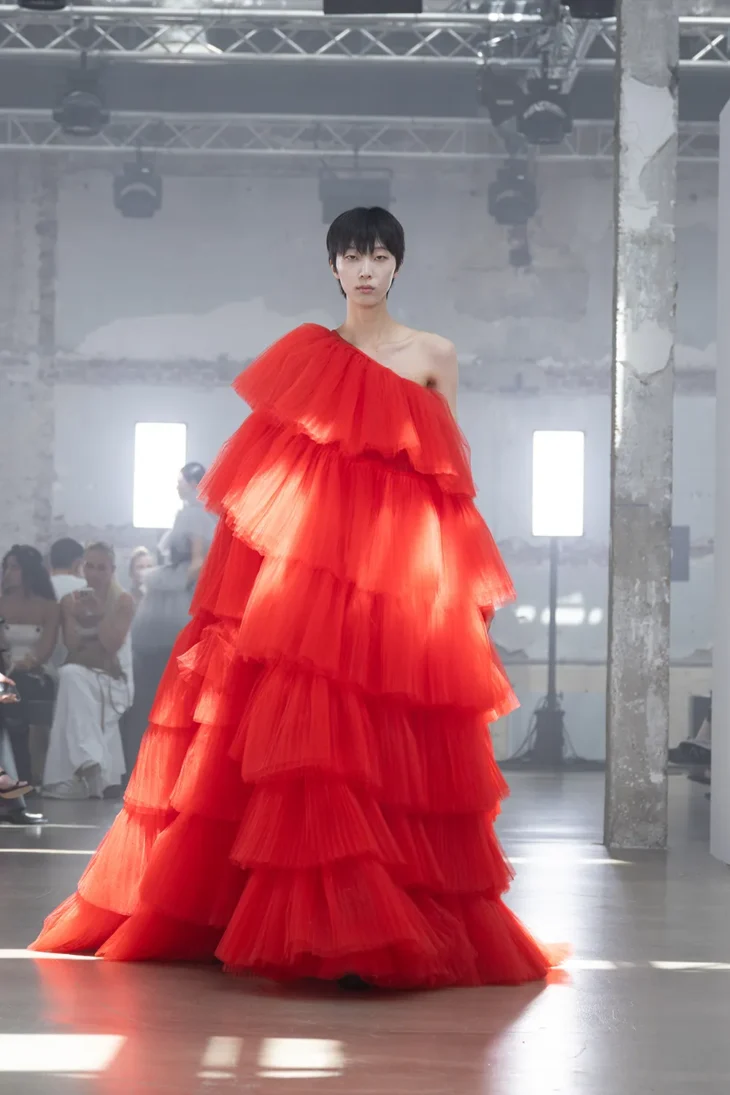
The collection succeeds when its internal engineering remains almost invisible. Viewers see volume, tension, and movement before they become aware of the systems holding each shape in place. That contrast between hidden discipline and visible freedom defines RVNG’s Fall Winter 2026 Couture collection.
Transformation does not use clothing to illustrate change from a distance. It makes change part of the garment’s construction. The result presents couture as an active structure, one that shifts with the person inside it and remains open to what comes next.