


What Holds Us, presented by Apple, brings together Alex Prager, Jack Davison and Jimmy Chin for a photographic project created entirely on iPhone 18 Pro. Each photographer uses the device within a different visual practice, testing its role as a professional tool for both photography and video. Kathy Ryan, former longtime director of photography at The New York Times Magazine, curated the exhibition.
EXHIBITIONS
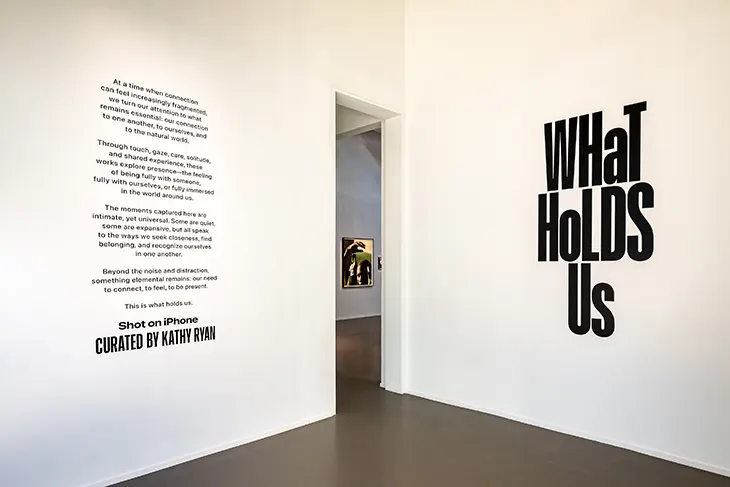
The exhibition centers on human connection, exploring the people, places and experiences that create a sense of presence and belonging. Ryan describes the theme as a response to an increasingly fragmented culture, with the three photographers approaching connection through very different subjects and methods.
The project arrives at a point when phone photography has already become part of everyday image culture. What Holds Us takes that familiarity into professional production, bringing together three photographers with very different working methods to examine how the iPhone 18 Pro performs within each practice.
That difference is central to the exhibition. The photographers come to the project from distinct creative practices, yet they rely on the same device throughout. The result places the iPhone inside established professional workflows and considers what happens when a tool associated with everyday photography takes on the full role of the camera.
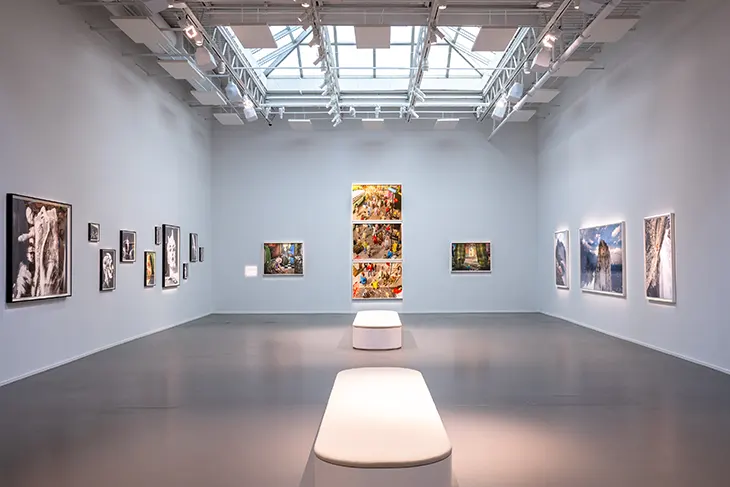
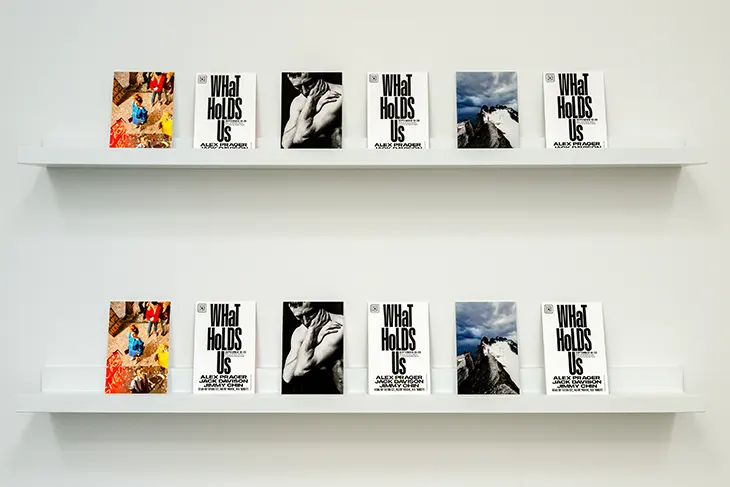
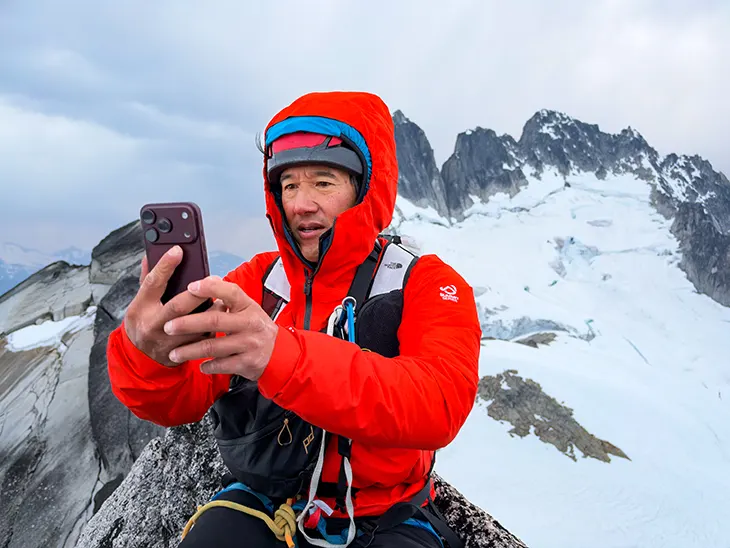
Jimmy Chin took the iPhone 18 Pro into the Bugaboos in southeastern British Columbia, where winds reached speeds of up to 70 miles per hour. He photographed climber Conrad Anker through close details, aerial views, action images and a large panorama. Chin used the 48MP Fusion Main camera with variable aperture and the Telephoto camera to photograph rock, ice, glaciers and the surrounding mountains. He said the resolution and sharpness allowed him to trust small details and expansive images at size. The smaller setup also mattered in conditions where the weight and amount of equipment directly affect how a photographer can work.

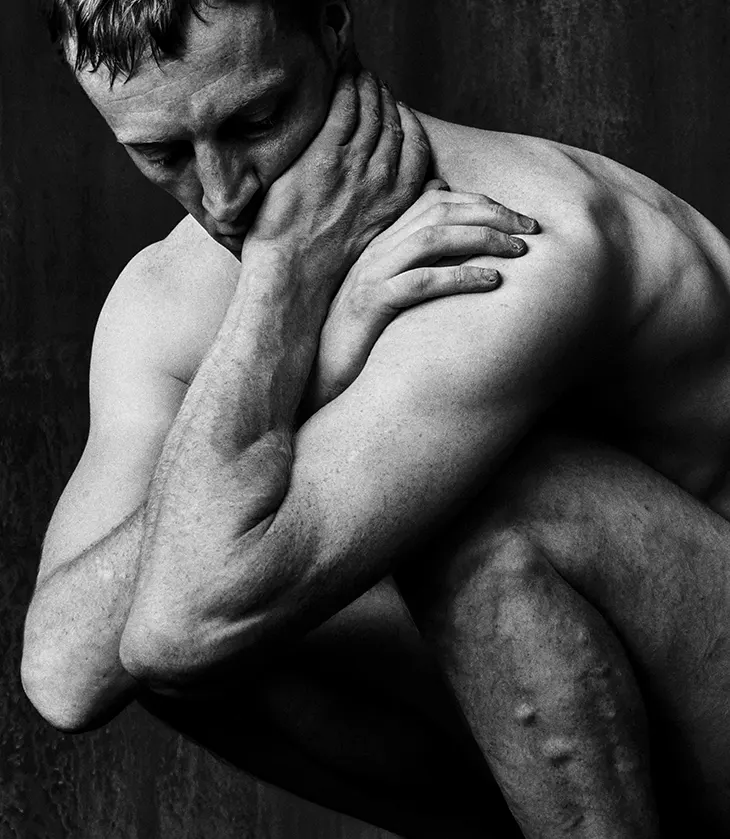
Jack Davison approached the phone from another direction. Working inside a former sugar warehouse in London, he photographed people interacting with clay and chalk. His images focus on bodies, hands, texture and physical contact, using the strong blacks and whites associated with his portrait work. Davison found that holding the iPhone lower allowed him to maintain eye contact with his subjects instead of placing a larger camera between himself and the person he photographed. He also worked with different lenses, slower shutters and RAW files, using the device as a flexible studio camera.
Alex Prager tested the iPhone 18 Pro on a soundstage in Los Angeles. Her staged crowd scenes required a camera that could handle large sets, dense compositions, color and small details. She shifted between overhead views and tighter portraits while allowing some improvisation from the people on set. Prager described the iPhone camera as increasingly close to a video stream, connecting still photography with the continuous flow of images that now shapes photo albums and social media. Her installation turns that idea into a sequence that suggests moments before and after each frame.

Ryan brings the three bodies of work together through the exhibition’s focus on human connection, while their different approaches also reveal how the iPhone 18 Pro functions under very different professional demands. Taken together, the photographs place the device within a wider discussion about the changing role of the conventional camera in contemporary photography.
What Holds Us opens in New York from September 18 through September 20 before traveling to London and Shanghai in the coming months. The New York program includes a Friday evening conversation between Sam Fragoso and Kathy Ryan, followed by a gallery viewing and cocktails.