



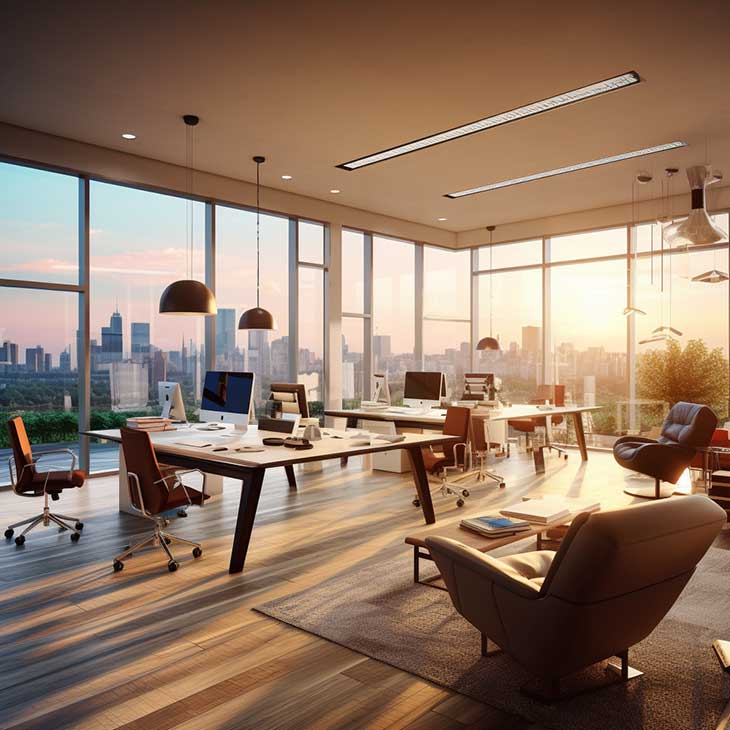
When most leaders think about organisational performance, they look to talent, technology, and strategy. But an often-overlooked factor sits right in front of them: the physical environment where their teams work every day. The layout of an office, its pathways, adjacencies, transitions, and quiet corners, quietly shapes behaviour, productivity, and collaboration in ways many companies underestimate.
In the modern era of hybrid schedules, shifting employee expectations, and rising real estate costs, the office has become more than a workplace. It is a strategic asset. Organisations that intentionally design and optimise their layouts are discovering that small spatial decisions can deliver outsized advantages. The space you don’t immediately notice, the flow between departments, the pockets of focus, the cues that guide movement, often drives performance more than the furniture, branding, or technology on display.
Why Office Layouts Matter More Today
The workplace has evolved, but not every office has evolved with it. As employees juggle in-person collaboration with periods of deep, focused work, layout inefficiencies become more noticeable – and more costly.
The Hybrid Model Has Exposed Spatial Weaknesses
With fewer people in the office at any given time, traditional “one-size-fits-all” layouts fall short. Rows of assigned desks or static open-plan designs no longer support the variety of tasks employees perform. Companies now need flexible environments that help workers transition seamlessly between concentration, collaboration, and connection.
Rising Real Estate Costs Demand Smarter Use of Space
Organisations are increasingly scrutinising how every square metre is used. Empty desks, awkward corners, or underutilised meeting rooms represent financial inefficiency. As leaders seek to reduce waste without compromising performance, space optimization has become a central part of strategic planning.
Talent Expectations Have Shifted
Employees want workplaces that feel purposeful, not just functional. When a layout supports both comfort and productivity, people feel more empowered and engaged. The office becomes a place they want to be, not a place they feel obligated to visit.
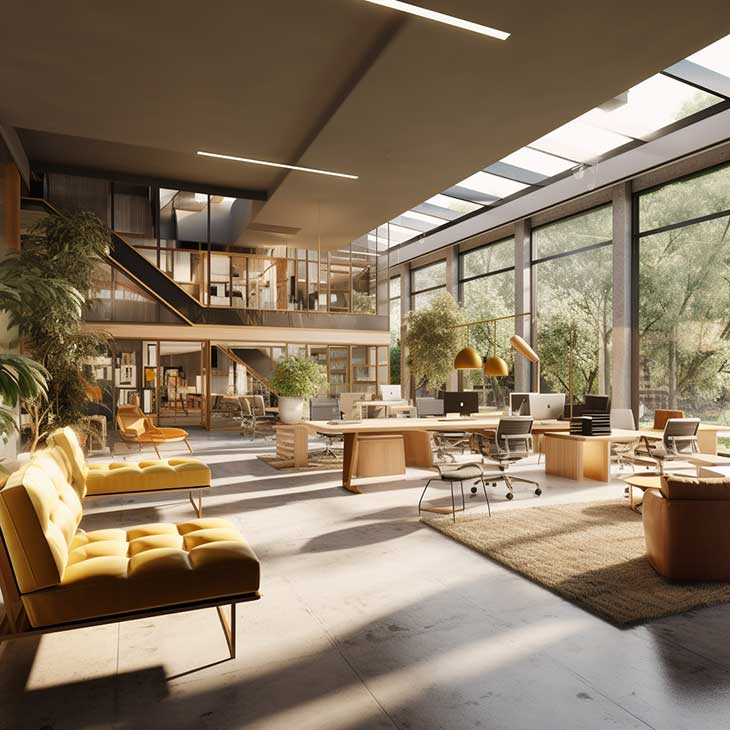
How Layout Shapes Productivity – Often in Invisible Ways
A well-designed layout doesn’t call attention to itself. Instead, it makes work feel intuitive and frictionless. Behind the scenes, countless subtle decisions influence the way people interact with their environment.
Flow and Movement
The placement of hallways, circulation paths, and shared assets affects how easily people can navigate their day. A poorly designed flow causes bottlenecks, interruptions, and unnecessary steps. A thoughtful one reduces stress, conserves mental energy, and increases efficiency.
Proximity and Adjacency
The physical distance between teams can either support collaboration or hinder it. Strategically placing related functions near each other increases the velocity of communication. Designers often study behavioural patterns to determine which groups benefit from closeness and which need more separation.
Noise Control
Acoustics are one of the most common complaints in open offices. Yet effective noise management goes far beyond installing sound panels. Layout plays a critical role: buffer zones, spatial gradients, and intentional zoning can dramatically reduce disruptions without sacrificing openness.
Visual Cues and Boundaries
People naturally interpret spatial cues, lighting changes, furniture placement, or thresholds to understand where certain behaviours belong. Smart layout design uses these cues to signal focus, collaboration, or relaxation zones without requiring signs or policies.
The Strategic Advantage of Optimised Office Layouts
Thinking strategically about office layout isn’t just about aesthetics or comfort. It provides measurable, long-term business benefits.
Increased Productivity Through Reduced Friction
When workers spend less time searching for tools, relocating to quieter spaces, or navigating confusing layouts, their cognitive load decreases. They can focus more fully on high-value tasks. Optimised layouts streamline the workday, reducing micro-disruptions that add up over time.
Stronger Collaboration and Faster Problem-Solving
When teams interact naturally, because the space encourages movement and chance encounters, ideas spread faster. Research from respected design and workplace organisations consistently shows that thoughtfully placed collaboration zones lead to richer discussions and more frequent knowledge sharing.
Better Employee Experience and Talent Retention
Strong companies recognise that workplace experience is a powerful symbol of culture. An environment that supports employee well-being and workflow sends a clear message: people matter here. Employees who feel supported by their workspace are more likely to remain engaged and stay with the organisation longer.
More Efficient Use of Real Estate
Optimised layouts allow companies to do more with less – not through downsizing, but by using every square metre with intention. This leads to cost savings, greater agility, and the ability to adapt as teams grow or transform.
What Smart Layout Optimisation Looks Like
Modern organisations approach layout design with a blend of behavioural insight, creativity, and operational strategy.
Zoning for Different Work Modes
High-performing offices create distinct yet connected zones:
- Focus areas for uninterrupted work
- Collaborative clusters for team-based tasks
- Social hubs for informal interaction
- Retreat spaces for mental resets
These zones accommodate shifting needs throughout the day without forcing employees to fight their environment.
Flexible and Modular Elements
Moveable walls, multi-purpose furniture, and adaptable meeting areas allow companies to reshape space quickly. This flexibility enables organisations to respond to seasonal changes, team restructures, or evolving workflows without expensive renovations.
Designing for Moments, Not Just Tasks
Many workplaces now incorporate micro-spaces, brief pause points, standing nooks, quick-chat perches, that support the short but meaningful interactions that keep teams aligned. These small touchpoints often have an outsized impact on culture and communication.
Integrating Technology Thoughtfully
A smart layout also accounts for digital needs: acoustic support for video calls, intuitive access to charging, and equipment placement that feels natural rather than forced. Technology works best when it supports the flow of the space instead of disrupting it.
Beyond Aesthetics: A New Understanding of Workplace Strategy
The shift toward intentional office layout is part of a broader change in how organisations view physical space. The office is no longer a static container for work, it is a dynamic system that influences behaviour, productivity, and culture.
Leaders who invest in strategic layout optimisation acknowledge a simple but powerful truth: built environments shape human performance. When designed with insight and purpose, they can enhance efficiency, strengthen relationships, and elevate the everyday experience of employees.
Finally, optimising an office layout is not about making a workplace trendy or visually impressive. It is about understanding the subtle ways space affects how people think, communicate, and feel. As organisations continue adapting to modern work realities, the companies that prioritise smart, strategic layouts will gain a meaningful competitive edge.
The space you don’t see, the hidden pathways, the thoughtful proximities, the silent cues, may be the very key to unlocking a stronger, more resilient, and more productive organisation.