


Heimtextil 2026 returned to Frankfurt as a central gathering for the global textile industry, bringing together participants from 148 countries and maintaining strong exhibitor and visitor numbers despite a turbulent market environment. With a growing share of senior decision-makers and top-level executives, the fair underscored its role as a strategic platform for the future of textiles.
INTERVIEWS
Under the theme Craft is a Verb, Heimtextil 2026 explored how traditional craftsmanship, material intelligence, and artificial intelligence intersect to shape design, production, and business. From curated trend presentations to immersive showcases, the fair highlighted new business models, innovative interior concepts, and forward-looking approaches for retail, hospitality, and contract projects, offering both inspiration and practical insight to the global industry.
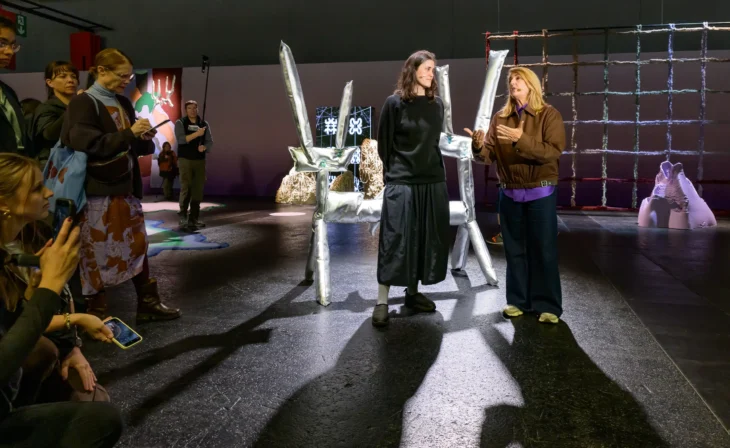
Patricia Urquiola and among-all
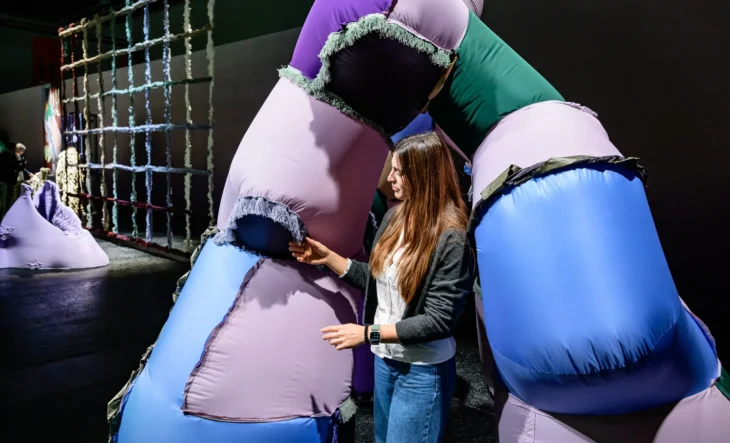
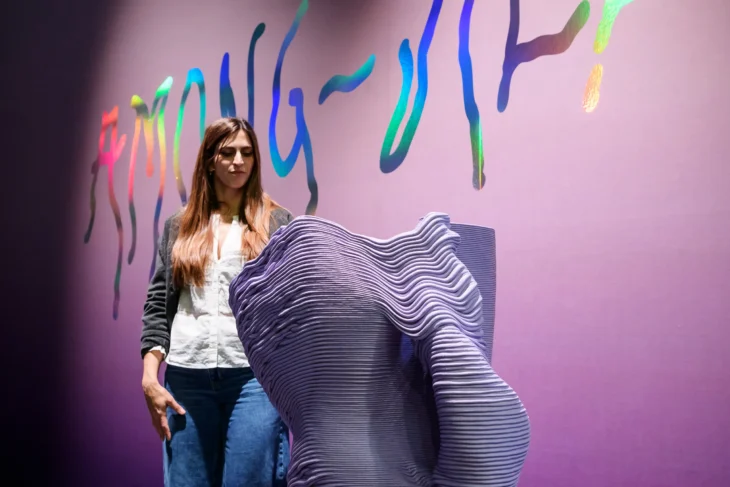
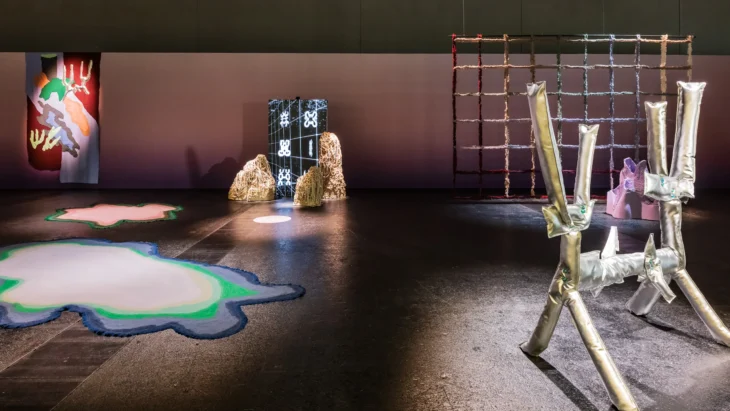
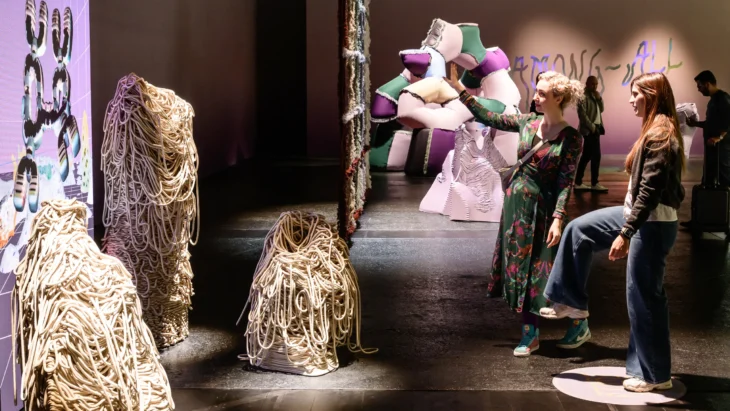
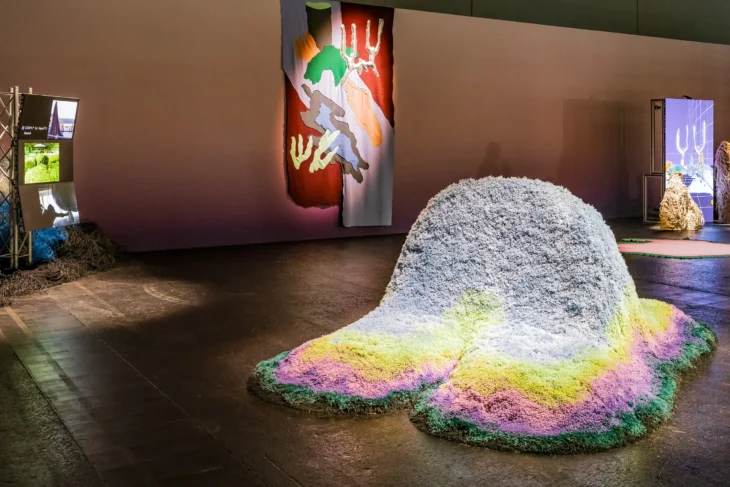
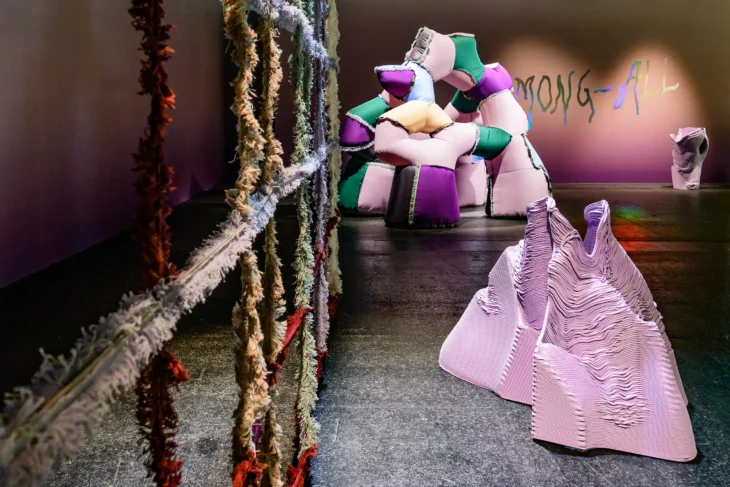
At the centre of Heimtextil’s creative programme was Patricia Urquiola’s among-all, an interactive installation that embodied many of the fair’s key themes. Developed exclusively for Heimtextil, the project combines AI, material innovation, and sustainability to imagine a new future for interior spaces. Featuring hybrid sculptures, inflated forms, and hanging grid structures crafted from regenerated nylon, textile waste, and bio-based materials, among-all treats textiles as living systems rather than static objects. Visitors are invited to shape the space through movement, turning them into active participants within a temporary ecosystem that responds, transforms, and evolves. For Urquiola, the installation examines coexistence, relational materials, and dynamic processes, offering a glimpse into how design can merge craftsmanship, technology, and environmental awareness in meaningful, tangible ways.
Bringing her ideas directly to the readers of DSCENE, Patricia Urquiola spoke with editor Borislav Utješinović about how among-all redefines the role of textiles, weaving together AI, sustainability, and human interaction. In this exclusive interview, she reflects on the creative process behind the installation, the evolving language of materials, and what excites her most about the future of textile design.
Read the full interview with Patricia Urquiola below:
‘Among-all’ continues your exploration of textile thinking after ‘among-us.’ What new directions or questions did you want to grow into with this chapter?
Among-all is the second chapter of an ongoing exploration, but it is not a sequel in a linear sense. Where among-us focused on proximity, on being together, among-all shifts toward coexistence. It asks how textiles can become a shared material ecology, one that includes remnants, bio-based materials, technologies, and human presence. The question is no longer how we relate to objects, but how we inhabit systems that listen and respond.
The question is no longer how we relate to objects, but how we inhabit systems that listen and respond.
You describe the installation as a temporary ecosystem. What interests you about designing systems rather than objects?
Objects tend to be closed, resolved. Systems remain open. In among-all, the exhibition is not a container but a temporary ecosystem, something that grows through space rather than enclosing it, it generates relationships, passages, and transformations.
The work moves between craft, waste, regeneration and advanced materials. How do you decide when a material is ready to be part of a narrative?
A material enters the narrative when it carries transformation within itself. ECONYL®, fishing nets, selvages, bio-based materials like Ohoskin, none of these are pure or finished. Textiles here are zones. The moment interest me the most is when materials start to negotiate among themselves and the installation shifts from a collection of elements into a temporary ecosystem.
The moment interest me the most is when materials start to negotiate among themselves and the installation shifts from a collection of elements into a temporary ecosystem.
Heimtextil brings industry and experimentation into the same space. Why is it important for large-scale production and research-driven design to coexist?
Because transformation needs both scale and sensitivity. Industry provides structure and impact; experimentation keeps the system open.
We are living through economic instability and rapid technological change. What responsibility does design carry in moments like this?
To work with complexity instead of simplifying it. Among-all suggests design as a regenerative and relational condition, one that acknowledges human and non-human intelligences as part of the same material story.
Industry provides structure and impact; experimentation keeps the system open.
Looking ahead, what excites you most about the future of textiles?
Textiles becoming ecosystems rather than surfaces. Materials that are responsive, regenerative, and relational. Textiles that do not simply cover space, but help generate it, remaining in continuous transformation, like the systems we live within.
Textiles that do not simply cover space, but help generate it, remaining in continuous transformation, like the systems we live within.