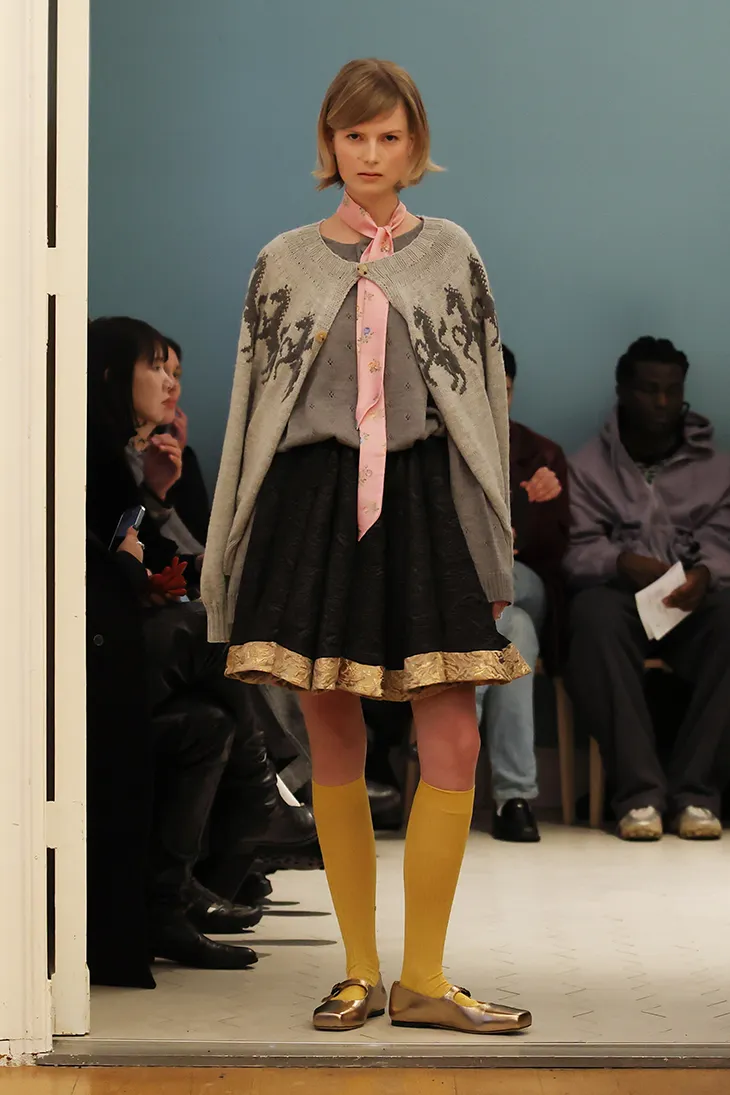



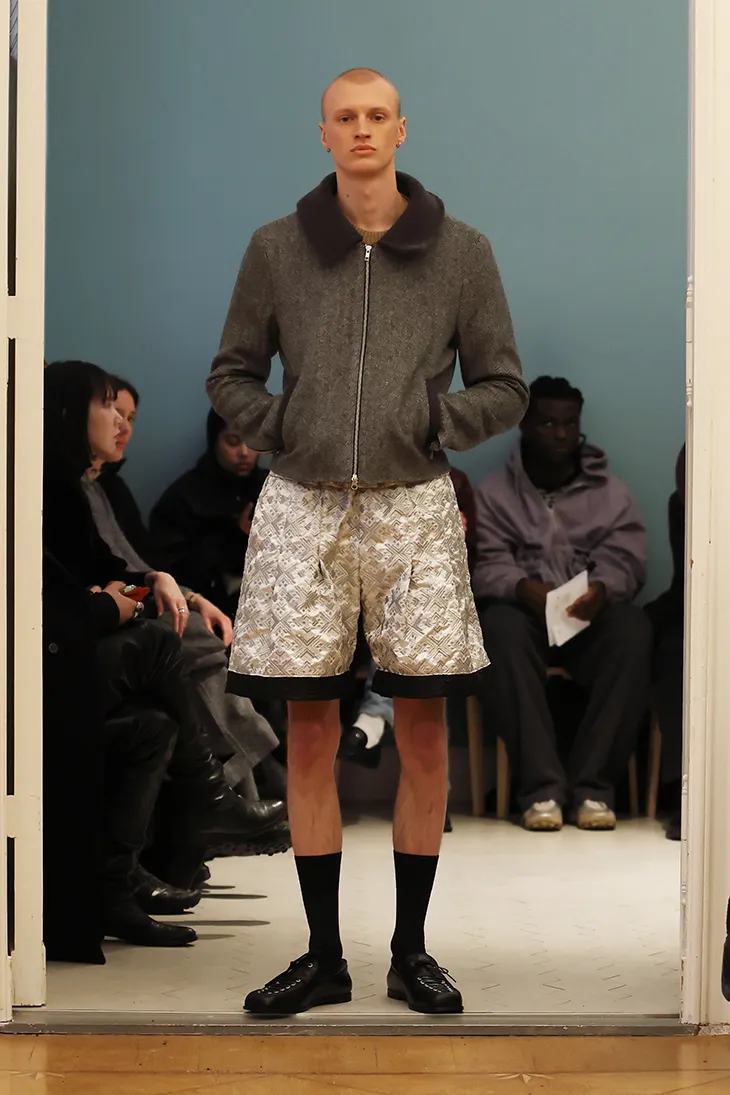
Andrej Gronau presented his Fall Winter 2026 collection Room-For-Play at Berlin Fashion Week, framing the home as a site where dressing begins. The collection enters domestic space and treats it as a system shaped by habit, contradiction, and excess. Gronau draws on the dollhouse as a structural idea, and examines what occurs when adulthood occupies rooms once coded as decorative, feminine, masculine, or excessive.
FALL WINTER 2026.27 MENSWEAR
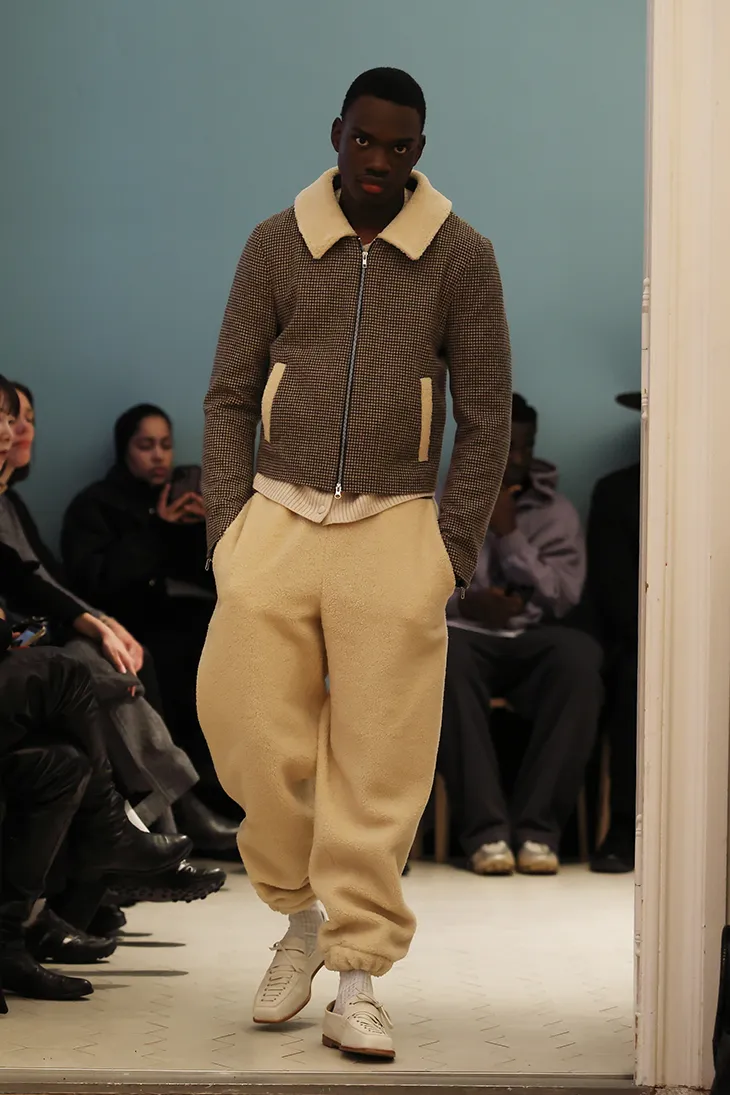
Interior textiles cross into clothing throughout the collection. Carpets, curtains, blankets, and ornamental patterns shift from living rooms into wardrobes. Comfort defines the silhouettes. French terry stretches into elongated trousers. Sherpa fleece forms everyday shapes. Elastic waistbands replace formal structures. Fabrics associated with rest and privacy appear openly and visibly, worn without disguise. Dressing adopts the logic of being at home.
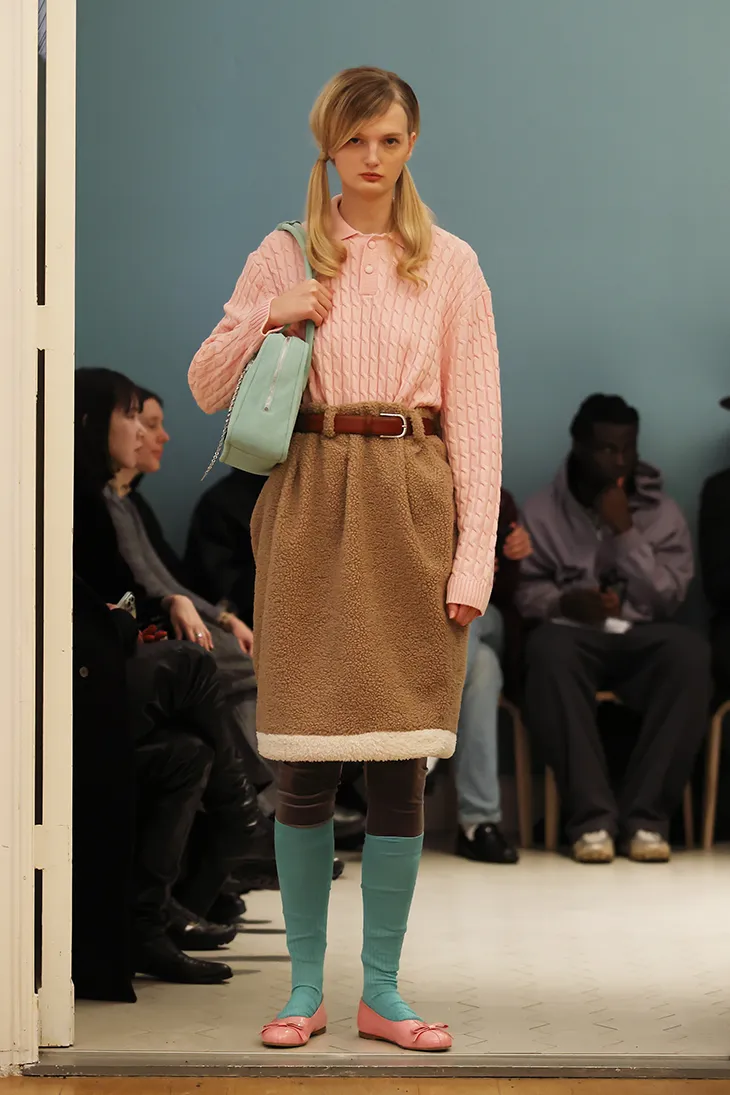
Taste operates differently inside domestic space. In public, taste performs and follows codes. Inside the home, taste loosens and allows contradiction. Gronau references Pierre Bourdieu’s reading of taste as a social structure, then uses the home as a loophole where excess becomes acceptable. Sentiment and inconsistency exist side by side. The collection inhabits this friction between accepted taste and personal indulgence, between exposure and concealment.
Material pairings reinforce this interior logic. Velour meets brocade that recalls ornamental stucco. Hoodie hoods fall long and echo curtain drapery. Interior structures translate directly into silhouette. These gestures carry seriousness and resist irony. Gronau echoes Walter Benjamin’s writing on the interior as a place where traces of the self accumulate, where memory and desire settle into objects. Clothing takes on a similar role.
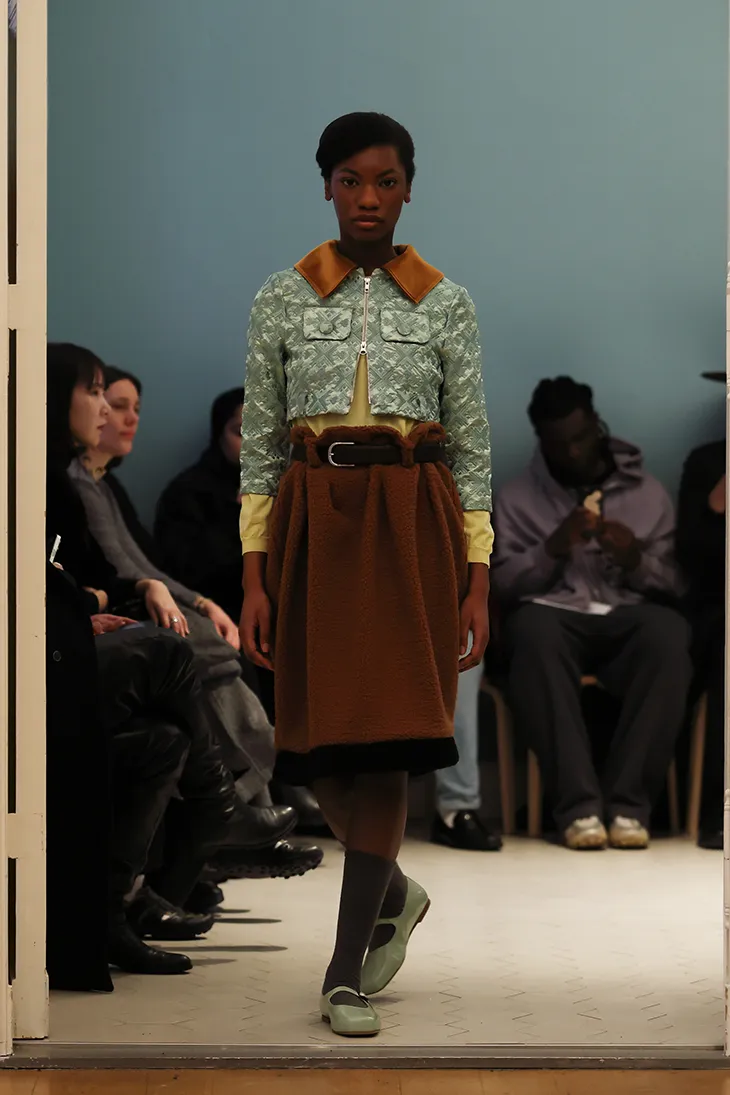
The collection absorbs childhood into adulthood. Growth appears layered and unfinished. Saturated yellow, turquoise, mint, and gold recall decades when velvet and velour filled interiors with warmth. Whimsical patterns appear without apology. These tones confront several versions of bureaucratic grey, the uniform worn outside the home. The contrast defines a clear division between exterior restraint and interior indulgence. Gronau frames privacy as power and comfort as confidence under the declaration “My house. My rules. My pleasure.”
Gronau grounds the collection in personal memory. His grandmother’s 80th birthday, held in a long-standing villa, provided a starting point. The house revealed inconsistency instead of unity. Each room followed its own rules. Floors, walls, proportions, and stucco refused alignment. Textile wallpapers and hand-painted floral details survived across decades. The villa resembled a dollhouse assembled over time. Gronau focused on the freedom this disorder allowed, where difference coexists without hierarchy.
Another reference came from observing how adults dress his newborn nephew. For a christening, the child wore a miniature suit that appeared misplaced on his body. Softness and ornament felt natural on the infant, yet excessive on adults. This inversion stayed present throughout the collection and informed its balance between uniform and play, interior and body.
Layering defines the garments. Socks stack over tights. Shorts rest over trousers. Sweaters pile over jackets. These layers mirror the accumulation of surfaces inside a room. Function replaces rigidity. Elastic waistbands hold the body without belts or zippers. Materials support wear through Japanese textiles chosen for surface quality and durability. Loden and wool come from an Austrian manufacturer that also supplies houses such as Chanel and Prada. These fabrics retain integrity over time and support daily use.
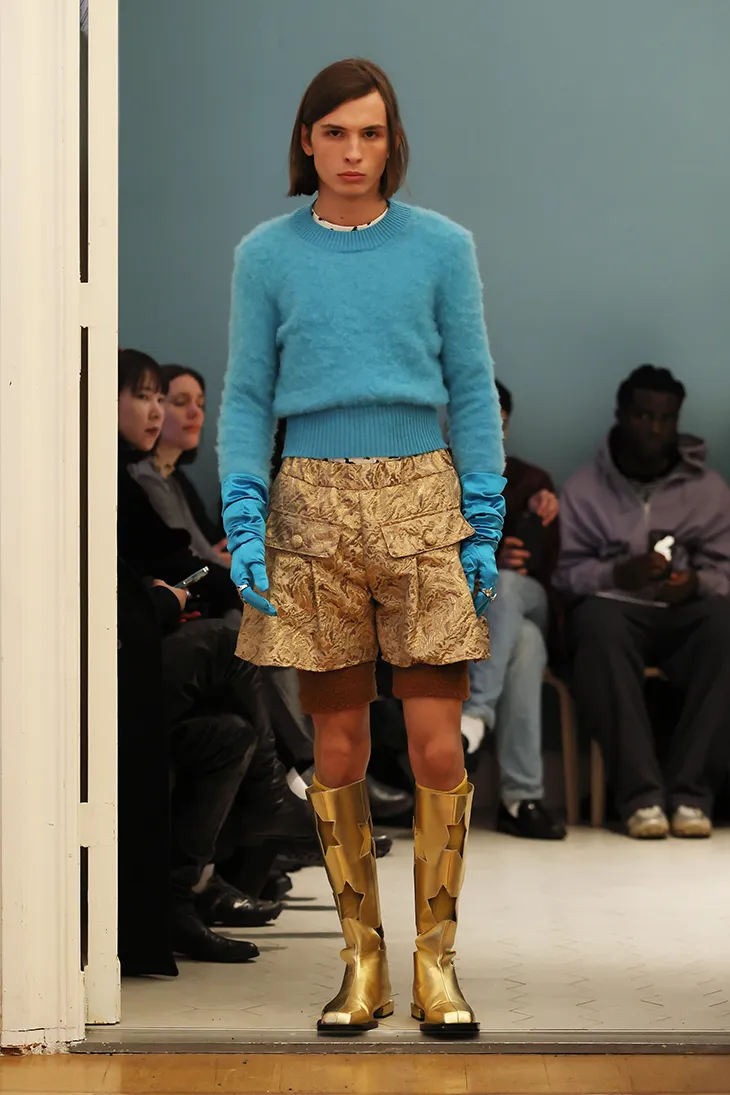
The presentation took place on January 31 at 3 p.m. inside a protected historic apartment in Berlin. Four rooms shaped the setting: a bay-window room, a balcony room, a large hall, and a space suggesting a kitchen. Guests entered the apartment and passed through its rooms as invited visitors. Dressing occurred within the same space, just a corridor away. Reduced lighting and limited technical intervention fostered intimacy. The presentation functioned as a gathering, closer to an afternoon visit than a conventional runway show.