


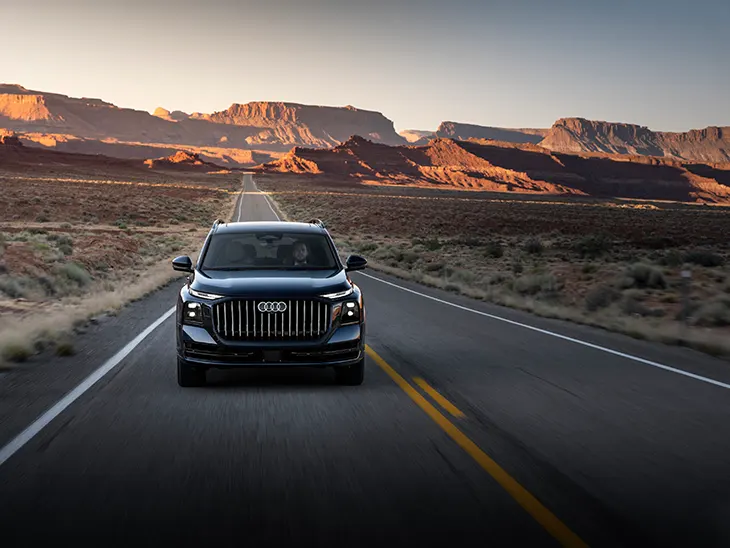
Audi gives the number 9 to an SUV for the first time with the new Q9, the largest vehicle the company has ever produced. The full size model extends Audi’s range above the Q7 and puts cabin space, passenger comfort and digital technology at the center of its flagship role.
CARS
At 5.31 meters long, 2.21 meters wide and 1.81 meters tall, the Q9 carries a substantial footprint. A 3.14 meter wheelbase creates room for three rows and seven seats as standard. An optional six seat configuration replaces the middle bench with two individual electric seats. Audi equips every second row seat in the seven seat version with child seat mounting points, and passengers can fold each third row backrest separately at the push of a button. Audi also introduces automatic doors with obstacle detection, remote control through the myAudi app and an electric soft close function.
Audi places one of the Q9’s defining features above the passengers. Its standard panoramic sunroof covers over 1.5 square meters, making it the largest roof of its kind Audi has ever installed. Drivers can open or tilt the glass, and optional switchable transparency controls glare. Audi also offers roof illumination that follows the selected ambient lighting color.
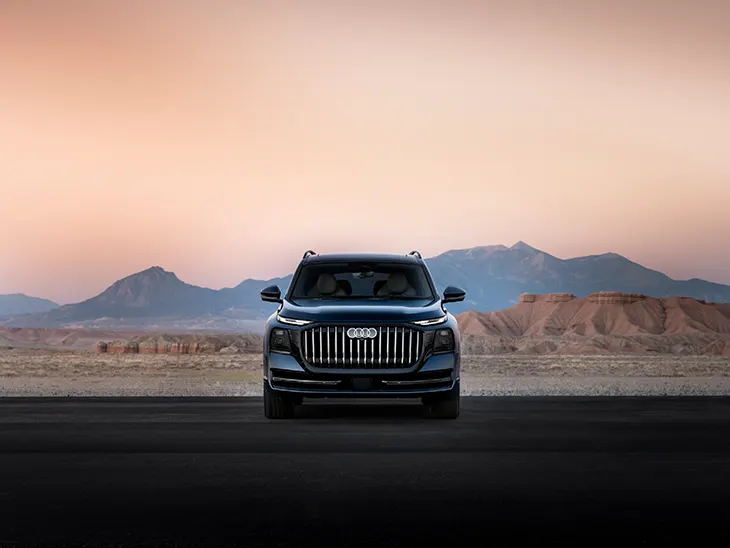
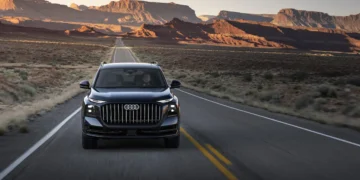
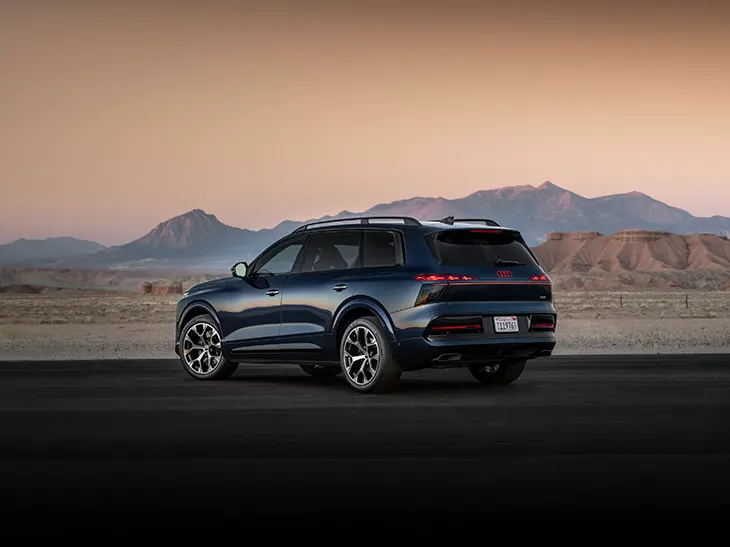
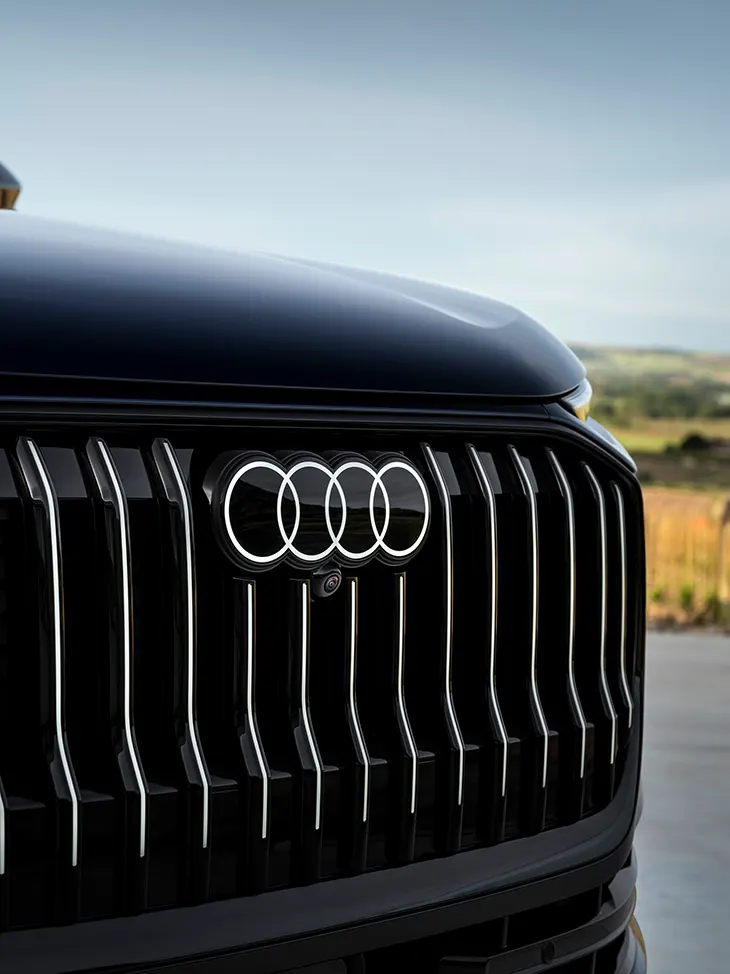
The exterior gives the Q9 an upright, formal profile. The standard advanced line uses vertical bars in the Singleframe grille. The optional S line sharpens the front and rear treatment. Wheel options range from 20 to 23 inches. A long roof, large rear doors and an extended rear overhang communicate the space inside and emphasize the SUV’s scale.
Lighting technology gives the rear its most distinctive feature. Audi uses third generation digital OLED rear lights and forms the curved outer panels from ultra thin glass. Their shape follows the body and improves visibility from wider angles. Advanced turn signals can project a stylized indicator onto the road at night. Digital Matrix LED headlights use a micro LED module to deliver precise illumination and expanded guidance functions.
The Q9 also introduces Audi’s adaptive driving assistant plus with hands free operation on designated highway sections in Germany, the United States and Canada. At speeds up to 130 km/h, the system manages steering, acceleration and braking. The driver retains full responsibility and must stay alert. A driver monitoring camera tracks head and eye movement, and emergency assist can slow the vehicle and bring it to a controlled stop when the driver fails to respond.
At launch, Audi will offer the Q9 in Germany with a 3.0 liter V6 diesel producing 220 kW, or 299 PS, and 630 Nm of torque. Selected European markets will also receive a 180 kW version. MHEV plus technology adds up to 18 kW of electric support, and Audi pairs both engines with an eight speed tiptronic gearbox and permanent quattro all wheel drive. Adaptive air suspension comes as standard. Optional all wheel steering helps reduce the turning circle at low speeds and improves stability on faster roads.