


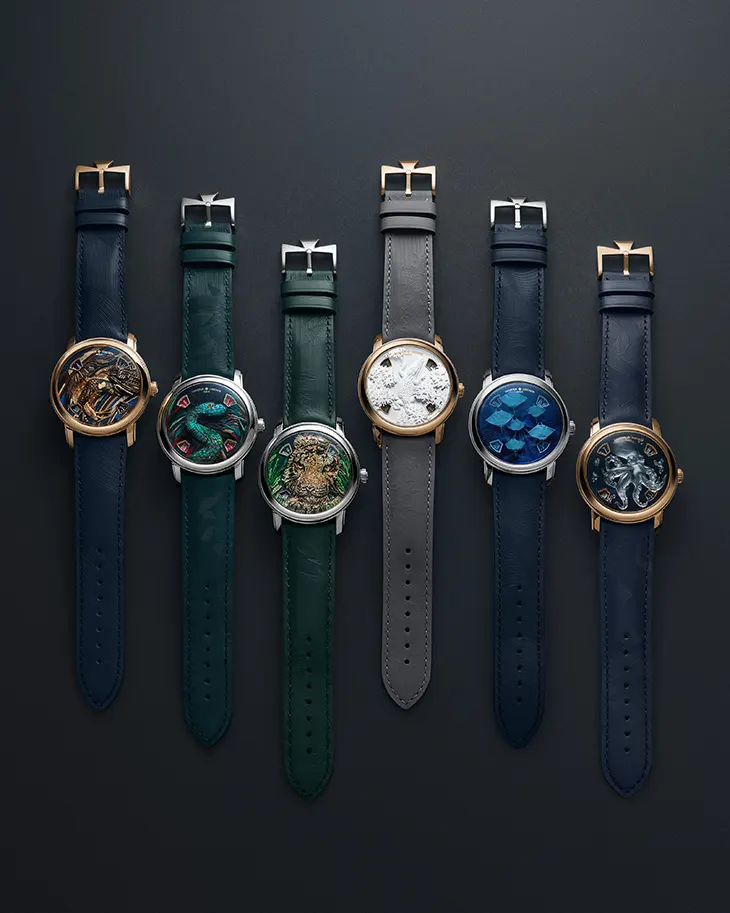
Vacheron Constantin presents Métiers d’Art Tribute to the Animal Kingdom, a series of six concept watches created through its One of Not Many Crafts Programme. The initiative invites artisans from disciplines rarely associated with watchmaking to adapt their techniques to the dimensions and technical demands of a functioning watch.
WATCHES
Each watch interprets wildlife through a different medium. Featherwork, glass sculpting, micro-origami, gold embroidery, paper sculpting and wood marquetry define the six dials, with the animal kingdom providing a common source of inspiration.
The project builds on Vacheron Constantin’s long involvement with decorative arts including guillochage, engraving, enameling, gem-setting and high watchmaking. The Maison also works with cultural institutions including the Louvre and The Metropolitan Museum of Art while supporting artistic education and the transmission of specialist skills.
For the One of Not Many Crafts Programme, artisans had to rethink familiar techniques at an extremely reduced scale. Each 42-millimeter case allows roughly four millimeters between the dial and sapphire crystal, forcing artists to develop new tools, materials and methods.
The Calibre 2460 G4 supports this approach through peripheral displays for hours, minutes, day and date. Four apertures positioned around the dial leave the central surface available for artistic work. Each watch also features a specially designed 22K gold oscillating weight engraved with motifs inspired by artisans’ tools and a dedicated embossed calfskin strap.
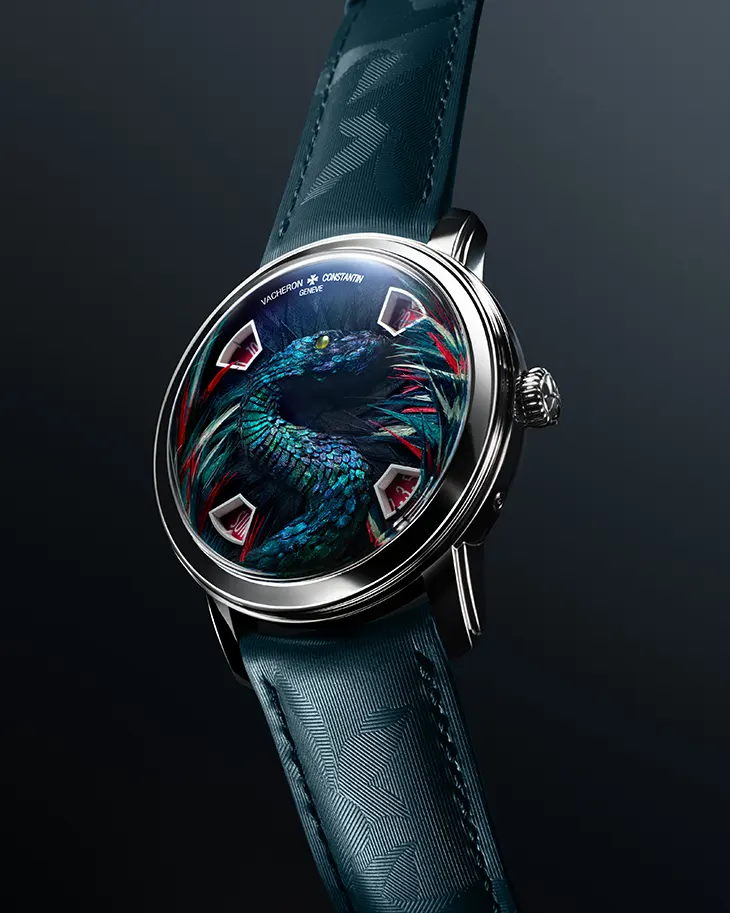
The Feathersnake uses featherwork to create an imaginary serpent across the dial. More than 200 tiny pieces cut from seven rare Lophophore feathers form the snake, while goose feathers create the surrounding vegetation. Artist Julien Vermeulen developed custom tools to handle elements measuring fractions of a millimeter. The work required around 250 hours including research and prototyping. Vermeulen described the project as his first experience working with Lophophore feathers and at such a microscopic scale.
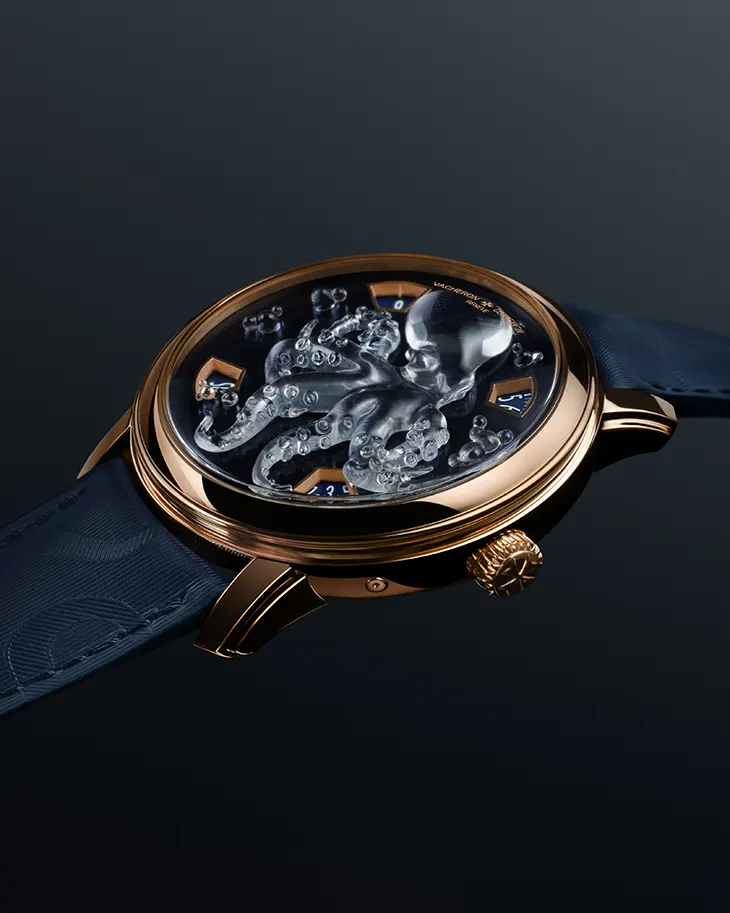
Glassoctopus features a transparent glass octopus rising only 3.5 millimeters above a dark blue hand-guilloché gold base. Simone Crestani developed a new method for building the creature from tiny glass rods, shaping each section gradually with tungsten tools. The development process lasted more than a year.
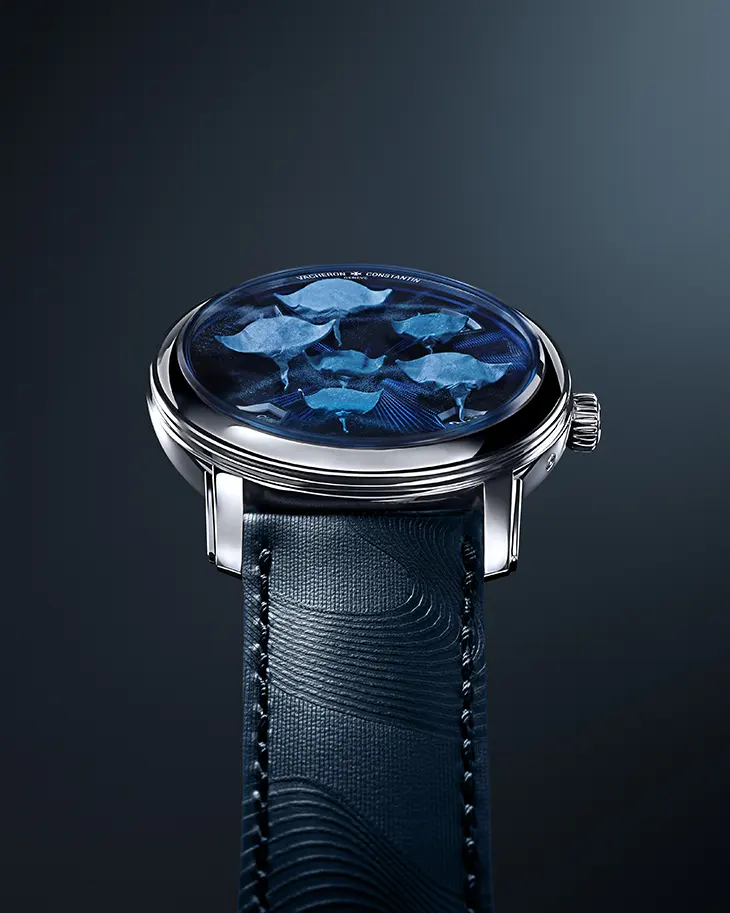
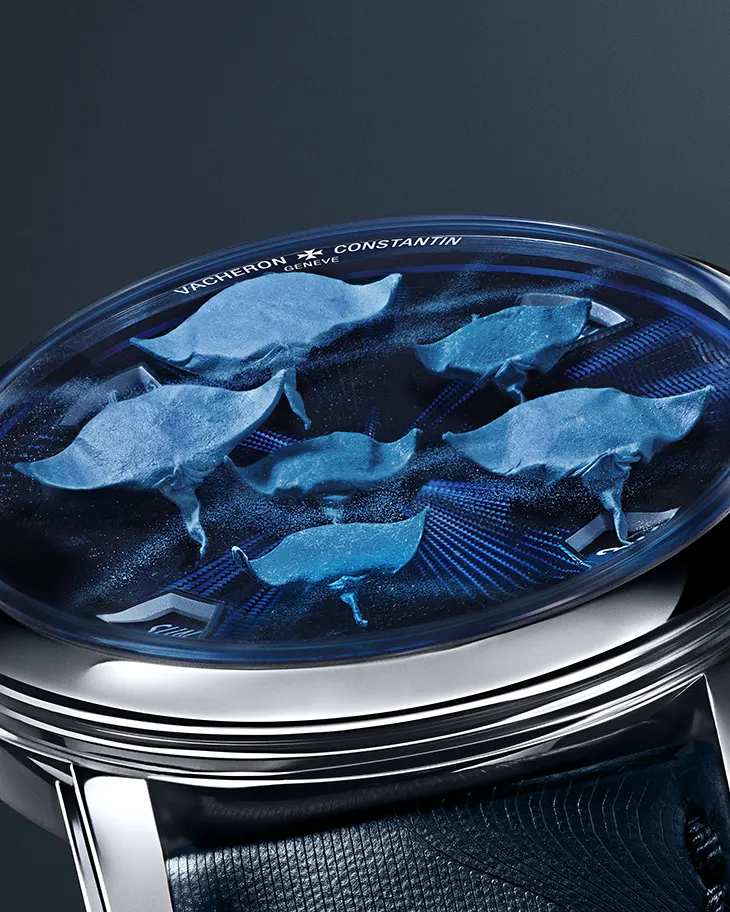
For Oraygami, Anya Midori created miniature manta rays from hand-colored Japanese paper. The rays measure between five and ten millimeters and sit on fine brass stems above a deep-blue dial. Midori invented a new folding sequence specifically for the project and developed her own dyeing process.
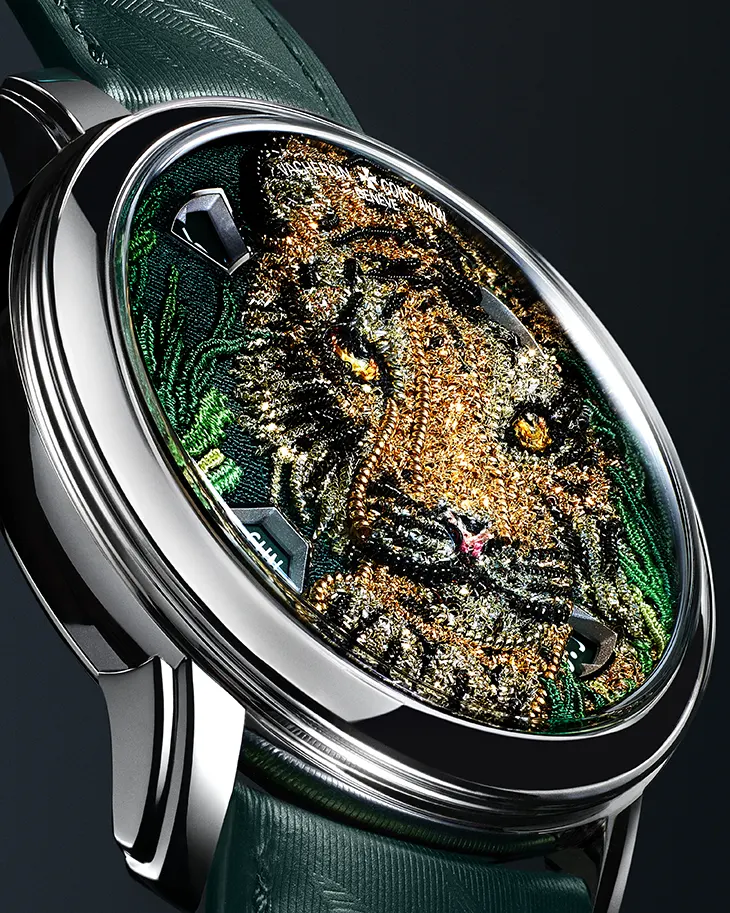
Tigerbroidery uses gold embroidery to depict a tiger moving through dense vegetation. Laura Baverstock worked with 9-karat yellow and white gold wires, ceramic-coated black wires and Japanese silk. The final dial required approximately 210 hours of work.
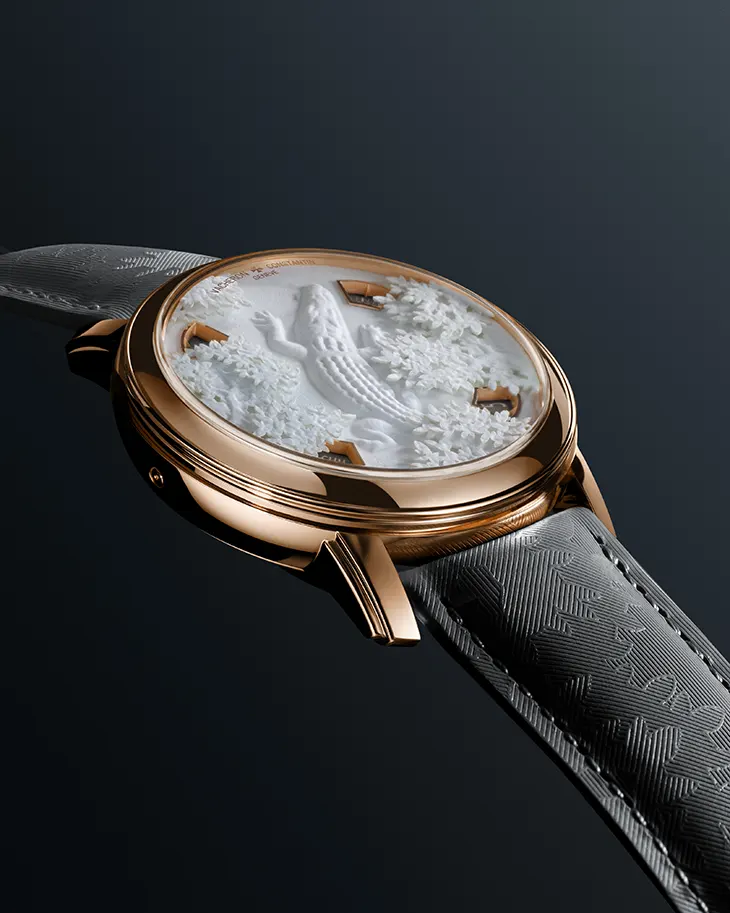
Marianne Guély created Papercroc from white cotton paper using embossing, laser cutting and hand assembly. Heated brass matrices produced the crocodile’s scales and surrounding foliage within a composition measuring only three millimeters in height.
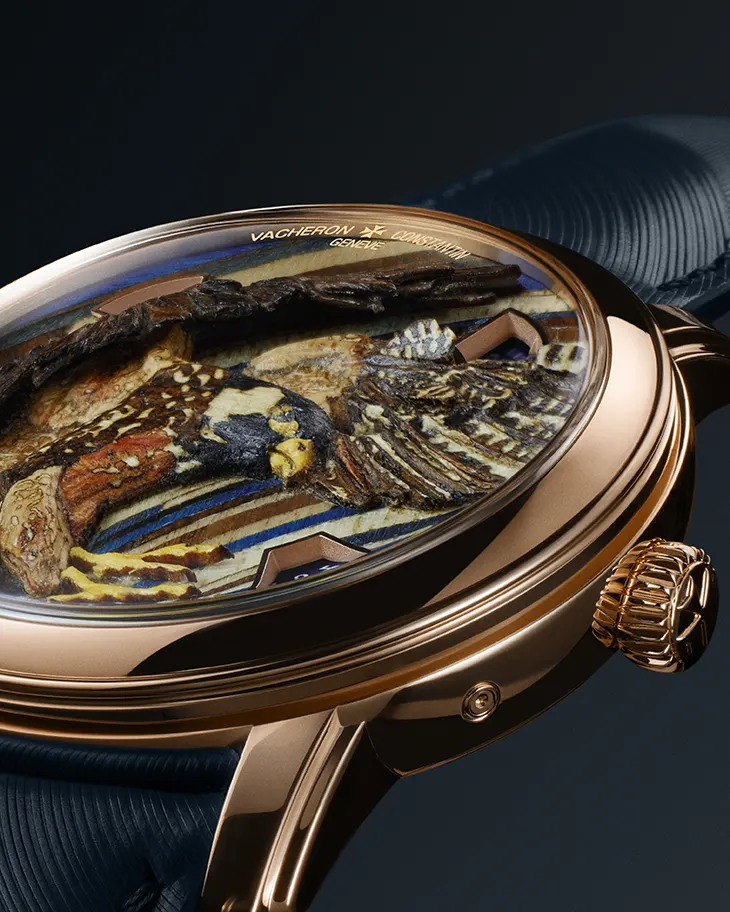
Woodenwings completes the series with a falcon made from twelve wood species. Anna Le Corno combined circular marquetry, sculpted layered marquetry and a specially developed feather-by-feather construction method to give the bird depth within the confined dial space.
Across all six watches, Vacheron Constantin uses miniaturization as a testing ground for techniques rarely seen in horology, allowing each artisan to reconsider the possibilities of their own practice through the demands of watchmaking.