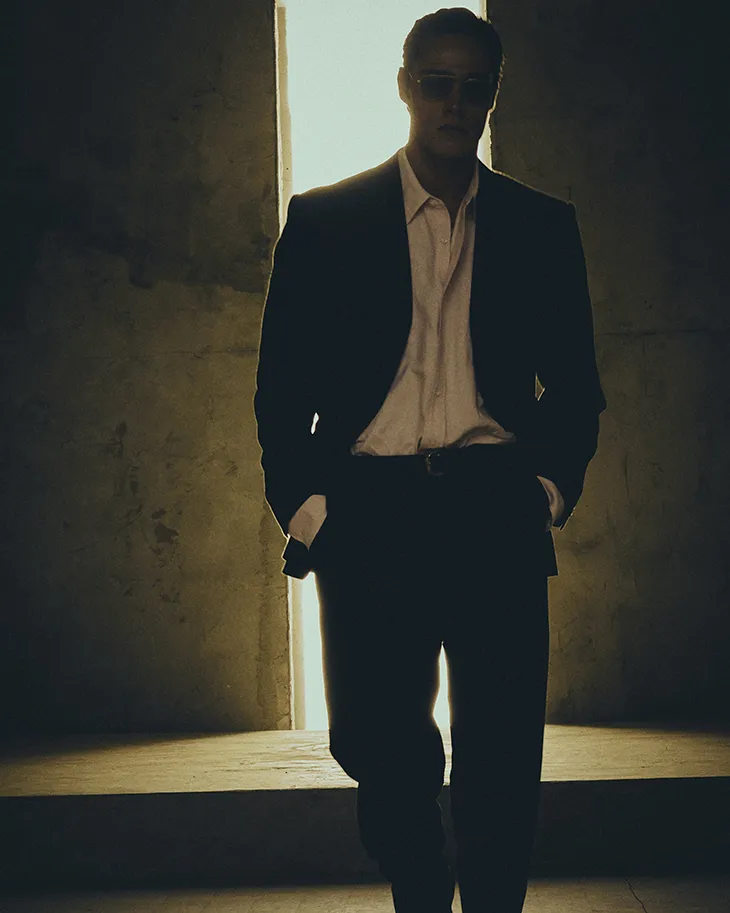



Max Esmail takes Mies van der Rohe as the starting point for God Would See It, his Spring Summer 2027 collection. The title refers to the architect’s decision to clad the unseen brick firewall of the Seagram Building in bronze because, as he explained, “God would see it.” Esmail translates that principle into clothing by giving hidden seams, internal structures and supporting layers the same attention as the exterior.
SPRING SUMMER 2027
The collection treats garments as architecture for the body, with construction determining the final silhouette. Esmail works with virgin wool, cashmere, silk, leather, Super 200’s Cerruti cloth and industrial hardware, assigning each material a distinct function. Fabrics supply weight, texture and surface, while hardware supports the underlying structure.
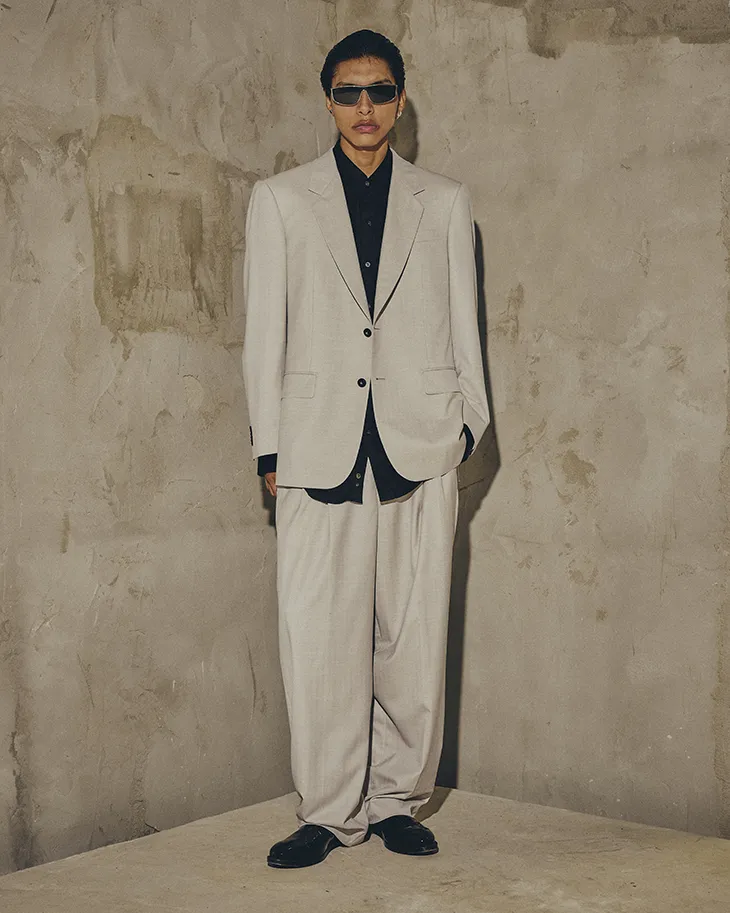
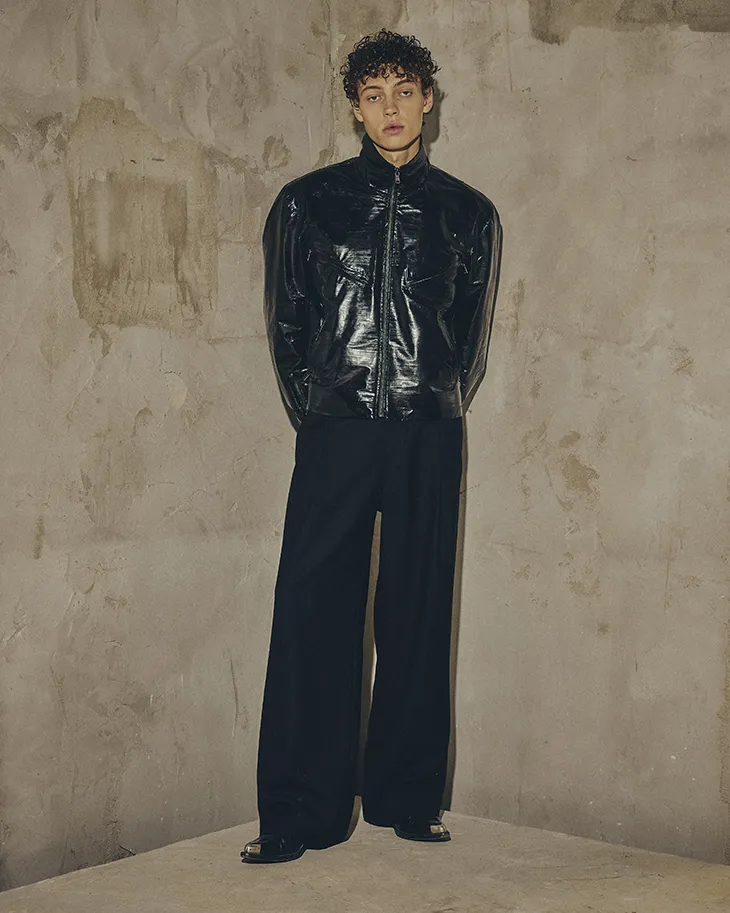
The looks extend that idea through sharply different proportions. Wide trousers appear repeatedly beneath compact jackets, bombers, tailoring and longer outerwear. A glossy black zip jacket with a high collar meets floor-skimming black trousers, while another look pairs a cropped dark jacket with a pale blue shirt and similarly generous pants. Tailoring follows the same elongated line through cream and dark suits with broad trousers and simple shirting.
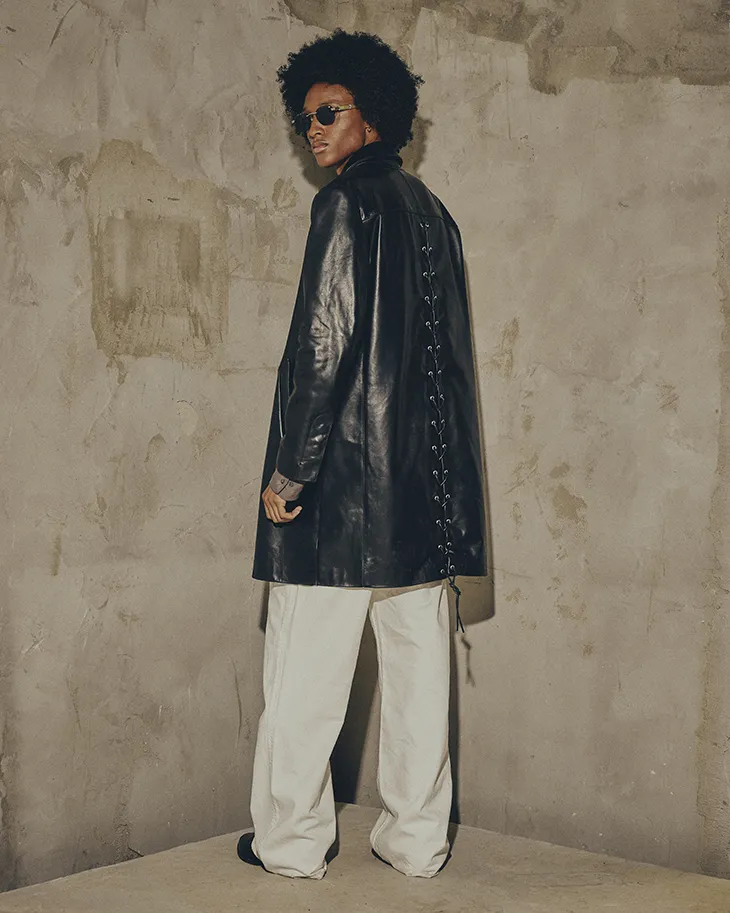
Hardware becomes visible in several pieces. A black high-neck jacket uses repeated metal eyelets and fastenings along the front and sleeves, while a long black coat introduces lacing down the back. These elements make the construction part of the surface and connect directly with Esmail’s emphasis on the parts that hold a garment together.
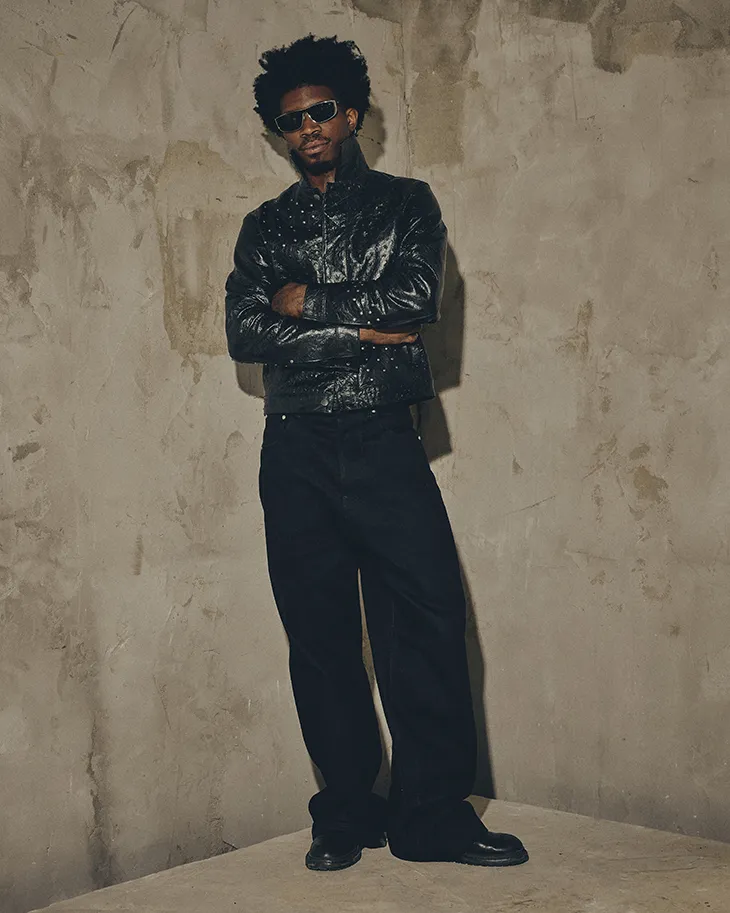
Outerwear ranges from glossy black jackets to longer coats and leather-heavy layers. One black jacket combines glossy sleeves and lower panels with a darker upper section over navy tailoring. Another look pairs a long dark coat with a white shirt and extremely wide black trousers. A white jacket and matching trousers introduce a lighter counterpoint, finished with a dark collar and pale knit underneath.
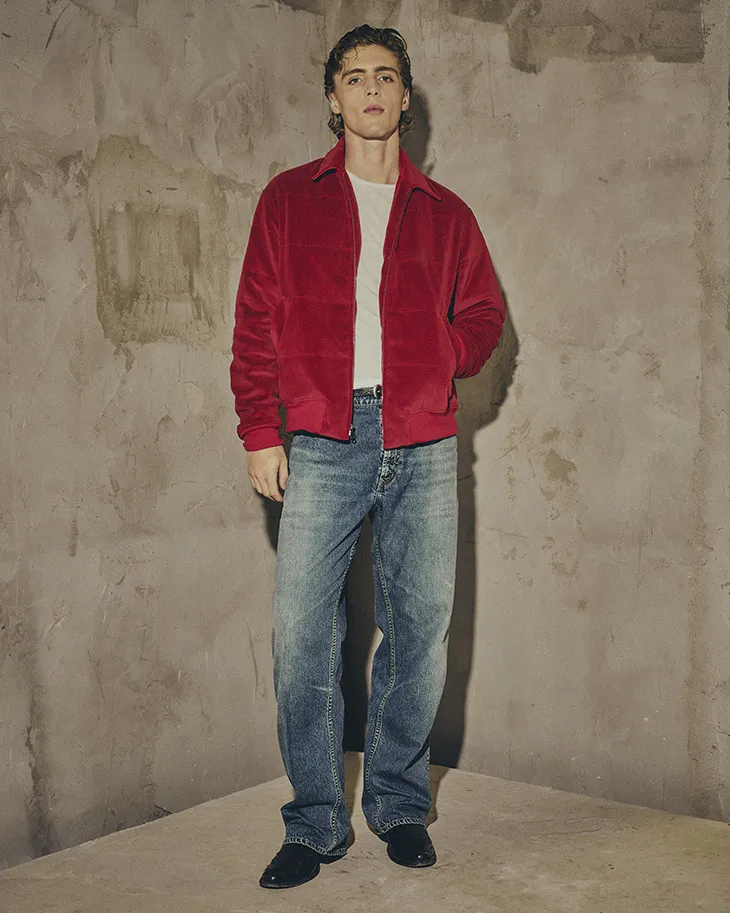
Color remains concentrated around black, navy, cream and white, with selective shifts into pale blue, washed denim and red. A bright red padded jacket worn with faded jeans provides the strongest departure from the darker tailoring, while several looks use sunglasses and low-profile footwear to keep attention on proportion and surface.
God Would See It ultimately ties Esmail’s architectural reference to the practical construction of clothing. The collection lets seams, hardware, internal support and material choice dictate how each garment takes shape, bringing the logic behind the clothes directly into their visible form.