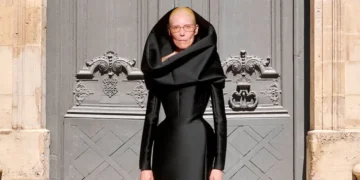



When Jaden Smith fronted a Louis Vuitton womenswear campaign in 2016, the reaction was significant enough to feel like a turning point. Thom Browne had been sending men down the runway in pleated skirts for years by then. Harry Styles wore a gown on a Vogue cover in 2020 and the debate rolled around again, as if the question of whether men could wear a skirt had never been asked before. Each time, the coverage treated it as a provocation from the top, something fashion was doing to men rather than something men were doing for themselves.
That framing was always incomplete. The more interesting story was happening away from the runway, across online communities, where a generation of young men was assembling a wardrobe the industry had not designed for them and, for a long time, did not notice. By the time any of it reached a showroom, the look was already finished.
Where the Look Came From
Menswear has a long habit of borrowing from the women’s floor and pretending otherwise. Hedi Slimane’s skinny tailoring at Dior Homme in the early 2000s narrowed the male silhouette dramatically. Rick Owens, Yohji Yamamoto and Comme des Garçons Homme Plus put men in draped, skirted and layered shapes long before it was a talking point. Marc Jacobs wore a kilt. Kanye West wore a leather Givenchy skirt on tour in 2011, prompting a wave of discussion about men and skirts.
None of that created a widely accessible version of the look. The garments were expensive, rare, and presented as concept. A different route brought the style into everyday wardrobes: young men buying ordinary women’s clothes at ordinary prices and working out how to wear them together.
The Anatomy of the Silhouette
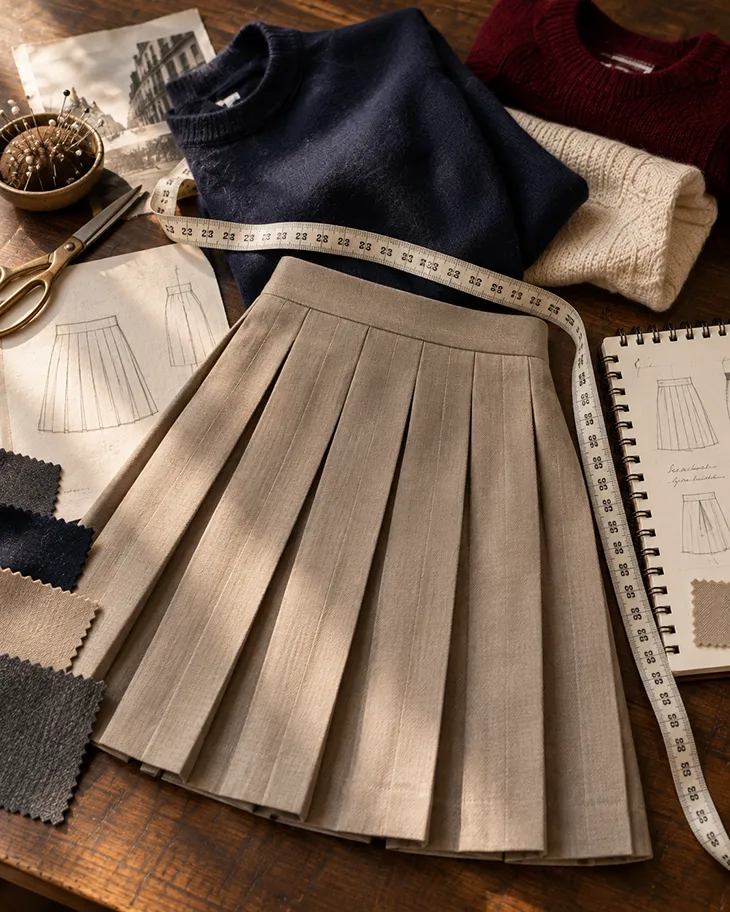
The aesthetic that emerged has a name its wearers use freely and outsiders often misread. Its components are not new, and almost all of them were bought from the women’s section of fast-fashion chains or from Japanese and Korean online retailers.
The core pieces
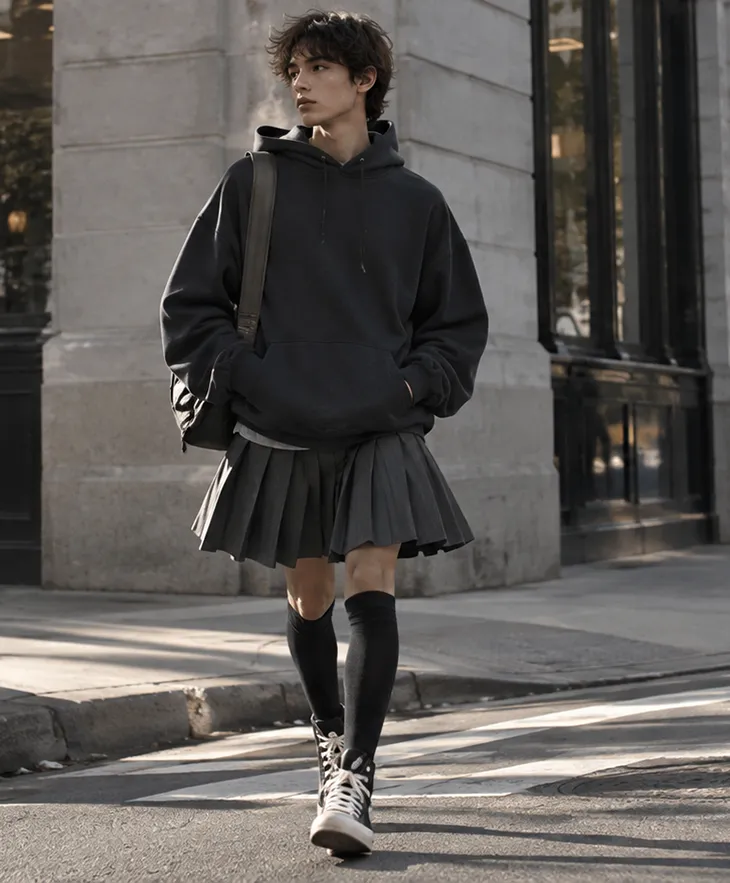
- Pleated miniskirts, usually tennis or school-uniform cut, in black, plaid or pastel
- Thigh-high socks or over-the-knee stockings, worn with a gap of bare thigh below the hem
- Oversized hoodies or sweatshirts, sized up two or three steps so the hem sits near the skirt hem
- Cropped sweaters and cardigans for the alternative, more fitted version of the look
- Sneakers rather than heels; platform Converse, Fila and Demonia are the recurring choices
- Details borrowed from Japanese street fashion: sailor collars, maid-style aprons, cat-ear beanies
What makes it a look rather than a pile of clothes
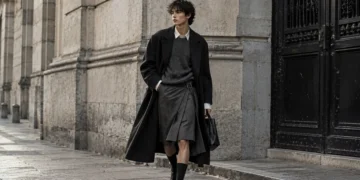
What is new is the combination, and the fact that it was being assembled by men themselves, without a designer dictating the formula. The result is recognisable at a glance: feminine hemline, masculine proportions, with the clothes treated as part of an everyday wardrobe rather than a costume. The pieces may have come from the women’s department, but the styling belongs to the wearer.
How It Spread
It grew the way streetwear grew in the 1990s, through images passed hand to hand. Where streetwear had skate videos and magazine scans, this had TikTok, Discord servers and a handful of Reddit communities where fit checks were posted, critiqued and refined into something like a shared grammar. A silhouette that looked chaotic to outsiders was, inside those spaces, governed by fairly strict rules about hem length, sock height and how much the hoodie should swallow the skirt.
The platforms mattered because they solved the problem the runway never could. A Thom Browne skirt tells you nothing about how to wear a skirt if you are nineteen, live in a suburb, and have never seen another man in one. A thousand fit-check posts from men with your build and your budget tell you everything. The knowledge transferred sideways, not downward.
The Sizing Problem Nobody Solved
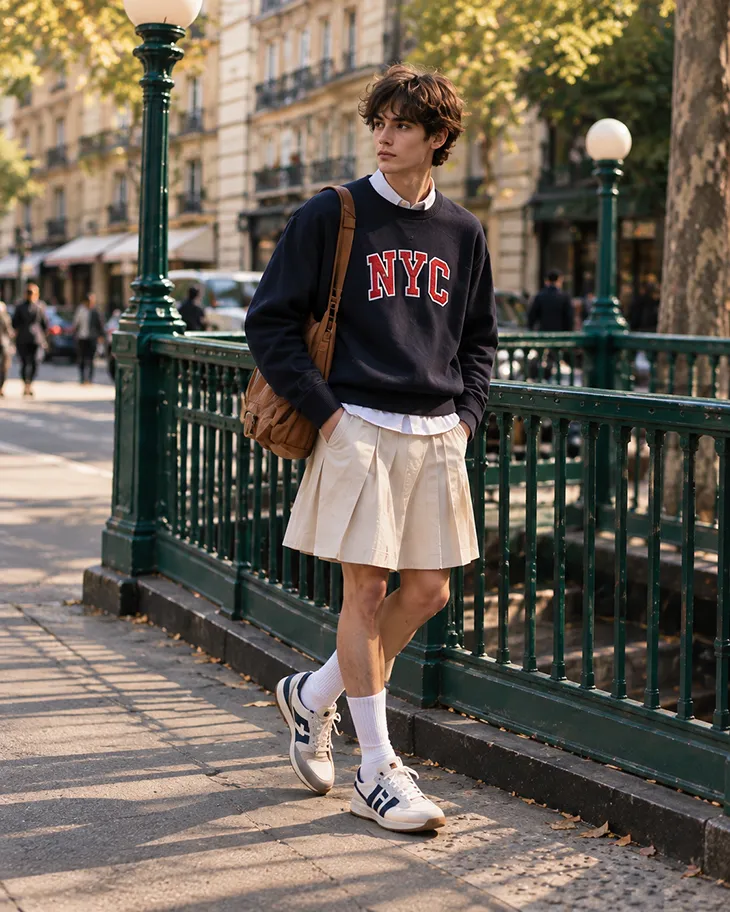
The women’s-department origin created a practical obstacle that the runway version never had to face. A model in a Thom Browne skirt is wearing a garment cut for his body. A young man buying a pleated skirt online is guessing whether a women’s medium will close over hips that were never in the size chart’s reference population.
Why women’s charts fail men
Men’s waists sit higher, hips run narrower, shoulders run wider and the torso is longer, and none of that is reflected in a chart written for women. For years the workaround was trial and error, and returns. The communities built their own knowledge base of which brands ran large, which fabrics forgave a broader waist, how to convert a men’s inseam into a women’s size, and more recently a handful of specialist online stores such as FemboyBox have started publishing size charts written for men’s proportions. It was folk expertise, accurate and unevenly distributed, and it was the single biggest barrier to entry. The clothes were cheap. Getting them to fit was not. For the majority of shoppers still buying from mainstream chains, that problem remains unsolved, and it is the part of this story the industry could most easily fix.
What the Industry Is Borrowing
There is a reflex in fashion to absorb a subculture the moment it becomes visible: cast it, style it, sell a version of it at ten times the price, then move on. Some of that is already happening. Gender-fluid menswear that has run through recent seasons at several houses, the longer lines, the narrower shoulders, the pleated and wrapped lower halves, owes an unacknowledged debt to a look that was fully formed online before any of it reached a showroom.
The more useful lesson is structural. This aesthetic did not need permission and it did not need a designer. It needed sizing that made sense, a place to buy the pieces, and a community to teach newcomers how to wear them. Any brand, at any price point, that solves those three problems earns a loyalty a single campaign cannot buy.
How to Wear It Without Looking Like a Costume
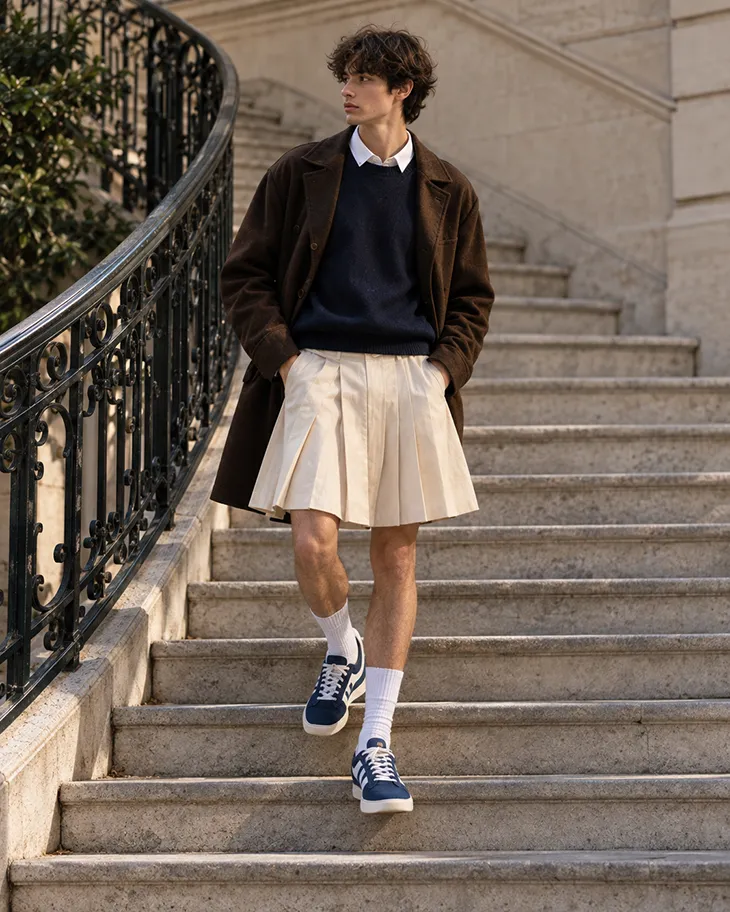
For readers who want the silhouette rather than the sociology, the rules the communities settled on are simple.
- Keep one element oversized and everything else fitted. Big hoodie, short skirt, snug socks. Two oversized pieces and the shape collapses.
- Mind the gap. The bare stretch between sock top and skirt hem is the whole look; too little and it reads as tights, too much and it reads as lingerie.
- Sneakers, not heels. The footwear gives the skirt a more casual, distinctly menswear-oriented finish.
- Buy skirts by waist measurement, not by letter size, and expect to size up once or twice from what the chart suggests.
- Ignore colour rules. Black-and-plaid and pastel-and-white are both established; what matters is proportion.
Menswear has spent a decade congratulating itself for putting skirts on the runway. The men wearing them on the street were never waiting for that. They were waiting for the skirt to fit.