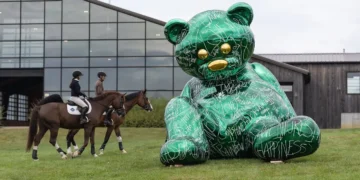



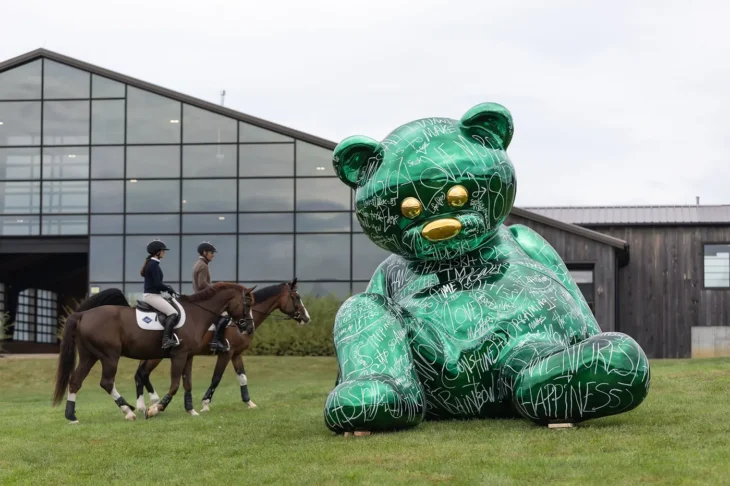
Show jumping is not where most design editors expect to find a compelling spatial argument. Yet a day at Highlands, the 1,000-acre equestrian campus in Amenia, New York, made a persuasive case that the sport’s social infrastructure, the tents, lounges, bars and viewing terraces where an audience actually spends its hours, is a legitimate canvas for architects and artists. In its third year, the Hudson Valley event has quietly built a cultural program with enough conviction to pull collectors, designers and car enthusiasts into the same field.
We made the trip on a crisp autumn day, about ninety minutes north of Manhattan, and came back convinced that the most interesting thing happening at Highlands was not on the course.
Horse Show That Behaves Like a Cultural Campus
The calendar tells part of the story. The Autumn Invitational ran for twelve days, beginning with the Discovery Land Co. Masters, an international FEI jumping competition, followed by the Highlands Cup, anchored by Major League Show Jumping, and closing with the Bridlemont Concours, a gathering of rare automobiles and motorcycles. Sport supplies the rhythm, but the organizers have layered hospitality, culinary programming, wellness and a curated art component on top, so that the grounds read less like a venue and more like a temporary village with its own taste level.
That ambition matters for anyone who follows design and art. Collectors are, by definition, people who travel for experiences that combine provenance, craft and community. An equestrian weekend upstate, with objects worth studying and conversations worth having between rounds, fits that appetite far better than a conventional fair booth ever could. The pairing of horses, vintage cars and contemporary sculpture is less random than it sounds, since all three are cultures built around lineage, restraint and obsessive refinement.
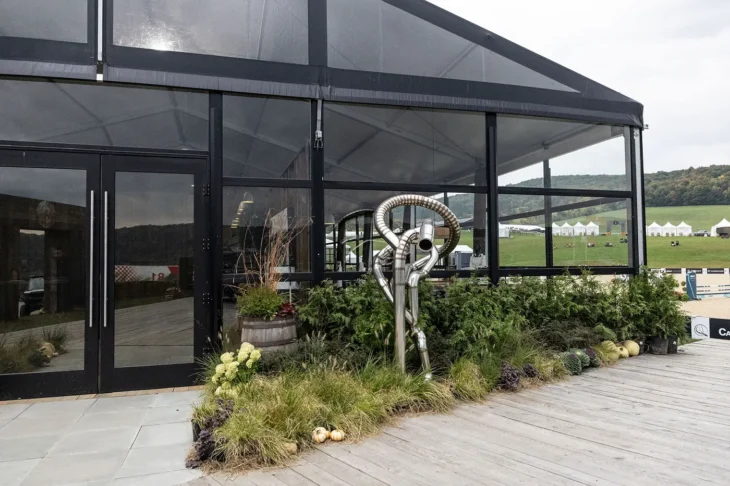
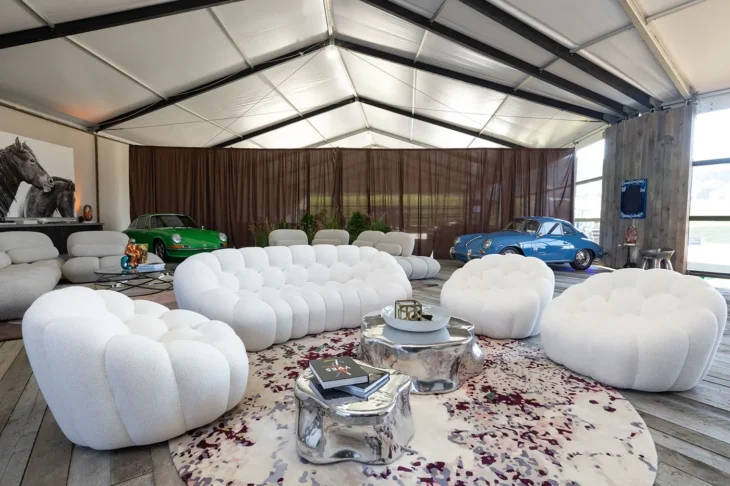
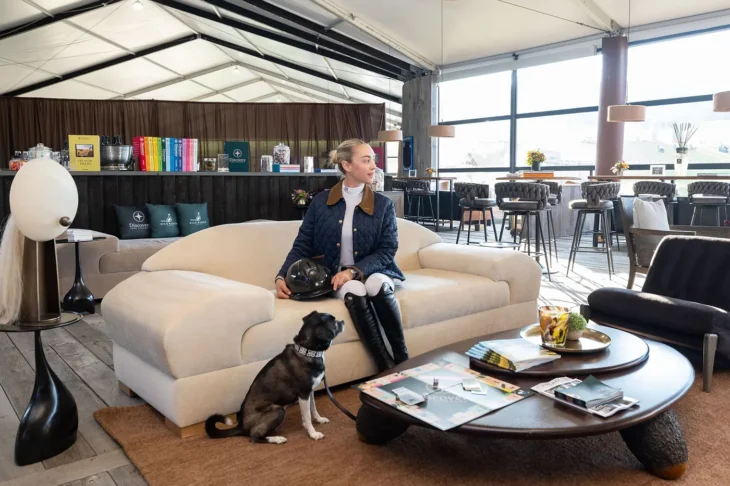
Andrew Franz and the Architecture of the Tent
The anchor of the design program is Andrew Franz, the New York architect appointed Design Curator of The Legacy Club. Temporary event architecture is usually a polite exercise in white fabric and rental furniture. Franz treated it as a real commission. He shaped the club’s dining room, private lounges, wellness spa and additional hospitality areas so that each reads as a distinct room with its own atmosphere, rather than one long marquee divided by stanchions.
His reference point is unexpected and well chosen: the rustic modernism of early twentieth-century France, a period when designers were pairing humble, tactile materials with disciplined geometry. Translating that sensibility to a Hudson Valley field is a clever cultural transfer. French rural modernism and American agrarian landscape share a vocabulary of honest surfaces, so the dialogue between them feels earned instead of themed. As Franz put it, the goal was a space that “feels like it truly belongs here.“
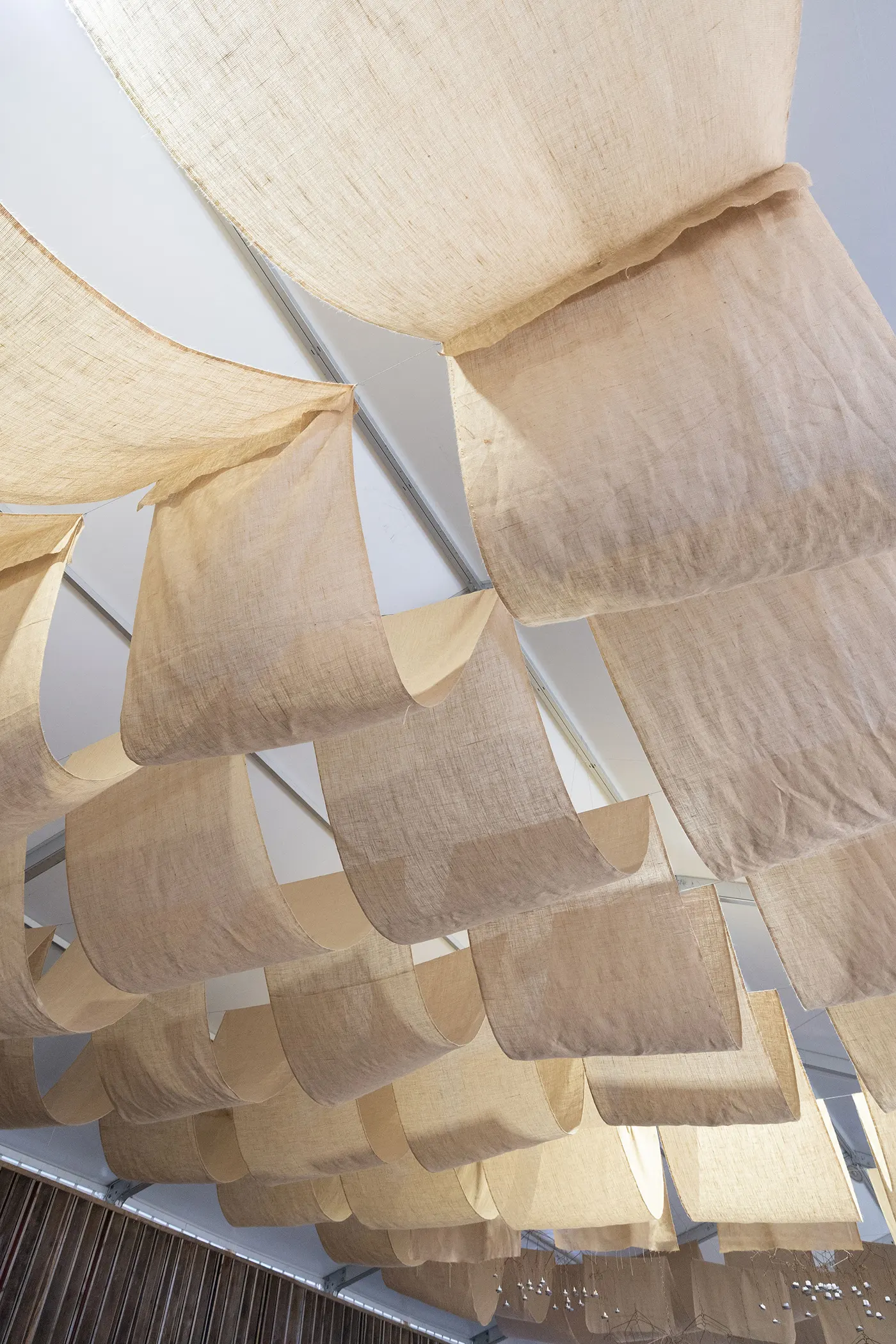
The execution leans on a few confident moves. Sculptural screened walls and dividers break the tent volumes into intimate zones and control sightlines without sealing anyone off. Bars and counters are clad in a turbine-like pattern and topped in zinc, a material that ages visibly and rewards touch. The result sits deliberately between high and low, refined and rugged, and it avoids the trap of luxury events that mistake polish for personality. Zinc and sculpted cladding inside a tent is a small act of defiance against the disposable.
Furniture as Curatorial Voice
A room is only as convincing as what you sit on, and the furnishings here were selected with a collector’s eye. Pieces from Aguirre Design, Roche Bobois, Found Collectibles and Rosemary Hallgarten shared floor space with the horsehair work of Cavalo, designed by Jessica Gersten. Mixing a heritage French house with boutique studios and collectible dealers gave the interiors a layered, lived-in quality, as though the rooms had been assembled over years rather than installed over days.
The Cavalo collection deserves a particular mention. Horsehair is an old upholstery and weaving material with a long association with equestrian craft, and using it in VIP lounges at a horse show closes a conceptual loop without becoming a gimmick. The material is tactile, slightly unruly and visually distinctive, which is exactly what a seating piece needs if it is going to hold its own against a landscape of this scale. It is rare to see a furniture line so naturally matched to its context, and it demonstrates how brand partnerships at events work best when the object genuinely belongs to the story.
Sébastien Léon: Glass, Sound and Speed
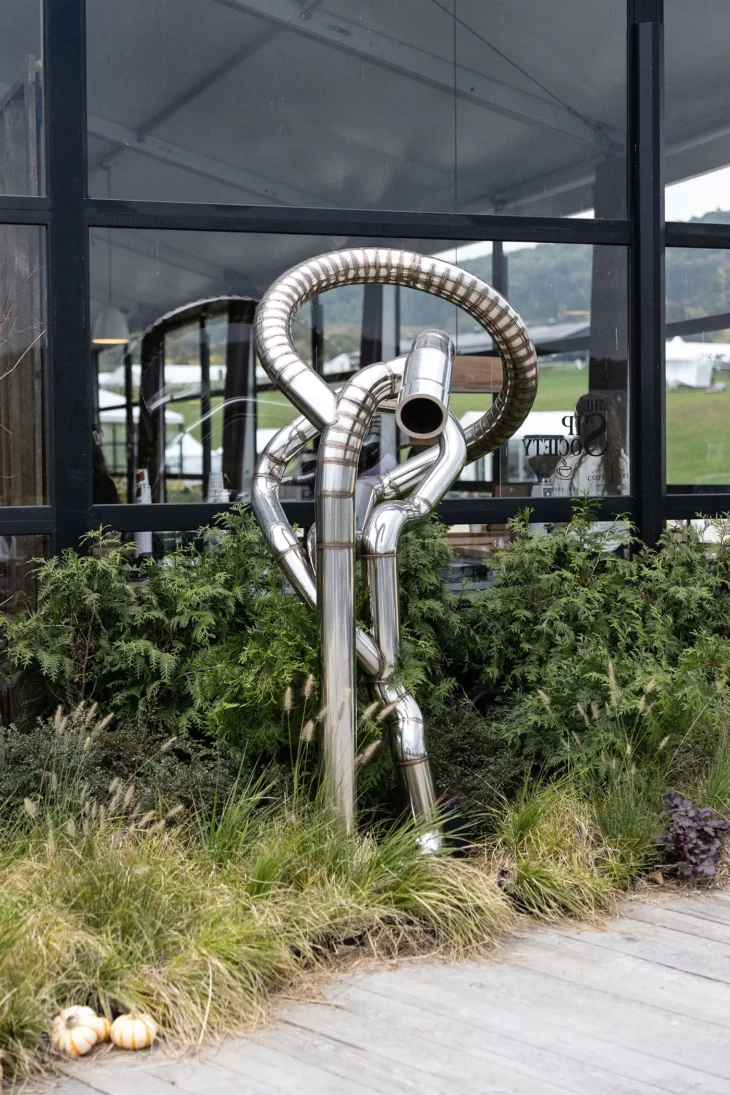
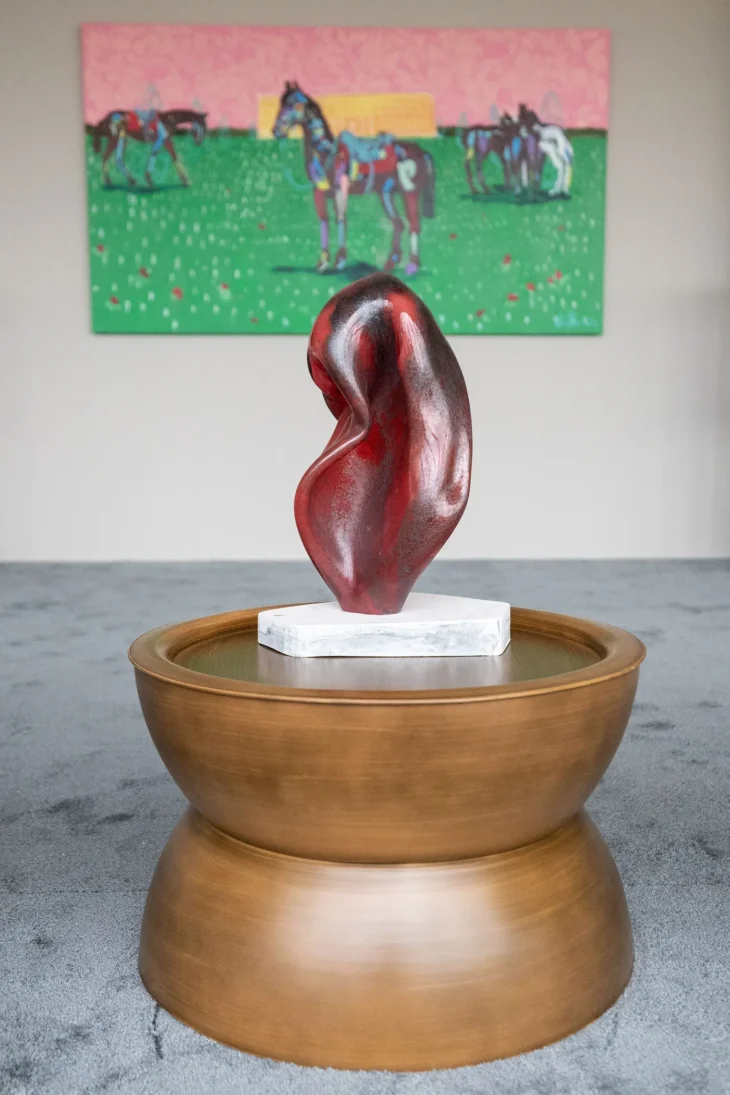
If Franz supplies the architectural spine, Sébastien Léon supplies the most compelling artistic idea. For the Bridlemont Concours, the artist introduced a new series of matte-colored glass sculptures keyed to the paint colors of the vehicles on view. It is a smart curatorial reversal: instead of placing sculpture beside cars as decoration, he lets the automobiles dictate the palette, so the glass becomes a kind of chromatic echo of the field.
Matte glass is the interesting decision. Glass is typically celebrated for transparency and shine, qualities that automobiles already monopolize with their lacquered finishes. By frosting the surface, Léon softens reflection and shifts attention to color, density and light as it passes through the form. The sculptures feel quieter than the machines around them, which is precisely why they register. Those who followed his show at Ralph Pucci will recognize the same fascination with material behavior, and we explored that earlier body of work in our coverage of Sébastien Léon at Ralph Pucci in New York.
His sound sculpture, The Echoes of Our Dreams, first seen at the NOMAD Hamptons art and design fair, returned in a reimagined form. The new abstract score is composed from the noise of race cars, converting engine roar into something closer to a meditation. It is a neat conceptual loop: the loudest object at the event becomes the raw material for its most contemplative moment. Few installations at a sporting event manage to change how you hear the place you are standing in. This one did.
Painters, Photographers and the Wider Roster
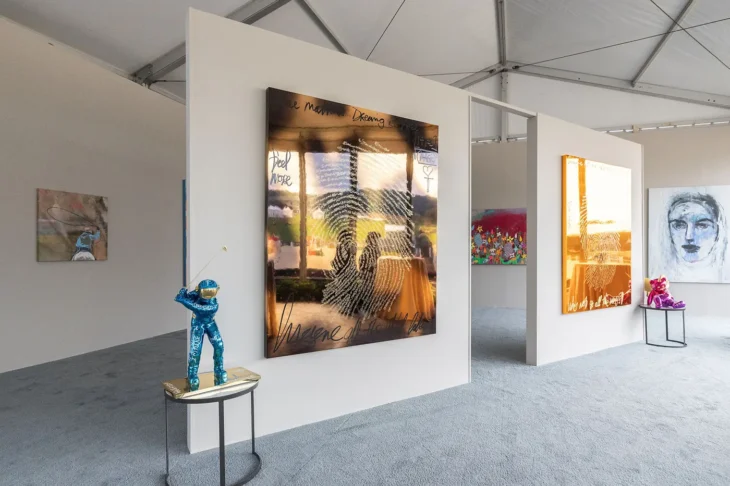
Beyond the two headline names, the program extended to live painting by Bradley Theodore and works by Brendan Murphy. Live painting is a useful format for this kind of audience, since it makes the act of creation visible and gives guests a reason to linger and talk. Placing it within an event otherwise defined by performance and spectacle feels consistent: the canvas becomes another arena where skill is demonstrated in real time.
What the roster signals is range. A figurative street-rooted painter, a sculptor working with glass and sound, and an architect shaping interiors together suggest a curator thinking about different entry points for different visitors, rather than a single aesthetic. That breadth is sensible for a first serious push into the art world, and it leaves room for the program to sharpen in future editions.
Why Collectors Belong in This Field
The strategic logic is worth stating plainly. Collectors are rarely moved by a gallery pitch alone. They respond to context, to the sense that a work was encountered at the right moment in the right setting, ideally alongside peers who share their curiosity. Highlands offers that context in abundance: a landscape, a sporting spectacle, curated hospitality and a guest list assembled around shared values of craft and rarity. Add the Concours, where collectors of a different kind already gather around exceptional objects, and the overlap becomes obvious. A person who values a coachbuilt chassis is a short conversation away from valuing a hand-finished glass form.
There is also the matter of pacing. Art fairs compress viewing into hurried aisles, while a day at an equestrian grounds invites slower attention. Between rounds, you wander. You sit in a Cavalo chair, run a hand over a zinc bar top, notice a sculpture’s color against a car’s paintwork. That unhurried exposure is closer to how people actually fall for objects, and it is a quiet advantage over more formal commercial formats.
What Still Needs Sharpening
A fair assessment also notes the limits. Temporary architecture, however thoughtful, remains temporary, and the real test for Highlands is whether its design commitments deepen over successive years instead of resetting each autumn. The art program would benefit from more explicit interpretive framing, so that visitors understand how each installation relates to the grounds and to one another. And the collector proposition will mature only if the event creates clearer pathways between encounter and acquisition, whether through gallery partners, commissions or structured studio introductions.
Those are the problems of a promising project, not a flawed one. The foundations are strong: a patient presenter in Silo Ridge Field Club, an architect with deep local knowledge from designing estate homes in the surrounding community, and artists willing to make work specifically for the setting.
Find more in our gallery:
Highlands has understood something many luxury events miss: audiences now expect cultural substance, not just hospitality. By commissioning a real architect, inviting artists to respond to the site, and aligning furniture houses with the narrative, the organizers produced a weekend that rewards design-literate visitors. For anyone who tracks the intersection of sport, interiors and collectible art, it is worth a place on next autumn’s calendar, and worth the drive upstate.