


Emma (Xinyan) Gu approaches curating through objects, spatial storytelling, and the relationships people develop with the material world. A graduate of the Royal College of Art’s Jewellery & Metal programme, Gu founded Nest – A Lab to create opportunities for emerging artists and underrepresented creative voices. Her curatorial practice brings together experimental materials, installation, and critical perspectives, often using unconventional exhibition spaces to explore questions of identity, production, and everyday life.
INTERVIEWS
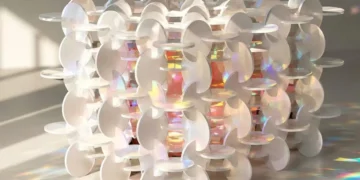
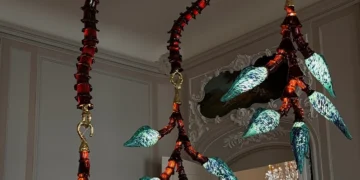
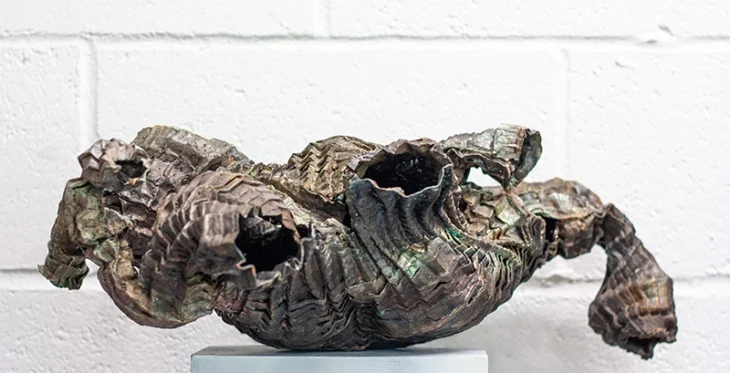
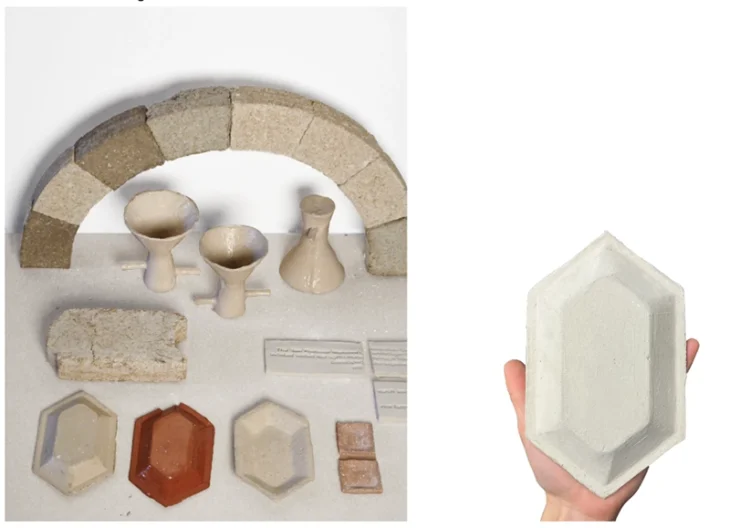
Her latest exhibition, Future Matter: Crafting Sustainable Futures, took place at London’s ASC Handbag Factory from September 12 to 14 as part of London Design Festival 2026. Bringing together nine artists and designers, the exhibition examined the life of an object, from the sourcing of materials to its production, use, and potential transformation. Works incorporating reclaimed wood, experimental bio-materials, repurposed gemstones, and traditional craft techniques offered different approaches to responsible making. With academic guidance from Dr. Sofie Boons, the project also questioned how we assign value to materials and the objects they become.
For DSCENE, Gu discusses her transition from making objects to curating exhibitions, the challenges of building an independent art platform in London, and the ideas behind Future Matter. She also reflects on supporting emerging artists, the financial realities of independent exhibition-making, and her ambition to bring contemporary art into everyday life through objects that people can use, keep, and develop personal connections with.
Your MA is in Jewellery & Metal at the Royal College of Art, and you later moved into curating. What pulled you from making objects toward organising exhibitions? – For me, objects are more than physical things. What fascinates me is their character in our lives and their relationships with their creators, users, and viewers.
My own art practice, including my studies at the Royal College of Art, was quite concept-oriented. I found it necessary to find ways for these concepts to actually be communicated. To me, exhibition-making is about building a physical context to present ideas to people in the most accessible way possible.
On the other hand, early-career artists need exposure. They need space and a stage to make their voices heard. After graduating from art school, I thought, “I’m not going to wait for opportunities to find me. I’m going to be someone who creates opportunities, for others and for myself.”
I’m not going to wait for opportunities to find me. I’m going to be someone who creates opportunities, for others and for myself.
Your first curatorial role was an internship at UI Art Center in China. What did that early work teach you about artist communication and project administration? – It actually wasn’t a curatorial role. It was a visual design internship in the branding department. But it was my first opportunity to gain some access to and first-hand experience of exhibition-making.
I launched my first independent curatorial project in May 2025: Behind the Closed Doors at Safehouse 1 in London. It was a group show featuring 28 artists in a two-storey Victorian house. I created a standardised information sheet to make sure all the artwork details were accurate and could be managed efficiently. I also contacted the artists one by one to learn about their practices and discuss the best ways to present their work. I think my genuine passion resonated with them, and we developed good relationships.
It’s crucial to balance the artists’ ideas and needs with the practical conditions. I would say that, in any communication, respect and mutual understanding are key.
How would you describe your curatorial voice to someone who has never seen your work? – I would say it’s grounded in fluidity and marginalised identities. I use narrative threads to establish the context, then use humour and situational elements to question established norms.
You describe your practice as “spatial storytelling.” What does that mean in practice when you are planning how visitors move through an exhibition? – That’s a really good question. When I’m planning the visitor journey through an exhibition, I consider what people will see first and how that initial encounter might make them feel.
Most of the time, I have a clear theme and standpoint that we want to communicate through the exhibition. So, I first work out a narrative progression.
For example, in Behind the Closed Doors, the narrative moved from public to private spaces, exploring family relationships and the conflicts around domestic labour. In A Room for Unbecoming Women, it moved from bodily experiences towards symbolic expressions. In our most recent exhibition, Future Matter, the focus was on how sustainability can be considered throughout the entire process of object-making, from sourcing materials, including recycled materials, to material development, craft innovation, and making the most of existing resources.
I arrange and connect the different themes in the space like scenes in a story, while also considering visual breathing room and balance.
You say you want to support emerging and underrepresented voices. How does that show up in how you select artists and structure opportunities for them? – Most of the artists we work with are at an early stage in their careers. We open up opportunities to current students and recent art graduates. I visit degree shows and independent art spaces to discover amazing work, then invite artists to collaborate with us or take part in our exhibitions.
For some of our shows, such as When Light Breaks the Dark at Bomb Factory Holborn in June 2026 and A Room for Unbecoming Women at the Handbag Factory in August 2026, I also set specific criteria for participating artists. For When Light Breaks the Dark, I looked for artists with experiences of fluid identities. For A Room for Unbecoming Women, participants needed to identify as women or queer and speak from feminine experiences.
So, depending on the theme of each show, I not only make sure we include diverse voices but also develop exhibitions specifically around the communities we want to represent.
Nest–A Lab was created to build a nest for artists whose practices are experimental or rooted in marginalised experiences.
Your practice spans installation, material experimentation, and critical writing. Which of these do you return to most, and why? – For me, it’s installation and critical writing. What drew me into the art world was conceptual art. I’m very much someone who believes that ideas matter more than form, so the form should serve the idea.
I like creating installations because I’ve realised that physical presence and the experiences it brings are irreplaceable. It’s a more direct response through the human body. You can experience art through different senses, whereas thoughts and ideas alone can remain purely rational.
What is the hardest lesson you have learned from producing independent exhibitions in London? – I think it’s definitely the financial stress and the problems that follow. Funding can take a long time to secure and process, which delays execution and can lead to unexpected changes to the plan.
In some cases, I’ve had to cover expenses personally, whether to pay people who contributed to a project or to cover other costs.
We’ve faced challenging cash-flow situations, which have made me think seriously about whether our curatorial practice and platform can be sustainable in the long term.
So, I’m currently exploring whether art merchandise could be a viable commercial collaboration to help sustain our exhibitions and potentially generate income for the artists and curatorial team.
What gap in the London scene did Nest–A Lab set out to fill, and how does it differ from the institutions it works with? – Nest–A Lab was created to build a nest for artists whose practices are experimental or rooted in marginalised experiences. We’re particularly interested in artists with a strong point of view who are at an early stage in their careers.
Around 70% of the artists we’ve worked with are East Asian, whose work can bring a different sensibility to the local UK art scene and market.
We also love presenting exhibitions in alternative spaces, such as residential spaces, outdoor locations, and repurposed buildings.
We have a relatively focused audience and a particular interest in bringing sculpture and objects together with other forms of visual art to create a cohesive narrative. In our exhibitions, objects and artworks can function as products, symbols, witnesses, or even storytellers.
How did Future Matter begin, and why did you choose the object as the connecting thread? – Future Matter began with a question: are there alternative materials or ways of working that could make production more ethical, especially in this age of mass production and amid the climate challenges we’re facing?
I travelled to the Netherlands earlier this year and was impressed by how environmental considerations, such as plastic recycling, were put into practice in everyday life. When I returned to the UK, I thought this was something we would love to bring together and present during this year’s London Design Festival.
Objects have always been a central interest in my own practice, in different forms. They are our companions in this material world; we coexist with them. Home objects and wearable objects, in particular, have such intimate relationships with people. They carry emotions and memories, witnessing our everyday lives.
I think objects are a great medium for helping audiences feel that an exhibition is connected to their own lives, rather than being too theoretical or philosophical, as contemporary art can sometimes seem.
How did you select the nine exhibiting artists, and what did you look for in how each one works with material? – The nine artists and designers have quite diverse practices, but they share a common goal of exploring more sustainable ways of working with materials.
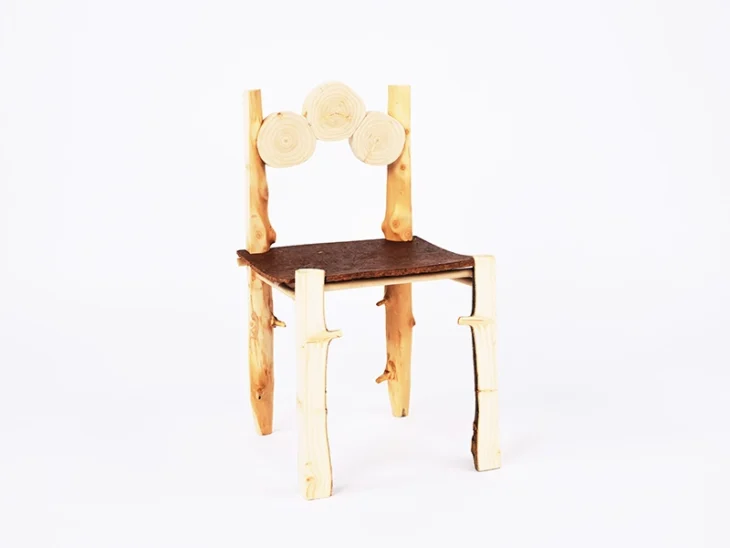
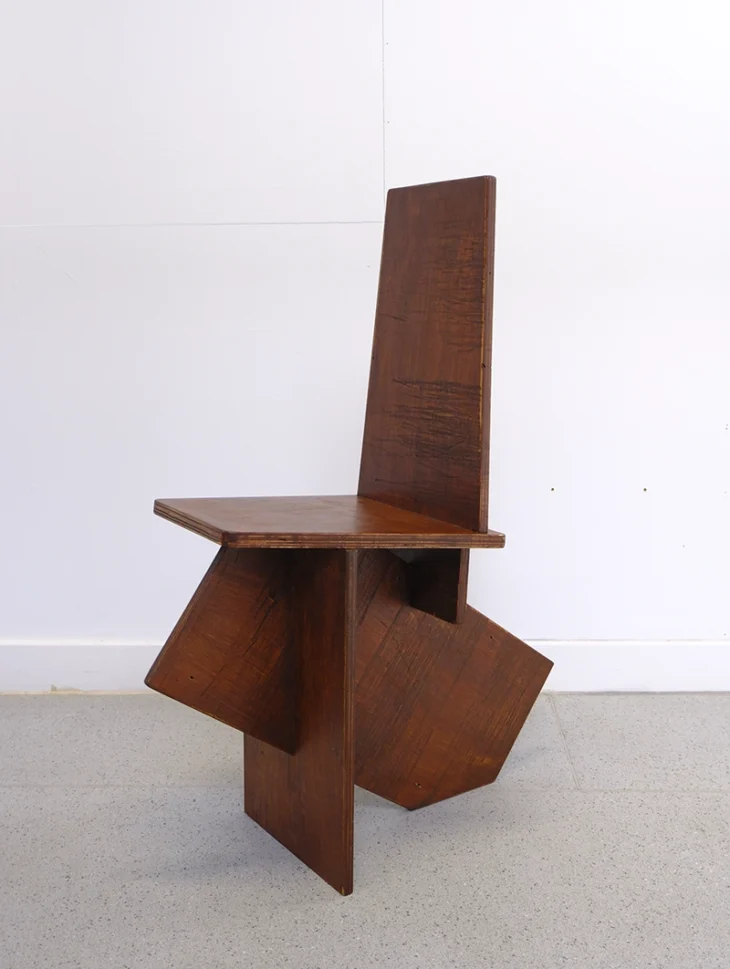
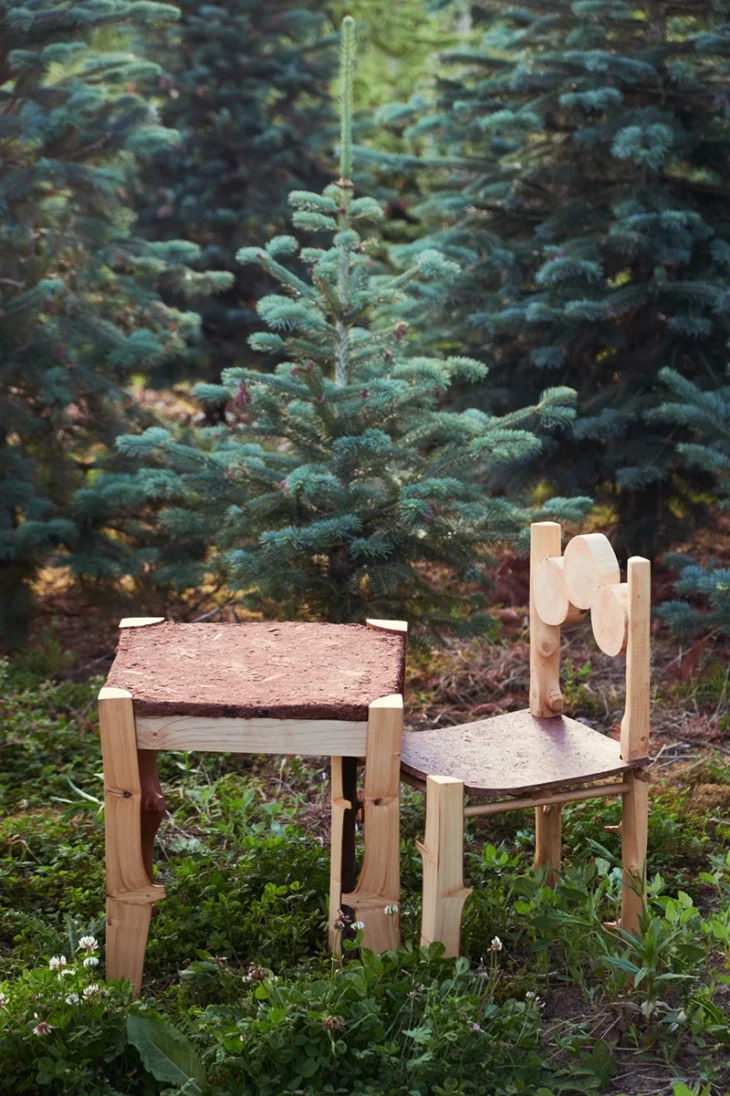
I looked at how they put these ideas into practice, from sourcing materials to the making process. For example, Abe Yantin made his Haldane Chair from reclaimed plywood salvaged from the historic Haldane Building at the Glasgow School of Art. Anna-Maria Stavreva’s Christmas Tree Collection explores how discarded Christmas trees can be transformed into furniture.
I wanted to bring together different approaches to material reuse and craft, and show how we can rethink the resources already available to us.
Nest–A Lab was created to build a nest for artists whose practices are experimental or rooted in marginalised experiences.
What role did Dr. Sofie Boons play in shaping the exhibition’s material and intellectual direction? – Sofie kindly provided academic guidance, introduced us to different approaches to sustainable practice and material processing, and shared her own research.
Her work explores lab-grown crystals and how they might challenge traditional jewellery industry assumptions about material value. She also gave an artist talk during the opening, introducing the possibilities and challenges of these emerging technologies.
I think her contribution brought a more research-based perspective to the exhibition and encouraged us to question how we define the value of materials.
The show placed traditional and emerging materials in dialogue. Can you give one specific pairing of works that made that conversation clear? – Yes. Although the exhibition was organised more into different sections, I think Andrea Dritschel’s Crafting Impermanence I & II and YouJin Seo’s Wish Series would make an interesting contrast.
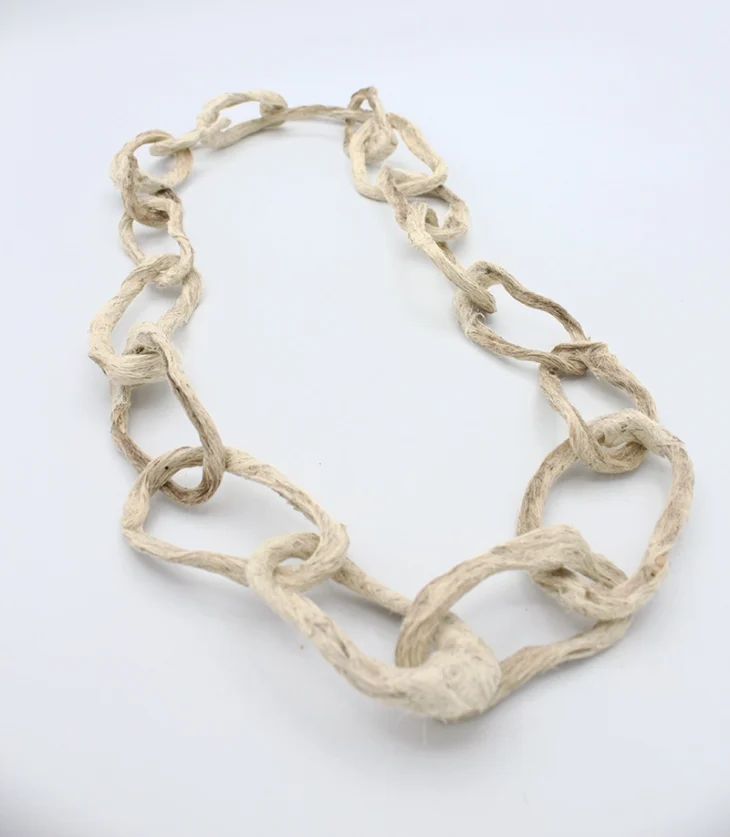
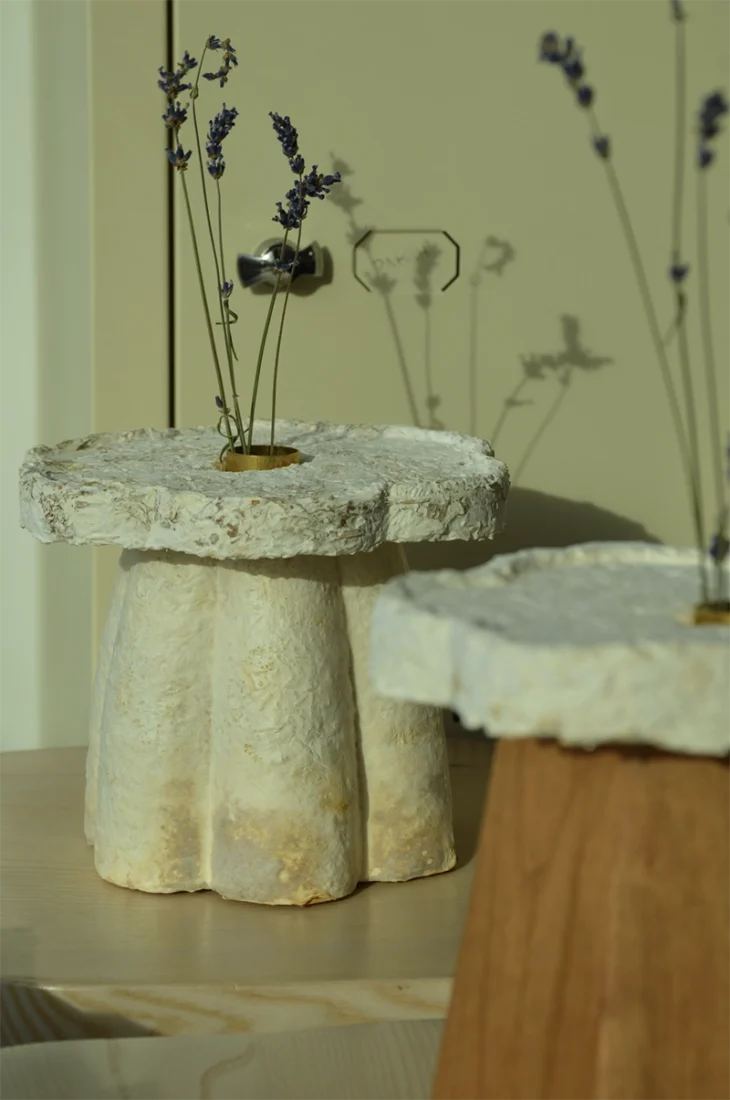
Andrea collaborated with a science lab to develop a bio-wool material. The material is designed to transform, decay, and evolve over time, almost as if it ages alongside the wearer. I think that’s beautiful because the piece embraces change and develops a relationship with the person wearing it, rather than remaining fixed.
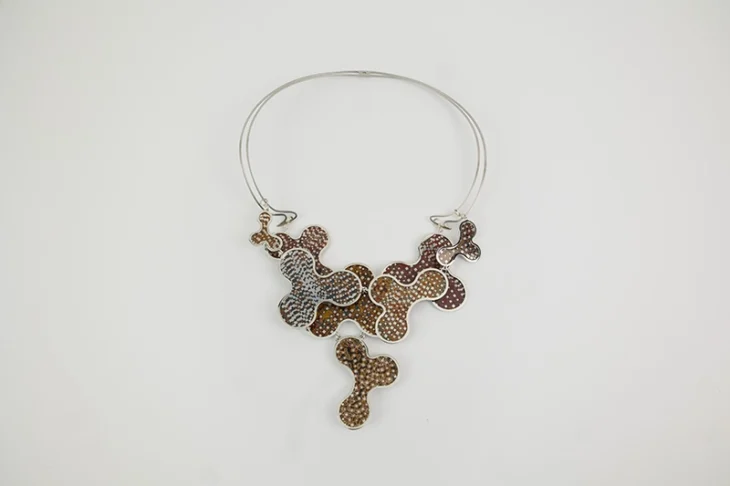
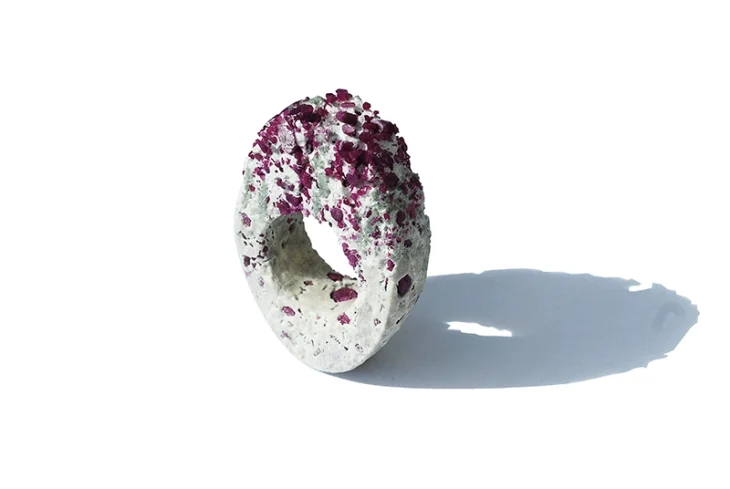
On the other hand, YouJin works with traditional materials such as rock crystal and other gemstones. In her Wish Series, she transforms the traditional ritual of stacking stones to make a wish into jewellery and sculptural forms. She carefully preserves and repurposes fractured gemstone pieces, including material that might otherwise be discarded, giving each fragment a new purpose and meaning.
I like how these two approaches present different ways of thinking about materials and time. Andrea’s work embraces impermanence and transformation, while YouJin’s work explores how existing materials can be reused to carry memories, wishes, and personal intentions. Both demonstrate how the way we work with materials can shape our emotional relationships with objects.
The exhibition was free and ran at ASC Handbag Factory during London Design Festival. What did a former industrial space add to the work, and how did the venue shape the visitor experience? – This was the second time we had worked with ASC Handbag Factory. Its space offered us a relatively clean canvas to work with, allowing us to build our own narrative through the arrangement of the objects and the exhibition layout.
At the same time, the building’s industrial history added another layer to the experience. Presenting work about material reuse and more sustainable production in a former industrial space created an interesting relationship between the artworks and the building itself.
I also think the space made the exhibition feel accessible. Visitors could encounter the works in a physical environment rather than through images or text alone, which was important for a show centred on objects and materials.
We need to value not only the objects themselves but also the resources, labour, and stories behind them.
What do you hope visitors take away about their own relationship to everyday objects, and what comes next for Nest–A Lab? – I hope the exhibition gives people a chance to pay more attention to the objects around them, from the materials they’re made of to their individual character. Ideally, people might spend more time with their objects and build long-term relationships with them, instead of treating them as disposable things. We need to value not only the objects themselves but also the resources, labour, and stories behind them.
For Nest–A Lab, the next chapter is about developing the platform further. We’ll continue curating exhibitions around objects and underrepresented voices, while also exploring collaborations with factories and production teams to develop art merchandise.
We want Nest–A Lab to become a platform that not only curates art exhibitions but also brings art into people’s everyday lives through objects they can use, keep, and build relationships with.
Interview by DSCENE Editor Maya Lane.