
• Latest
How Fashion Designers Turn a Print Studio Into a Signature Look

How Fashion Designers Turn a Print Studio Into a Signature Look

October 21, 2026
Leaving MSCHF: Lukas Bentel on Stories That Outlast Objects

Leaving MSCHF: Lukas Bentel on Stories That Outlast Objects

November 6, 2026
BadBo

Bad Bunny and adidas Bring Two BadBo Styles on November 12

November 6, 2026
Isabel Marant Defines the High Winter 2026 Wardrobe

Isabel Marant Defines the High Winter 2026 Wardrobe

November 6, 2026
Nike Football Cleats

Closer Look at New Nike Football Cleats for Ohio State and Oregon

November 6, 2026
Julianne Moore Dances Into the New Year With Bottega Veneta

Julianne Moore Dances Into the New Year With Bottega Veneta

November 6, 2026
Martine Rose Steps Into the Creative Director Role at Balenciaga

Martine Rose Steps Into the Creative Director Role at Balenciaga

November 6, 2026
DSCENE STYLE STORIES: Wenli Zhao & Shaz Dakhlaoui by Charlie Grant

DSCENE STYLE STORIES: Wenli Zhao & Shaz Dakhlaoui by Charlie Grant

November 5, 2026
Louis Vuitton Holiday 2026 Campaign: Five Minutes Before the Grand Departure

Louis Vuitton Holiday 2026 Campaign: Five Minutes Before the Grand Departure

November 5, 2026
Hoka Marni Clifton 11

Hoka and Marni Set November Launch for Clifton 11

November 5, 2026
The Met Reveals the Official Theme for Met Gala 2027

The Met Reveals the Official Theme for Met Gala 2027

November 5, 2026
Why Collectors Belong at a Horse Show: A Day at Highlands in Amenia

Why Collectors Belong at a Horse Show: A Day at Highlands in Amenia

November 5, 2026
Nike Tiempo Kids Of Immigrants

Nike and Kids Of Immigrants Launch Two Tiempo Designs on November 19

November 5, 2026
DSCENE
  • LATEST
  • FASHION
    • Ad Campaigns
    • Collections
      • Spring Summer 2027 Womenswear
      • Spring Summer 2027 Menswear
      • Resort 2027
      • Fall Winter 2026.27 Womenswear
      • Fall Winter 2026.27 Menswear
      • Pre-Fall 2026
      • Spring Summer 2026 Womenswear
      • Spring Summer 2026 Menswear
      • Couture Collections
      • Bridal Collections
      • Capsule Collections
    • Jewelry
    • Lookbooks
    • Street Style
    • Backstage
    • Directory
      • Agencies
        • Creative Talent Agencies
        • Modelling Agencies
      • Brands
      • Photographers
      • Fashion Stylists
      • Hair Stylists
      • Makeup Artists
      • Female Models
      • Male Models
  • SNEAKERS
  • MAGAZINES
    • DSCENE Magazine
    • MMSCENE Magazine
    • EDITORIALS
  • EXCLUSIVE
    • Interviews
    • Exclusive
  • TRAVEL
    • Hotels
    • Restaurants
  • ART
    • Art
    • Design
      • Furniture
    • Architecture
      • Interior Design
  • SHOP
    • ABOUT
No Result
View All Result
DSCENE
No Result
View All Result

How Fashion Designers Turn a Print Studio Into a Signature Look

A studio guide to large format printers, proofing, paper stock, and the print room habits behind fashion campaigns and gallery-ready art.

October 21, 2026
in Design, Fashion
0
Share on FacebookShare on Twitter
Photo ©Daniele Mango for DSCENE

Most lookbooks die in the inbox. Not because the clothes are weak, but because the images arrive looking like everyone else’s. I’ve watched a stylist spend three weeks on a shoot and then hand the retouching to a default preset, and the campaign came back flat, safe, forgettable. The designers who escape that trap usually own one habit: they control the print, not just the file.

That habit starts with hardware. Studios that treat output as part of the creative direction tend to run their own large format printers rather than farming every proof to a lab, because the machine becomes another set of hands in the room. You can hold the color, change the paper, and reprint a poster the night before a show instead of begging a vendor for a rush slot. Here’s what I mean by owning the print, and how a studio builds that system without blowing a season’s budget.

Why Оutput Quality Is a Branding Decision

Walk through any fashion week presentation venue and the walls tell you who printed well and who didn’t. A show backdrop with muddy skin tones under warm light reads as cheap, no matter what the collection costs. A zine with orange-shifted blacks reads as careless. Buyers feel that before they can name it.

Print also carries legal weight most designers ignore until it bites them. If your campaign imagery incorporates a photographer’s work, a collaborator’s illustration, or licensed artwork, reproduction and distribution rights matter. The U.S. Copyright Office spells out how reproduction rights apply to creative work, and a print run is a reproduction. Know what you’re allowed to multiply before you multiply it. So the question isn’t whether you print as a fashion designer. It’s whether your prints look like a decision or an accident.

Paper, Ink, and The Aging Problem Nobody Plans For

Right after choosing a printer, choose your paper with the same seriousness you’d give a fabric. Coated matte holds fine detail and deep shadows, which suits editorial portraiture and dense typography. Uncoated stock drinks ink differently, giving softer grain that flatters textile-heavy still lifes. Glossy finishes pop saturated color but show fingerprints, which matters if a gallery or showroom will handle the prints.

Ink choice shapes longevity too. Pigment inks resist fading better than dye inks, and if you’re producing archival prints, meaning pieces meant to be collected, framed, and kept for decades, materials research is not optional. The Smithsonian Institution has long studied how light, humidity, and material quality affect the survival of printed and photographic works, and its material conservation guidance applies to the same decisions a design studio makes when choosing paper and display conditions. Hang a print in direct sun and you’ve already shortened its life.

My stance: never proof on the cheap paper and then switch to the good stuff for the final run. The color shifts and you’ll chase it for a week. Pick the stock first, calibrate to it, and stay there for the whole project.
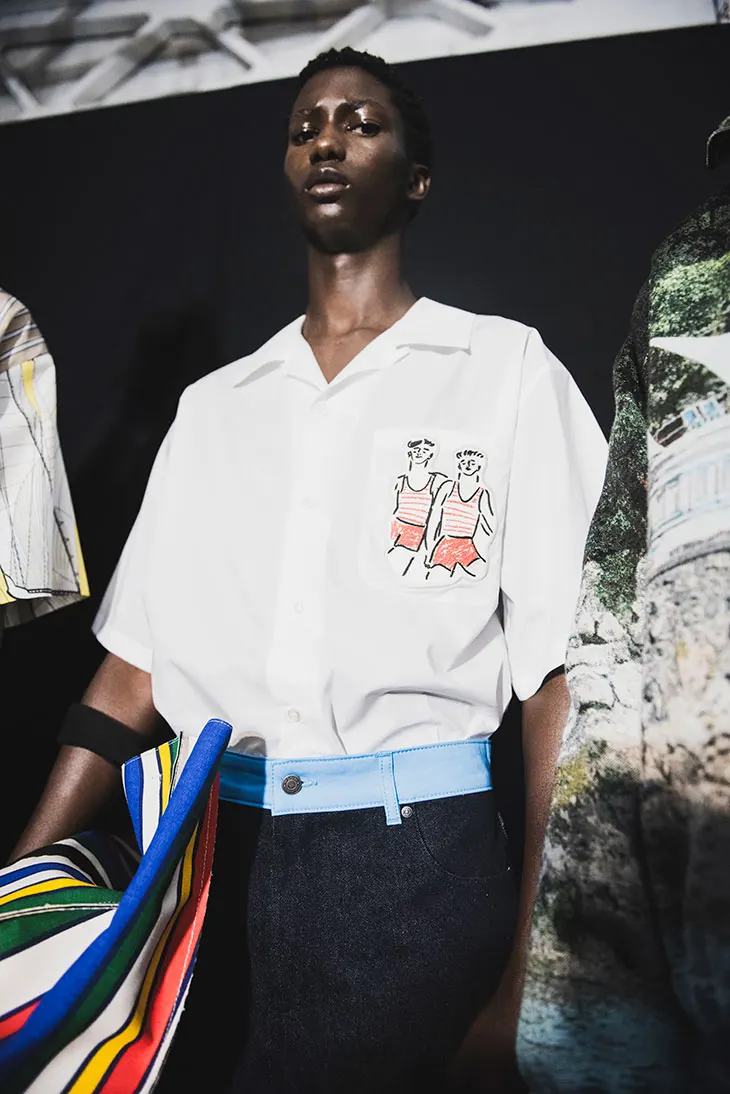
Photo ©Daniele Mango for DSCENE

Setting Up a Studio Print Room Without Wasting Money

You don’t need a huge setup. You need the right setup for your volume. Work through it in this order.

  1. Match the machine to your largest real job. If your biggest output is an A2 poster, a 24-inch printer is plenty. If you produce banners, backdrops, or full-size exhibition panels, you’re looking at 44-inch and wider machines. Buy for the 90th percentile of your work, not the dream project.
  2. Build one profile per paper and lock it. Create a color profile for each stock you use regularly, name it clearly, and stop fiddling. Consistency beats perfection.
  3. Proof at final size, small and large. A thumbnail hides banding. A full-size proof reveals it. Do both.
  4. Track ink and head health monthly. A clogged nozzle ruins a run quietly. Print a test pattern, not a campaign, to find out.
  5. Store finished prints flat and dark. Curled corners and UV exposure undo good printing faster than bad printing ever did.

One more thing outsiders miss: printmaking is a real job with real wages, and the people running these machines aren’t button pushers. According to the Bureau of Labor Statistics, printing and related support occupations employ a substantial share of the manufacturing workforce in the United States, and the skills involved, from color management to press operation, take years to build. If you hire someone to run your studio printer, pay them like the technician they are. You’ll get fewer ruined runs and better color.

Proofing Workflow That Actually Catches Problems

A proof is not a print you make after the decision. It’s how you make the decision. Here’s the sequence I’d use for any campaign with a physical component.

  • Calibrate your monitor and set a soft-proof view before you touch a file.
  • Print a test strip of skin tones, fabric detail, and typography together, on the actual stock.
  • Check it under the light it will live in, not just your desk lamp. Gallery light and store light are different animals.
  • Adjust once, then commit. Endless tweaking eats the schedule you need for binding, mounting, and shipping.

A fashion house doing 4 lookbook print runs a year has a different problem than a furniture studio printing 40 product sheets a month. The studio printer that works for the first will bury the second. Get honest about volume before you spend.
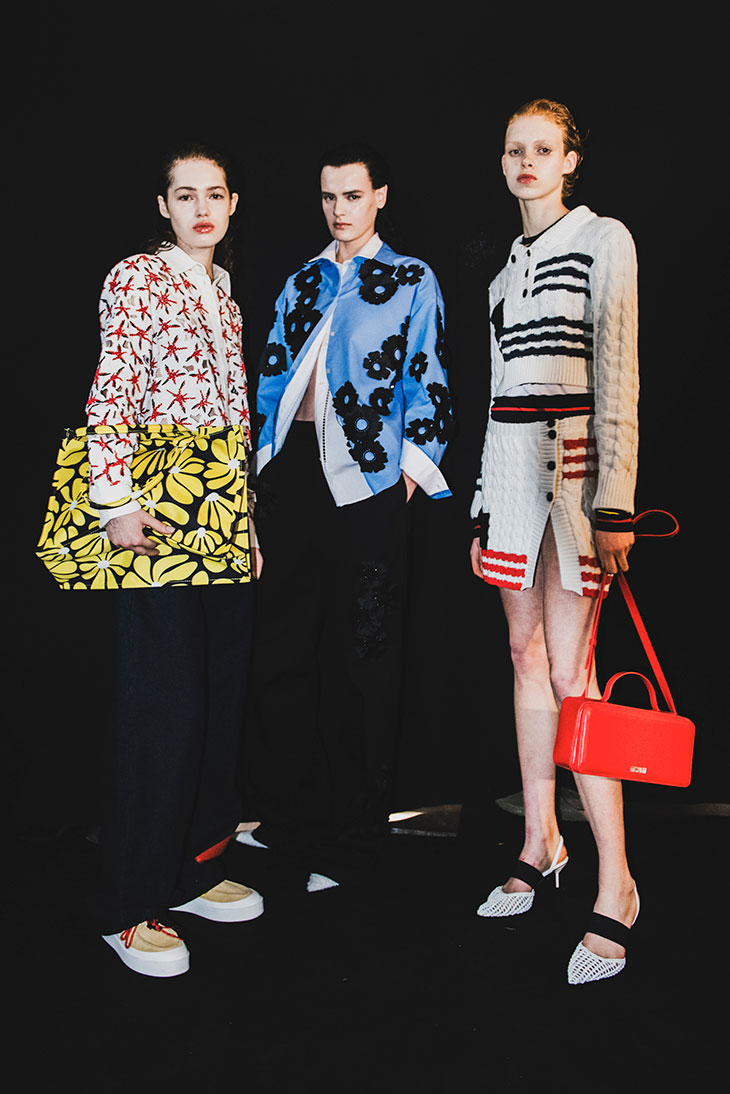
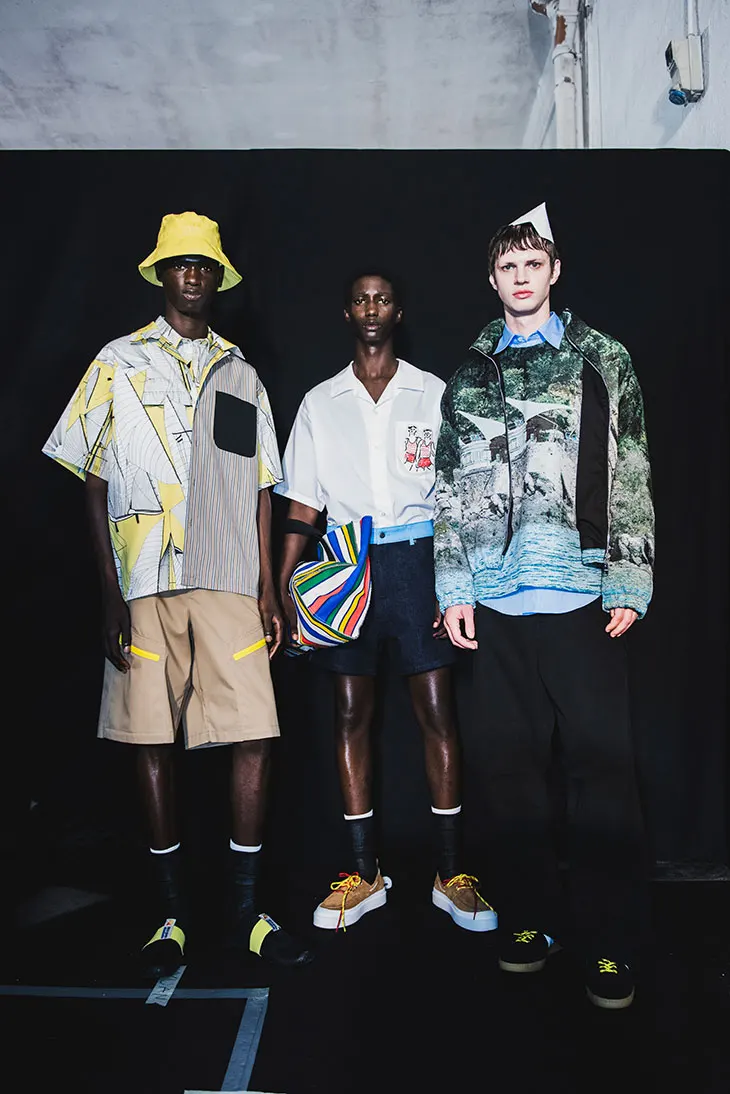
Photo ©Daniele Mango for DSCENE – discover more of the backstage moments at MSGM in Milan

What Separates a Signature Print From a Template

Two things I’ve never seen an outside vendor replicate, because they live in the room, not in a service agreement. First, a studio’s own proof ledger. That’s a running record of which paper, profile, and settings produced which result, kept by the designer who ran the machine. After six months, it’s a private color language no competitor can buy. Second, in-house test prints from failed runs. Hang them on the wall. Study what went wrong. That visual archive trains your eye faster than any tutorial, and it’s yours alone.

Neither of those things scales through outsourcing. That’s the entire point of printing in-house, and it’s why I’d rather a young studio spend on one solid machine and a paper profile than on two rounds of rush fees at a lab that doesn’t know their palette.

Where To Start This Week

Pick your largest real job size, choose one paper, build one profile, and run a single full-size proof. That’s it. Everything else, the test strips, the proof ledger, the wall of failed prints, grows from that first controlled run.

Ask yourself one question before your next campaign ships: if a buyer held this print in their hands tomorrow, would they know it came from your studio without reading the label? If not, the machine in the corner is sitting idle.


Tags: Style
Maya Lane

Maya Lane

Maya Lane is an Online Editor at DSCENE Magazine, where she covers daily updates in fashion, beauty, and culture. Her work focuses on new collections, brand campaigns, and emerging talent, maintaining a clear editorial voice that reflects DSCENE’s contemporary perspective.

Related Posts

Leaving MSCHF: Lukas Bentel on Stories That Outlast Objects
Art

Leaving MSCHF: Lukas Bentel on Stories That Outlast Objects

November 6, 2026
Martine Rose Steps Into the Creative Director Role at Balenciaga
Balenciaga

Martine Rose Steps Into the Creative Director Role at Balenciaga

November 6, 2026
Why Collectors Belong at a Horse Show: A Day at Highlands in Amenia
Art

Why Collectors Belong at a Horse Show: A Day at Highlands in Amenia

November 5, 2026
Daniel G Castrillon
Beauty

How to Dry Your Hair Without Causing Unnecessary Damage

November 5, 2026

Leave a Reply Cancel reply

Your email address will not be published. Required fields are marked *

dscene

Subscribe To Our Newsletter

DSCENE

DSCENE is curated as a daily art, design, fashion & lifestyle destination. DSCENE is non-for-profit fashion and culture basis organization which aims at further development of research on DSCENE values, as well as on providing educational services. Home of magazine editions DSCENE and MMSCENE – Click for more about DSCENE and for our Terms of Service.

Subscribe Our Newsletter

© 2024 DSCENE Publishing. All rights reserved.

Welcome Back!

Login to your account below

Forgotten Password?

Retrieve your password

Please enter your username or email address to reset your password.

Log In

Add New Playlist

No Result
View All Result
  • LATEST
  • FASHION
    • Ad Campaigns
    • Collections
      • Spring Summer 2027 Womenswear
      • Spring Summer 2027 Menswear
      • Resort 2027
      • Fall Winter 2026.27 Womenswear
      • Fall Winter 2026.27 Menswear
      • Pre-Fall 2026
      • Spring Summer 2026 Womenswear
      • Spring Summer 2026 Menswear
      • Couture Collections
      • Bridal Collections
      • Capsule Collections
    • Jewelry
    • Lookbooks
    • Street Style
    • Backstage
    • Directory
      • Agencies
      • Brands
      • Photographers
      • Fashion Stylists
      • Hair Stylists
      • Makeup Artists
      • Female Models
      • Male Models
  • SNEAKERS
  • MAGAZINES
    • DSCENE Magazine
    • MMSCENE Magazine
    • EDITORIALS
  • EXCLUSIVE
    • Interviews
    • Exclusive
  • TRAVEL
    • Hotels
    • Restaurants
  • ART
    • Art
    • Design
      • Furniture
    • Architecture
      • Interior Design
  • SHOP
    • ABOUT
This website uses cookies. By continuing to use this website you are giving consent to cookies being used. Visit our Privacy and Cookie Policy.