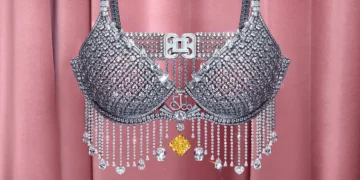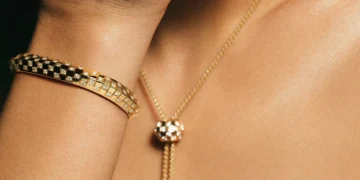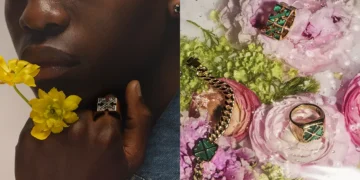



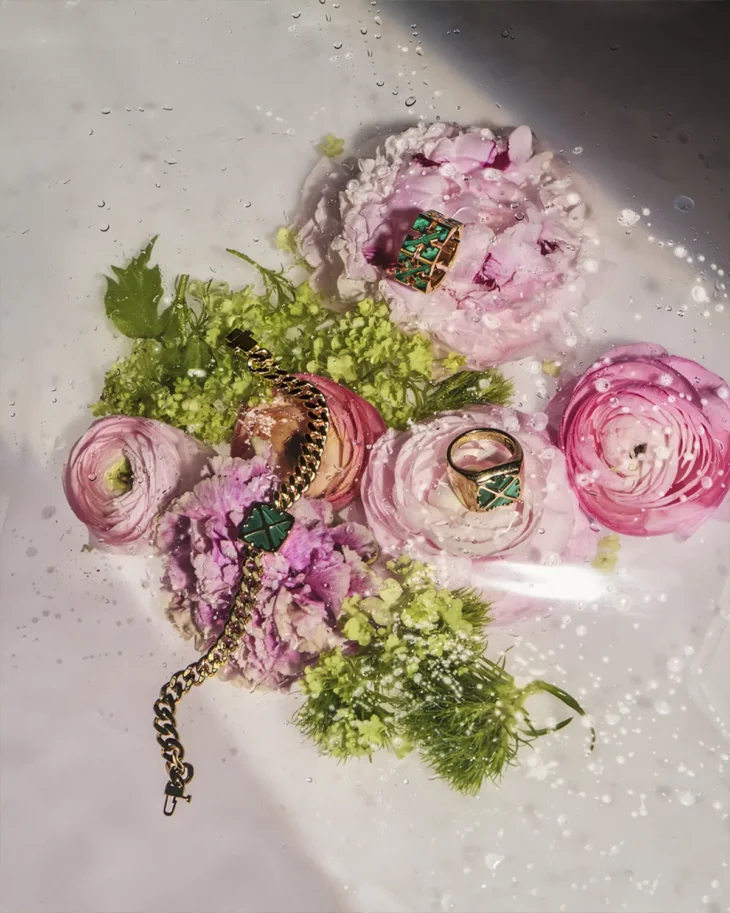
Off-White launches its first Fine Jewelry collection at a moment of transition. The label has spent years searching for a stable commercial footing, and the arrival of new owners has sharpened the question that has followed the brand since Virgil Abloh led it: what does Off-White become next? The answer, at least for now, is jewelry. The more interesting question is whether lab-grown diamonds can make that category work.
A Brand in Transition
The timing is hard to ignore. After the departure of Ib Kamara’s exit after four years as creative director, the brand moved quickly from leadership change into a new product category. Bluestar Alliance, the global brand management group that now oversees the label, has a track record of re-energizing heritage names through licensing, partnerships, and retail reach. Fine Jewelry fits that playbook. It is a category that can travel across markets, sell through department stores, and reach customers who may never buy a full look.
For a brand that has long been questioned about its place in the market, jewelry offers a different kind of proof. Accessories carry the logo and the attitude, but they also carry lower production risk and a clearer price ladder. You can test an identity in a pair of earrings before committing to a full season.
Lab-Grown Diamonds as the Real Story
The collection’s most consequential detail is not the gold. It is the diamonds. The debut is built around sterling silver, 18 Karat Yellow Gold Vermeil, and lab-grown diamonds, and it marks the brand’s first use of diamonds at all. That choice shapes everything else about the line.
Lab-grown diamonds are chemically, physically, and optically identical to mined diamonds. They are grown in controlled environments rather than extracted from the earth, which makes them easier to source with predictable quality and cost. For a brand that wants to offer diamonds without the price tag of high jewelry, that predictability matters. It allows a designer-led label to put a real diamond into a sculptural ring or pendant without pricing the piece out of its audience.
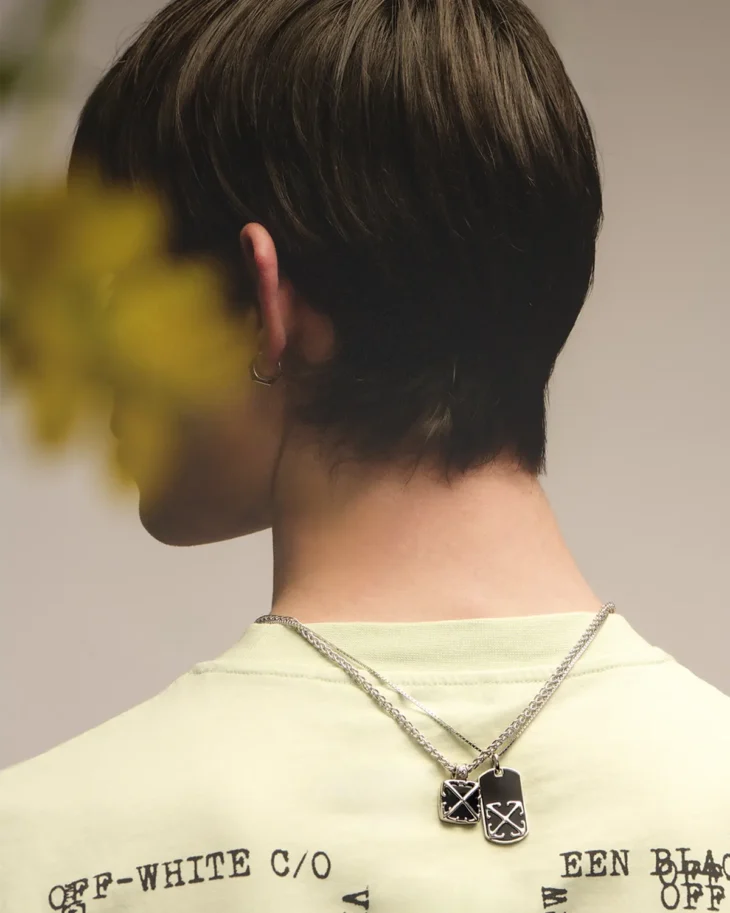
Consumers are also more informed than they were a decade ago. Many shoppers now compare origin, carat, and certification before they buy, and lab-grown stones have become a mainstream option rather than a niche one. If you are curious about how these stones are graded and bought, our guide to choosing lab-grown diamond jewelry covers the practical questions that matter before a purchase.
Where the Price Lands
The collection’s retail prices range from $200 to $3,000, which places it far from the territory of Louis Vuitton or Chanel, both of which run high jewelry lines with pieces priced for collectors. Off-White is not chasing that segment. Its closer comparison is the accessible luxury tier, where brands like Swarovski have built large businesses on glamour, repetition, and broad distribution.
That positioning is a strength if the designs hold up. A $200 entry point brings in first-time buyers who might later trade up. A $3,000 piece gives the brand a statement object for its most loyal followers. The range lets the label speak to two audiences without splitting its identity, which is exactly what a brand under scrutiny needs to do.
Designed for Men and for Everyone
The assortment includes necklaces, bracelets, rings, earrings, pendants, and cufflinks, styled across men’s and unisex lines. That breadth matters. Jewelry has long been coded as feminine in the luxury market, and cufflinks and chunky pendants give the brand a clear reason to speak to men who already wear its ready-to-wear. The unisex framing also suits a label built on clean geometry and oversized proportions, where the object should work on any wearer.
Is This the Model the Brand Needed?
Fine Jewelry will not settle the debate about whether Off-White should exist in its current form. It does, however, give the brand something it has rarely had: a product that can be sold, measured, and repeated without relying on a single creative voice. Jewelry can be restocked, licensed, and expanded into new markets with a discipline that a runway show cannot.
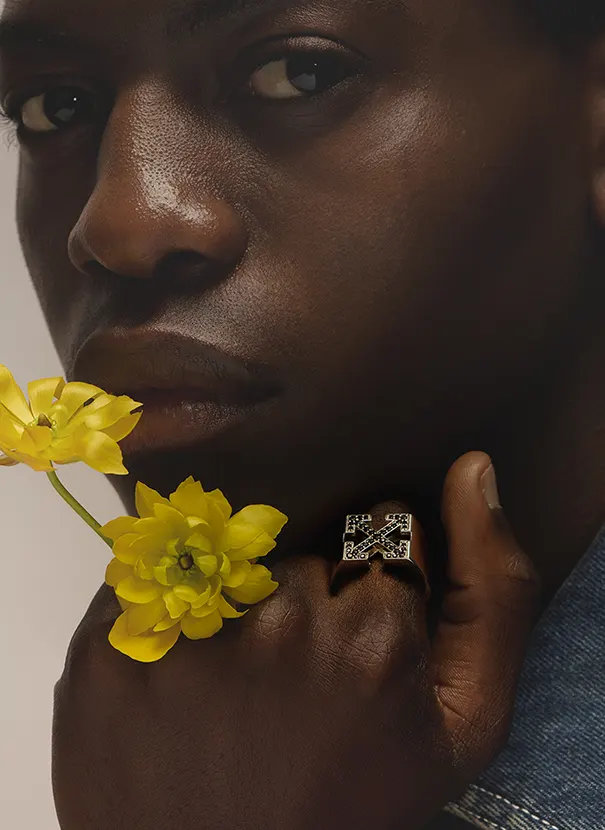
The lab-grown diamond strategy is what makes the category credible. It lets the brand claim a real material, offer it at a reachable price, and tell a story about modern luxury that fits its identity. If the designs are as sharp as the concept, the collection could become the first stable revenue line the label has built in years. The next season will show whether this is a footnote or a foundation.