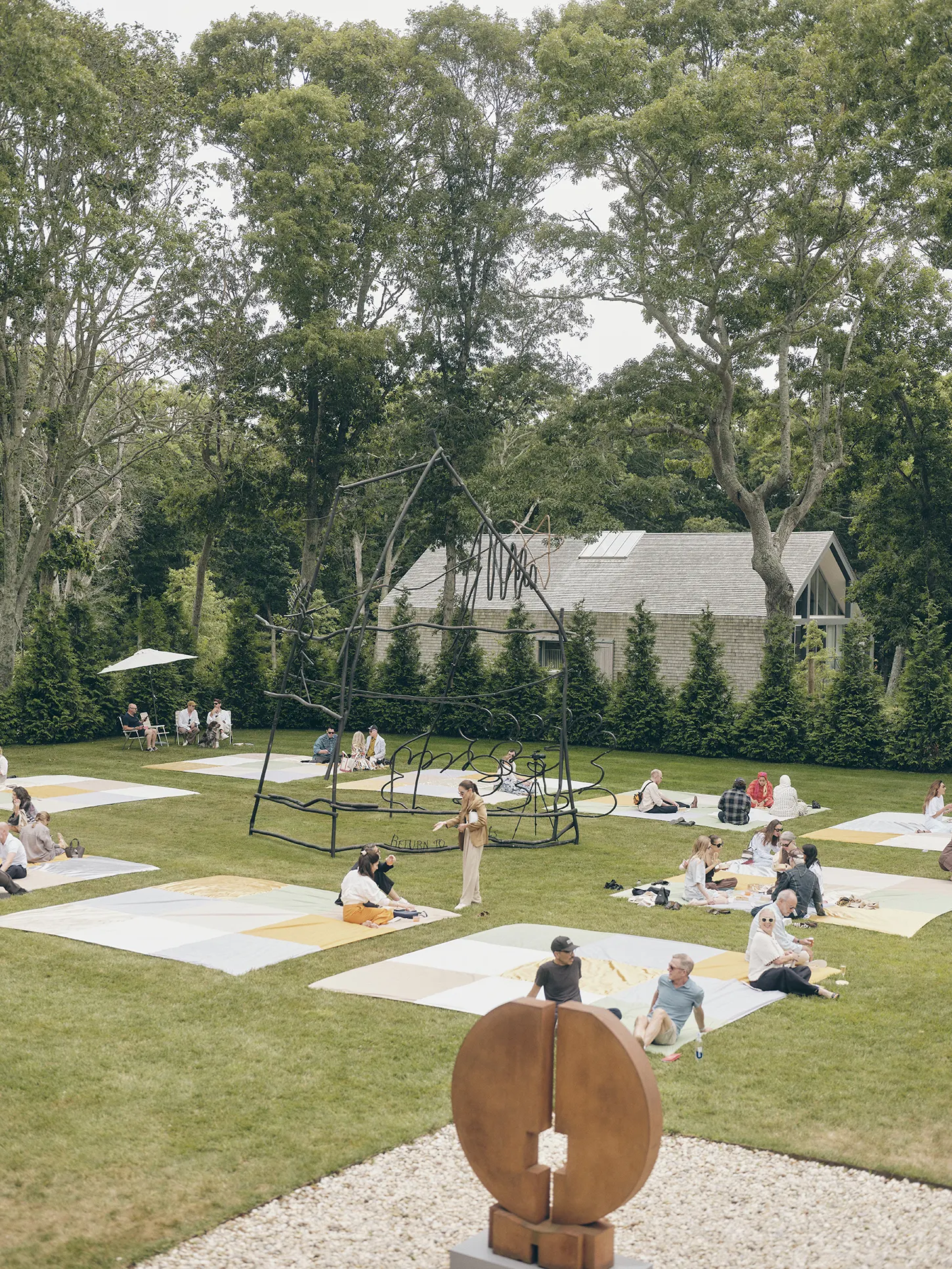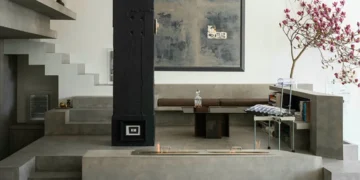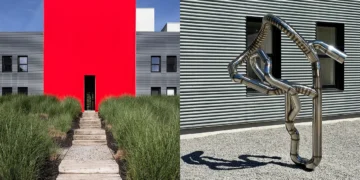



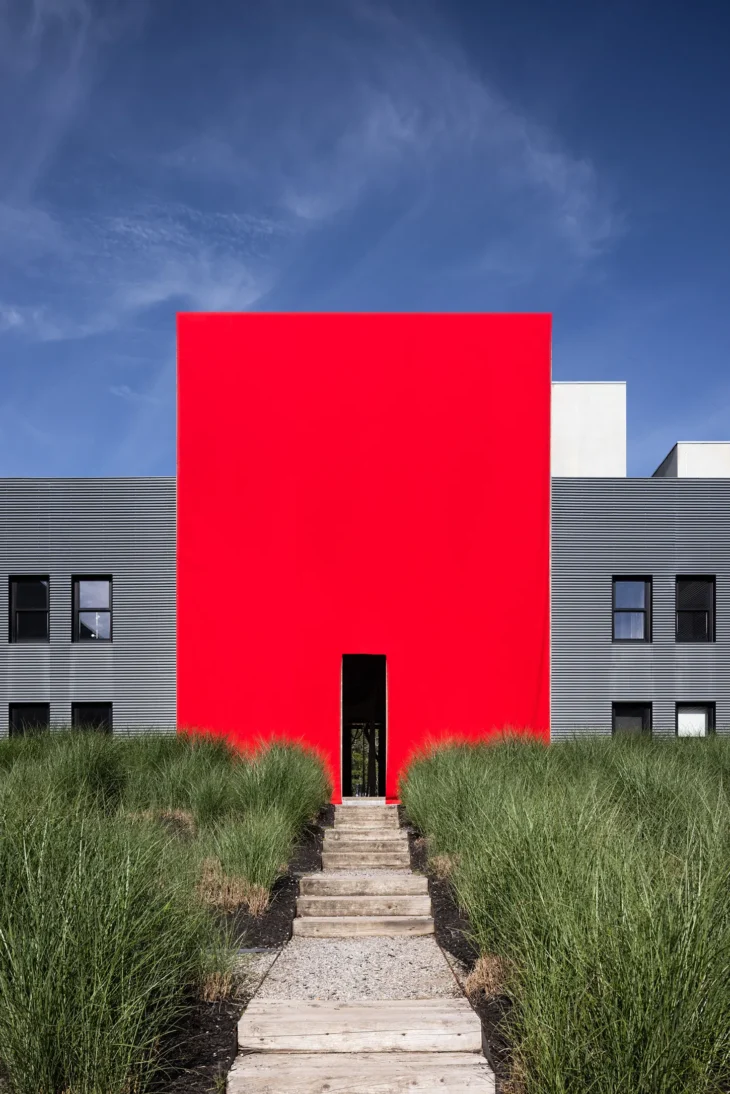
The wrap of NOMAD Hamptons days (June 25-28, 2026) at The Watermill Center leaves the design world with a pressing question: Was this a singular cultural event, or the beginning of an annual tradition? The fair’s debut U.S. edition unfolded with unmistakable momentum, Giorgio Armani as official partner, Robert Wilson’s legendary archive opened to collectors, 23 vetted galleries, and a curatorial depth that felt less like commerce and more like a living exhibition. Yet the harder question persists: Does NOMAD’s power lie in its scarcity, or would the design community genuinely benefit from annual iteration?
The answer hinges on what NOMAD fundamentally is, and what it refuses to become.
The Anti-Fair Model
Traditional design fairs operate on predictable logic. Salone del Mobile in Milan cycles annually. Design Miami returns every December. Frieze, ADAA, Affordable Art Fair, the calendar is built around routine, volume, and commercial return. These fairs measure success in attendance, booth revenue, and inventory turnover.
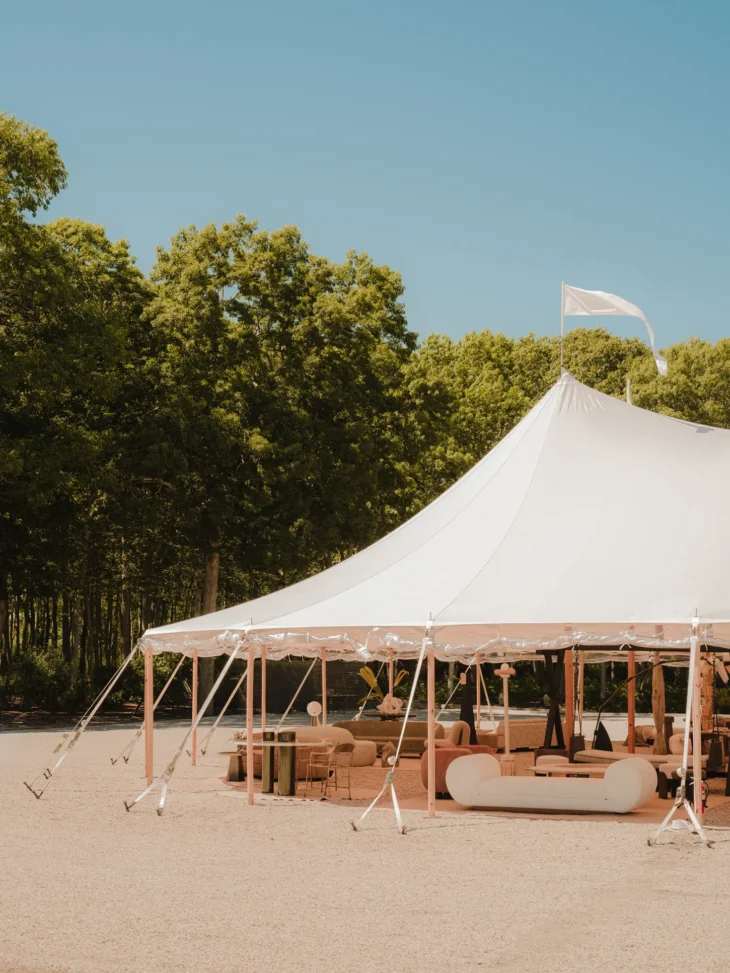
NOMAD inverts this entirely. Since 2017, founder Nicolas Bellavance-Lecompte has positioned the fair as a deliberate counterweight to “conventional fairs relying on volume and routine.” Each edition unfolds in an architecturally singular location: Capri’s limestone cliffs, St. Moritz’s alpine peaks, Monaco’s Belle Époque waterfront, Abu Dhabi’s desert modernism, and now the Watermill Center’s ten acres of Long Island arts sanctuary.
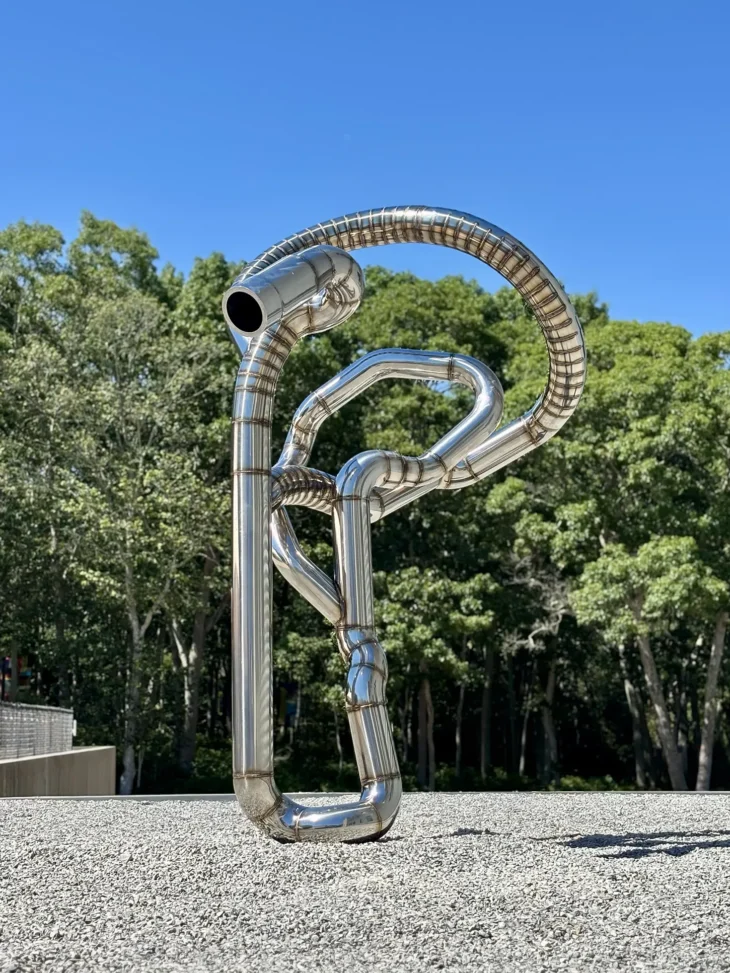
The structural differences are stark. While major design fairs host 300 to 500-plus exhibitors, NOMAD caps participation at 20 to 23 galleries. Admission requires invitation to NOMAD Circle, VIP status, or select industry credentials. No public ticketing. No Instagram-friendly sprawl across manicured booths. The scale is deliberately intimate, almost private.
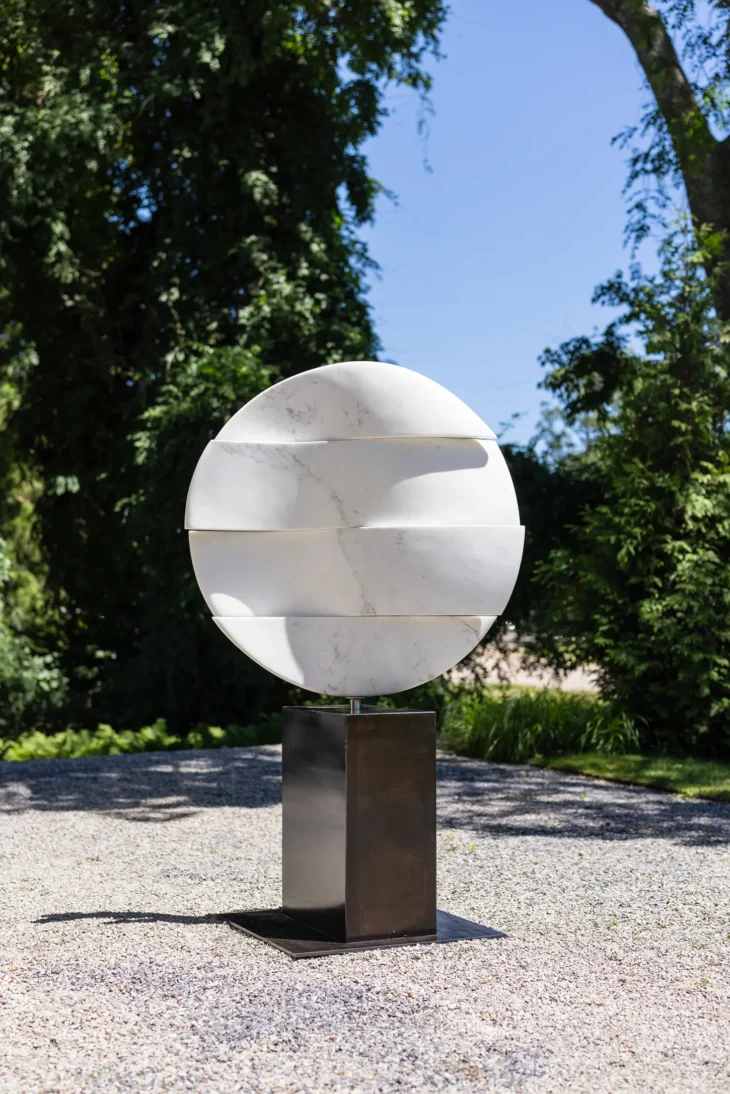
The Hamptons edition exemplified this curatorial intensity. Robert Wilson’s apartment became part of the fair itself. His decades-long correspondence with Gio Ponti was excavated and displayed. Rachel Hayes’ site-specific textile installation transformed the South Lawn into a participatory artwork. These are not booth activations, they are exhibitions and intellectual exchanges that happen to involve galleries and collectors.
Scarcity Equation
NOMAD has operated on an irregular schedule. Between its 2017 founding and the 2026 Hamptons edition, 16 editions unfolded across five continents, averaging roughly 1.5 fairs annually, with variable spacing that reflects curatorial opportunity rather than calendar predictability.
This irregularity may be strategic. When a fair doesn’t anchor itself to an annual date, each edition becomes an event. Collectors plan around it. Galleries commit serious resources because it isn’t competing against ten other fairs that month. The scarcity creates cultural weight.
The traditional model operates differently. A gallery might show at Design Miami in December, participate in Salone Satellite in April, exhibit at NYCxDesign in May, and present at ADAA in October, cycling through the same venues, testing inventory, maintaining visibility through repetition. The economics favor volume over depth. The cultural stakes diminish.
NOMAD’s model prioritizes the opposite: a smaller universe of collectors, galleries, and artists gathered in a location chosen for its artistic and architectural resonance. The Hamptons selection wasn’t arbitrary. The Watermill Center, founded in 1992 by Wilson, operates as a multidisciplinary laboratory dedicated to experimental artistic research. It houses over 8,000 artworks and objects in its collection, hosts fully funded artist residencies, and maintains The Robert Wilson Archive. The venue isn’t a rental space, it’s a living creative institution.
This context matters. Wilson’s residency program brings 30 to 40 artists annually to work on interdisciplinary projects, blurring boundaries between theater, visual art, architecture, and design. These residents work in fully funded studios across the Center’s grounds, pursuing what Wilson calls “what no one else is doing.” Adding NOMAD to this ecosystem was a curatorial decision, not a commercial one, and the United States could become a regular host.
Renewable Venue Question
The critical test is whether this partnership can sustain repetition without dilution. Can the Watermill host NOMAD annually without the fair consuming the Center’s identity? Or does the venue’s power, and the fair’s power, depend on singularity? At the same time when it comes to the interest it produced, I am seeing parallels to the growing world of Alcova, which from Milan ventured even into a Miami edition.
The numbers suggest caution. The Watermill Center employs a skeleton staff dedicated to residencies, education programs, exhibitions, and archival work. An annual design fair, even at NOMAD’s curated scale, introduces logistical and curatorial demands that could strain institutional resources. More practically, repeating the same location risks turning it into a scheduled event rather than a site-specific dialogue.
NOMAD’s previous editions suggest a different model. St. Moritz hosted the fair in 2023 and again in 2024, but this appears to be the exception, not the rule. Capri, Monaco, Venice, and Abu Dhabi received single or occasional editions. The pattern suggests Bellavance-Lecompte privileges location discovery over venue loyalty.
What the Market Actually Needs
The Hamptons edition demonstrated genuine collector appetite for what NOMAD offers, a curated refuge from the commercial saturation of the traditional fair circuit. The caliber of galleries (Gallery FUMI from London, Todd Merrill Studio from New York, Leila Heller Gallery with its 40-year focus on Middle Eastern artists) treated the fair as a serious platform, not a routine placement.
Yet translating appetite into annual structure in a grid of specific location is dangerous. The moment NOMAD becomes “the annual fair in the Hamptons,” it risks becoming another calendar fixture. The freshness erodes. The scarcity dissolves. Galleries begin to question whether a yearly booth justifies resources. Collectors lose the urgency that scarcity creates.
The design community doesn’t need another annual fair. It needed a fair that treated curation, site-specificity, and artistic dialogue as non-negotiable. NOMAD delivered that at the Watermill. Whether that happens annually, biennially, or across rotating destinations matters less than whether Bellavance-Lecompte can resist the pressure to scale, routinize, and franchise the very thing that made it valuable. Bellavance-Lecompte‘s next move will be revealing. It will answer not whether the fair should return to the Hamptons, but whether he understands what made the fair work in the first place. Yet, this year there is no rest for NOMAD, with schedule already set for Abu Dhabi edition from 18th to the 22nd of November at the city’s old airport.
Find more of the highlights form NOMAD Hamptons in our gallery: