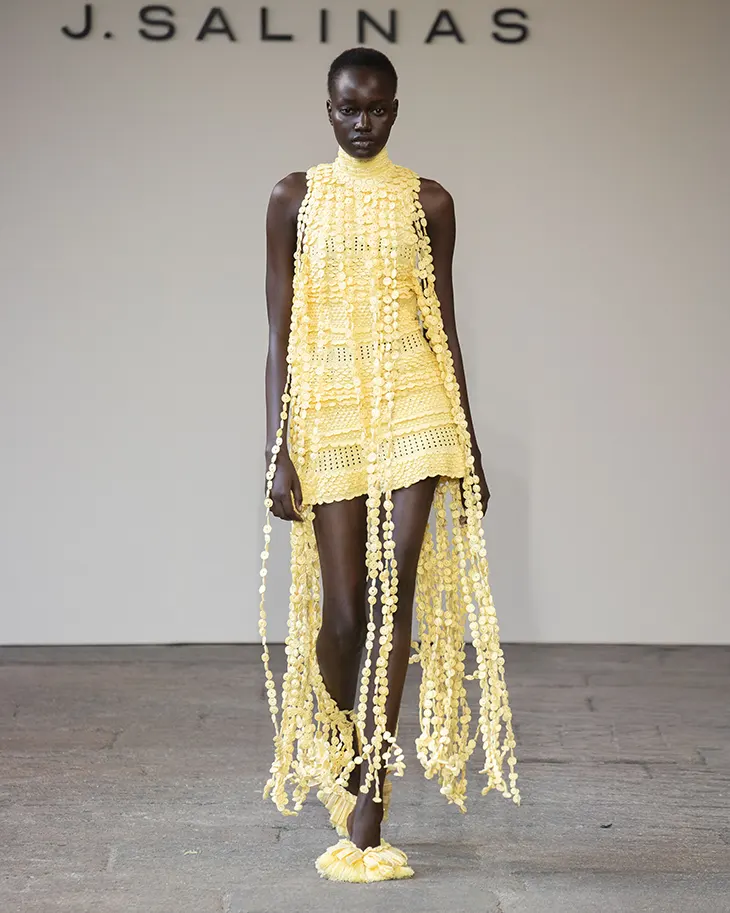



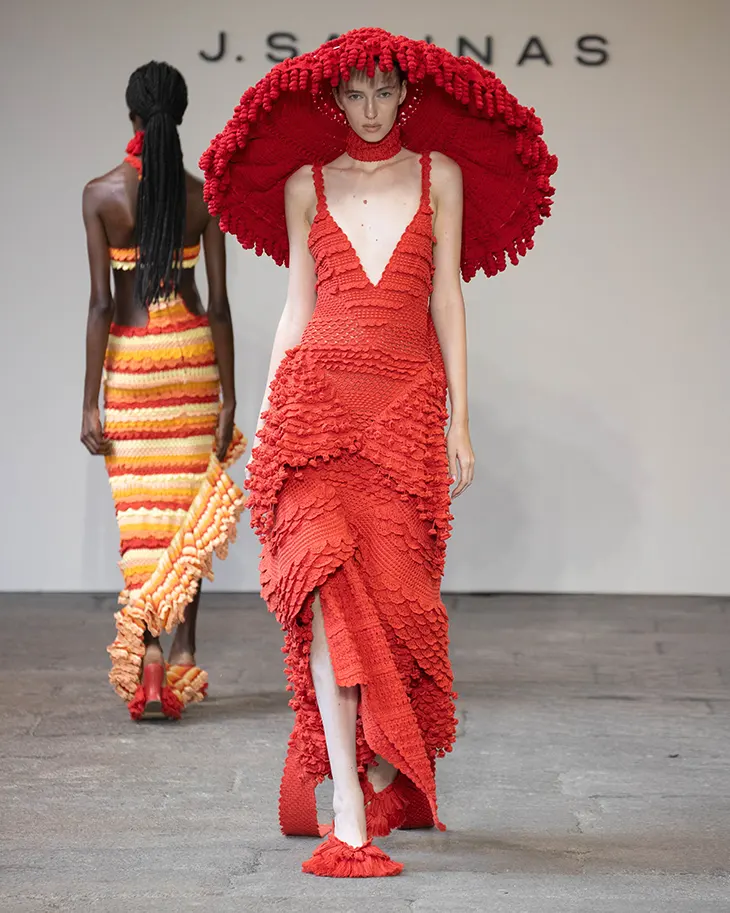
El Retablo, the J. Salinas Spring Summer 2027 collection, is the authenticity Milan Fashion Week needs. At a moment when the calendar feels crowded with derivative work, Jorge Luis Salinas stepped into the Milanese schedule and reminded the industry what happens when a designer leads with conviction, rooted in something real.
SPRING SUMMER 2027
The Spring Summer 2027 collection unfolds as a meditation on Peruvian culture, but not in the way outsiders might expect. There is no exoticization here, no flattening of heritage into aesthetic texture. Instead, Salinas presents El Retablo with the precision of someone who understands that tradition and contemporaneity are not opposing forces, they are dialogue partners.
Living Archive
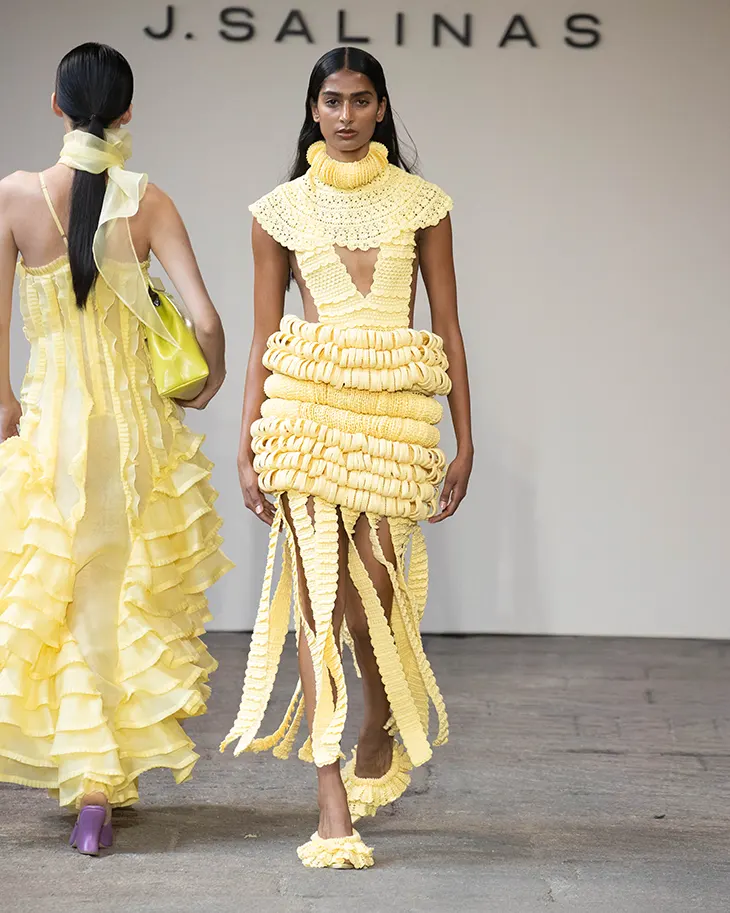
The collection takes its name from the Retablo, a traditional Andean devotional box that functions as a vessel for collective memory. Within these wooden structures, entire worlds unfold: religious processions, agricultural rituals, family moments, all preserved in miniature. Salinas translates this concept into fabric. Each garment becomes its own Retablo, a container of story and skill.
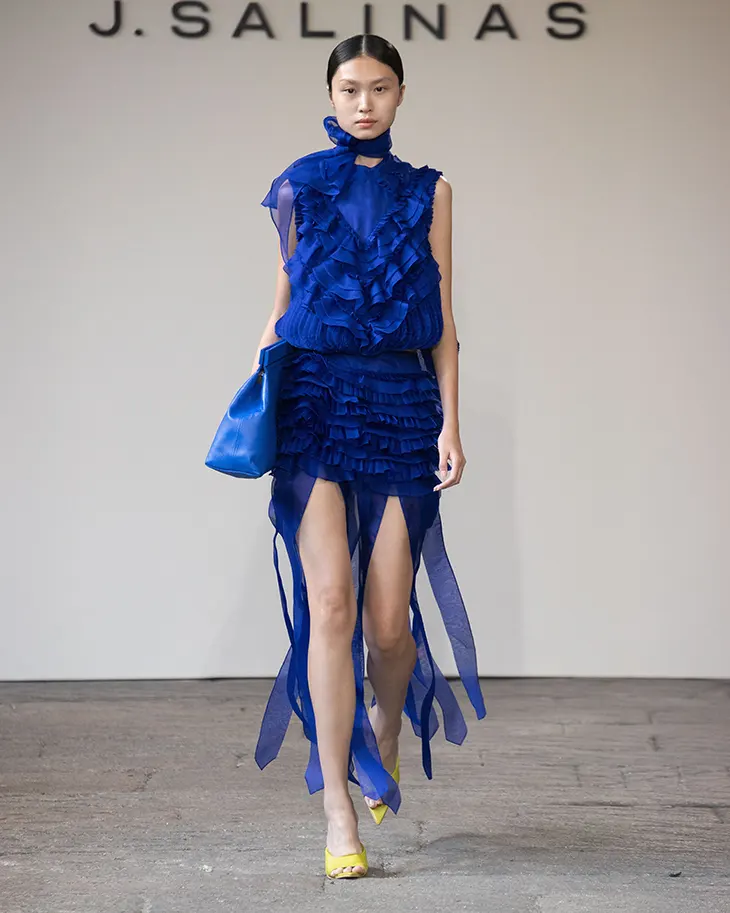
Organza and ultra-fine Pima cotton are layered with intricate crochet work, the hand-stitching visible and celebrated rather than hidden. Short dresses and flowing capes emerged with what can only be described as architectural delicacy, the sheer fabrics contrasting sharply with dense, textured detailing. A sleeve was embroidery. A hem was heritage. The silhouettes refused to whisper.
Color as Cultural Language
The color story pulled directly from the Andes: pistachio and turquoise sang alongside coral, orange, and carrot tones. Lilac and violet added complexity. This is not the muted palette of contemporary minimalism. This is the palette of a landscape, of cultural memory made chromatic. Each color choice was deliberate, each pairing intentional.
The Women Behind the Work
What distinguished the finale was not theatrical flourish, but radical honesty. As Salinas took his bow, he stepped out alongside the collective of Peruvian artisan women who shaped this collection. These are the hands that executed the crochet, the weavers whose techniques have been passed down through generations. They were not props in a designer narrative, they were the narrative itself.
Outside the venue, Peruvian fans gathered, celebrating not just a designer but representation. There was palpable emotion in witnessing their cultural heritage honored at scale on one of fashion’s largest stages, executed with rigor and without compromise.
Why This Matters
In a fashion week calendar often defined by repetition, J. Salinas offered something scarce: authenticity rooted in place, craftsmanship that refuses to be invisible, and a designer willing to center the hands that make the work possible. El Retablo is not a collection designed to chase trends. It is a collection designed to preserve, celebrate, and evolve a living tradition.
This is the work Milan fashion week needs to see more of. Not tourism through culture, but stewardship. Not appropriation, but dialogue. J. Salinas proved today that the two can coexist on the runway, and that audiences will show up for authenticity when it is offered with care.