


Most visitors see Nashville through the windows of a honky-tonk on Lower Broadway, and the neon is undeniably part of the city’s charm. The visual culture of Nashville runs much deeper, though. It is a city of hand-painted walls and letterpress posters, of Gothic Revival tabernacles and Art Deco post offices, of postwar ranch houses and a full-scale Greek temple in a public park. Seeing it properly means leaving downtown, and the easiest way to do that is with a set of keys and a loose route.
Why Nashville Rewards a Driver
Nashville’s most interesting neighborhoods are spread across a wide area, from 12 South and Belmont to East Nashville, Germantown and Belle Meade, and public transit between them is limited. Picking up one of the Nashville rental cars at the airport turns the city into a series of short hops, with the freedom to stop wherever a wall catches the eye or a side street looks promising. BNA is only about 15 minutes from downtown, so the drive into the city doubles as a first look at the skyline, and parking in most neighborhoods outside the core is straightforward.
The Mural Circuit
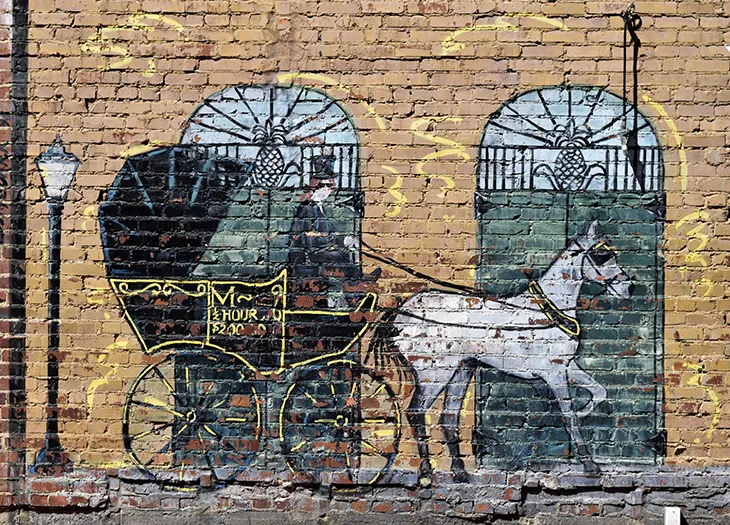
Street art has become one of Nashville’s signatures, and many of the city’s best murals were commissioned by local businesses who wanted their walls to work as both advertising and public art.
The most famous is probably the “I Believe in Nashville” mural by local artist Adrien Saporiti, a bold piece of typography on a wall in the 12 South neighborhood that has become a symbol of civic pride. The design is so popular that versions now appear on t-shirts, coffee mugs and car bumpers across the city. In the Gulch, Kelsey Montague’s large-scale wings invite visitors to stand between them and become part of the work, a format she has since repeated in cities around the world.
East Nashville and the Wedgewood-Houston area are good hunting grounds for less polished pieces, from abstract color-field walls to illustrated portraits of musicians. Murals are repainted and replaced fairly often, so checking a recent map or social media before driving across town avoids disappointment.
Architecture Shaped by Music
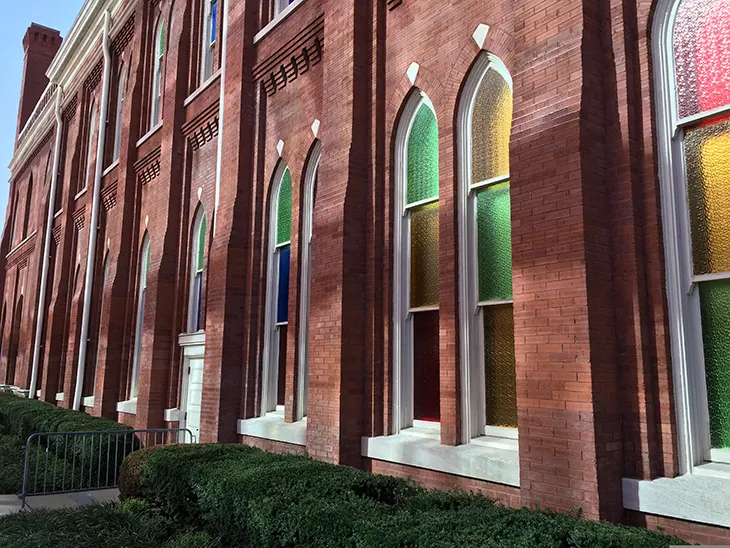
The Ryman Auditorium, built in 1892 as the Union Gospel Tabernacle, is the city’s most important building. Its red brick Gothic Revival exterior and arched stained-glass windows hint at its origins as a church, and the curved wooden pews inside are still used for concerts. Daytime tours are worth it for the acoustics and the history.
A short drive southwest leads to Music Row, which is less a single street than a district along 16th and 17th Avenues South. Its appeal lies in the contrast between the industry’s power and its modest buildings. Many record labels, publishers and studios work out of converted early 20th-century houses and bungalows, their porches and gabled roofs hiding recording booths and offices. Historic RCA Studio B, where Elvis Presley and Dolly Parton recorded, is here, and tours run from the Country Music Hall of Fame.
For anyone interested in typography and print, Hatch Show Print is essential. The letterpress shop has been making posters since 1879 using wood type and hand-carved blocks, and its bold, colorful style has shaped the look of Nashville’s music scene for well over a century. The shop is now part of the Country Music Hall of Fame complex downtown, and visitors can watch the presses in action.
Mid-Century Homes and Postwar Neighborhoods
Nashville grew rapidly after the Second World War, and its suburbs reflect the optimism and design ideas of the period. Neighborhoods such as Crieve Hall in the south of the city are known for their ranch houses, with low-slung rooflines, wide picture windows, brick and stone facades and generous lots. Inglewood and parts of East Nashville have their own share of postwar homes, often lovingly restored by owners who appreciate the clean lines and practical layouts.
A slow drive through these streets makes a peaceful counterpoint to the downtown bustle. Respect matters, since these are private homes, so admiring from the car or the sidewalk is the way to go. The contrast with the grand estates of Belle Meade, a short drive west, is striking. There, early 20th-century mansions in Colonial Revival and Georgian styles sit on wide lawns, a reminder of the city’s older money.
Art Deco and Classical Detours
The Frist Art Museum occupies Nashville’s former main post office, a 1934 building that is one of the city’s finest examples of Art Deco architecture. The marble, aluminum grilles and geometric detailing are worth seeing even before stepping into the galleries, which host rotating exhibitions rather than a permanent collection.
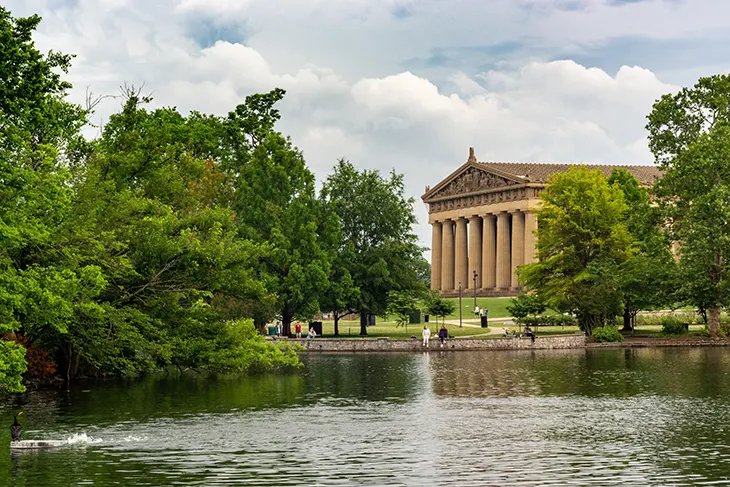
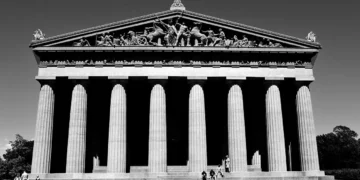
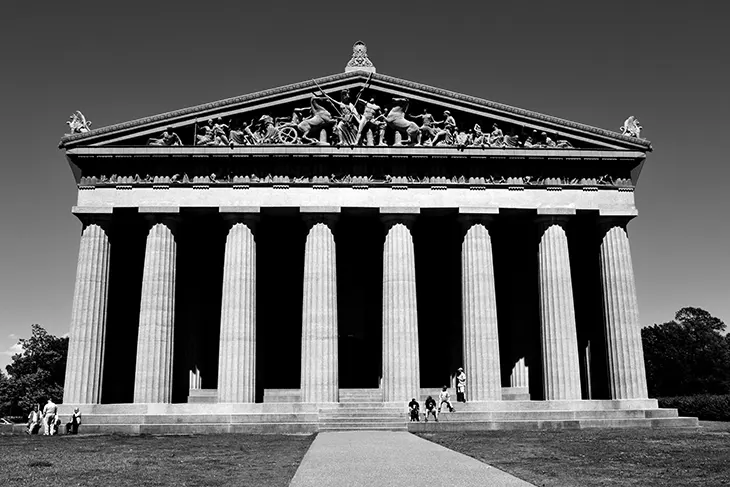
In Centennial Park, the Parthenon is a full-scale replica of the Athenian temple, originally built for the 1897 Tennessee Centennial Exposition and later rebuilt in concrete. Inside stands a 42-foot gilded statue of Athena, and the building now serves as the city’s art museum. The sight of a Greek temple surrounded by joggers and picnicking families is one of Nashville’s most delightfully odd.
On the western edge of the city, Cheekwood is a 1930s Georgian-style mansion set in more than 50 acres of botanical gardens, with a sculpture trail through the woods and seasonal exhibitions inside the house.
Where to Stay and Eat
Nashville’s hotel scene has grown fast, and a number of the city’s design hotels occupy historic buildings downtown and in the surrounding neighborhoods, with interiors that lean into local materials, vintage furniture and music references. Staying in East Nashville or 12 South puts some of the most interesting restaurants and boutiques within walking distance in the evening, when the car can stay parked.
Planning the Route
A practical plan splits the city into three loops. The first covers downtown and Music Row, with the Ryman, Hatch Show Print, the Frist and Studio B. The second heads south to 12 South for murals and shopping before continuing to Crieve Hall for the mid-century streets. The third goes west, taking in Centennial Park, Belle Meade and Cheekwood. Each loop fits comfortably into a day, with time left over for long lunches and unexpected detours, which in Nashville are often the best part.
Finally, seen from behind the wheel, Nashville turns out to be a city of distinct neighborhoods, each with its own visual character. Visitors who give the design trail even a single day often come away seeing Broadway in a different light.
Find the latest travel stories on DSCENE.