




I started thinking about this column at the gym, listening to Van Halen. Somewhere between sets, I caught myself watching the music video for “Jump” on my phone. David Lee Roth, his ridiculous energy, the hair, the clothes, the complete absence of embarrassment. I looked around the gym, at the men lifting weights, the carefully maintained bodies, and began thinking about how much of our current visual culture seemed to be borrowing from a decade I never actually experienced. I opened my Notes app and wrote: 1985.
DORIC ORDER
I was born in the nineties, which makes my nostalgia for the eighties slightly absurd. I have never experienced the decade, yet I feel strangely attached to it. I love the music, the clothes, the architecture, the cars, the terrible haircuts. I love slasher films, particularly the ones where teenagers arrive at an isolated house with a swimming pool and immediately begin making decisions that will shorten their lives.
My understanding of 1985 comes from movies, photographs, music videos and, occasionally, video games. I developed an affection for the Pontiac Firebird partly through Need for Speed. This probably tells you everything you need to know about the historical accuracy of my nostalgia. But lately, I keep seeing pieces of this imaginary decade everywhere.
Saint Laurent. Aviators. Muscle cars. Men showing their stomachs. Glam rock. Disco. Kate Bush. High-school clothes. Camping equipment. Los Angeles. Ryan Murphy. The renewed fascination with things that only recently would have seemed excessive, vulgar or simply exhausted.
I have never experienced the eighties, yet I feel strangely attached to them.
Something about our collective taste appears to have loosened up. I notice it particularly in menswear. For years, fashion seemed determined to conceal the male body. Trousers grew wider. Jackets expanded. Sneakers became enormous. Men spent considerable time at the gym only to disappear beneath enough fabric to upholster a small apartment. Now the body has returned, and the crop top is a useful way to understand what has changed.
In photographs from the early eighties, a muscular man wearing a cropped T-shirt could be a football player, a bodybuilder or somebody on his way to buy cigarettes. The garment acquired different associations over the following decades. Today, it carries several meanings simultaneously, which makes it much more interesting.

Prince already knew that masculinity could survive lace. Jean Paul Gaultier knew it could survive a skirt. Twisted Sister understood that a man could wear enough makeup to require professional removal and still perform a particularly aggressive version of masculinity. Grace Jones approached the entire question from the opposite direction.
I have never understood the appeal of making every object reasonable. Contemporary cars have become extraordinarily well behaved. They are silent, efficient and constantly informing you about your mistakes. Their interiors resemble expensive electronics stores. An old American muscle car has other priorities. It consumes too much, occupies too much space and converts gasoline into theatre. I know this is environmentally indefensible. I also know that a black Pontiac Firebird would improve my mood considerably.
Freeways at night. Swimming pools. Dry hills. Parking lots. Glass. Concrete. A house above the city. A fire somewhere beyond the frame.
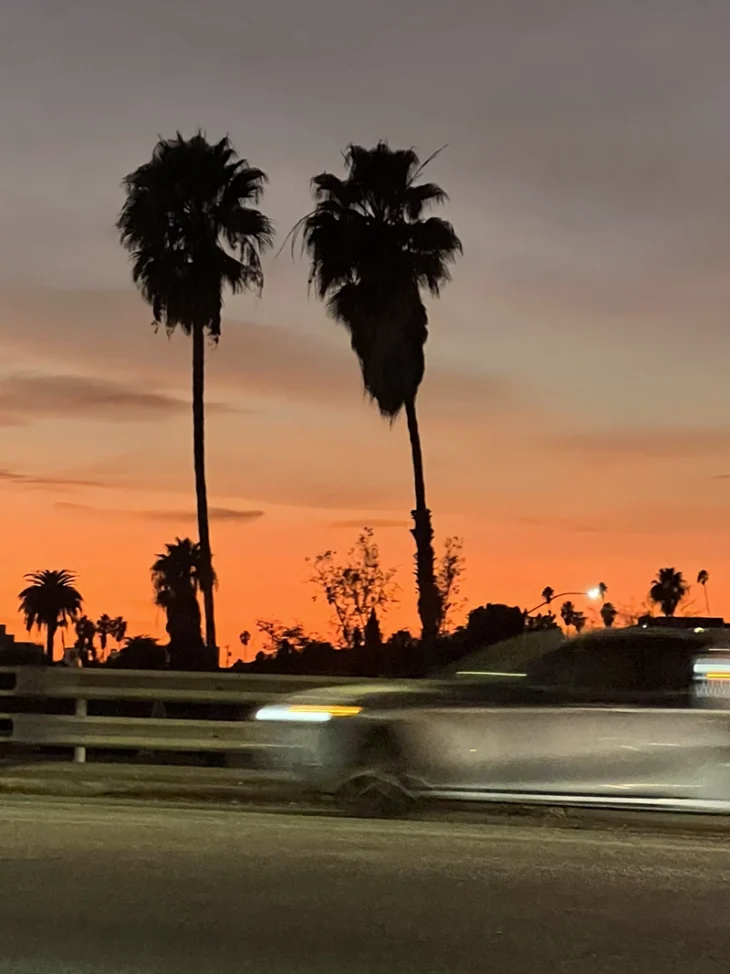
Los Angeles understood the attraction of unnecessary objects long before the rest of us. The California in my head comes partly from Joan Didion, partly from Ed Ruscha, partly from David Hockney and partly from movies I watched far too young. Freeways at night. Swimming pools. Dry hills. Parking lots. Glass. Concrete. A house above the city. A fire somewhere beyond the frame.
I think about Pierre Koenig’s Stahl House, suspended above Los Angeles like the world’s most expensive observation deck. Julius Shulman’s famous photograph of two women sitting behind its glass walls might be the single most convincing advertisement for living in California ever produced.
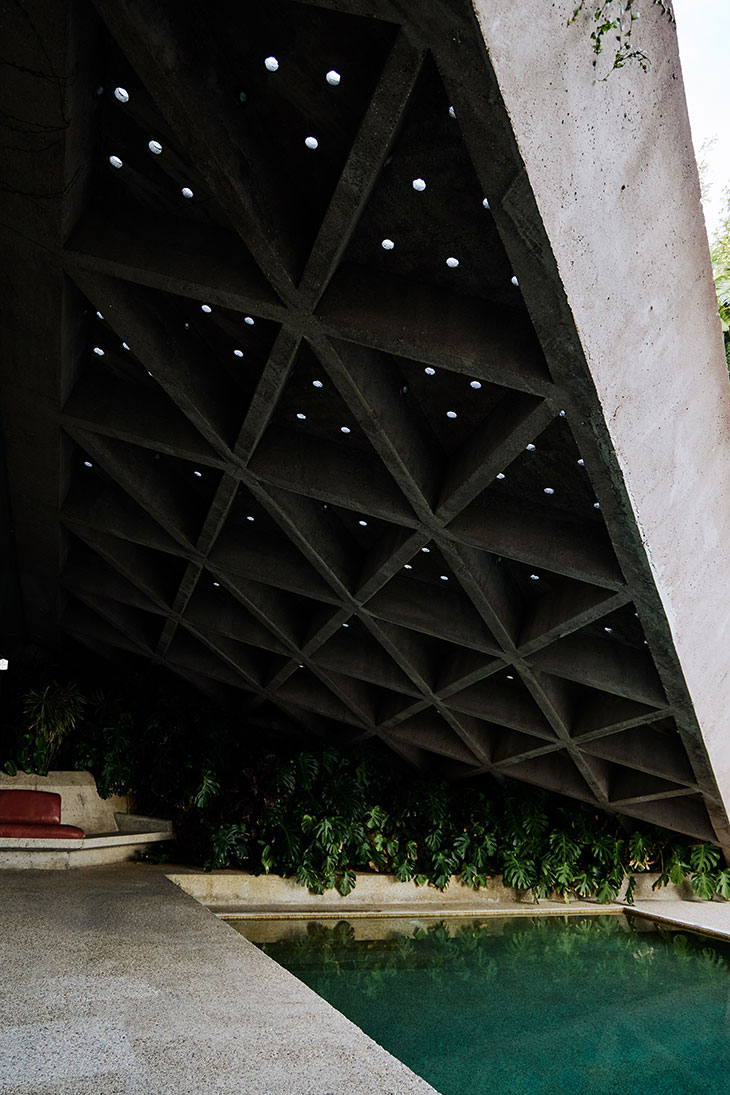
Then there’s John Lautner’s Sheats-Goldstein Residence, with its dramatic concrete roof, angular geometry and views across the city. The sort of house where I imagine someone in a silk shirt pouring a drink at three in the afternoon while making a very bad financial decision.
These buildings belonged to different decades, but together they created the Los Angeles I associate with the eighties: glamorous, strange, occasionally aggressive and entirely unconcerned with good taste.
The California in my head comes partly from Joan Didion, partly from Ed Ruscha, partly from David Hockney and partly from movies I watched far too young.
Glamorous, strange, occasionally aggressive and entirely unconcerned with good taste.
Contemporary wealth, by comparison, produces architecture that behaves extremely well. There is limestone. There are enormous sliding glass doors. There is an olive tree imported at considerable expense. There is the same curved sofa. The swimming pool disappears into the horizon. Somewhere, inevitably, there is a room devoted entirely to wellness. You can usually identify the price of the house. It is harder to identify the person who lives there.
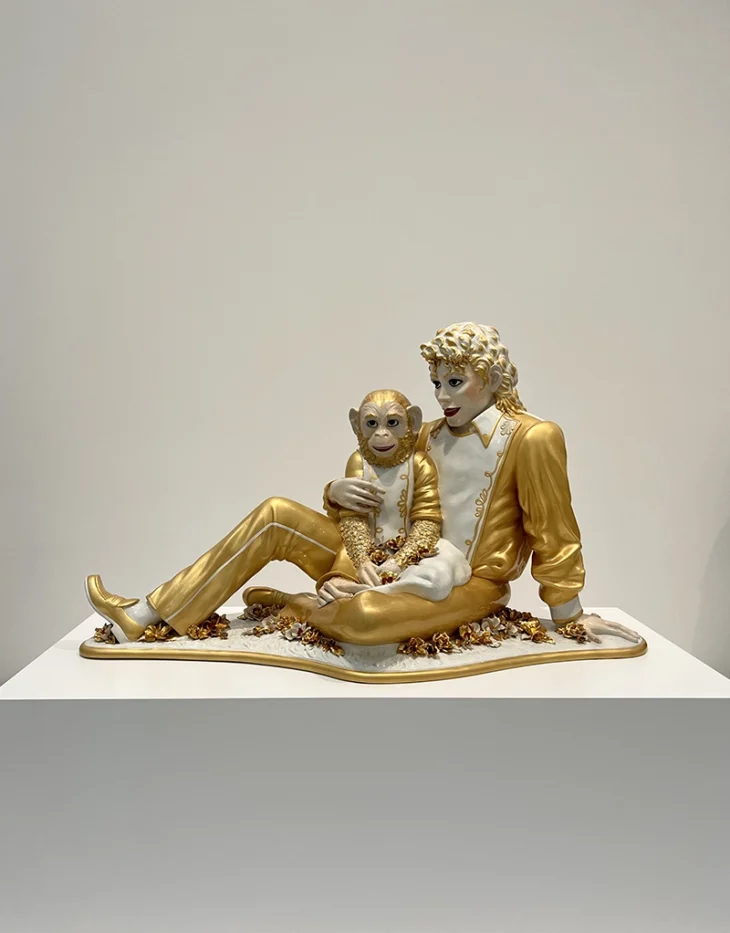
The eighties had money too. An extraordinary amount of it. It also had Jeff Koons. Basquiat, Keith Haring, Cindy Sherman, Barbara Kruger, Jenny Holzer, and Robert Mapplethorpe were working with bodies, advertising, money, sex, violence, celebrity and consumption. We have retained all the subjects. We have improved the distribution.
Everyone now carries a camera, an editing suite, an advertising platform and a small television network. Everyone understands the photograph before taking it. Everyone knows where the photograph will go.
Perhaps this is why I have become so interested in photographs from old nightclubs. The people in these pictures seem remarkably unconcerned with proving that they attended. Their outfits are often extraordinary. Their expressions suggest they had more pressing matters to consider than whether the lighting was flattering.
Hair metal. Power ballads. A guitar solo that lasts longer than most contemporary relationships.
I miss that kind of social carelessness. There are more events than ever. There may be fewer scenes. A scene does not know what it is becoming while it is happening. An activation knows exactly what it is before the first guest arrives.
The same thing interests me about eighties music. Kate Bush could make a song sound like a supernatural incident. Prince could make a guitar solo feel indecent. Grace Jones could turn standing still into a performance. Depeche Mode made synthesizers sound like industrial machinery developing feelings. I love all of it.
I also love the less respectable parts. Hair metal. Power ballads. The ridiculous sincerity of a song that builds toward a guitar solo lasting longer than most contemporary relationships.
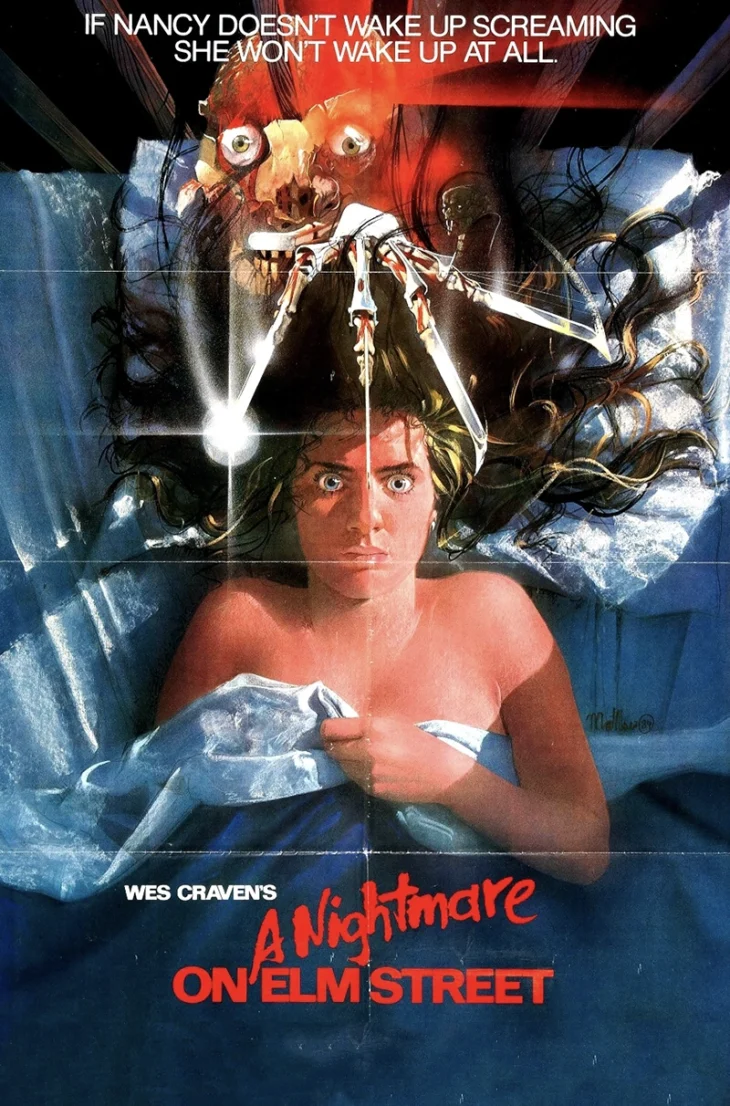
And then there is horror. My affection for eighties slasher films probably deserves its own column. The suburban houses, the deserted summer camps, the high-school corridors, the threatening telephone calls. The peculiar certainty that anyone having sex in a remote location is about to encounter serious consequences. I particularly love how glamorous everyone looks while making catastrophic decisions.
The American high school of the eighties remains one of the most durable fictional environments ever constructed. Lockers, gymnasiums, football fields, parking lots, prom dresses, varsity jackets, suburban bedrooms and parents conveniently absent from the house.
I particularly love how glamorous everyone looks while making catastrophic decisions.
Ryan Murphy understands the continued attraction of this artificial America. His Hollywood is more Hollywood. His high schools are more theatrical. Sex is more sexual. Horror is prettier. His characters understand that being looked at constitutes part of being alive. There is something deeply eighties about that understanding.
Even the decade’s fitness obsession feels strangely contemporary. Aerobics, bodybuilding, tanning, protein, exercise videos, bodies treated as ongoing personal projects. Jane Fonda understood the commercial potential of a workout long before anyone considered becoming a fitness influencer. We have better technology now, although I am unconvinced we have better exercise clothes.
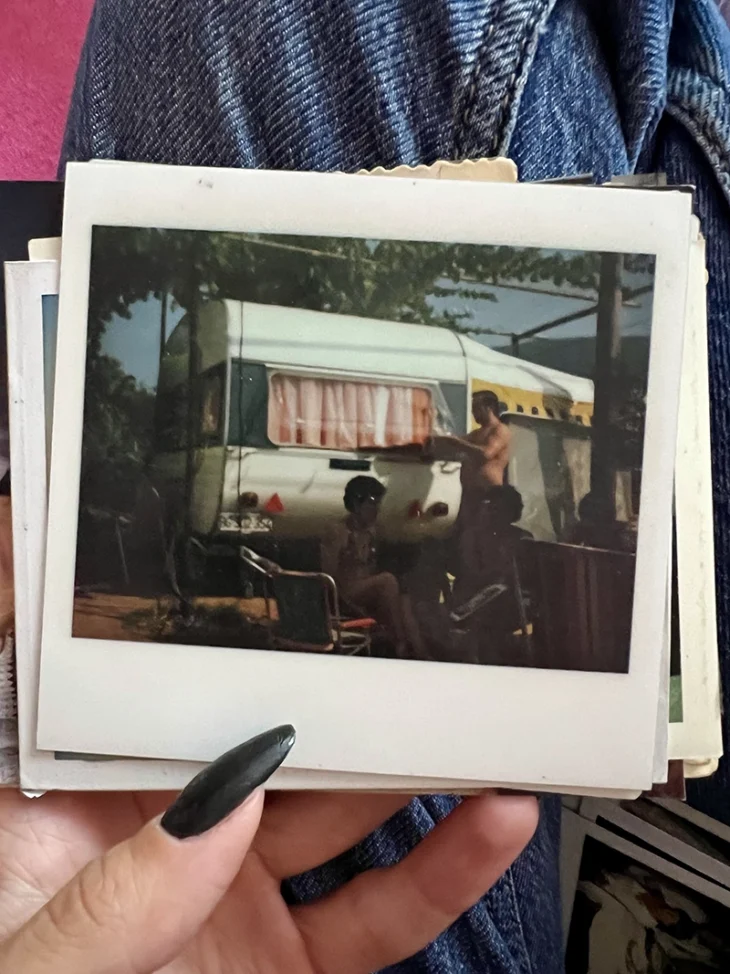
Camping also appeared on my original list, and for several days I couldn’t explain why. Perhaps my fascination with camping has something to do with an old photograph of my grandparents, somewhere at the seaside in the eighties. I have spent so much time imagining that decade through films and music videos that I occasionally forget my own family was living through it. Apparently, they had already figured out the appeal of escaping the city.
We want the nightclub and the forest. The muscle car and the running club. The body built at seven in the morning and ruined at two.
We want the nightclub and the forest. The muscle car and the running club. The mansion and the tent. The body built at seven in the morning and ruined at two. We want expensive clothes and the possibility of getting them dirty. Perhaps this is why my imaginary 1985 feels so attractive. It contains contradictions without attempting to resolve them.
Mapplethorpe and muscle cars. Kate Bush and bodybuilding. Gaultier and Van Halen. Gehry and Hollywood mansions. Disco and camping. High school and high fashion. Masculinity and makeup. Aerobics and decadence. Money and punk.
None of it fits together particularly neatly.
Good.
I don’t think we are witnessing an eighties revival in the conventional fashion sense. I hope we aren’t. Literal nostalgia becomes boring quickly. Nobody needs to recreate 1985 precisely, and nostalgia has a convenient habit of editing out everything unpleasant about the period it fetishizes.
I am particularly aware of this because my own version of the decade never existed. It is an accumulation of images, sounds and fantasies, assembled years after the fact.
I suspect I would have enjoyed 1985 enormously, although I would probably have complained about the cigarette smoke and died fairly early in a slasher film.
Permission to look ridiculous. Permission to be sexy. Permission to make something enormous. Permission for a man in a crop top to love a muscle car. Permission to listen to Kate Bush and Twisted Sister. Permission for architecture to irritate the neighbors. Permission for art to engage with money and desire. Permission to leave the city and sleep in a tent, then come home and put on Saint Laurent.
I suspect I would have enjoyed 1985 enormously, although I would probably have complained about the cigarette smoke and died fairly early in a slasher film (slashers prefer blondes).
After years of refinement, perhaps culture simply wants some friction again.
Maybe that is why everything suddenly feels like 1985.