



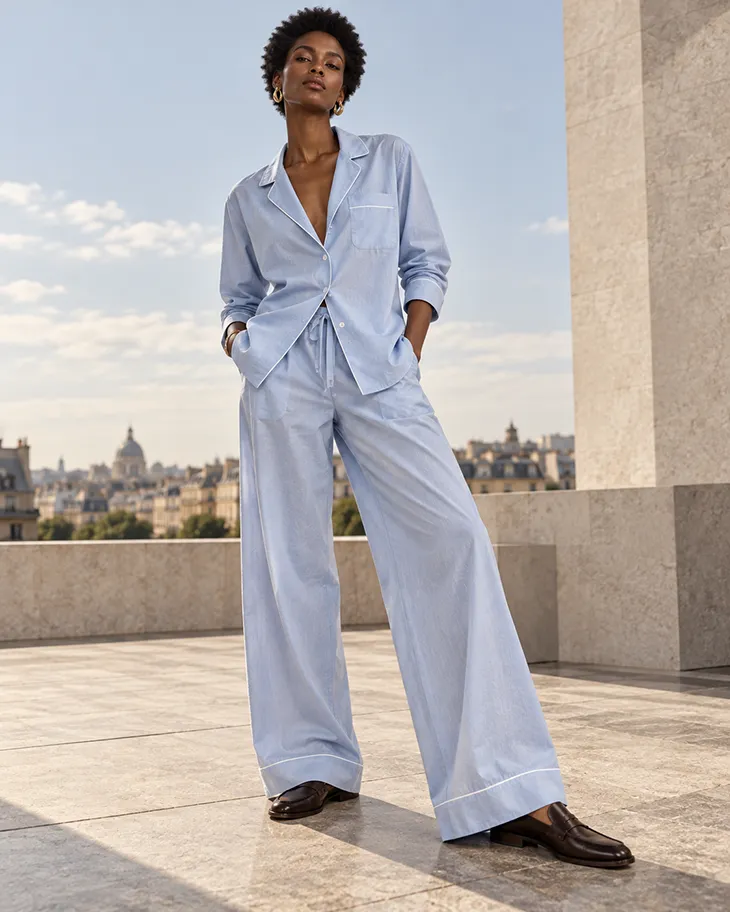
A matching set in a soft, fluid fabric. Wide trousers that move with every step, a shirt with a relaxed collar, piping that traces the edges. Ten years ago, an outfit like that belonged behind a closed bedroom door. Today it turns up at brunch, on video calls and in the background of countless street style photos, often styled with loafers, a blazer or a single gold chain.
Pajama dressing has moved from novelty to wardrobe staple, and the shift says as much about how people live now as it does about fashion. The sleepwear drawer has quietly become one of the most considered parts of the closet.
From Leg Garment to Wardrobe Staple
Pajamas have always traveled. The word itself comes from the Persian for “leg garment,” and the style reached Europe through travelers to India before becoming standard menswear for sleep in the late 19th century. As National Geographic traces in its history of the garment, it was in the 1920s and 1930s that women adopted pajamas in earnest, with loose beach pajamas worn as summer outerwear on the French Riviera and photographed on Coco Chanel.
In other words, the idea of wearing pajamas outside is not new. What has changed is how ordinary it has become. The beach pajama was a statement for the fashionable few; today’s pajama set is something people actually live in.
Why Sleepwear Moved Into Daywear
Several shifts arrived at once. Remote and hybrid work blurred the line between home and office, and the clothes followed. A wardrobe built for commutes and meeting rooms gave way to one built for long days at home that still needed to look presentable on camera.
At the same time, the broader move toward comfort-first fashion changed what people expected from their clothes. Tailoring softened, trousers widened and knitwear became the default. Sleepwear, which had always been designed around comfort, suddenly looked less like an exception and more like the logical endpoint of where fashion was already heading.
There is also a quieter, more personal driver. Sleep and rest have become part of the wellness conversation, and the rituals around them, from skincare to bedding, are now treated with the same care as anything else people buy. Pajamas sit right at the center of that ritual.
Fabric Is the Real Upgrade
If pajama dressing has a single rule, it is that the fabric does the work. A set that looks elegant at noon and still feels comfortable at midnight depends almost entirely on what it is made from.
Silk remains the classic choice for its sheen and drape, though it asks for careful washing and can feel warm or slippery depending on the weave. Cotton poplin gives a crisp, tailored look that photographs well but creases quickly. Linen is cool and relaxed, ideal for summer, with the expected wrinkles.
Then there is rayon or viscose made from bamboo, which has grown into one of the most popular fabrics in sleepwear. It is soft, breathable and drapes in a way that sits closer to silk than to cotton, while still being machine washable. That balance helps explain the appeal of the bamboo pajamas women now wear well beyond bedtime: a matching set in a fluid fabric looks put together with a blazer in the afternoon and stays comfortable through the night.
Whatever the fabric, a few details separate a set worth wearing out from one that belongs in bed: a collar that holds its shape, trousers cut with enough length to sit properly over a shoe, and seams finished cleanly enough to stand up to a second look.
How Pajama Dressing Works Outside the Bedroom
The trick to wearing pajamas in public is balance. A full set worn head to toe with slippers reads as unfinished, but a few well-chosen pieces change the story completely.
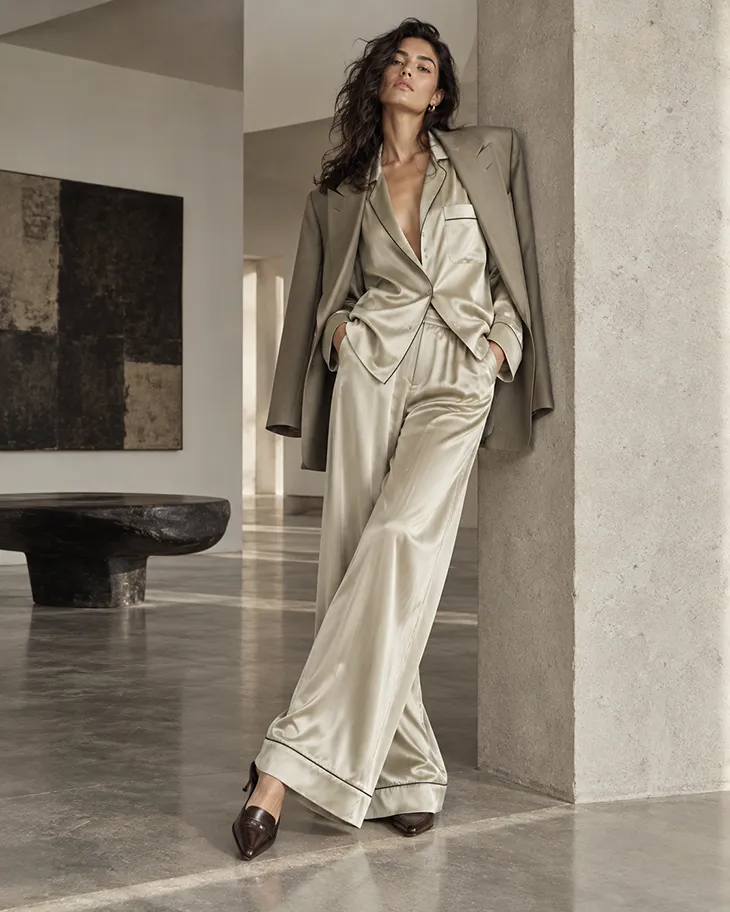
Add structure. A tailored blazer or a cropped jacket over a pajama set instantly makes it look intentional.
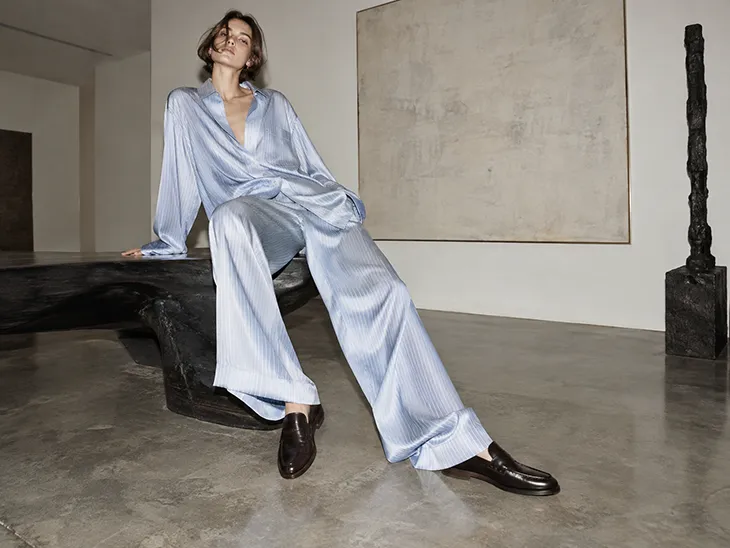
Ground it with the right shoes. Loafers, sleek mules or minimal sneakers anchor a relaxed set. Slippers, however chic, keep it firmly at home.
Split the set. The pajama shirt worn open over a tank with straight-leg jeans, or the trousers paired with a fine-gauge knit, is the easiest entry point for anyone hesitant about the full look.
Keep accessories minimal. A good bag, simple jewelry and polished hair are enough. The set should feel effortless, not costumed.
Caring for Sleepwear So It Lasts
Because sleepwear is washed more often than almost anything else in the closet, care matters. Cold water, a gentle cycle and air drying or a low tumble setting preserve both the color and the hand of delicate fabrics. Washing sets inside out protects prints and piping, and rotating between two or three sets spreads the wear so no single one fades too quickly.
Why the Trend Is Here to Stay
Pajama dressing has lasted because it answers a real need rather than a passing mood. People want clothes that move between rest, work and going out without a full change in between, and well-made sleepwear does exactly that. The pajama has spent a century slipping in and out of fashion. This time, it seems to have settled into the wardrobe for good.