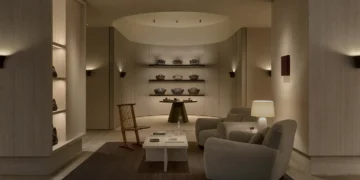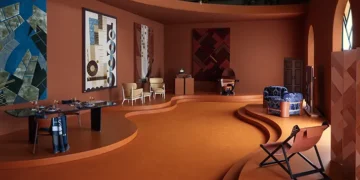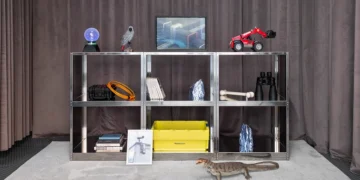



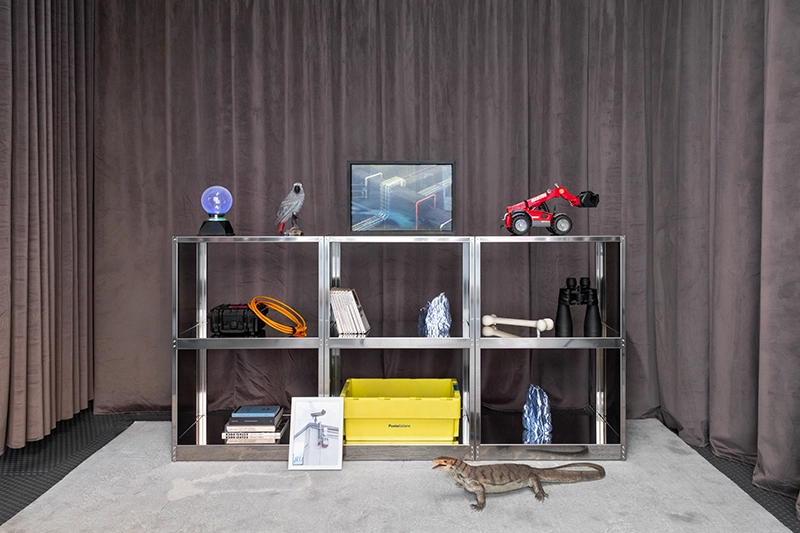
Contemporary interiors are making space for fewer, more sculptural, more personal pieces. New production methods have expanded what those objects can be.
Walls often carry fewer framed images, while shelves and surfaces hold pieces with greater texture and physical presence. Personal photographs still remain part of the home, but they can now take forms that extend beyond paper and screens. In optical glass, for example, a flat image can become a three-dimensional object, giving the photograph depth and a different presence within the room.
Curation over accumulation
Part of the change comes from how personal objects are displayed. The gallery wall, with its grid of matching frames, now shares space with interiors built around fewer, more distinctive pieces. A photograph can fit into that approach when it becomes something designed to be seen from different angles, handled, and placed among other objects. Turning an image into a three-dimensional piece changes the way it is experienced in the room. The memory remains personal, but the object itself becomes part of the interior.
What actually changed is the making
The deeper change comes from what can now be produced on a small scale.
For much of the twentieth century, many highly finished design objects relied on tooling, moulding, and larger production runs. Personalized objects often depended on handmade methods or straightforward printing.
Digital production has changed those limits. CNC milling, 3D printing, on-demand ceramics, and precision laser processes now make one-off and small-run objects far easier to produce.
A single personalized piece can use materials and techniques once associated mainly with larger manufacturing runs. That gives designers and makers greater freedom to turn a private image into a physical object instead of simply printing it onto a surface.
Material sets the emotional register
Once production allows for that flexibility, material changes the character of the object.
The same memory reads differently depending on what holds it. Cast in bronze, it becomes heavier and more formal. Fired into ceramic, it feels domestic and tactile. Etched into stone, it suggests permanence. Suspended in clear glass, it becomes lighter and more optical, changing according to the angle and surrounding light.
Material becomes part of how the memory is experienced. Weight, texture, transparency, and finish affect the object in the same way they affect other pieces selected for a room.
This allows personal objects to work within the same design considerations as furniture, sculpture, books, and decorative pieces. A private image can carry emotional meaning while contributing through material, proportion, and form.
One object, as an example
Photo-in-glass pieces show how these ideas can come together in a single object. A subsurface laser creates thousands of microscopic fractures inside a block of optical glass, turning a flat image into a three-dimensional form suspended within the material.
A cut-corner photo cube can sit on a shelf like a paperweight or small sculpture. Light passes through the glass, and the image changes as the viewer sees it from different angles.
The cube is only one example of a wider development. A private photograph can now become an object in which material, production, and image all contribute to the final result.
The sculptural, personal interior
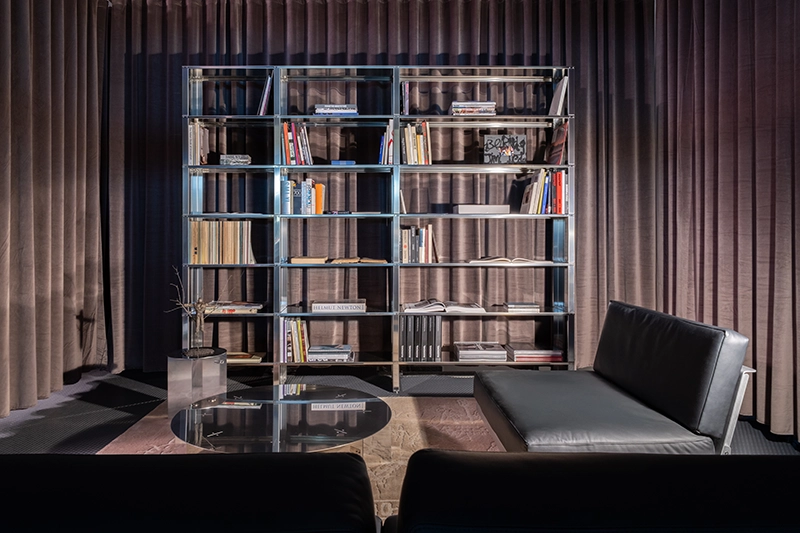
This helps explain the growing presence of personalized sculptural pieces in restrained interiors. A room built around fewer objects gives each piece greater visual responsibility. Personal objects can work within that approach when their scale, material, and placement receive the same attention as everything around them.
That also changes the old division between decorative objects and sentimental keepsakes. A personal piece can carry emotional meaning while still working formally within the room through its shape, surface, weight, and interaction with light.
The result can be highly specific to the person who owns it while still belonging naturally within the interior.
Personalization as a Design Language
Personalization has long existed in domestic objects, but new production methods have widened the range of forms available.
Mass-market personalized products often rely on printed mugs, magnets, frames, and similar formats. New technologies allow private images and memories to appear in glass, ceramic, metal, stone, and other materials with greater control over form and finish.
That changes what a personalized object can contribute to a room. It can carry a private image while working as sculpture, decoration, or simply as an object with physical presence.
Memory no longer has to remain confined to paper or a screen. Technology can give it weight, texture, transparency, and form, allowing personal images to become part of the material character of an interior.
Images from CASA NM3 Rewrites the Domestic Interior – see full article here.