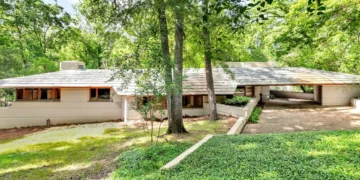



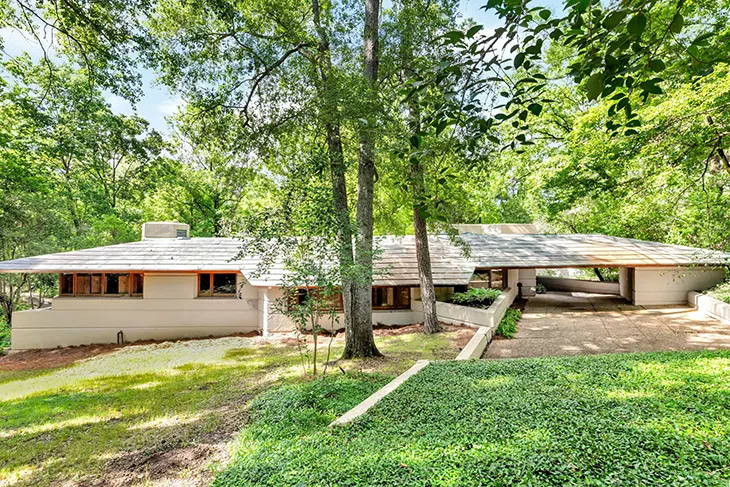
Set into the wooded hillside of Jackson’s Fondren neighborhood, Fountainhead is one of the most quietly assured houses designed by Frank Lloyd Wright in the final phase of his career. Designed in 1948 and completed in 1954 for J. Willis Hughes, the house belongs to Wright’s Usonian period, yet it operates far beyond the idea of a modest prototype. Fountainhead is precise, spatially complex, and deeply anchored to its site, a house shaped entirely by terrain, geometry, and material discipline.
ARCHITECTURE
In late 2025, the Mississippi Museum of Art confirmed its purchase of the property, securing the future of a house that has remained largely intact for decades. The acquisition places Fountainhead within an institutional context, but the architectural power of the building does not rely on its new ownership. Its significance is embedded in the way it handles space, light, and landscape with an almost analytical calm.
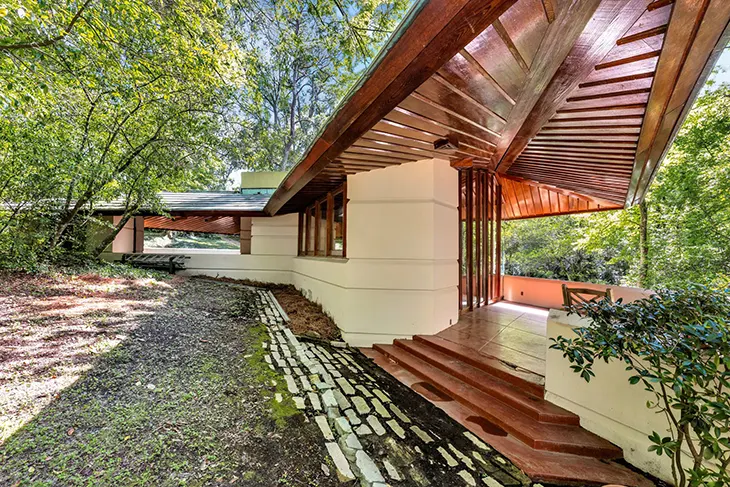
The house follows the slope of the site through a parallelogram-based plan that rejects symmetry and right angles in favor of diagonal movement. This geometry dictates the placement of walls and ceilings, shaping interiors that feel controlled without rigidity. Circulation unfolds gradually, moving from compressed passages into open communal areas that receive filtered daylight from large expanses of glazing.
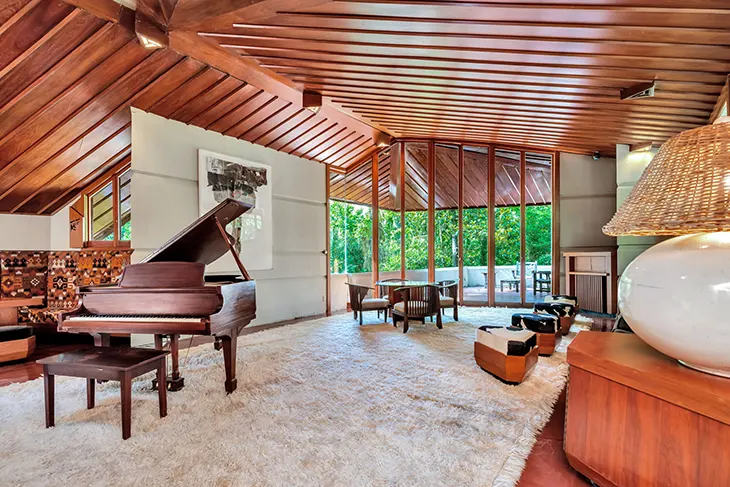
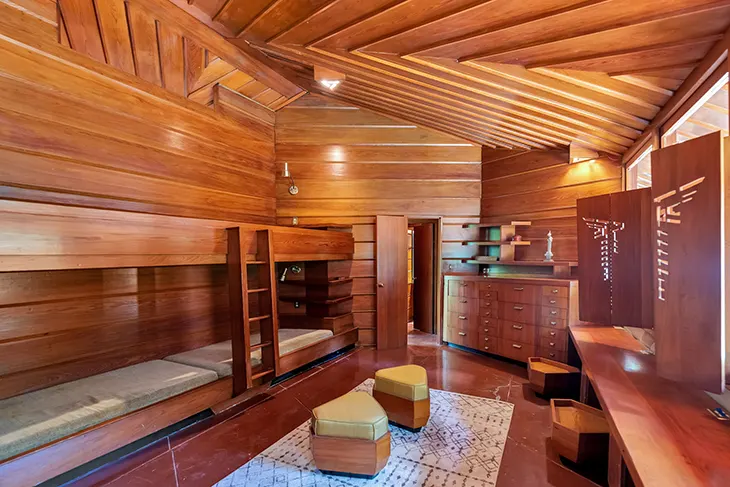
Material choices reinforce this continuity. Walls and ceilings are built entirely of Heart Tidewater Red Cypress, used without paint, drywall, or applied finishes. Structure and surface merge into a single architectural language, allowing light to play across the wood grain throughout the day. Built-in furniture, designed by Wright, further integrates daily life into the architecture, eliminating visual excess and reinforcing spatial order.
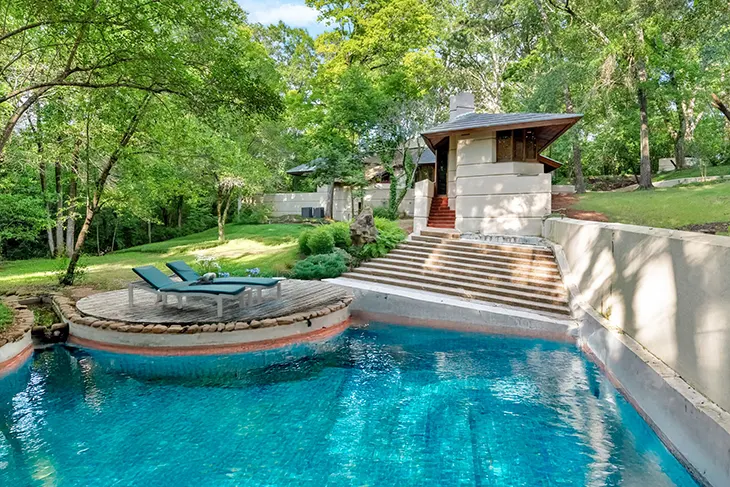
Fountainhead’s relationship with landscape reaches its most expressive moment at the rear of the site. Wright extended the bedroom wing into the hillside, ending it with a fountain that feeds into a swimming pool and then into a natural stream. Water becomes a spatial connector, linking house and terrain through gravity and flow.
Now entering a new public chapter, Fountainhead will open for guided visits under the Museum’s care. The purchase ensures preservation and access, but the house itself remains the focus: a late-career Wright work defined by restraint, clarity, and a sustained dialogue with its surroundings. In a moment saturated with spectacle, Fountainhead continues to speak through precision.
Read the full architectural feature on ArchiSCENE.