


Johann Ehrhardt discovered the inspiration for Haderlump‘s Fall Winter 2026 collection while helping a friend move apartments. The address was Leberstraße 65 in Berlin’s Schöneberg district, the birthplace of Marlene Dietrich. Standing in front of the building, Ehrhardt began photographing, thinking about the actors and dancers in his circle, and a collection took shape.
VARIUS, presented to 350 guests at the historic Wintergarten Varieté on Potsdamer Straße, represents Haderlump’s most refined expression to date. The venue choice was deliberate: Wintergarten was one of the most significant variety theaters of the 20th century, where Dietrich performed in the early stages of her career before Hollywood transformed her into an international icon.
The Dietrich Code
The collection’s title carries layered meaning. VARIUS, Latin for different, various, diverse, references both the Varieté venue and Dietrich’s own multiplicity. She was a woman who moved between glittering stage presence and a private life that, for her era, read as distinctly masculine. She wore trousers when trousers on women provoked scandal. She refused to be seen merely as a showgirl, instead projecting sovereignty over her own image.
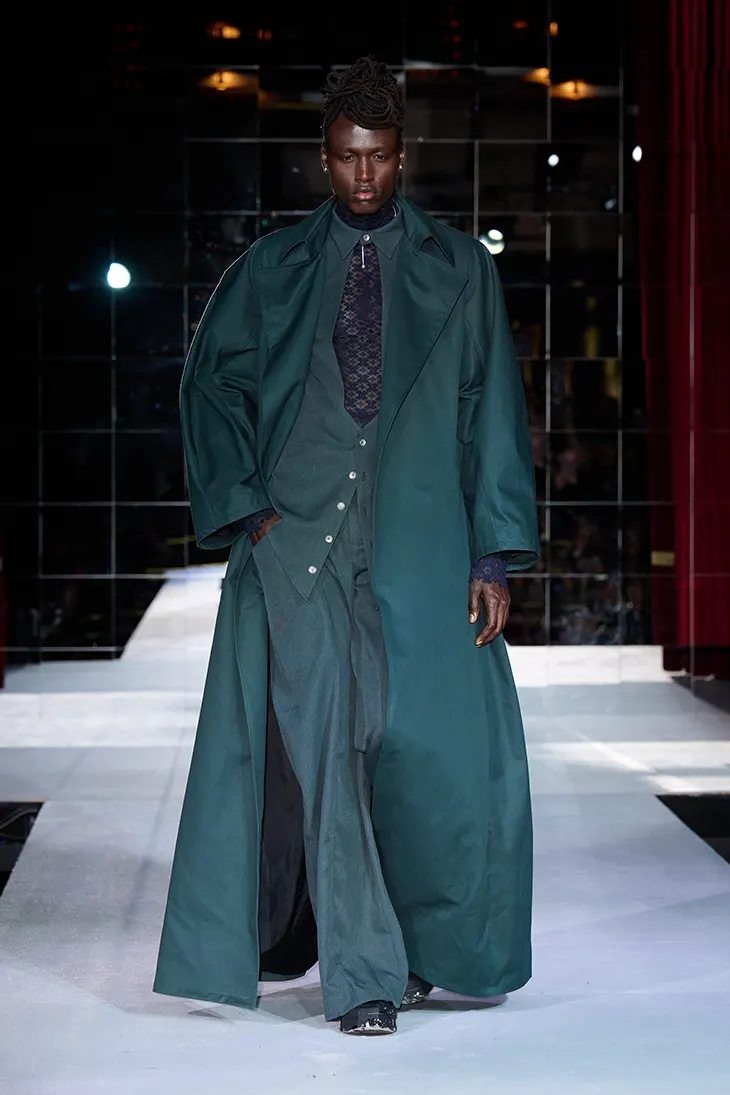
For Ehrhardt, now seven collections into Haderlump’s evolution, Dietrich offers a template for the kind of wearer the brand addresses: someone who bends, breaks, or embraces conventions with confidence and freedom of spirit. The collection translates that ethos into garments that span elegant gowns and traditionally feminine dresses to precisely cut trousers, most notably the silhouette Dietrich herself popularized.
The Marlene Pant and Beyond
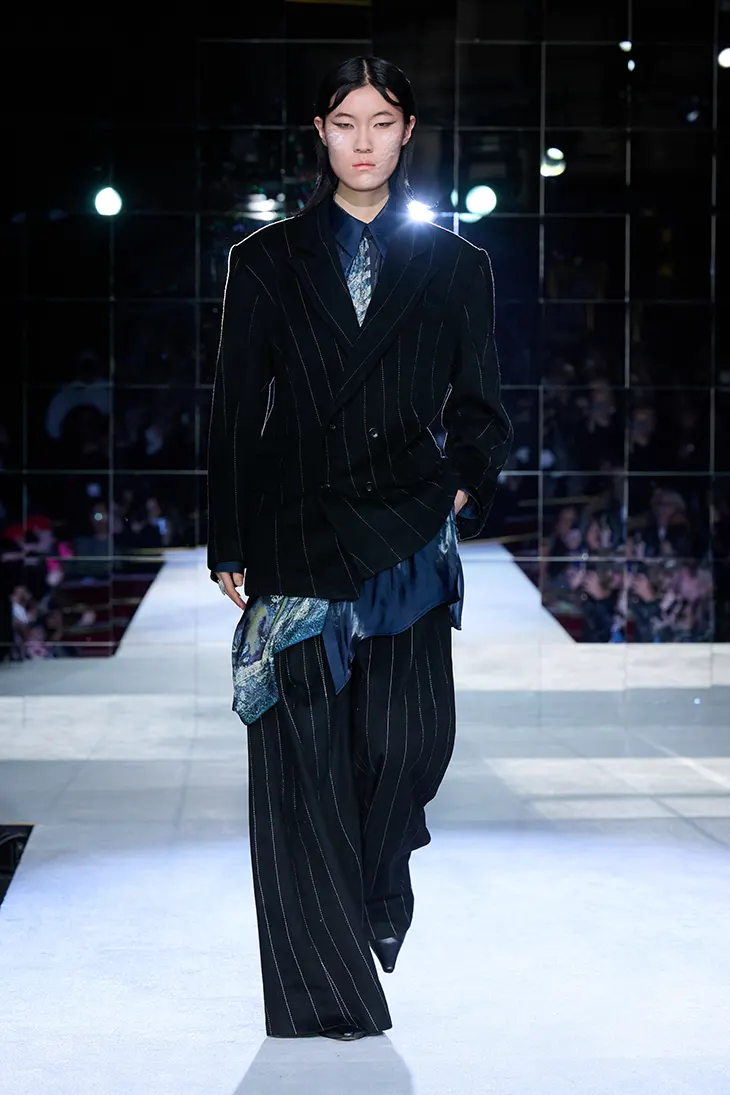
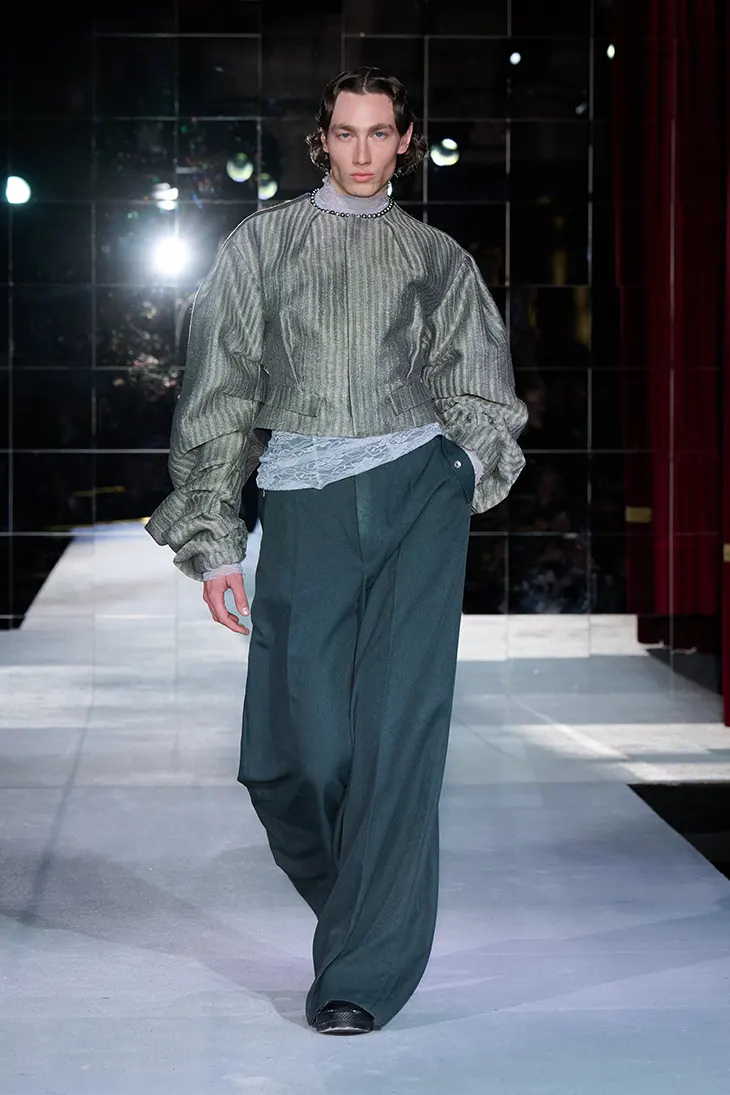
The so-called Marlene pants, a term established particularly in Germany, define a specific silhouette: high waist, wide leg, fluid drape. Dietrich used this garment as a tool of self-determination, asserting control over how she was perceived. In VARIUS, the silhouette anchors the collection’s tailoring, which Ehrhardt has pushed further toward refinement than in previous seasons.
This marks a deliberate shift. After collections that explored dystopia, craftsmanship, circularity, movement, solitary travel, and literary ownership, VARIUS moves away from avant-garde and rustic influences toward elegance. Classic tailoring appears across coats, blazers, and dresses with a precision that signals maturation.
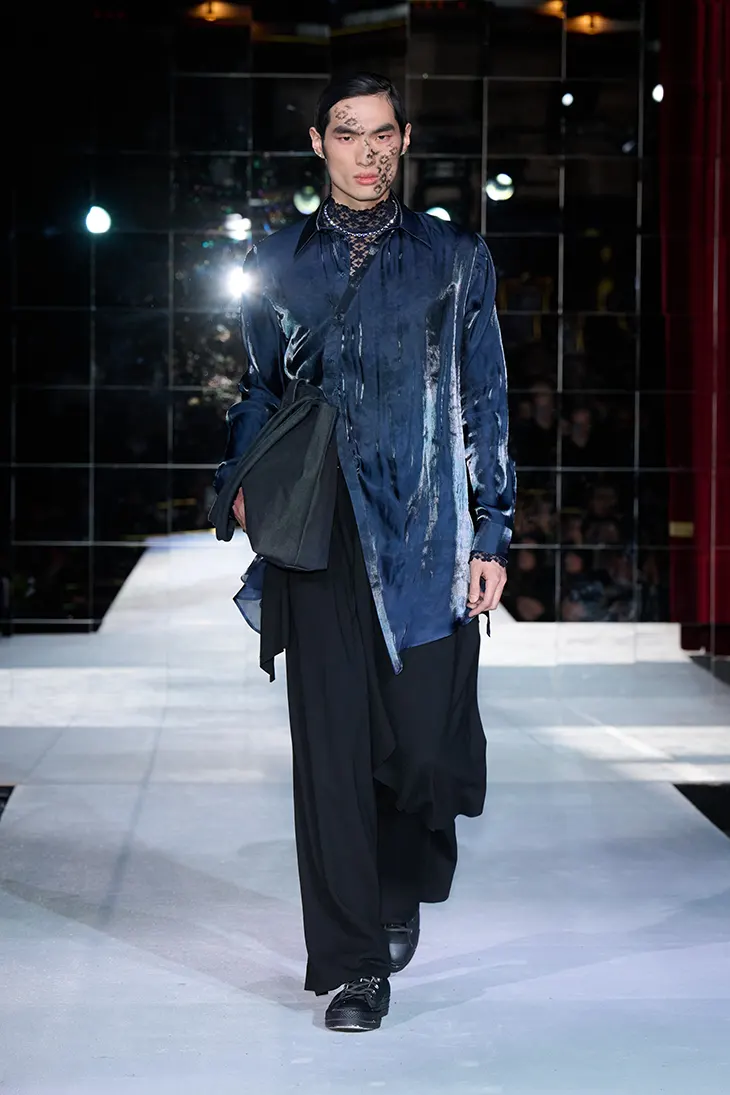
The material palette introduces lace for the first time, combined with leather, denim, and heavy wool. The interplay between softness and strength, a defining feature of Haderlump’s aesthetic since its 2023 debut, finds new expression in these pairings. Colors remain within the brand’s muted vocabulary: grey, cream, brown, and black, accented by pops of red and blue.
The Venue as Character
Wintergarten Varieté provided more than historical resonance. Velvet curtains framed the runway while a central mirror reflected the grandeur of the theater space, multiplying the room’s ornate details and the models moving through it. The staging emphasized deliberation: models walked slowly, their pace theatrical rather than commercial.
The finale gathered the cast one by one on stage, forming a tableau accompanied by a pre-recorded string ensemble. The composition came from John Carlsson, whose work guests may have recognized from Haderlump’s recent store opening and the Grammy-winning production “Berlin String Sessions.” The soundscape transformed the presentation into something closer to performance art than traditional runway.
Collaborations and Craft
Haderlump’s collaborative approach continues to define its positioning within Berlin’s fashion ecosystem. VARIUS maintains the partnership with Berlin-based Liebeskind and extends the relationship with Converse through a new Chuck interpretation. German jeweller Wempe contributed pieces that added heritage and craftsmanship to the runway, while Australian eyewear brand Le Specs debuted three sunglass models designed in collaboration with the label.
Joy Livia curated the cast, continuing her relationship with the brand. Suzana Haile handled styling, translating Ehrhardt’s vision into coherent runway narrative. Hannah Siegfried designed the set. The credits read as a roster of Berlin creative community, the kind of local network that distinguishes the city’s fashion week from larger industry centers.
The Deadstock Commitment
Haderlump uses only deadstock fabrics, a practice maintained since the label’s founding. This constraint, which could limit creative range, instead appears to sharpen Ehrhardt’s material intelligence. When you cannot order custom fabrics, you learn to see possibility in what exists. The lace, leather, denim, and wool in VARIUS all carry the particular character of found materials, their textures and weights determined by availability rather than specification.
What VARIUS Signals
Seven collections in, Haderlump has established itself as Berlin Fashion Week’s most consistent emerging voice. The trajectory from DYSTOPIA’s body-hugging expressionism through OPUS MANUUM, CIRCULARIS, AERO, SOLIVAGANT, and EX LIBRIS to VARIUS traces a designer finding his range while maintaining conceptual ambition.
The Dietrich reference could have tipped into costume or pastiche. Instead, Ehrhardt extracted the essence: a woman who used clothing as a tool for self-determination in an era when such freedom carried real risk. VARIUS argues that this spirit remains relevant, that the stage Dietrich once used for experimentation and provocation still exists for those willing to claim it.
Haderlump VARIUS Fall Winter 2026 was presented at Wintergarten Varieté, Berlin on January 31, 2026. Creative direction by Johann Ehrhardt. Styling by Suzana Haile. Casting by Joy Livia. Set design by Hannah Siegfried. Sound by John Carlsson. More in our gallery: