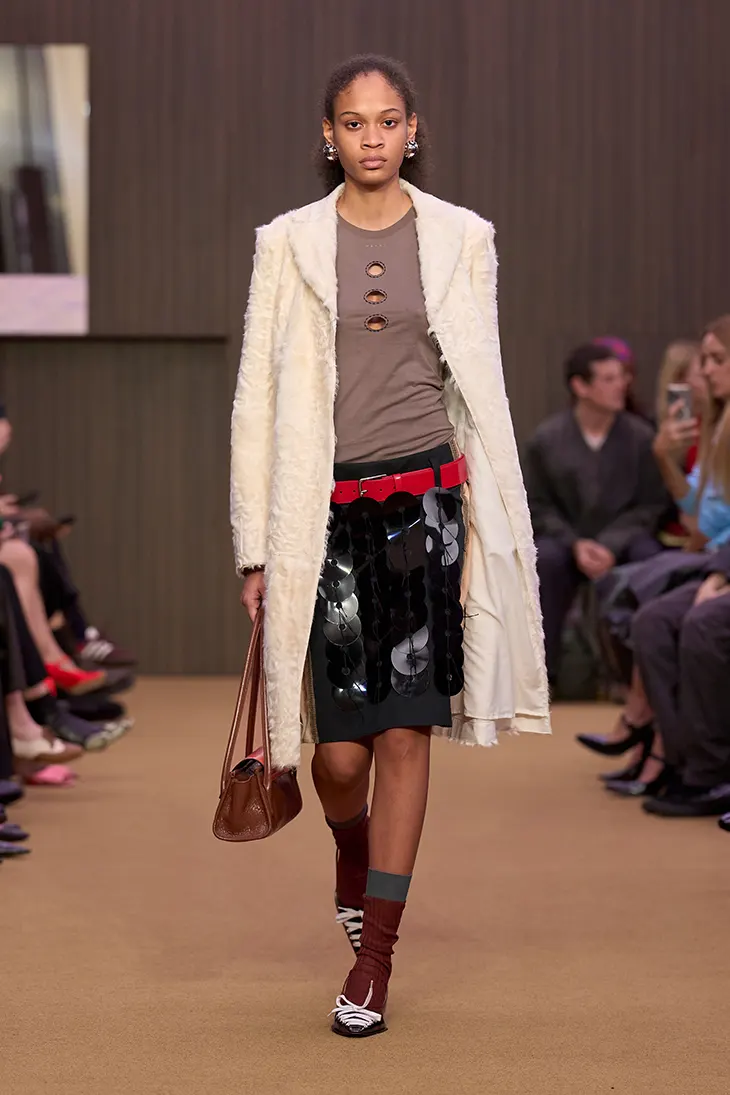



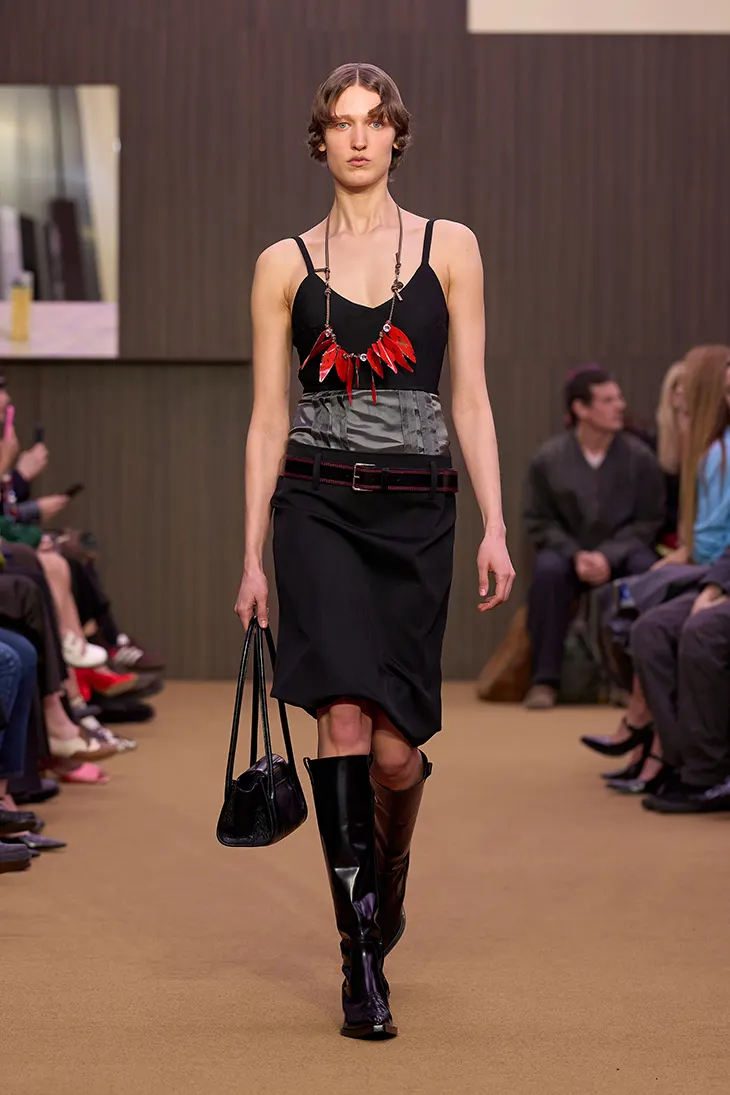
Meryll Rogge introduced her first collection as Creative Director of Marni with a clear examination of what defines the house. Presented in Milan on February 26, 2026, the Fall Winter 2026 show focused on familiarity, recognition, and reconstruction. Rogge approached Marni through recollection rather than replication, working from personal interpretations of its visual language. She emphasized honesty and clarity, identifying core elements that shaped the brand while adjusting them through proportion, fabrication, and construction. The collection established her authorship through careful recalibration, grounded in an understanding of Marni’s visual codes and their capacity for change.
FALL WINTER 2026 COLLECTIONS
Rogge placed Marni’s recognizable signatures into new configurations. Bold stitching appeared across garments as a visible structural marker, transforming technical construction into surface identity. Patterns carried weight across the collection, including gradient stripes, bias checks, and patchwork compositions that referenced earlier Marni collections. Broderie anglaise and polka dots returned with direct intent, reinforcing continuity while altering scale and placement. Rogge adjusted proportion throughout, shifting silhouettes to disrupt familiarity and reframe established shapes. These gestures created garments that acknowledged Marni’s past while asserting a contemporary reading of its vocabulary.
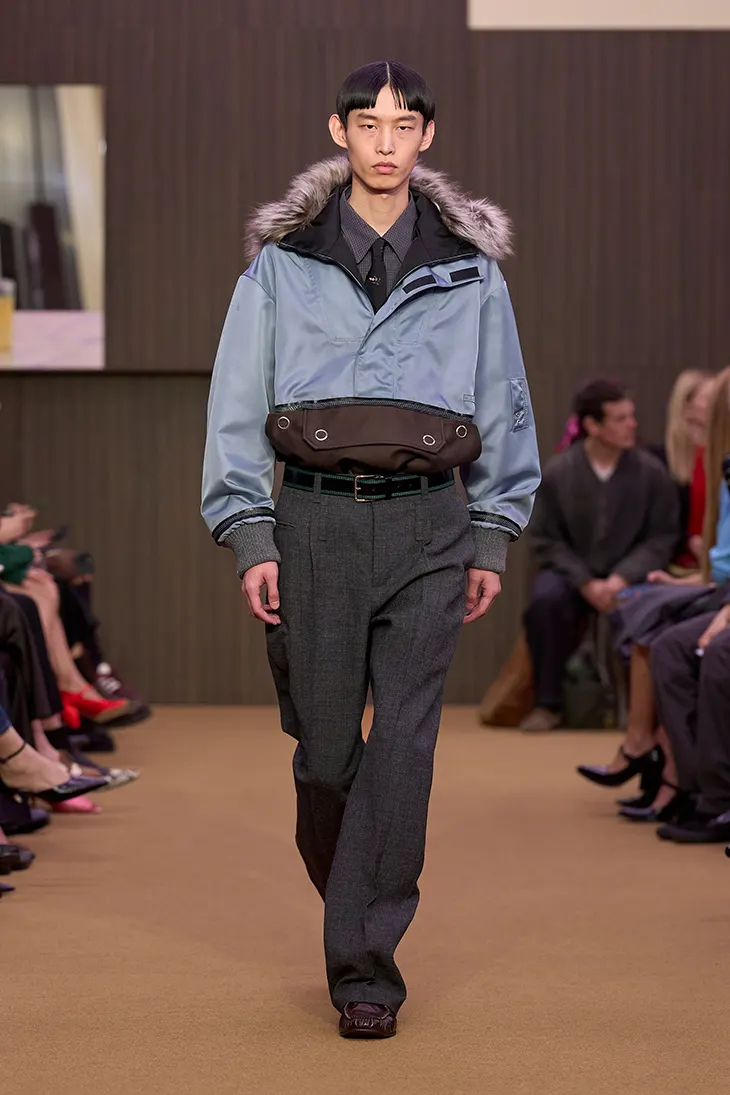
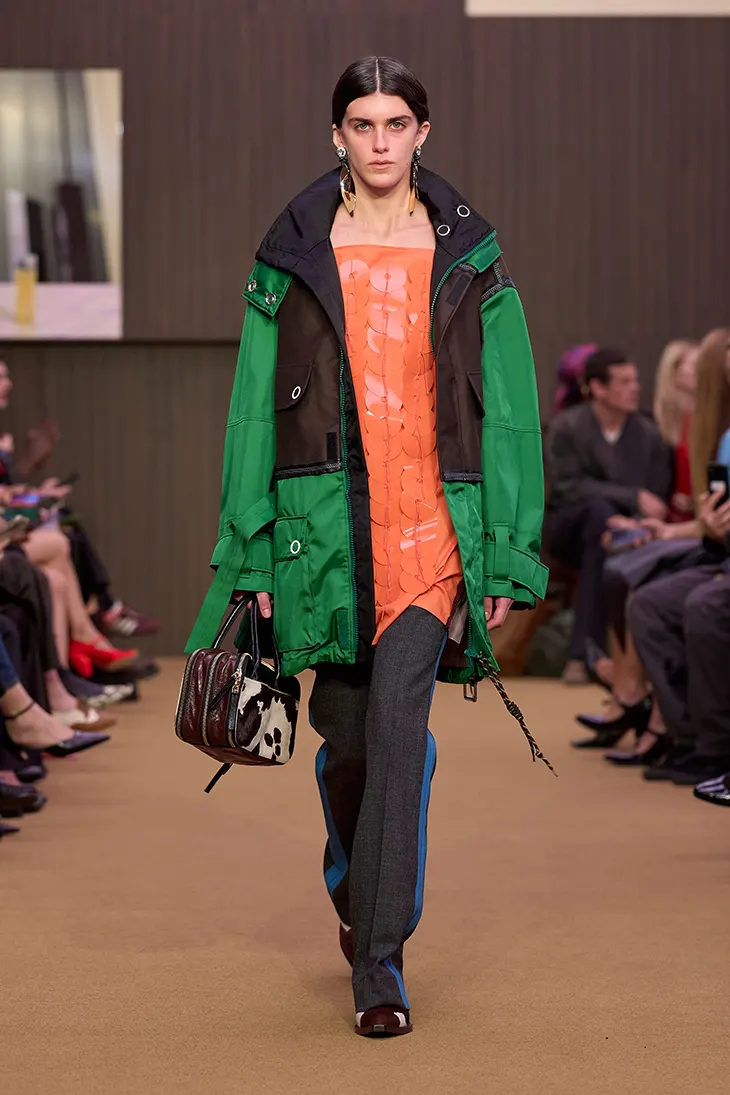
The geography surrounding Milan shaped a key visual thread. The Prealps informed a mountaineer direction that merged technical sportswear references with tailoring. Rogge combined substantial leather with industrial ciré fabrics, placing them against organza and satin to create material tension. Utilitarian elements appeared alongside refined surfaces, allowing function and formality to exist in parallel. This approach extended Marni’s long-standing interest in contrast while grounding it in physical environments connected to the city itself. Rogge treated sportswear codes as structural foundations rather than decorative references, reinforcing the collection’s focus on construction and purpose.
Accessories and established Marni objects returned with structural modification. The Fussbett sandal reappeared with adjustments that altered its presence while maintaining its recognizable profile. The Trunk bag underwent similar reconsideration, with details reworked to align with Rogge’s direction. These pieces functioned as anchors within the collection, linking Marni’s history to its current evolution. Rogge treated them as living objects, allowing their identities to shift while preserving their defining characteristics.
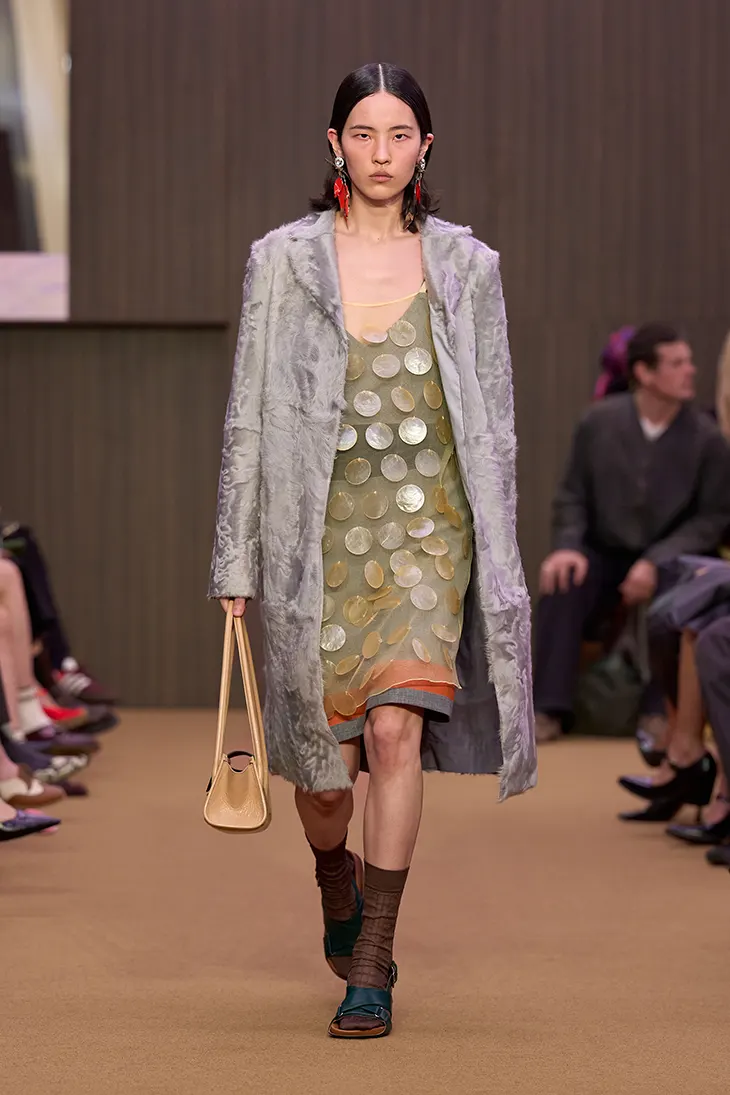
Garments emphasized the physical act of making. Reversed seams exposed interior construction, bringing attention to the process behind each piece. Oversized sequins appeared on cotton surfaces, interrupting expected hierarchies between casual and formal materials. Mother-of-pearl paillettes introduced reflective surfaces that reinforced handwork and tactile presence. Rogge combined industrial references with embellishment to create garments that carried visible evidence of intervention. Each detail reinforced the role of human decision-making within the collection.
The casting and silhouettes addressed dressing across genders without separating categories. Rogge focused on how garments interact with bodies, introducing high shoes, polished accessories, and jewelry that emphasized ceremony within everyday dressing. The collection encouraged transformation through styling, positioning clothing as a tool for personal articulation. Rogge framed Marni as a space where formal and utilitarian elements coexist through deliberate assembly.
The show environment, designed by FORMAFANTASMA in collaboration with Rogge, reinforced the collection’s ideas. The architecture created an interior defined by warmth and familiarity, allowing audiences to engage closely with garments and material details. The space extended Rogge’s interest in recognition and reconstruction, presenting Marni as both known and newly defined. Her debut established a precise direction, rooted in the house’s codes while reshaping them through material contrast, proportion, and visible construction.