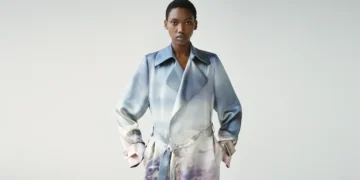





Gabriela Hearst and Paul Smith approach collaboration through personal memory rather than spectacle. Their limited-edition collection begins with two photographs taken by Smith’s father in the British countryside during the 1950s and 1960s. One image captures a mountain, the other a waterfall. Both photographs carry a quiet visual force, and both become the foundation for a project built around family, nature, tailoring, and material discipline.
CAPSULE COLLECTIONS
The connection between Hearst and Smith feels direct. Smith looked to his father, a textile professional and amateur photographer, while Hearst’s own work carries the influence of her grandmother and her childhood on a ranch in Uruguay. That background matters here, since Hearst has often framed luxury through use, purpose, and longevity. Objects in her childhood environment had function and value because they served daily life. Smith brings a parallel understanding through tailoring, print, and a British design language shaped by wit, precision, and a long respect for cloth.
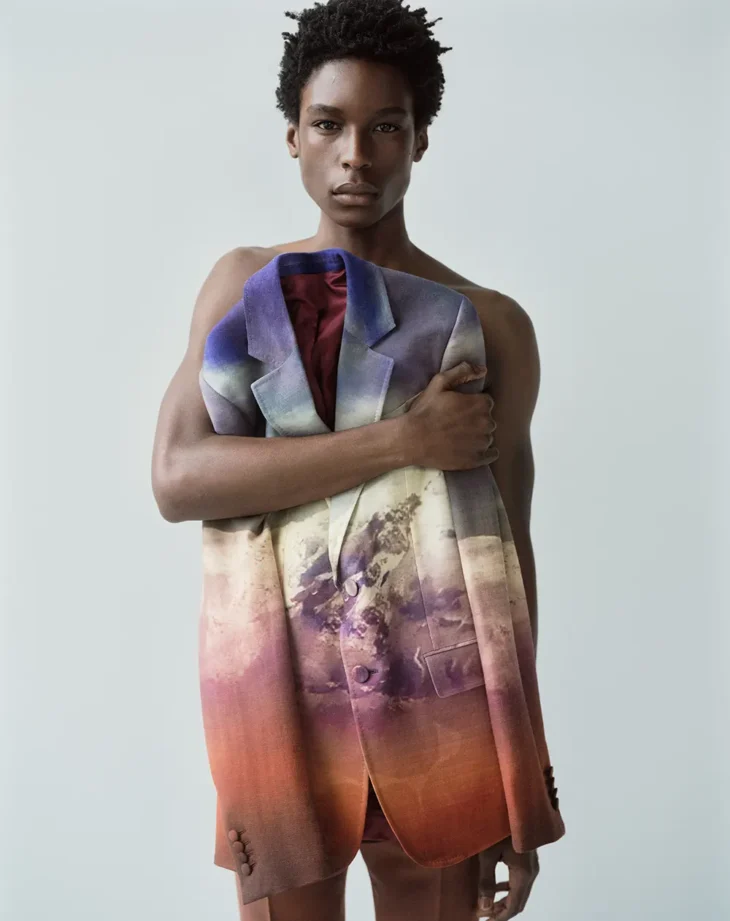
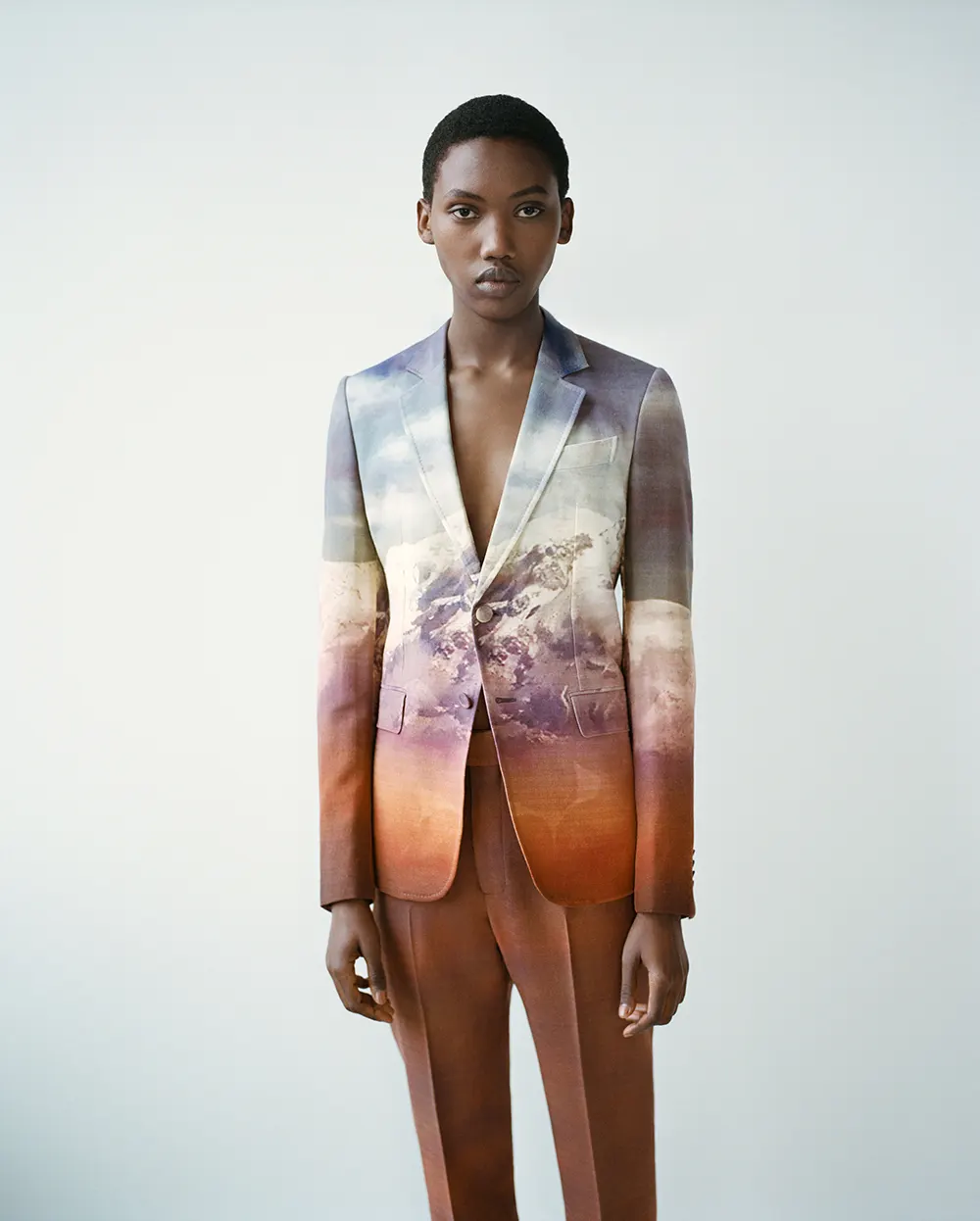
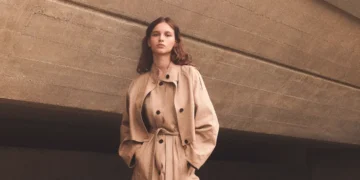
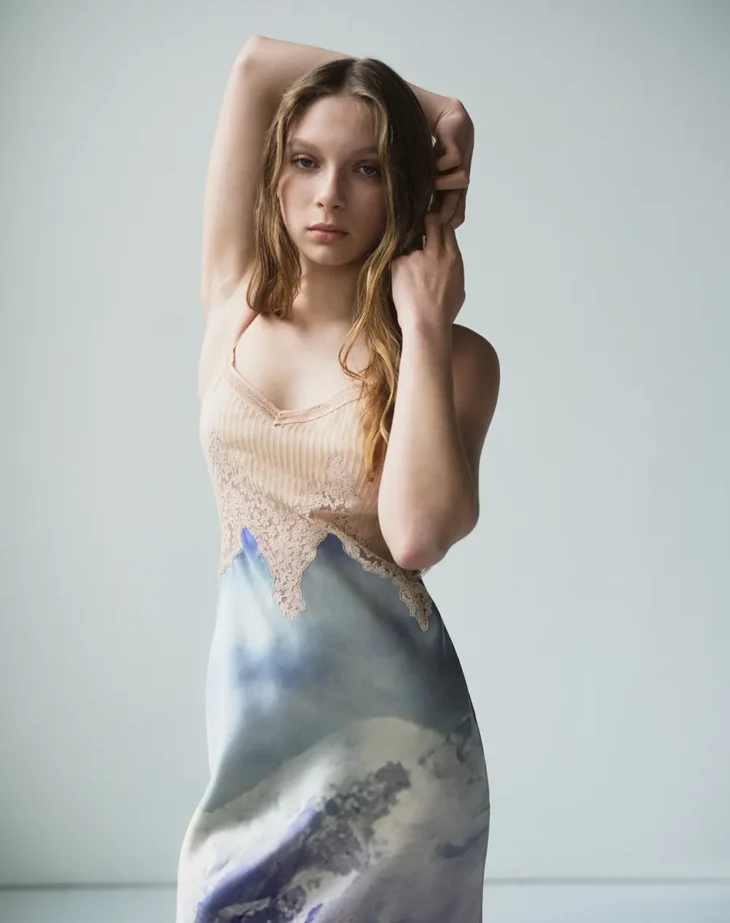
Across fourteen men’s and women’s pieces, the collection uses tailoring as its main structure. The archival photographs appear through printing and hand-led techniques, moving between literal image and abstract surface. Silk satin trench coats introduce a softer sense of motion, while bias-cut slip dresses pick up the movement of water and horizon lines. Virgin wool barré suiting carries all-over prints, adding visual tension to classic Italian-made tailoring. The pieces carry a strong point of view, yet the collection avoids over-explaining itself. It lets surface, cut, and reference do the work.
The strongest pieces appear where the collaboration balances structure with movement. The trench coats and slip dresses translate landscape into clothing without turning the source material into decoration. The suiting, meanwhile, gives the project its sharper edge. Paul Smith’s tailoring language meets Hearst’s interest in material depth, producing garments that feel personal without becoming sentimental. This is where the collection finds its clearest voice, in pieces that can move between memory and contemporary dressing.
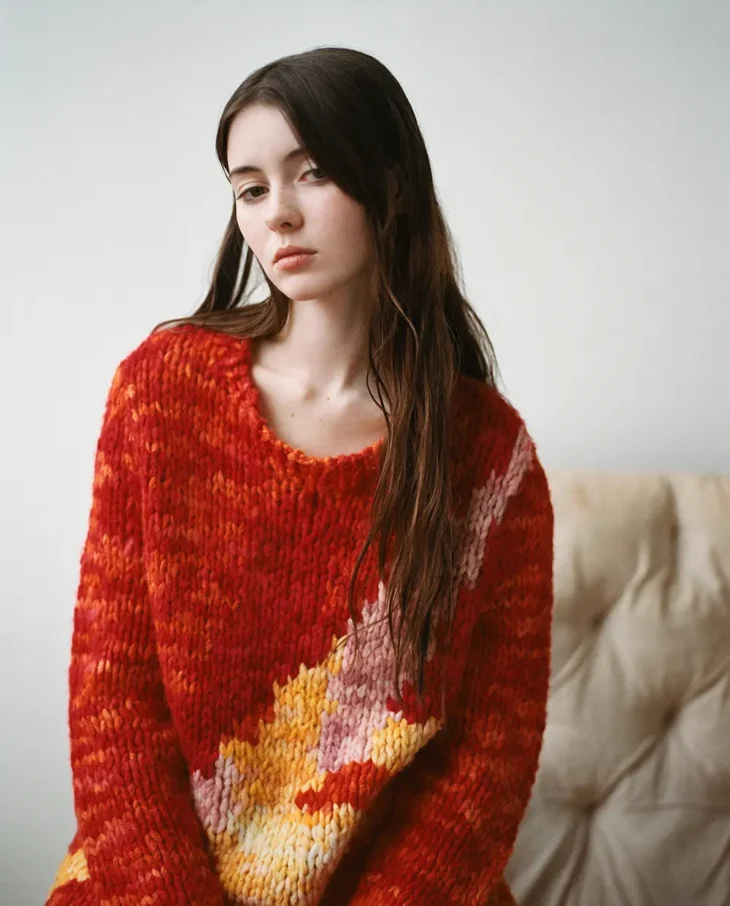
The knitwear adds another layer to the story. Cashmere crewnecks in space-dyed Welfat yarn are hand-knit by Manos del Uruguay, the nonprofit cooperative supporting economic independence for women in rural communities. For Hearst, that detail sits naturally within her wider design practice, where production process carries as much weight as the final garment. For Smith, it expands the collection beyond print and tailoring into a more tactile register. The sweaters bring warmth and human presence to a project otherwise defined by sharp cuts and photographic surfaces.
Accessories give the landscape imagery another format. Gabriela Hearst’s Nina and Demi top-handle bags become carriers for the collaboration’s visual references, translating the mountain and waterfall photographs into objects with strong shape and practical clarity. These pieces extend the project’s dialogue between structure and image. They also show how the collaboration works best when both designers keep their codes visible. Hearst’s bag silhouettes remain recognizable, while Smith’s archive photography shifts their mood.
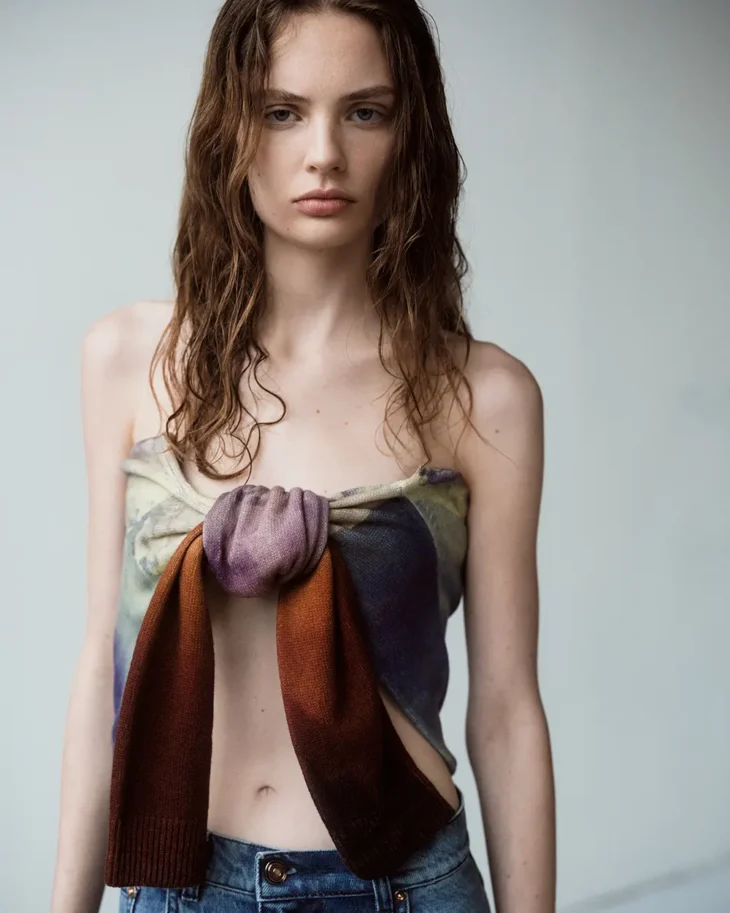
The campaign, photographed by Cathy Kasterine and styled by Camilla Nickerson, places these landscape-driven pieces into an urban New York setting. The imagery draws from the creative energy of a young Patti Smith and the current cultural presence of Brooklyn musician Cameron Winter, bringing the collection away from pastoral nostalgia and into the city. Featuring artists, musicians, writers, and creatives, the campaign gives the collaboration a lived-in cultural context. It frames the clothes through people who understand personal style as a working language.
Gabriela Hearst and Paul Smith launch the collection on May 20, 2026, through Paul Smith boutiques and paulsmith.com, Gabriela Hearst flagship stores in Beverly Hills, New York, and London, and gabrielahearst.com.