


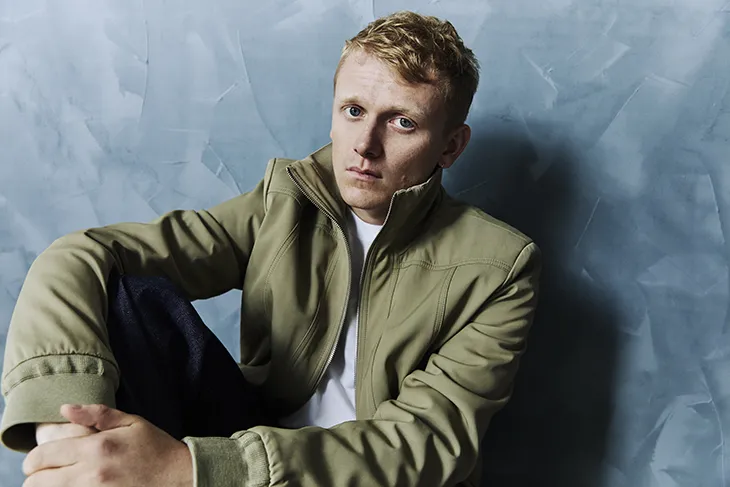
George Jaques has built his career both in front of and behind the camera, working as an actor, writer, director and producer. At 25, he has already acted opposite Jude Law in The Third Day: Autumn, appeared in The Serpent Queen and A Town Called Malice, and established himself as a writer, director and producer through his own projects. He founded Athenaeum Productions at just 16, staging his own theatre projects while still at school. His feature debut Black Dog, co-written with Jamie Flatters, premiered at the 2024 BFI London Film Festival and introduced a filmmaker interested in young characters, emotional instability and the relationships that form when people find themselves between one stage of life and another.
With Sunny Dancer, Jaques takes that interest into a very different setting. Written, directed and produced by him, the film stars Bella Ramsey as a teenage cancer survivor sent to a summer camp for young people affected by cancer, alongside Neil Patrick Harris, James Norton, Jessica Gunning, Ruby Stokes and a wider young ensemble. The film opened at the 2026 Berlin International Film Festival and draws partly from Jaques’ own experience after his mother was diagnosed with cancer when he was a teenager, as well as from his work as an ambassador for Teenage Cancer Trust.
It was never one big ‘ta-da’ moment where I discovered cinema – it was always about finding different ways to tell stories.
Jaques approaches the subject through comedy, friendship, music, first love and the awkward intensity of being young. In conversation with DSCENE editor Ana Markovic, he speaks about the early theatre work that led him into filmmaking, what acting taught him about directing, why Sunny Dancer needed humour, his collaboration with Ramsey and Este Haim, and how personal experience became the starting point for a film that sees its characters as young people beyond their cancer diagnoses.
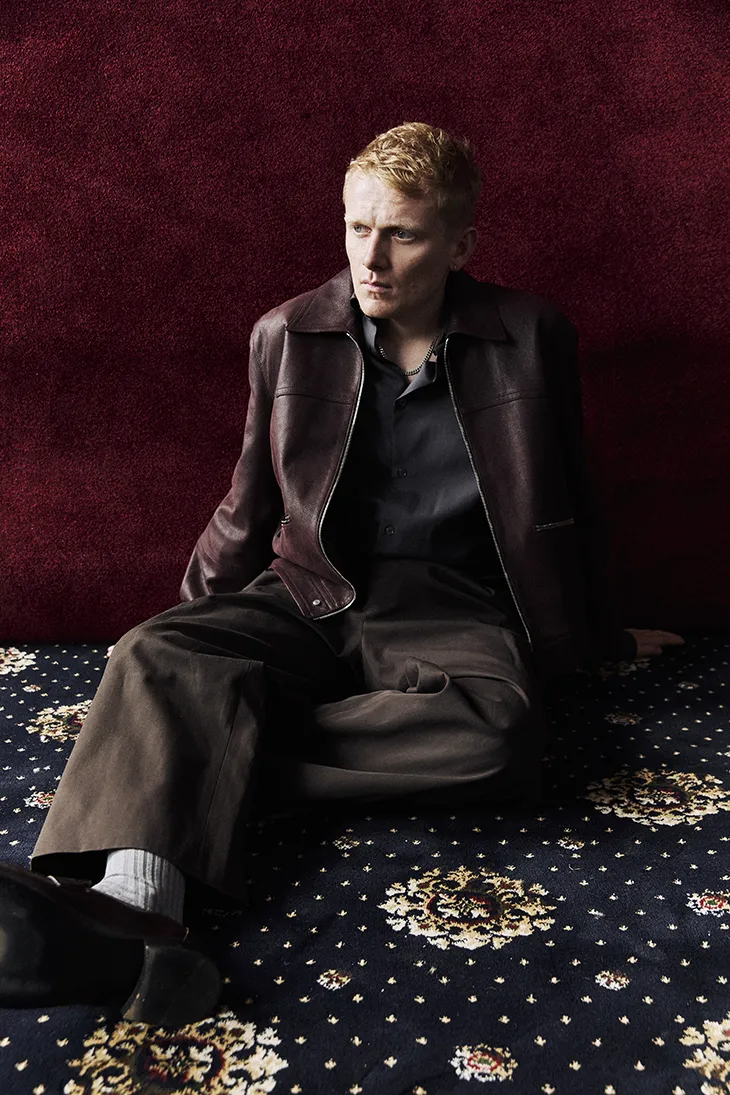
When did cinema first become something you wanted to take part in, rather than simply watch? And what kind of films made you understand the power of storytelling early on?
I actually started my company when I was 16, but at the time my focus was primarily theatre because that felt like everything I wanted to do. There’s something so special about a live, in-the-moment experience. I’d done school plays, but setting up the company was really my first introduction to the professional world. I put on a play about teenage drug culture in an abandoned railway arch, which was a pretty unconventional way to start, but I think that’s where I got the itch.
I never really saw myself as someone who only wanted to do theatre. I was always fascinated by storytelling, whatever form that took. I made three plays before I was 18, then got my first lead acting role and made my first short film around the same time. It was never one big “ta-da” moment where I discovered cinema – it was always about finding different ways to tell stories.
That’s remained the constant throughout my career, whether it’s writing television, making feature films, creating short films or working in theatre. It’s always been about collaborating with actors, working with people, and telling stories that make you laugh, make you cry, or leave you feeling something.
In terms of the films that shaped me early on, I remember my grandparents always having Little Miss Sunshine on, and I’d watch that every time I visited. That film felt perfect to me. I also loved Juno and coming-of-age films that could completely break your heart. But I’ve always had a real mix of tastes. I loved films like Gladiator and Nobody too. Whether it’s a quiet character piece or a big action film, I think what draws me in is always a great story and characters you care about.
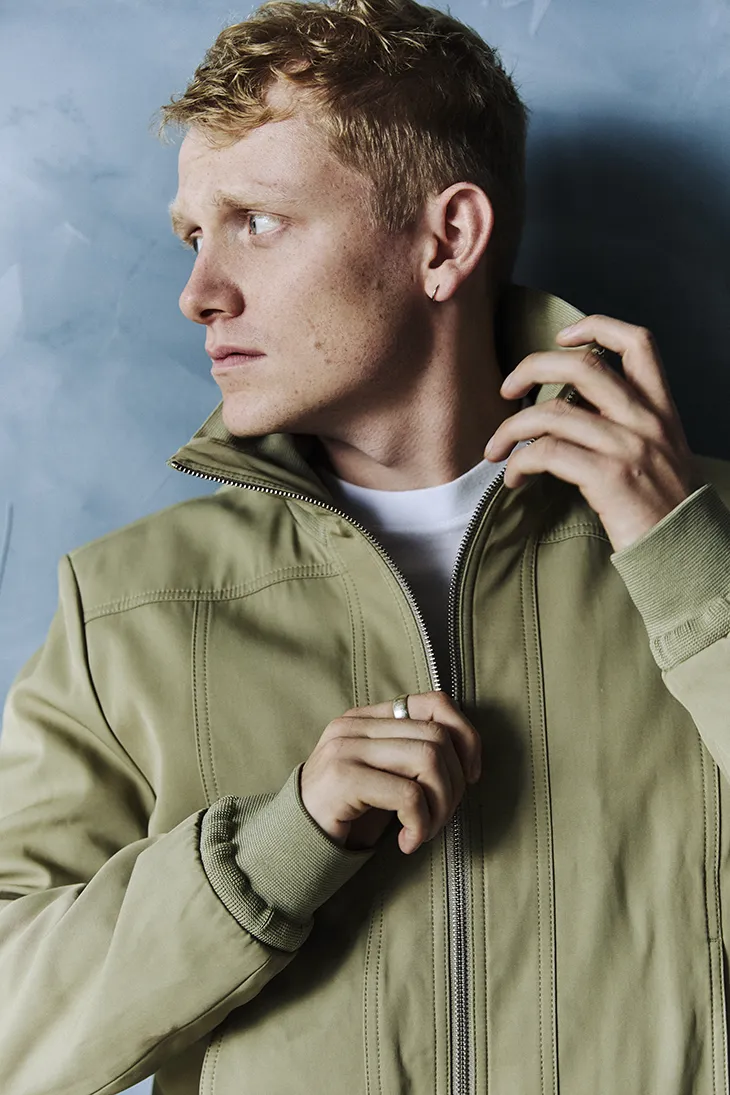
What part of the process feels closest to you: writing the first idea, directing actors, performing, or shaping the final film? And how have your experiences as an actor, writer, director and producer shaped one another?
I genuinely love all parts of the process. There are things I prefer about each one, and there are definitely things I find challenging about each one too. But when I’m making films now, I think my favourite part is working with actors in rehearsals because it feels completely pressure-free. It reminds me a lot of theatre – a group of like-minded people coming together, getting really nerdy about the story and finding the characters together.
With Sunny Dancer, for example, we’d play music, pack the actors’ bags for camp, look through the costume rail, go raft building, and just talk about life. It’s such a joyful part of directing because you’re getting to know these people, building those relationships, and watching them create a character from nothing. I love that collaborative process.
I think my experience as an actor has hugely shaped the way I direct. Working on other people’s sets, from Death on the Nile with Kenneth Branagh, to my first lead role in The Third Day: Autumn with Jude Law, as well as projects like The Serpent Queen and A Town Called Malice – I learnt so much by watching how different people work. You see how directors approach their days, how crews collaborate, how costume designers build a world, and how different actors find their characters. It’s such a rich tapestry of experiences.
I think a lot of my favourite directors have acted at some point, and I can see why. Having that experience gives you a real understanding of what it feels like to be an actor on set, which naturally makes you more empathetic and more aware of how to support them in the process.
After making Black Dog, what did you carry into Sunny Dancer, and what did you want to do differently this time?
With Black Dog, I made a small independent film that I’m incredibly proud of. I was 21 when I shot it and 18 when I wrote it. It’s a story about two boys travelling from London to Scotland on a road trip, experiencing life, grief and everything in between.
Even though Sunny Dancer has bigger locations, bigger costumes and bigger production design, ultimately it’s still about the characters and the people at the centre of it.
The thing with Black Dog was that it was a very intimate, small film, and while I’m so proud of the performances and everything we achieved, I wanted to push myself with Sunny Dancer and explore something on a bigger scale. I wanted it to feel more expansive, transatlantic and have that Americana coming-of-age feeling that you get from films like Juno, Lady Bird and Little Miss Sunshine, while still keeping that very British sensibility at its core.
What I loved about Black Dog and wanted to carry through was making sure the performances remained the heart of the story. Even though Sunny Dancer has bigger locations, bigger costumes and bigger production design, ultimately it’s still about the characters and the people at the centre of it. That’s always the thing I care about most.
What inspired the story of Sunny Dancer, and how much of it comes from personal experience?
My mum was diagnosed with cancer when I was 15, so I always knew I wanted to tell a cancer story, but I wanted to do it in my own way. I wanted to make a comedy about cancer because while that period of my life was filled with so much darkness, there were also moments where you were laughing – sometimes at the strangest things – and I found that really fascinating as a writer.
Alongside that, I wanted to make a 90s-style ensemble film and bring back that feeling of The Breakfast Club-inspired coming-of-age movies. Those two ideas were always at the heart of it.
I then started working with Teenage Cancer Trust as an ambassador, which has been one of the greatest joys of my career. Meeting so many young people affected by cancer made me realise that cancer is actually the least interesting thing about them. They’re funny, full of life, chaotic, rebellious and completely themselves. I wanted to capture that side of the experience.
It was actually my editor Caitlin who mentioned that she used to go on summer camps for young people affected by cancer, and I remember thinking, that’s the movie.
I feel really proud that we were able to show a different side of the cancer story. We’ve seen so many films that focus on the darkest moments – the hospital scenes, the fear, the heartbreak – and I wanted to explore what happens afterwards: the remission period, when young people are trying to figure out who they are again and learn how to just be young people. That felt like such an important and underrepresented part of the story.
How did you approach writing a coming-of-age story set around cancer without making illness the central focus?
I think it started with the people. I wanted to tell a story about these young people who had been through something incredibly difficult, but who were still able to find joy in the most unexpected places.
When you’ve been pushed to such an extreme point in life, the things that might once have felt huge can suddenly feel much smaller. Sneaking out of camp, breaking the rules, having your first snog – those things become moments of freedom and normality.
I think humour, when it’s used in the right places, actually adds to the emotional weight of a story rather than taking away from it.
What I loved about setting the story at a camp was that it gave them space to be teenagers again. They’ve gone through something incredibly adult and frightening, but they’re still young people who want to have fun, cause trouble, fall in love and experience all those classic coming-of-age moments.
That contrast felt really special to me: characters who have faced something so serious, but who are finally being given the chance to just be young again.
How did you find the balance between comedy, discomfort and emotional honesty? And did you ever worry that humour could undermine the story’s emotional weight?
Truthfully, no. I think humour, when it’s used in the right places, actually adds to the emotional weight of a story rather than taking away from it.
I think the reason people have responded so strongly to Sunny Dancer – saying things like they’ve never laughed so hard in a cinema or cried so much – is because it allows both emotions to exist together. When you’re crying with laughter in one scene and then completely heartbroken in the next, that contrast is what makes those moments hit even harder.
I think that’s true of life as well. Laughter and crying aren’t actually that far apart; they’re both such intense emotional releases and you can move between them very quickly. That was certainly true of what my mum went through. There were moments of incredible sadness, but there were also moments of laughter and joy. That’s part of the reality of going through something like that -you don’t get to experience just one side of it.
The film brings together characters who share a life-changing experience, but still have very different personalities. How did you approach building that group dynamic?
I think I wanted to bring a little bit of everyone I’d grown up with into the film – friends, people I’ve known, and even parts of myself. I didn’t want to define these characters by their treatment or their illness. Of course, I had done a lot of research and kept a diary while writing about what they’d been through, but ultimately I wanted to focus on who they were as people.
I really wanted to capture that feeling of being young, where everything feels incredibly serious and completely unserious at the same time.
I was interested in those familiar personalities that exist in every friendship group. You have the quiet one, the loud one, the chaotic one, the person who keeps everyone together. I wanted to create an ensemble where audiences could recognise someone they know – maybe there’s a Ralph in your life, an Ivy, an Ella, or maybe you see a bit of yourself in one of them.
The most exciting thing was seeing how those very different personalities came together and created something electric. The same was true with the casting. I can do so much on the page, but those actors brought their own experiences, energy and little details to the characters. They became the beating heart of the ensemble, and I’m so grateful to each of them because they elevated the writing and made the world feel even more alive.
What did you want the film to capture about being young that you rarely see treated honestly on screen?
I always say that this was a film made by young people, for young people. I was 23 when I wrote it and 24 when I directed it, which was really special because it wasn’t that long ago that I’d experienced many of those same feelings myself.
The world changes and the details change – young people might vape now or drink less than previous generations – but the patterns stay the same. They’re still sneaking out, falling in love for the first time, making mistakes, testing boundaries and feeling like every emotion is the biggest thing that’s ever happened.
Cancer is actually the least interesting thing about them. They’re funny, full of life, chaotic, rebellious and completely themselves.
I really wanted to capture that feeling of being young, where everything feels incredibly serious and completely unserious at the same time. Those moments of first love, first heartbreak, first experiences – they can feel overwhelming because everything is so new.
I also believe young people don’t sit still. They’re constantly moving, exploring and experiencing life, and I wanted the film to reflect that. These characters have been through something incredibly difficult, and now they’re being given the chance to really live – to dance, to laugh, to make memories and to experience everything that comes with being young again.
How did your work with Teenage Cancer Trust influence the film?
I became an ambassador for Teenage Cancer Trust, and through that I met so many incredible young people. The biggest thing I learnt was that, as I said earlier, cancer is the least interesting thing about them. They are so much more than their diagnosis.
The charity was also incredibly thoughtful in the language they used. For example, you don’t say “kids”, you say “young people”, and you don’t describe someone as “brave” because it can feel patronising. You start to understand that the way we talk about people’s experiences really matters.
When you’ve been pushed to such an extreme point in life, the things that might once have felt huge can suddenly feel much smaller.
I also had the opportunity to meet doctors, parents who had lost their children, and so many young people along the way. It became this incredibly authentic and emotional journey. We were even able to cast two young people in the film who had experienced Teenage Cancer Trust units themselves, which was really special. To give opportunities to people who had lived through that experience and then see them go on to become actors with agents and thriving careers has been amazing. I’m so proud of them.
I honestly couldn’t be prouder to be an ambassador for Teenage Cancer Trust. The work they do genuinely saves lives. One of the things that really struck me was learning that, while survival rates for both adults and younger children were improving, outcomes for teenagers and young adults weren’t changing at the same rate. A big part of that was because young people were missing treatment because they wanted to continue living their lives – going to school, seeing friends, being teenagers.
When Teenage Cancer Trust started creating specialist units for young people, those outcomes began to improve again. That’s the power of what they do. No one should have to go through cancer alone, and I feel incredibly lucky and proud to play even a small part in supporting such an important organisation.
Did you have Bella Ramsey in mind while writing Ivy, and how did the collaboration come together? What did they bring to the role that you may not have anticipated?
When I was writing Ivy, I didn’t have anyone specific in mind. My casting directors Daniel Edwards, Tom Payne and Lucy Allen, who worked on Heartstopper, suggested Bella Ramsey, and I remember thinking, “There’s absolutely no way Bella’s going to do it.” They’d just come off The Last of Us and were one of the most exciting young actors in the world, so I couldn’t imagine we’d get them.
They encouraged me to send it to Bella’s agent, Georgie Adams, who read the script, loved it and passed it on. A few weeks later, I got an email saying Bella would love to have a Zoom call with me, and I remember thinking, “Okay, this is actually happening.”
Bella was extraordinary. Their ability to move between anger, comedy, vulnerability and love is just incredible.
My team kept reminding me how huge it would be for the film if Bella came on board, and I definitely felt that pressure. But when we got on the call, I just said, “Bella, I want to start by saying I really want you to do this film,” and Bella replied, “Well, I really want to do it too.” From there, we just talked about life, and that really sums up our collaboration.
Bella is a one-of-a-kind talent. They’re unbelievably kind, generous and trusting, incredibly talented, and they’re someone who brings so much care to everyone around them – from the cast to the crew. They were always prepared, always on time, and they were the most brilliant person to have leading the film.
I think the reason our collaboration worked so well is because we trusted each other completely. There was a great piece written about Sunny Dancer giving Bella another chance at childhood, and I think that came from the fact that we created an environment where they felt safe to explore. If I pushed Bella, they knew why I was pushing them, and we became a really strong team.
What excited me about casting Bella was that I hadn’t seen them play a role quite like Ivy before. They’d done incredible work in Game of Thrones, The Last of Us, Catherine Called Birdy and Time, but Sunny Dancer required something very stripped back. There’s nowhere to hide in this film, and that can be scary because it’s often easier to cast someone in a role you’ve already seen them do.
But Bella was extraordinary. Their ability to move between anger, comedy, vulnerability and love is just incredible. I’m so proud that they were the lead in my second feature, and I couldn’t imagine anyone else bringing Ivy to life.
How did you approach the music in Sunny Dancer, from Este Haim’s score to the wider soundtrack, and what did you want it to bring to the film?
When I brought Este Haim on board, there was a really special synergy between her and Ivy because Este had been to diabetes camp herself. She understood that feeling of being different, of feeling like an outsider, and then finding a place where you suddenly belong. That emotional connection to the story was really important.
She also brought on the incredible Zachary Dawes, who plays bass for Lana Del Rey, and together they created something really special. We always talked about how coming-of-age films – particularly British ones – often don’t have the budget for huge soundtracks because budgets are stretched, and ours was no exception. So the fact that we ended up with 15 major tracks in the film feels pretty amazing.
I wanted the score to feel alive, emotional and almost like another character in the film.
That was thanks in no small part to our music supervisor Phil Canning and Universal, who went above and beyond to help make it happen. There were also some amazing moments of luck along the way. I was sat next to Alison Goldfrapp at an event and asked if we could use Ooh La La. The Scissor Sisters even went to Elton John for approval for I Don’t Feel Like Dancin’ because he co-wrote it with them, and thankfully he said yes.
We also had original songs from Olivia Dean and CMAT, which was incredibly exciting. Ultimately, we wanted music to feel like a huge part of the film because it’s such a massive part of being a teenager. I didn’t want the score to just sit in the background between the big soundtrack moments – I wanted it to feel alive, emotional and almost like another character in the film. I wanted it to feel big and loud and joyful, and that was one of the most exciting parts of creating the world of Sunny Dancer.
What did you want Sunny Dancer to add to the tradition of British coming-of-age films?
I wanted to be a little bit cheeky and make a big nod to those classic British coming-of-age films, while also bringing in that Americana influence that I love from films like Juno, Lady Bird and Little Miss Sunshine.
I think there’s a tendency to think that British films have to be small and intimate, but I wanted to show that we can make stories here that have a real international appeal and feel bigger in scale. I wanted Sunny Dancer to have that British humour and cheekiness at its heart, but also have the scope, energy and visual ambition of a much bigger film.
Ultimately, I wanted to make something that could connect with audiences anywhere in the world – something that was funny, emotional and full of heart – and I’m really proud of what we created.
Looking ahead, are you drawn to stories that challenge genre expectations, or do you prefer exploring familiar structures with a fresh voice? And what’s next for you, what are you most excited to explore moving forward?
I think, honestly, it’s a bit of both. I’d love for someone to eventually come into a George Jaques film, TV show or theatre piece and think, “I feel like I know what this is… but there’s going to be a completely unexpected spin on it.” That’s the kind of storytelling I’m drawn to.
Ultimately, I just love telling stories that make people laugh, make them cry and make them feel human. Even if the world isn’t necessarily familiar or realistic, I want the emotions at the centre to feel real and relatable.
That contrast felt really special to me: characters who have faced something so serious, but who are finally being given the chance to just be young again.
Ultimately, I just love telling stories that make people laugh, make them cry and make them feel human.
That’s something I’m really proud of with Sunny Dancer. Whether you’ve been to a cancer camp, a regular camp, or neither, I think there’s still something you can connect to because we’ve all experienced loss, grief, love and those moments that shape who we are. There’s something nostalgic about that shared human experience.
Looking ahead, I’m really excited to keep exploring the space between music, fashion, film, television and theatre. I love the idea of collaborating with brands and artists to tell stories in different ways, and using music and partnerships with people like Haim to add another layer, scale and emotional impact to projects. That intersection is something I’m really enjoying exploring.
Talent: George Jaques – georgejaques
Photographer: David Reiss
Sunny Dancer is released nationwide in cinemas on 14th August 2026, and will be released in US cinemas in September.




george is such a darling!