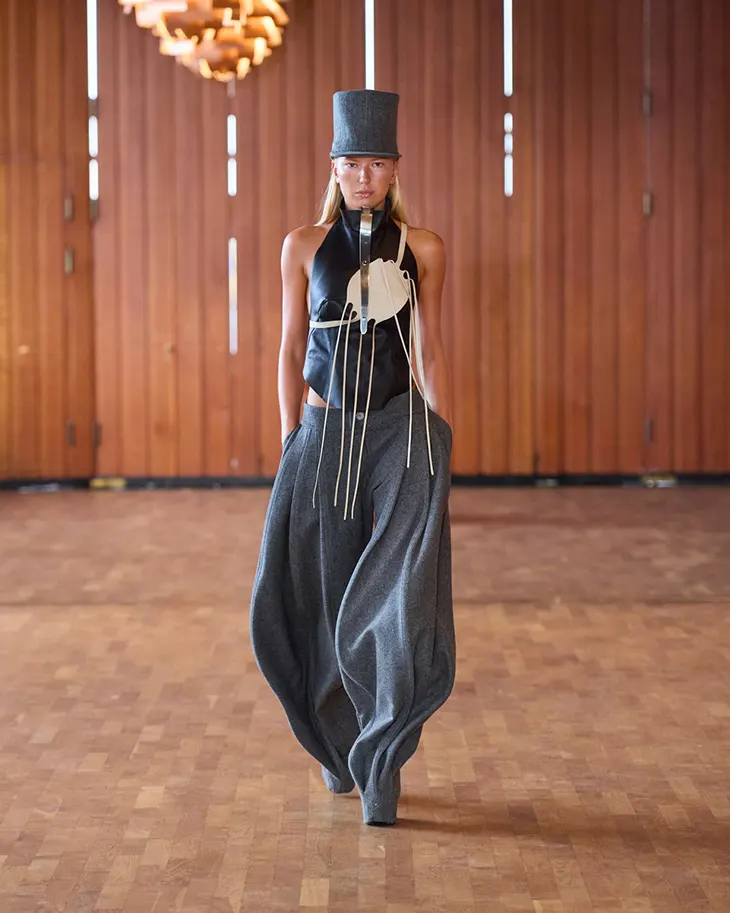



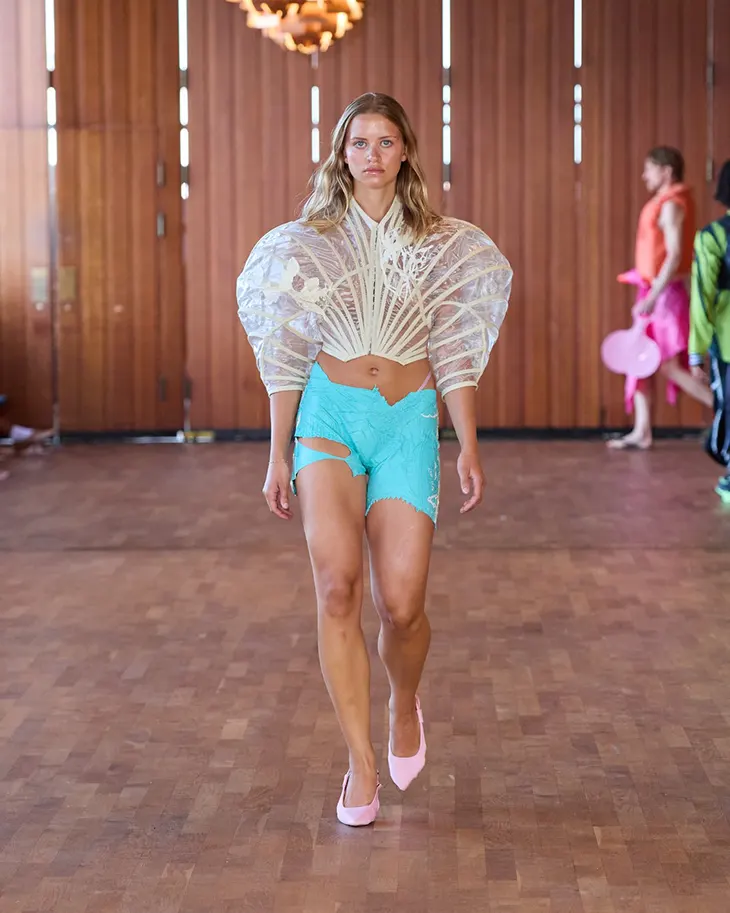
The Swedish School of Textiles presented its SS27 runway show during Copenhagen Fashion Week, bringing together 22 graduating designers at Langelinie Pavilion. The collections approached fashion through humor, experimentation, material research and a clear interest in what clothing can communicate beyond function. The show moved from playful objects to highly developed textile work, with pieces that included mop-like shoes, dresses with fairy lights, trousers made from nails and a beanbag transformed into a handbag.
SPRING SUMMER 2027
The show placed creativity at the center of the experience. Each designer approached playfulness differently, from direct humor to subtler ideas embedded in construction and material choice. Several collections showed a visible enjoyment of the design process, especially through print, textile manipulation and unusual approaches to fabric. The Swedish School of Textiles has built a strong reputation around textile experimentation, and this graduating class continued that focus through weaving, embroidery, wool work and unconventional materials.
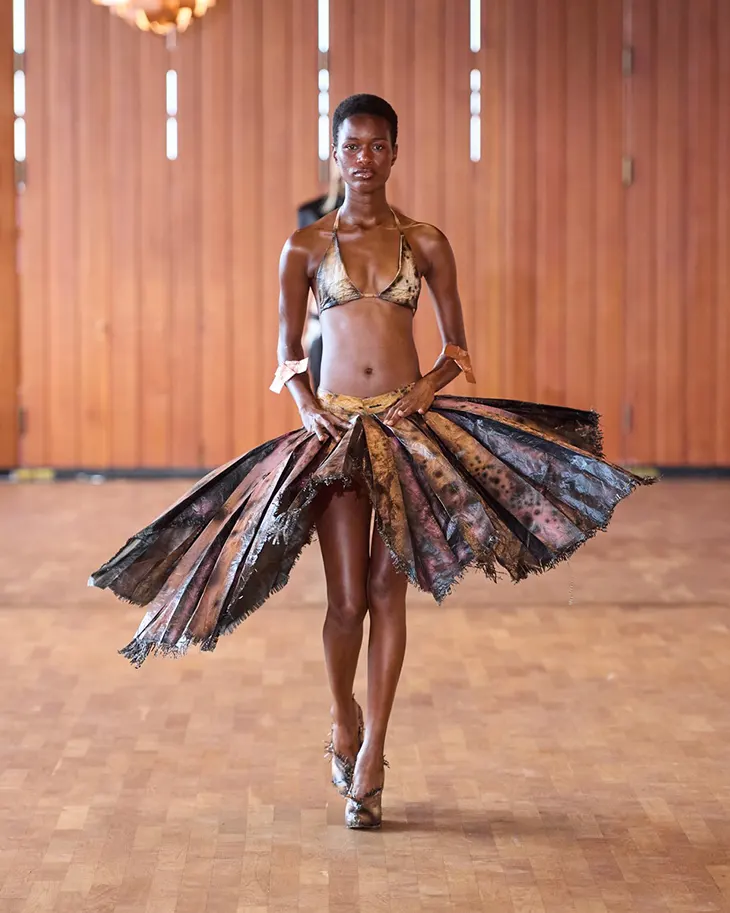
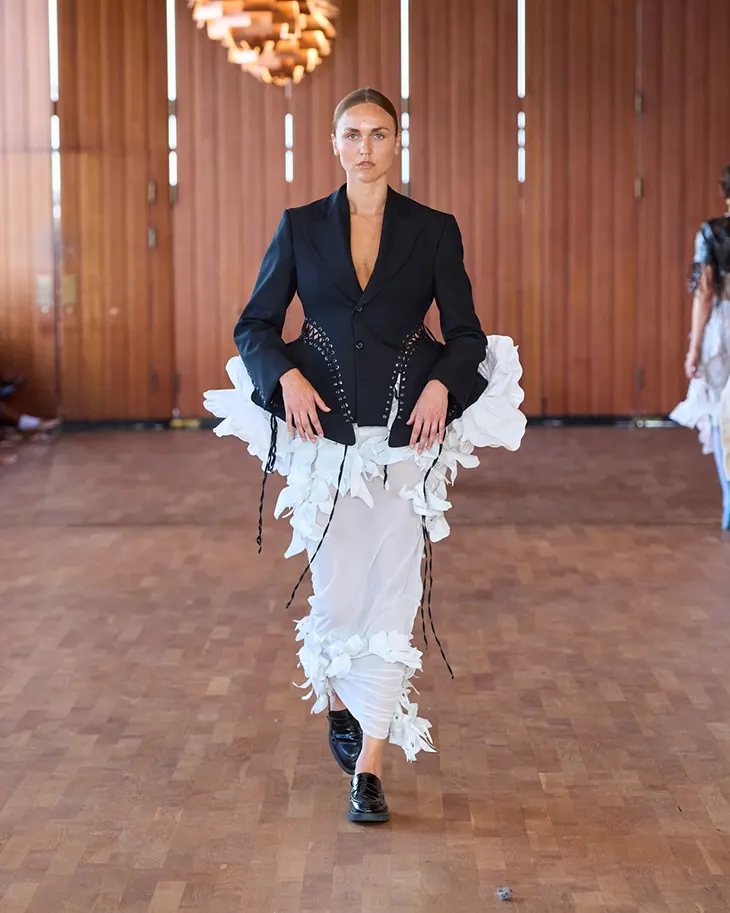
Ebba Carlson Persson developed a collection inspired by light and lamps. A disco ball dress appeared with a handbag fitted with a neon-light handle, while plastic and feathers responded differently to illumination throughout the presentation. Colorful lamps and additional neon elements extended the idea through the collection and gave the materials an active role in how the looks appeared on the runway.
Ilya Nyuganen explored wool through woven, felted and knitted forms. Tuula Wallace looked to techniques associated with Danish furniture design and translated them into a collection built primarily around woven materials. Sally Bjerre Gaarde focused on textile manipulation, using coarse weaves and machine embroidery to create surface and structure.
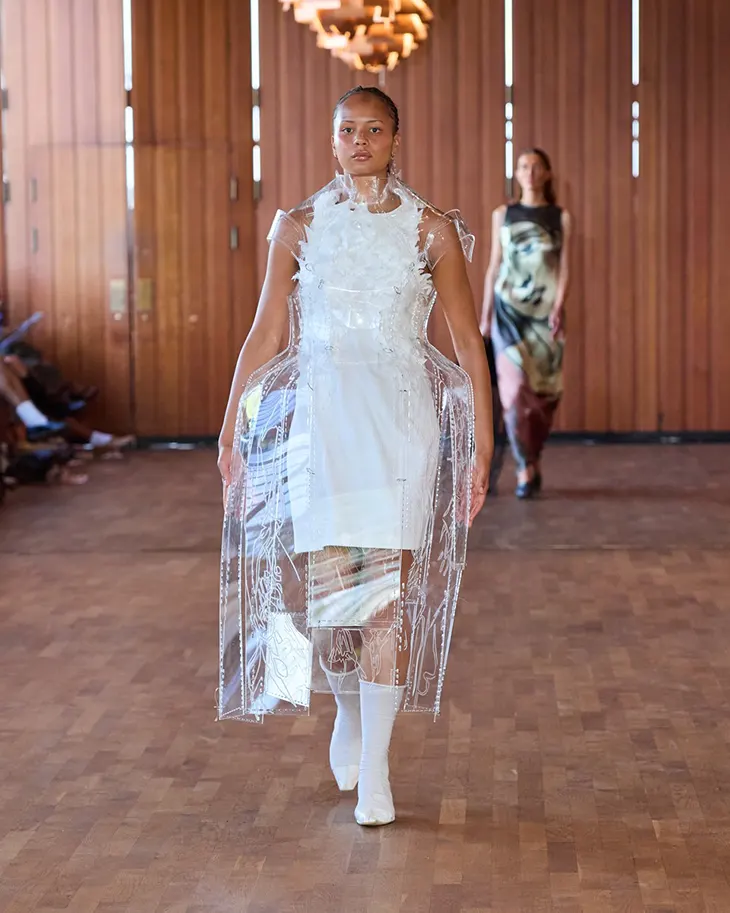
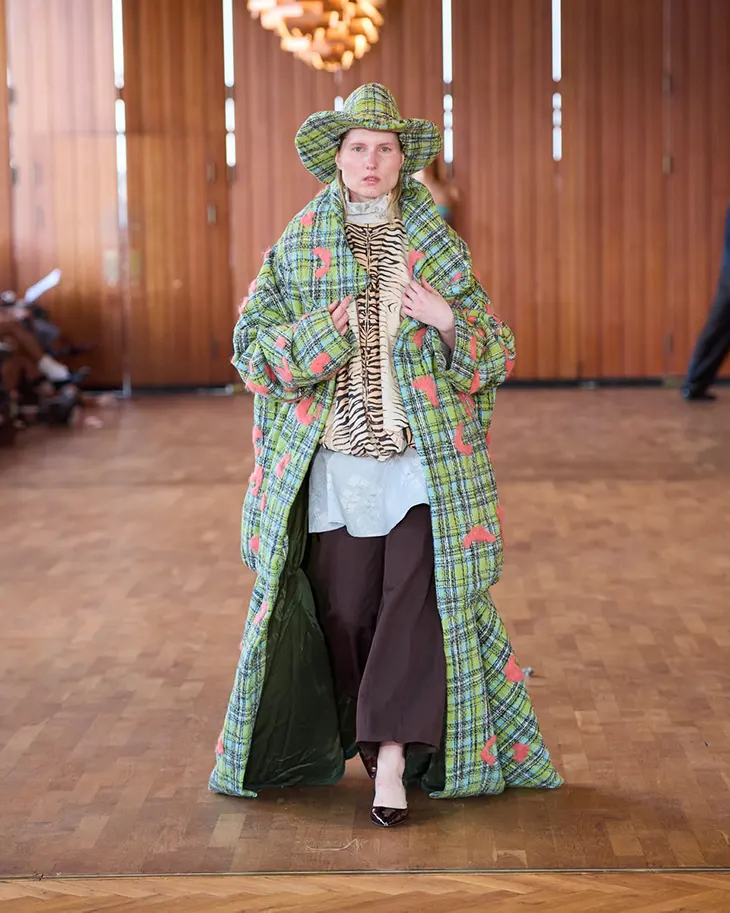
Construction and silhouette also played a major role. Iris Phillips opened the show with looks informed by the body’s postures, using undulating forms in trousers and a long wool coat. Sculptural leather pieces accompanied the garments and extended the physical language of the collection.
The show maintained a high level of finish despite the demands of graduate work, with many designers relying on hand-sewn, handwoven and hand-embroidered techniques. The presentation treated fashion as a space for experimentation, humor and individual expression, using material, shape and detail to communicate each designer’s ideas.