


For ANREALAGE Spring Summer 2027, designer Kunihiko Morinaga presents “SKIN,” a collection built around an outer surface that can shed, renew and change while the self remains. The presentation marks ANREALAGE’s 25th show in Paris and considers clothing as a surface in constant motion rather than a fixed form.
SPRING SUMMER 2027
Morinaga draws from both biological and digital references. Living creatures change the colors and appearance of their skin, while video-game avatars allow users to switch between different digital skins. ANREALAGE places clothing between these two systems, treating garments as another surface capable of transformation. The firebird, inspired by Osamu Tezuka’s Phoenix, provides a recurring image of renewal and rebirth throughout the collection.
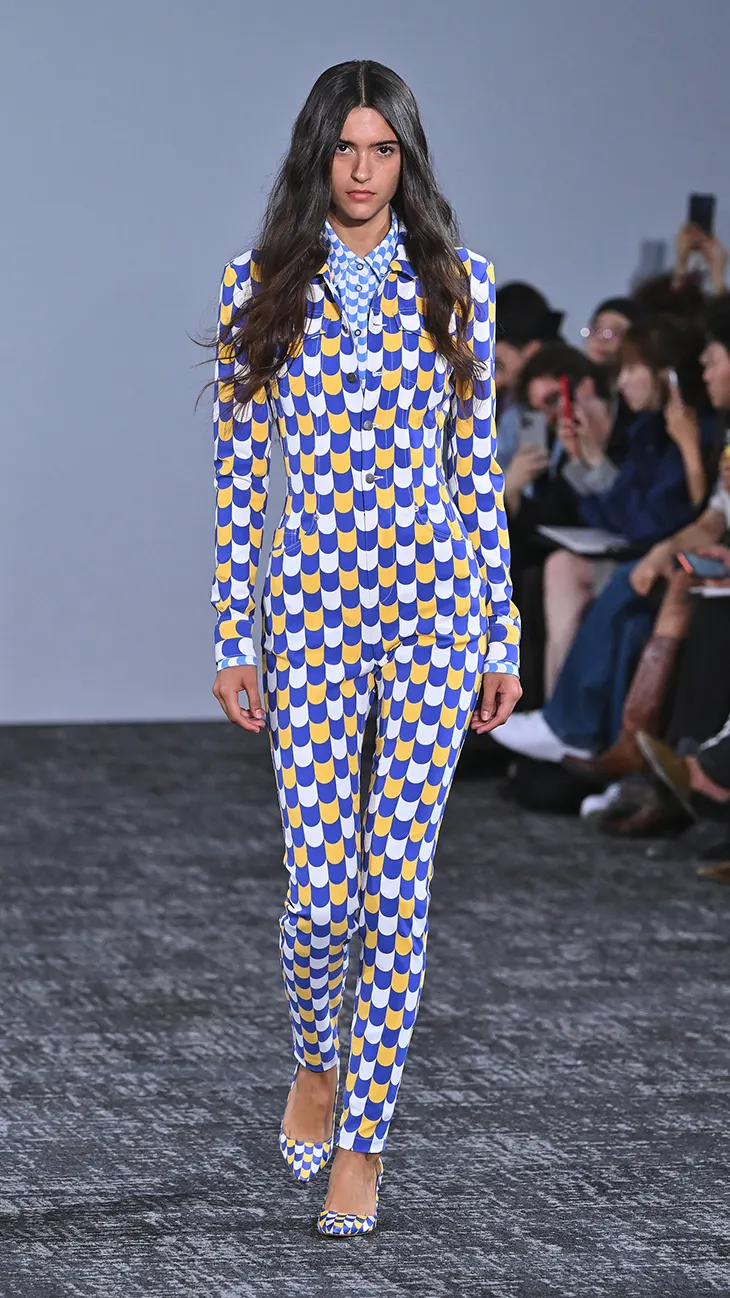
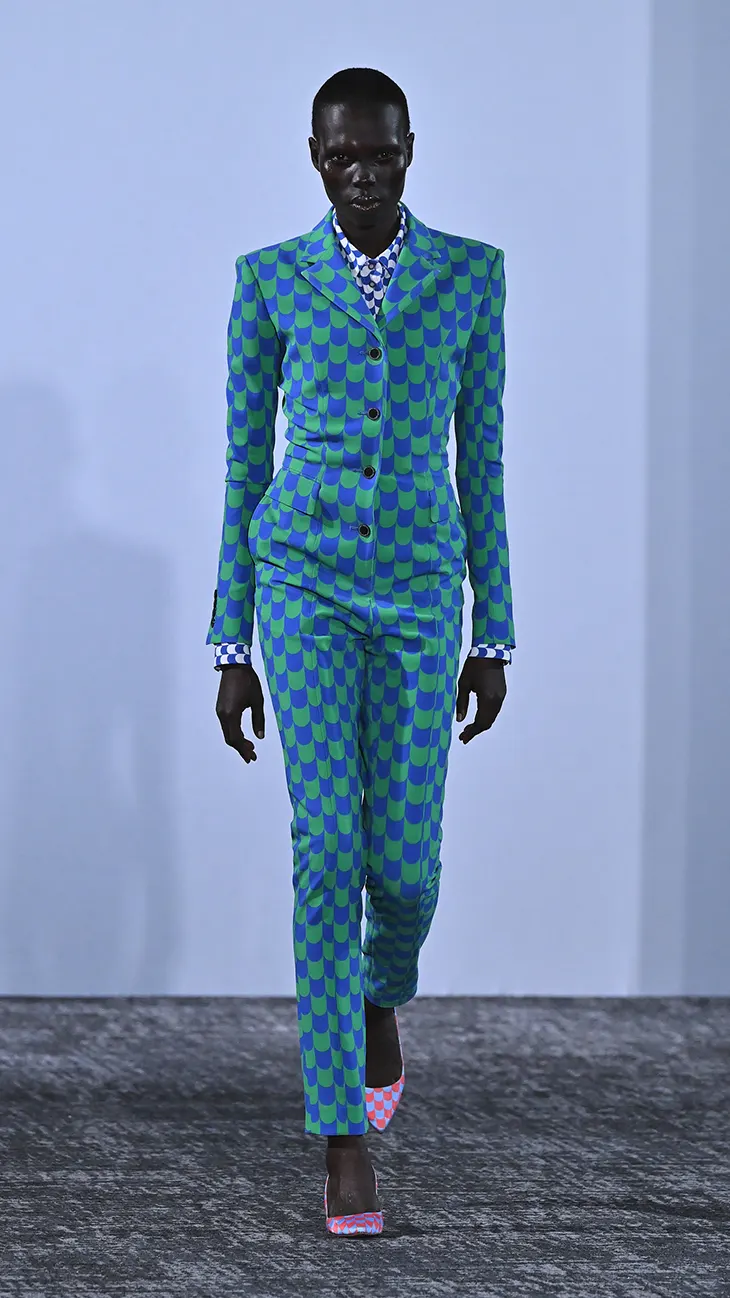
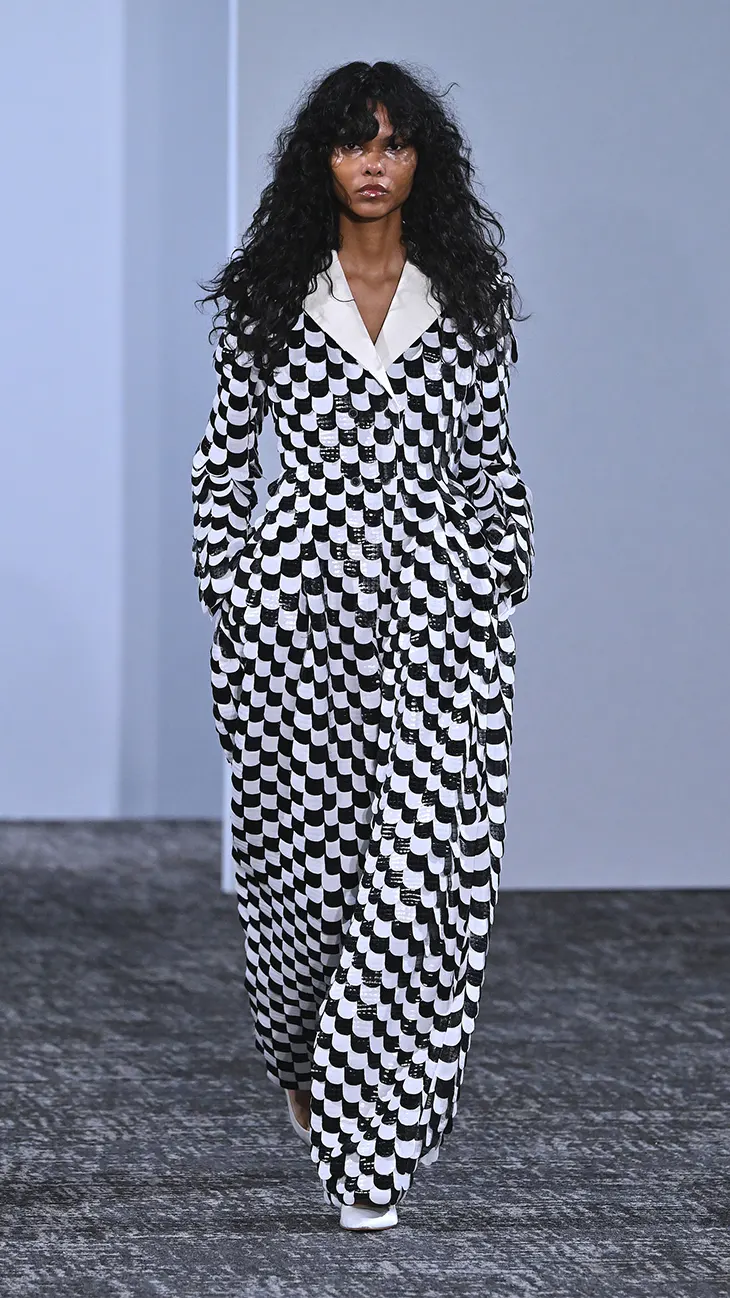
Presented at the Maison de la Radio et de la Musique, the show develops through a gradual process of mutation. It begins with second-skin all-in-one silhouettes before moving toward increasingly engineered forms. Layers of scales build new surfaces through different materials, patterns and visual effects.
Some motifs use KYOCERA’s water-saving FOREARTH technology, while traditional fabrics appear alongside Toray Ultrasuede scales. These elements create trompe-l’œil video-game costumes and robot graphics. Japanese washi enters the material mix with translucent sequins that reflect light and produce a peeling effect across the surface.
Bodysuits incorporate details and volumes associated with tailoring, outerwear and dresses into continuous constructions. These garments create a single layer around the body. Morinaga develops this idea further through surfaces inspired by chromatophores, the pigment-changing cells found in living organisms, and combines them with pixel-based graphics associated with digital imagery.
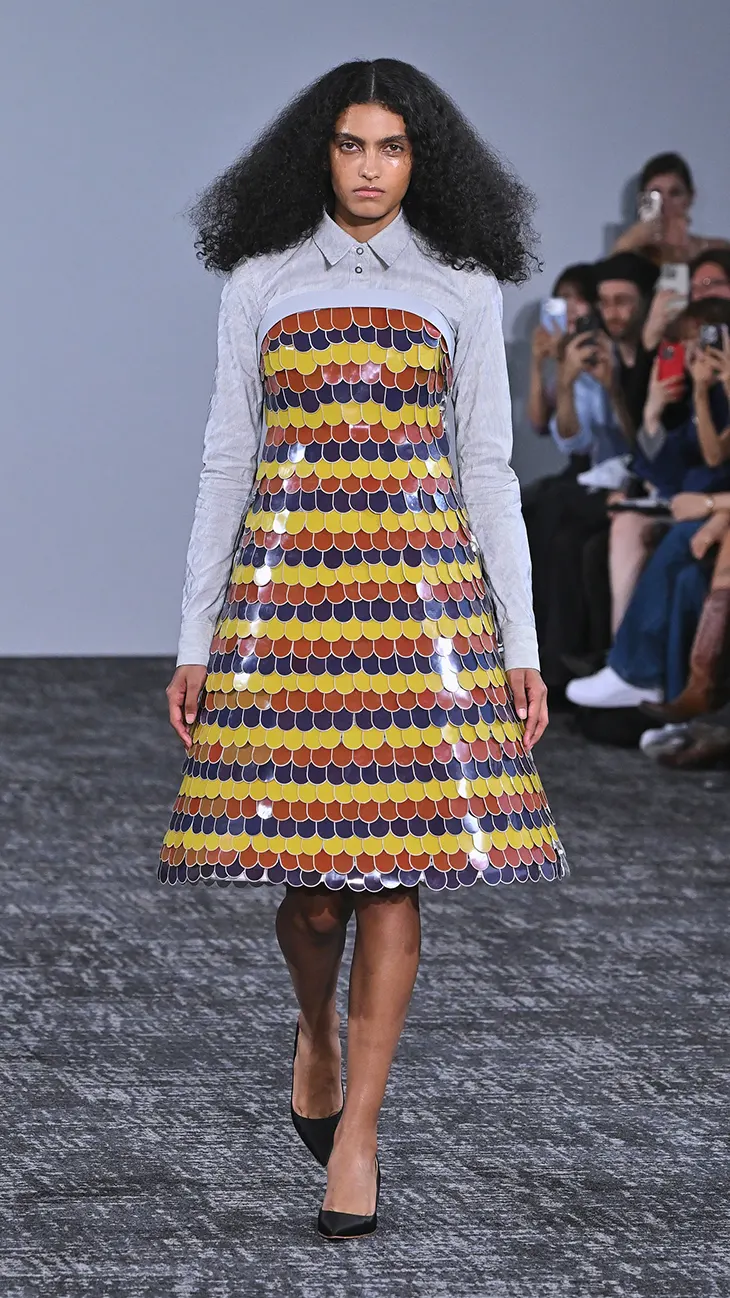
Technology gives these surfaces physical movement. Using SEKISAI’s proprietary “Effective Skin” technology, ANREALAGE introduces 3D-printed scales that alter color according to the viewing angle. The visual effect recalls Op Art as the garments shift with the model’s movement.
The collection reaches its most technically complex point through six armor-like cocktail and evening dresses. Each dress carries between 1,000 and 2,000 individually controlled E Ink electronic-paper scales. The scales can change color almost instantly without producing their own light. Instead, the material itself changes its appearance.
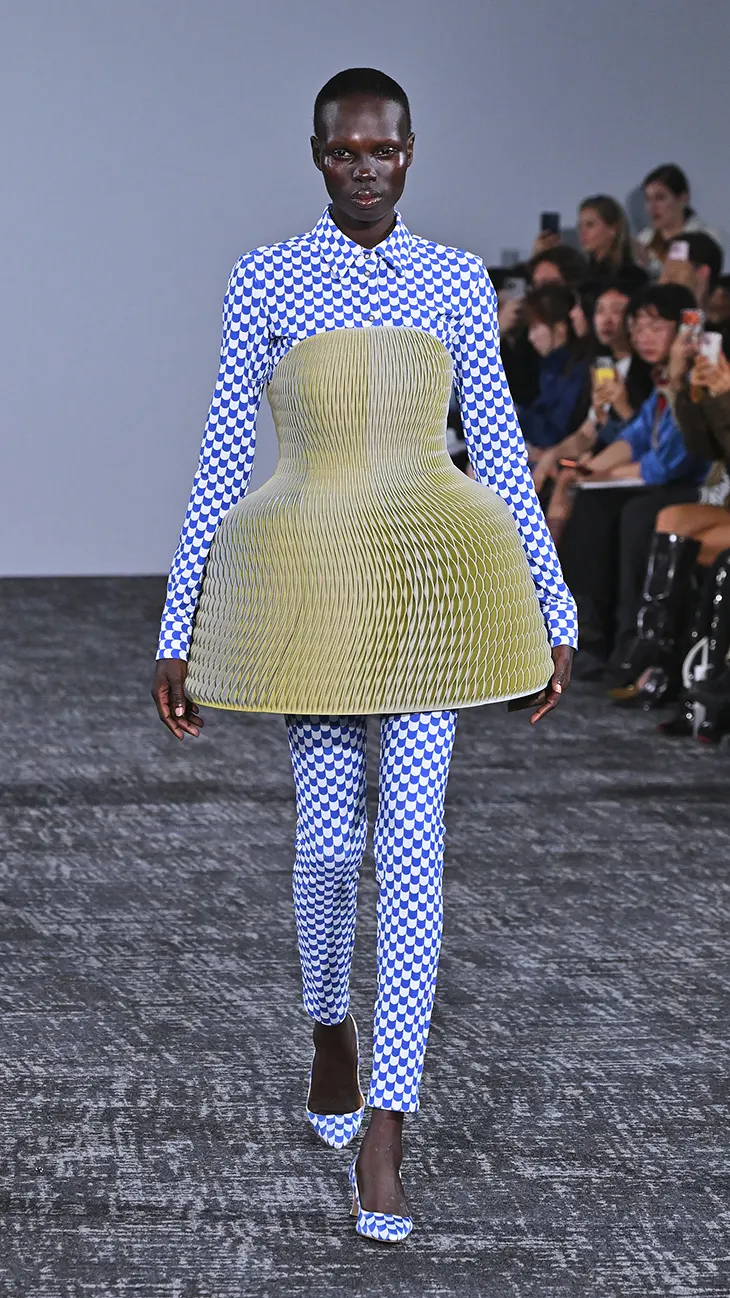
Colors move rapidly across the dresses before fading into ash gray and returning in new patterns. The effect recalls cells suddenly filling with pigment before releasing it again. Beneath these surfaces, networks of wires connect the individual scales like hair or feathers emerging from skin. AI maps the circuitry required to control the system.
The presentation closes with a model wearing an LED digital skin revived from the previous season. Light covers the body as a live performance of the 1919 version of Igor Stravinsky’s The Firebird accompanies the final sequence.
ANREALAGE imagines clothing as an adaptive surface capable of continual change. Morinaga describes this future form as a “third skin,” extending clothing beyond a static exterior toward something that can repeatedly alter, renew and begin again.