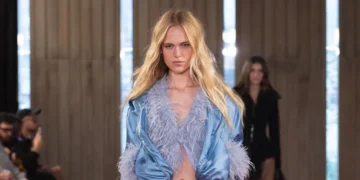



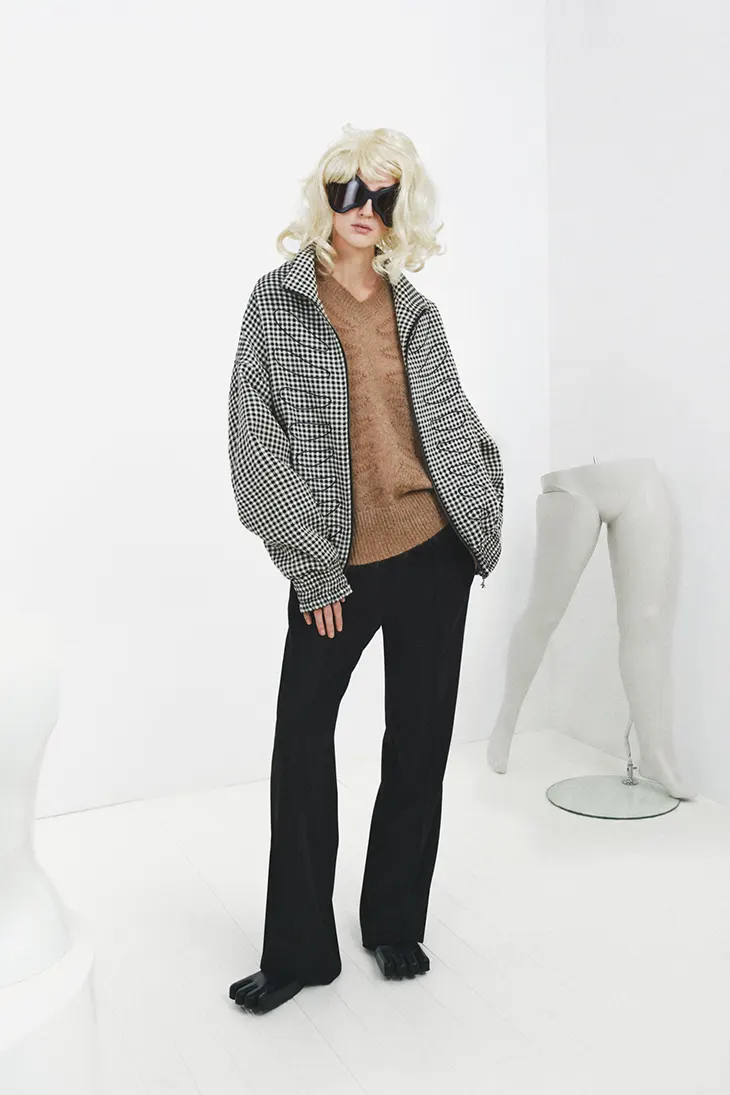
Avavav Spring Summer 2027 lowers the volume. After several seasons in which runway shows and the narratives around them became increasingly visible parts of the brand’s identity, Creative Director Beate Skonare Karlsson takes a quieter approach. The collection places more attention on the objects themselves and less on the communication surrounding them.
SPRING SUMMER 2027
Working within fashion’s constant demand for novelty has led Karlsson to reconsider what she expects from a collection. Rather than treating every season as a completely new idea, she returns to a more instinctive design process, closer to the way she worked before starting Avavav.
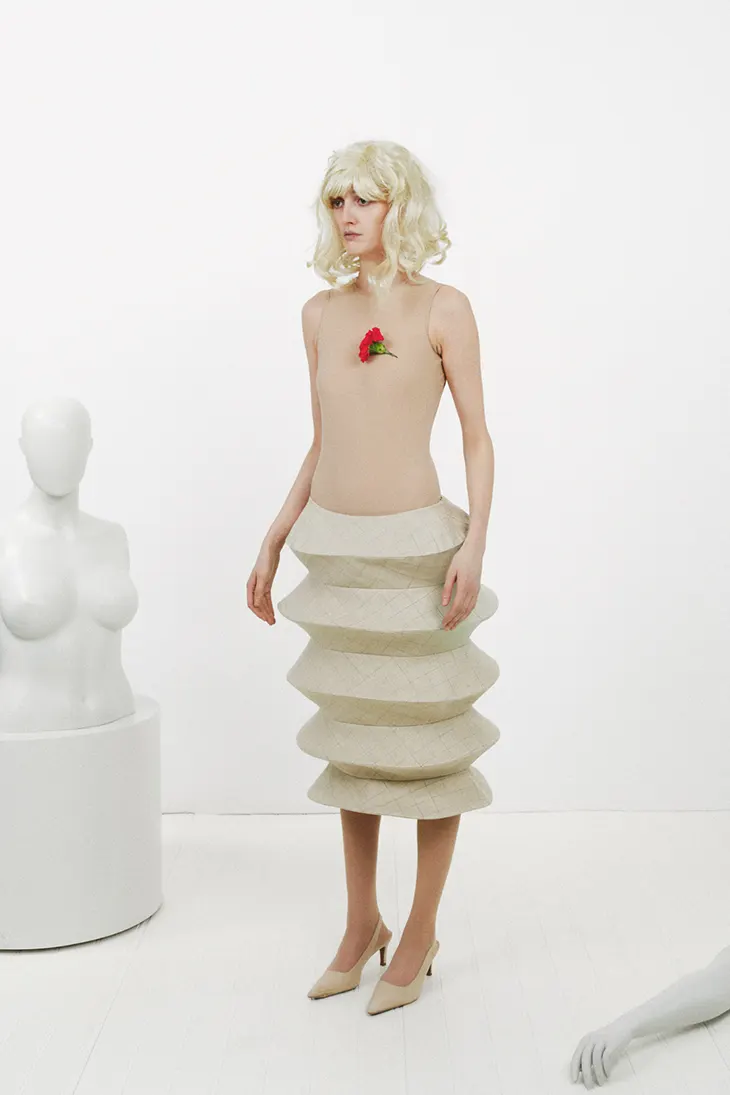
Form becomes the starting point. Karlsson now approaches Avavav as something cumulative, describing the brand as a growing family of figurines. Each season adds new forms and characters to an existing language. Some appear briefly. Others return, change and eventually become permanent parts of the brand’s visual vocabulary.
This approach gives Spring Summer 2027 a sense of continuation. Karlsson does not erase what came before. She develops existing ideas and places new ones beside them, allowing shapes to evolve over time.
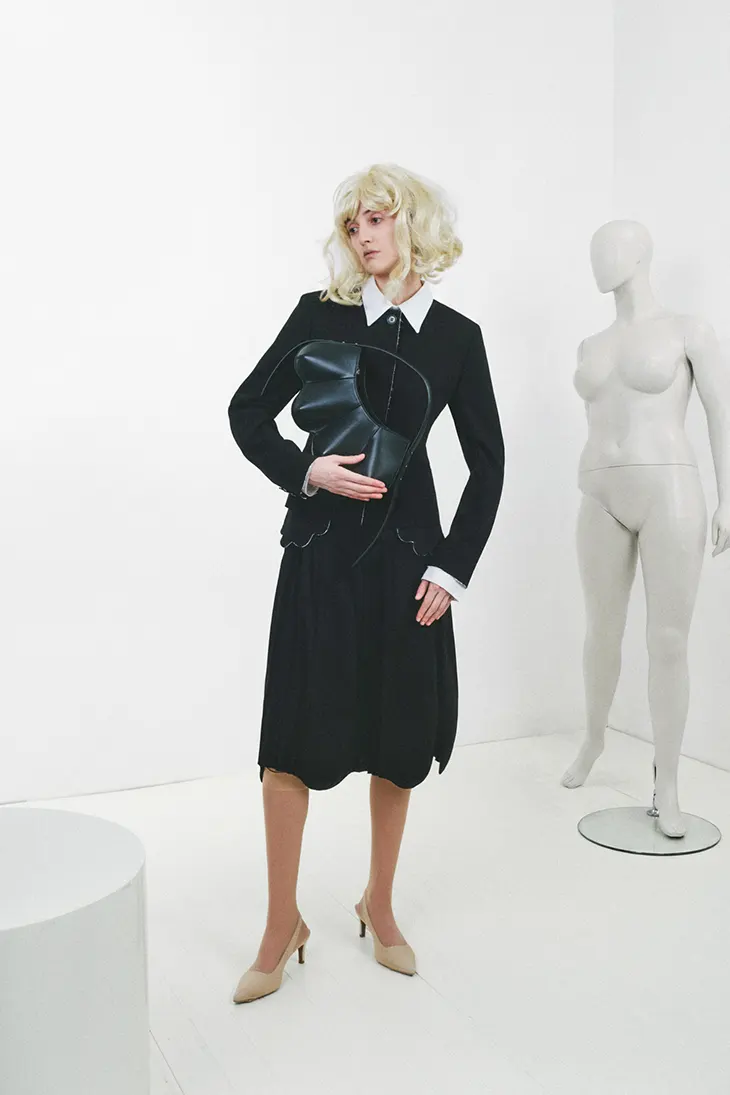
The collection uses familiar garment-making techniques as tools for sculpting the body. Pleating expands far beyond conventional proportions. One tubular pleated skirt stretches and contracts almost like a slinky, giving the garment a flexible, object-like quality. A top creates an exaggerated A-line shape around the torso, pushing the silhouette toward a cartoon-like form.
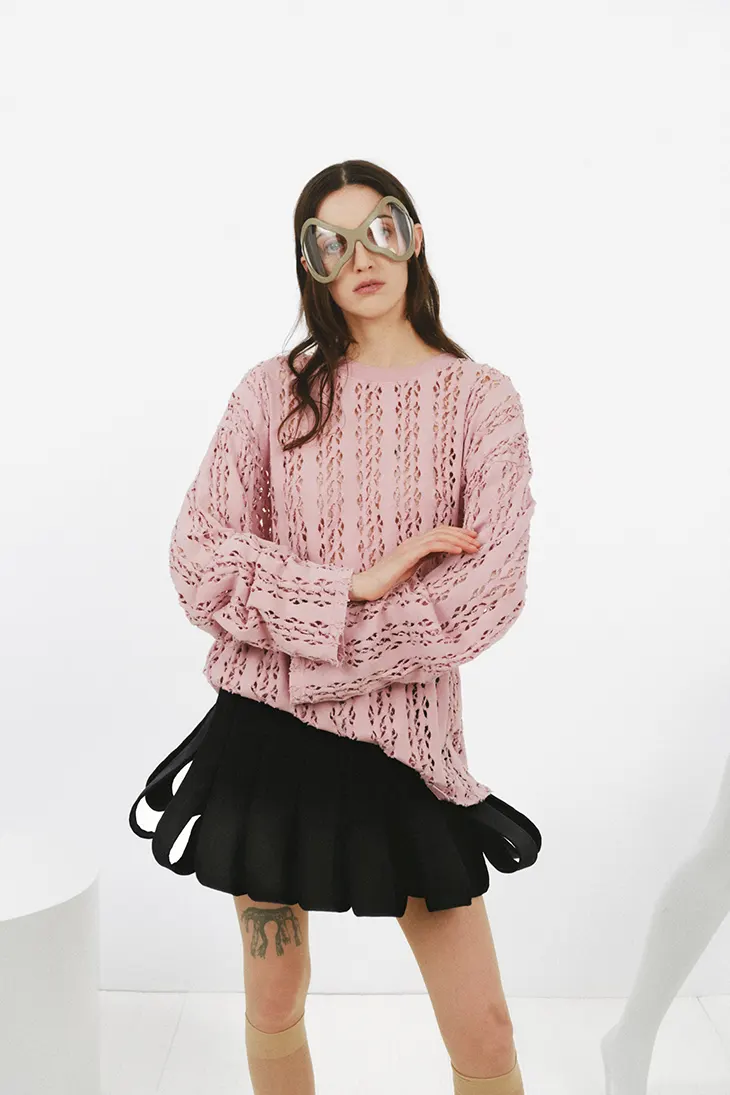
Elsewhere, Karlsson takes the shape of Avavav’s larva bag and transforms it into skirts. The process turns an existing accessory into a new garment form while keeping the connection to the brand’s earlier work visible.
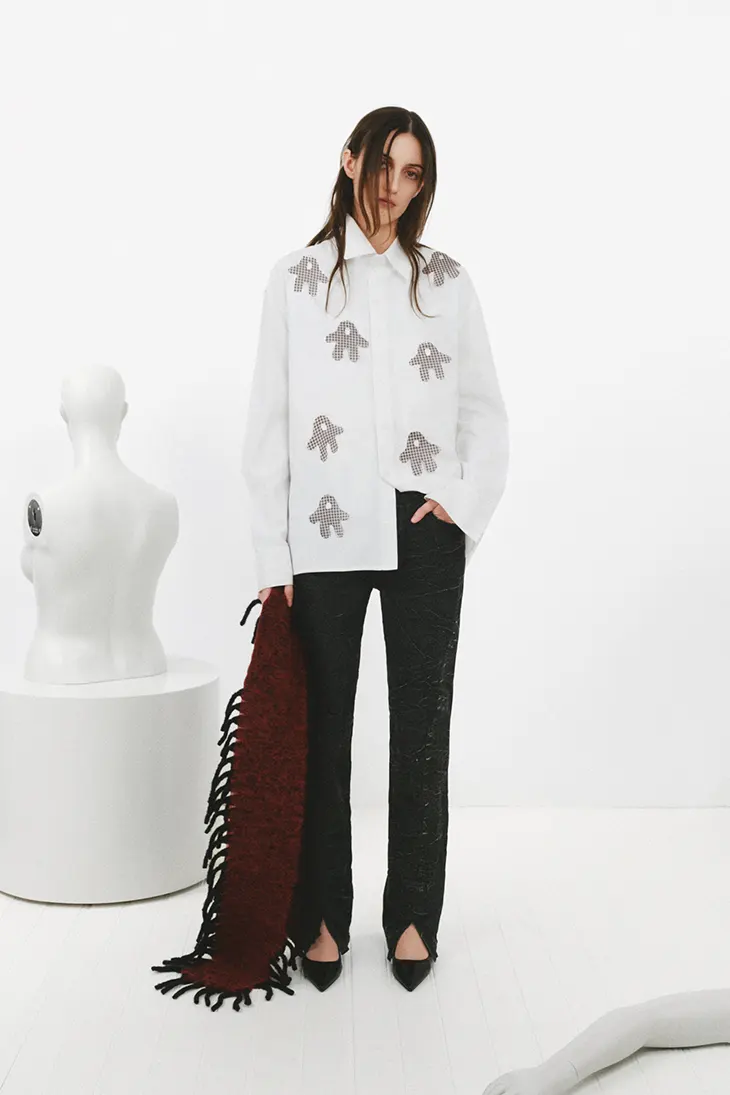
The recurring four-finger shape also returns across the collection. It appears within pockets and different constructions, continuing its role as one of Avavav’s recognizable forms. Karlsson treats it as part of a wider design vocabulary rather than a motif tied to a single season.
That vocabulary moves freely between categories. Forms can appear across garments, accessories and objects without remaining fixed to one function. This reflects Karlsson’s wider creative practice, which often shifts between clothing, sculpture, ceramics and functional pieces.
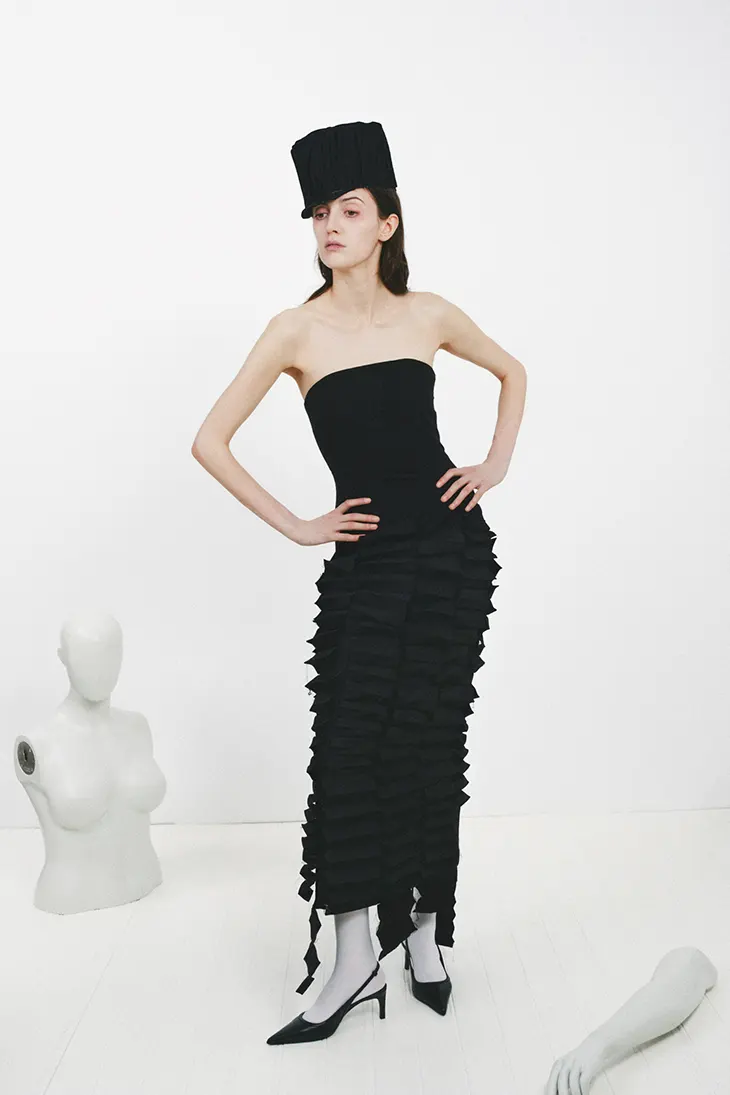
The function of the object may change, while the interest in discovering new figures remains consistent. The Spring Summer 2027 lookbook follows the same stripped-back logic as the collection. Rather than building another elaborate narrative around the clothes, Karlsson returns to the way she documented her work before Avavav.
The images present the pieces quietly, almost like sculptures displayed in a gallery. A clean, restrained setting keeps attention on silhouette, form and construction. Very little competes with the garments themselves.
Spring Summer 2027 continues Avavav’s existing visual language through new shapes, recurring forms and evolving characters. The collection expands Karlsson’s growing family of figurines while allowing familiar ideas to take on new functions and proportions.