


My husband quit the hike over breakfast. We had signed up for a guided group walk through the Dolomites, and sometime between coffee and whatever internal negotiation he was having with himself that morning, he decided he wasn’t going. I went anyway.
DORIC ORDER
I generally like group hikes. Meeting a random collection of people for a day in the mountains can be entertaining, particularly when you have someone beside you with whom you can quietly discuss everyone later. Without my husband, I had lost the gossip component, but I could survive.
The bigger problem was that this particular group was slow. Not necessarily slow at walking. Slow as a philosophy.
Every mountain hut seemed to require coffee. Then beer. Then food. Then another discussion about whether we should stay a little longer. I have never understood this approach. If I go hiking, I want to hike. I like the movement, the distance, the slight exhaustion and the satisfaction of realizing that wherever you are standing now exists because your legs brought you there.
Why travel to the mountains if we are determined to remove the mountain from the experience?
Eventually I decided I had had enough communal refreshment. I asked our guide how I could continue alone toward Lago di Carezza. He explained the route, pointed out several shortcuts and then casually mentioned one particularly useful one.
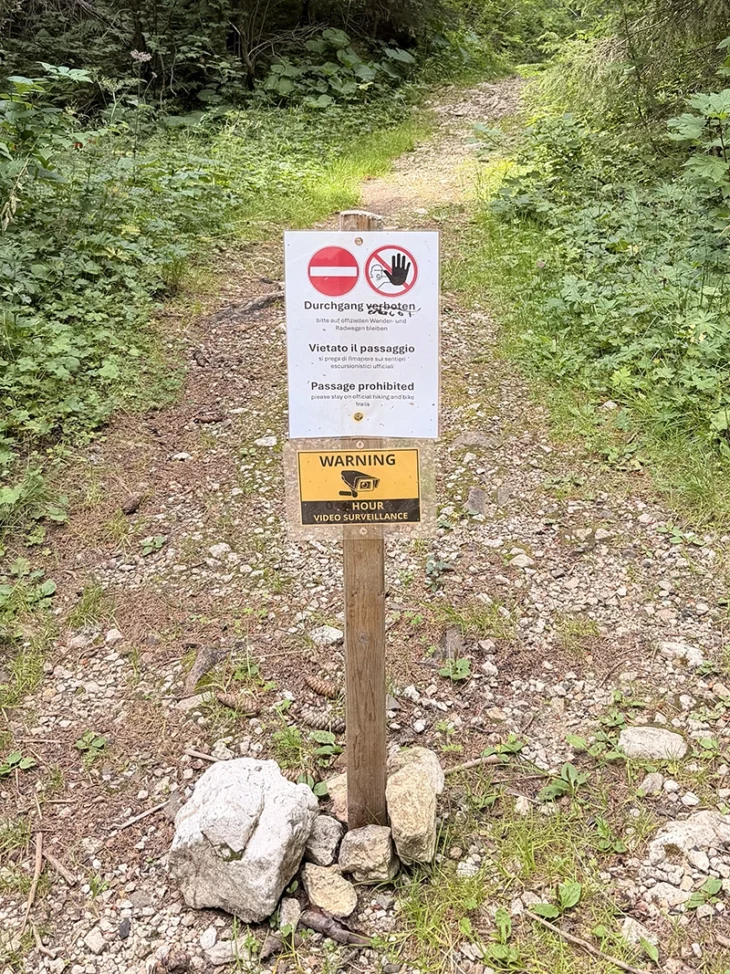
“When you see the sign saying not to pass,” he told me, “pass.” This was more my kind of excursion. So I left the group.
There is something genuinely special about being alone in the mountains. It sounds sentimental until you actually experience it. Nobody is talking. Nobody wants another espresso. Nobody is asking how much farther there is to go. Your pace becomes entirely your own.
And suddenly the Dolomites, which increasingly appear online as though they have been permanently occupied by Instagram, become enormous again.
This was probably the most surprising part of the day. We constantly hear that places like the Dolomites have become overcrowded. Social media certainly makes them look that way. Open TikTok or Instagram during summer and you could reasonably assume that every lake, ridge and meadow contains a queue.
But walk for a while and the people disappear. The mountains themselves are not crowded. They are much too big for that. What is crowded are a handful of locations that everyone has been told they must see.
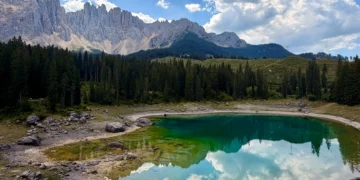
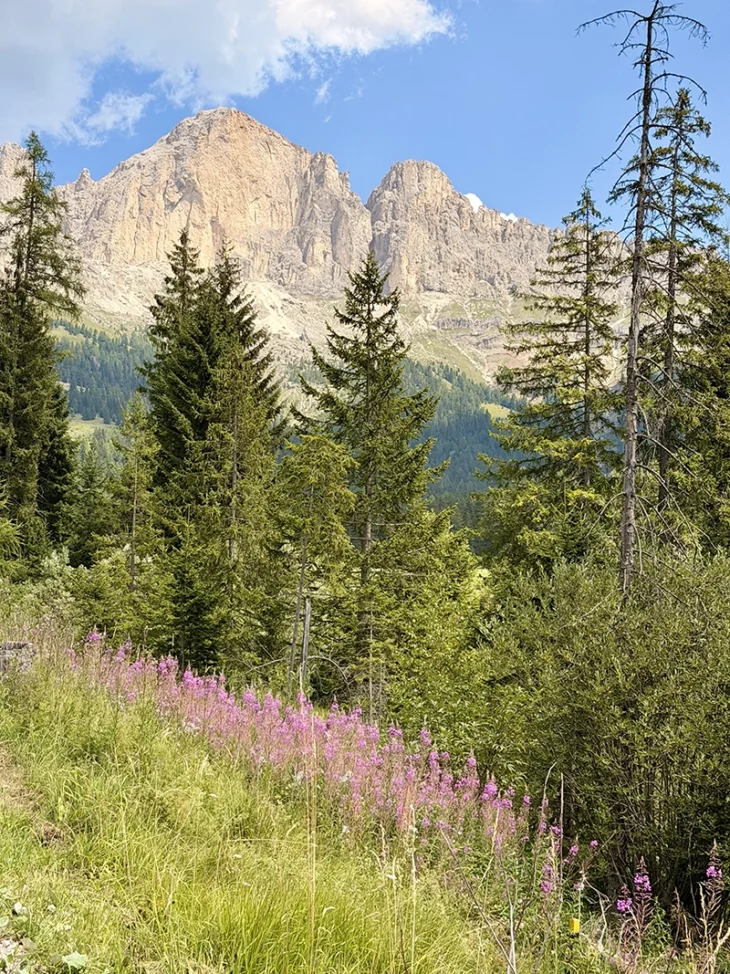
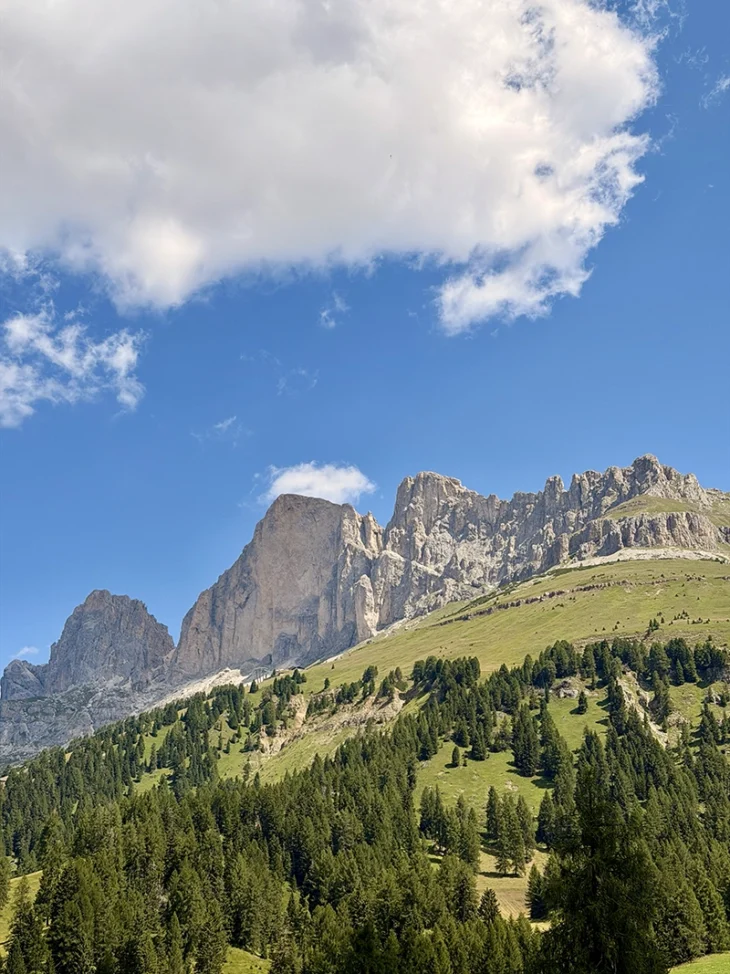
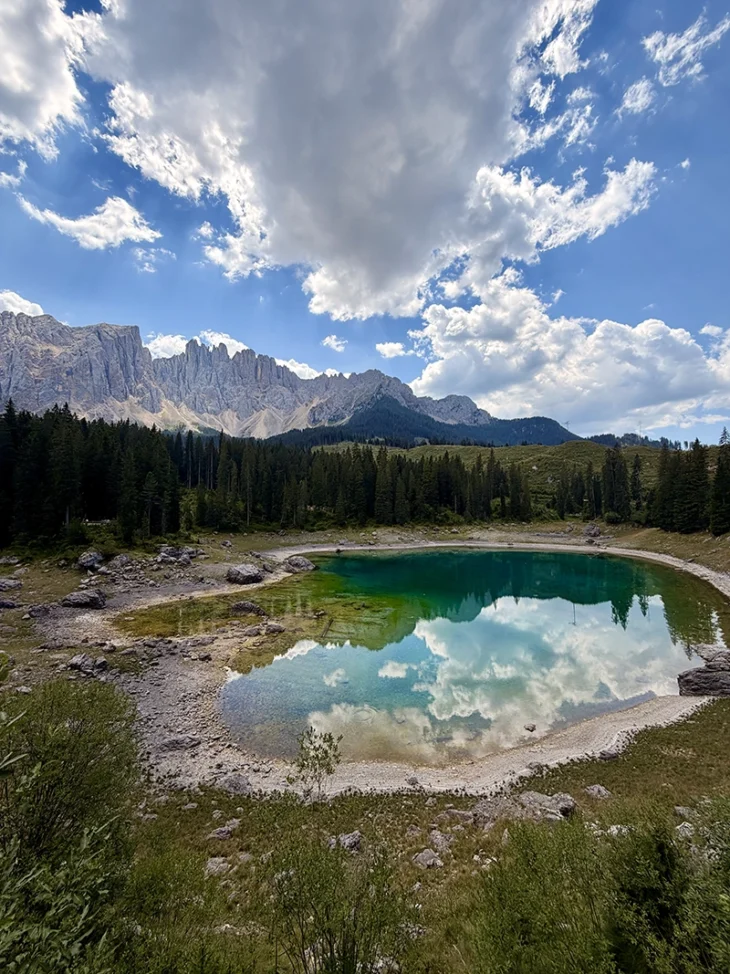
I walked through woods, crossed valleys, passed beneath peaks and occasionally encountered another hiker. For long stretches, there was almost nobody around. After hours of walking, I started approaching Lago di Carezza. Through the trees I could see flashes of the water. The color looked ridiculous.
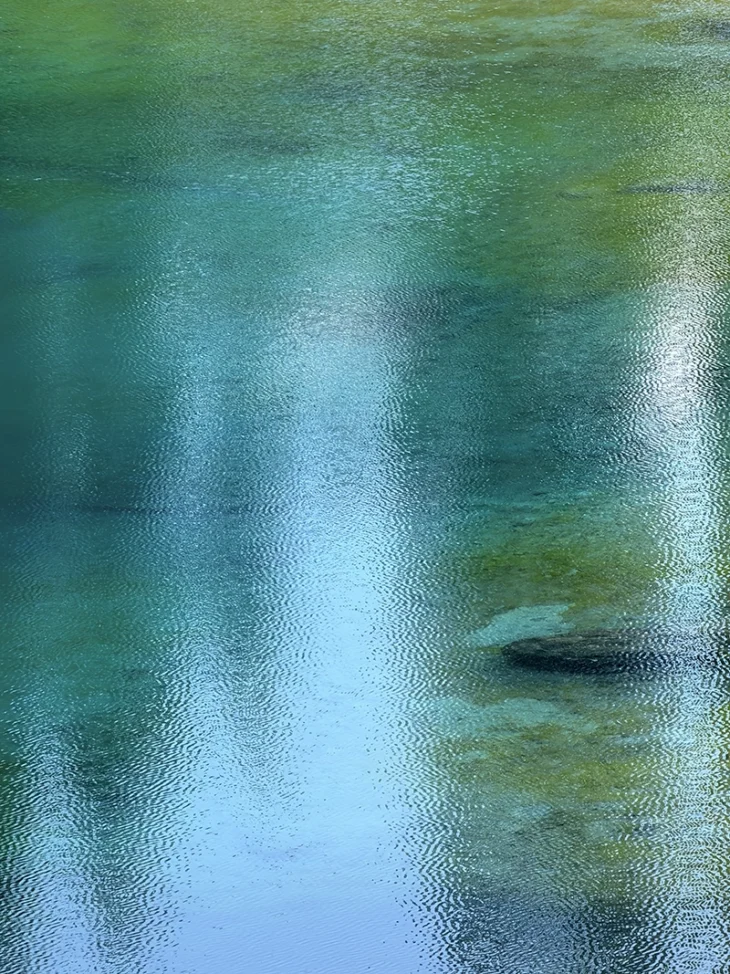
Turquoise, green, blue, the sort of color you assume has been aggressively edited when you see it on someone else’s phone. The sky was clear. The mountains rose behind it. After nearly 20 kilometres, sweaty, tired and extremely pleased with myself, I thought I had arrived at the perfect conclusion to the hike.
Then I saw the bridge. And the people. And the cars. And the parking lot.
Algorithms send enormous numbers of people toward tiny pieces of geography while the landscape around them remains almost empty.
Hundreds of visitors were gathered around the lake. Women arrived in dresses with full makeup. Men were wearing polo shirts and loafers. Families unloaded children from cars. People took turns occupying the exact position from which the lake apparently photographs best.
I looked terrible. I had walked almost 20 kilometers. I was sweaty, exhausted and, after suddenly emerging from hours of relative solitude into this strange alpine convention center, slightly dizzy.
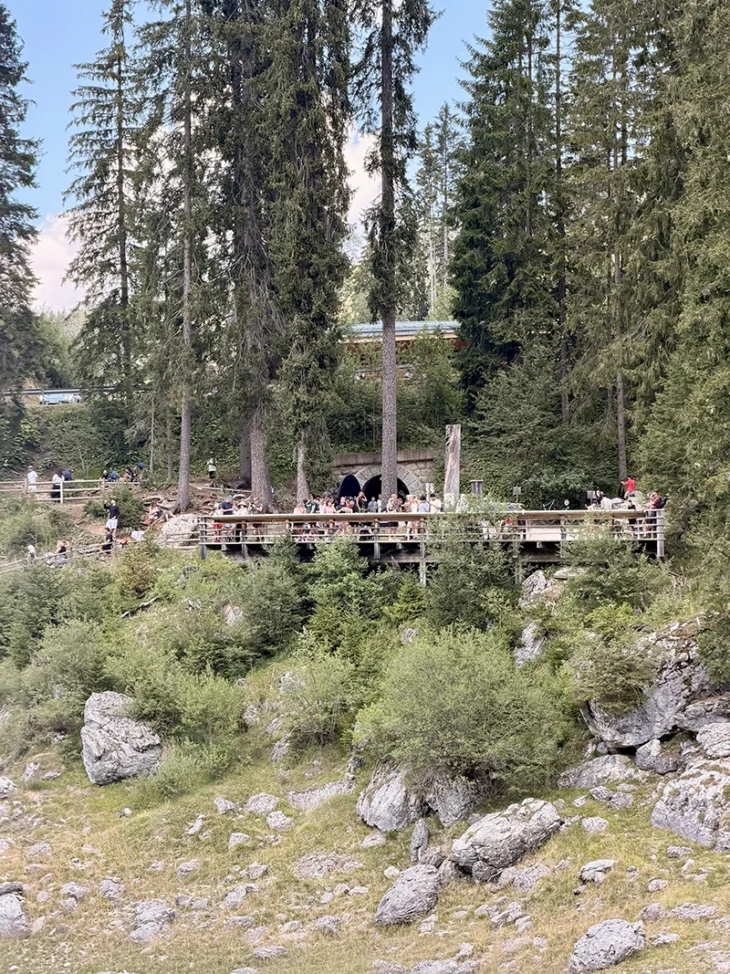
For a few minutes, I was genuinely pissed off. I had spent most of the day walking through this extraordinary landscape only to discover that everyone else had apparently driven straight to the final scene. Then it became funny.
At one point I passed a couple carrying a picnic bag branded with the logo of their hotel. They were dressed as though they had emerged from either a Hans Christian Andersen fairy tale or an unusually expensive fashion campaign. They appeared completely prepared to have the most romantic picnic of their lives beside one of Europe’s most beautiful lakes.
Along with approximately a thousand other people. And this is where my irritation became a more interesting question. Why do we travel to the mountains if we are determined to remove the mountain from the experience?
We want the lake without the walk. The summit without the climb. The remote cabin with road access. The wilderness with parking. We increasingly approach nature through the same logic we use for everything else: how efficiently can I reach the desired result?
Of course, nobody needs to hike 20 kilometres to earn the right to look at a lake. That would be ridiculous. Roads and cable cars make extraordinary landscapes accessible to children, older people, people with disabilities and anyone who simply has no interest in spending six hours walking through a forest. But accessibility and experience are not necessarily the same thing.
The harder the walk, the quieter the mountain becomes.
What interested me was how radically different our encounters with exactly the same place had been.
For me, Lago di Carezza had started hours earlier. It was the forest, the wrong turns, the forbidden shortcut, the empty trail, the changing terrain, the tired legs and those first glimpses of impossible blue appearing between the trees.
For somebody getting out of a car, the experience began at the parking lot. Neither version changes the lake. But they certainly change what the lake means.
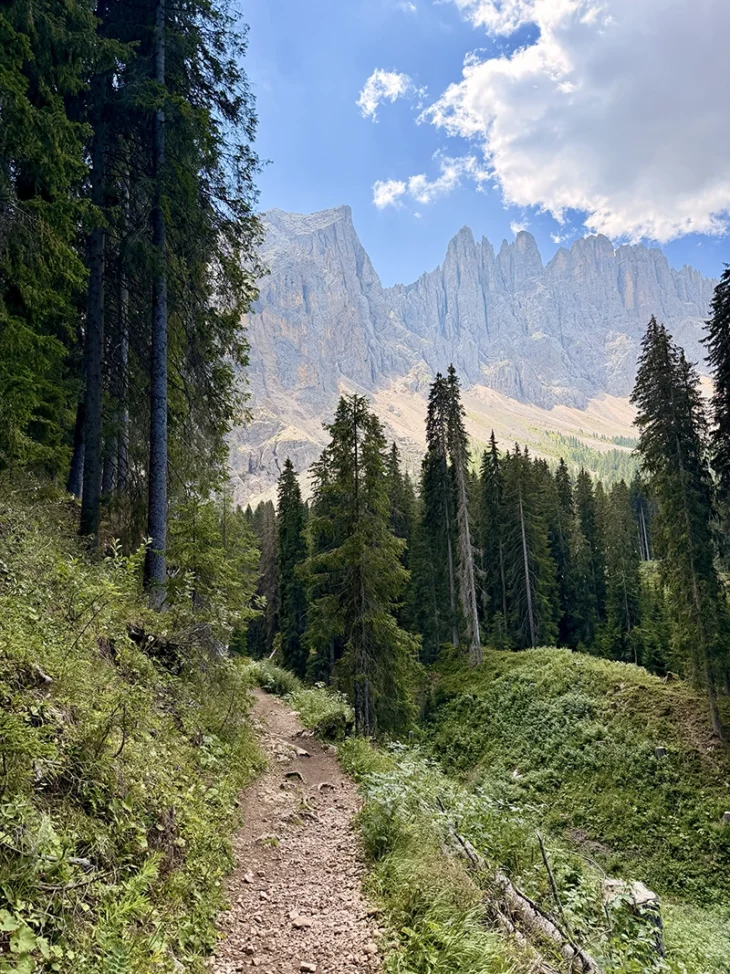
Social media has intensified this strange compression of travel. Entire regions become represented by a few coordinates. You go to the Dolomites, therefore you photograph this lake, that church, this viewpoint, that mountain hut. Algorithms send enormous numbers of people toward tiny pieces of geography while the landscape surrounding them remains almost empty.
Then we complain that nature is overcrowded.
We have become exceptionally good at arriving somewhere and increasingly uninterested in the space between departure and arrival. Yet that space was the best part of my day.
I stayed at Lago di Carezza for only a few minutes. The water really was beautiful. The crowd really did ruin it for me. Then I started walking again.
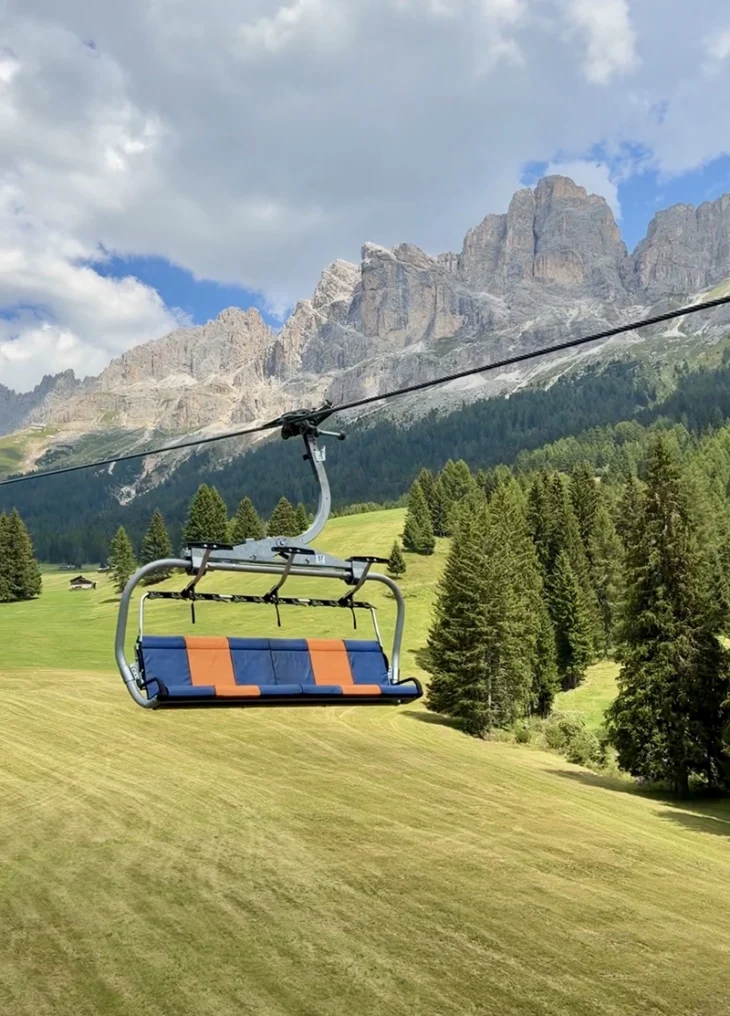
My route formed a loop back toward the hotel. A few more kilometers down the mountain, one cable car, then another, and eventually I was back where I had started that morning.
Yes, after judging everybody for driving to the lake, I took two cable cars home. I contain multitudes.
I walked almost 20 kilometers to discover that everyone else had apparently driven straight to the final scene.
What I took from the day was not that everyone should start undertaking unnecessarily long hikes or that beautiful places should become difficult to access. It was much simpler: I no longer feel particularly compelled to visit somewhere because the internet has declared it unmissable.
Give me the trail beside it. Give me the valley nobody tagged. Give me the route that requires enough effort for half the people to decide they would rather have a beer at the hut. The harder the walk, I have discovered, the quieter the mountain becomes.
And after nearly 20 kilometres of walking to discover a parking lot, I would still choose the long way.