


Petra Fagerström develops a study of sexuality, femininity and personal agency for Spring Summer 2027. Titled “Swedish Summer,” the season marks the fourth collection from her London label and arrives after her nomination as a finalist for the 2026 LVMH Prize. She presented the work under BFC NEWGEN with Pull&Bear during London Fashion Week.
SPRING SUMMER 2027
Fagerström has built her label around a recurring character: an imagined woman who guides each creative decision. That idea originated during her graduate work at Central Saint Martins and remains the foundation of her design process. For Spring Summer 2027, she examines how this woman might use clothing to express sexuality while navigating opposing cultural pressures surrounding female appearance and behavior.
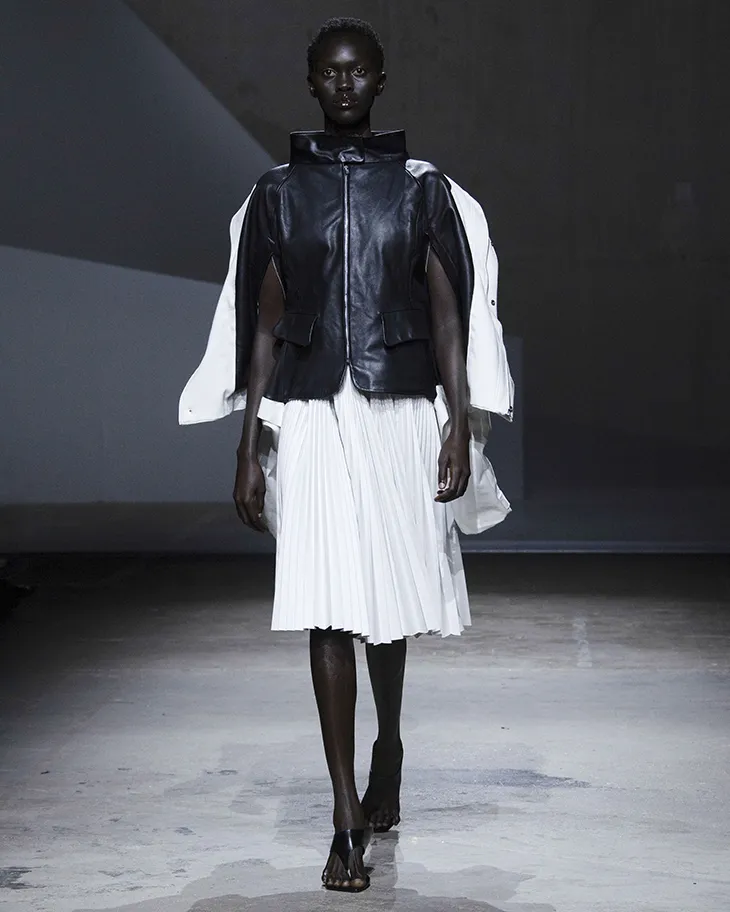
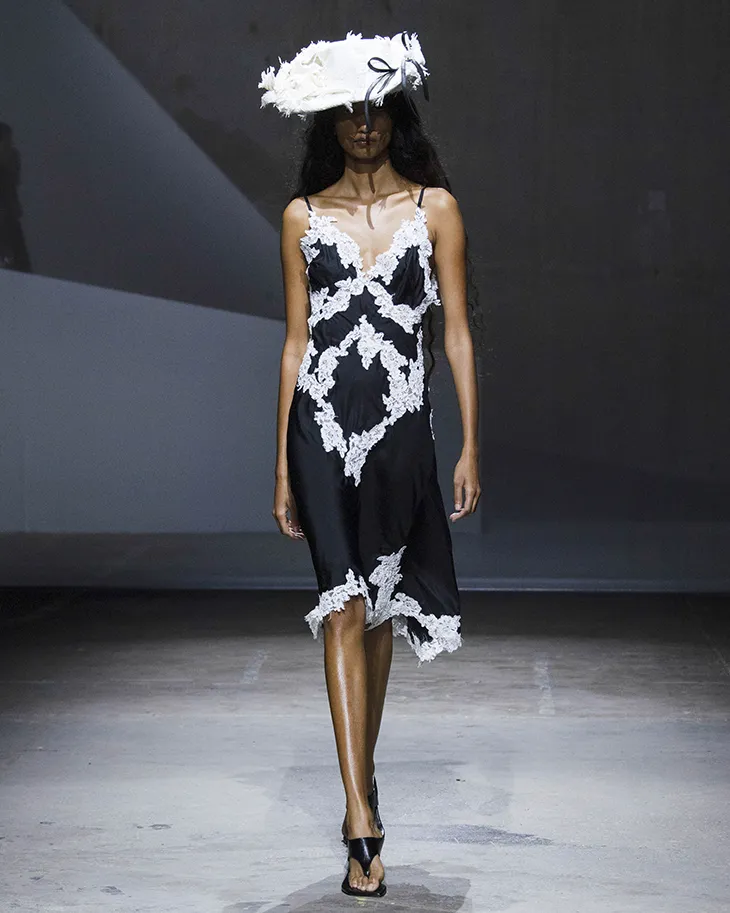
The designer looks at a moment shaped by two opposing pressures: the growing commercialization of sexuality and the return of conservative expectations around how women should dress and behave. She responds by taking the structure and formality associated with traditional dress and removing the ideas of obedience and purity historically tied to those codes.
Fagerström calls her approach “method design.” She imagines the character behind the label as someone she could aspire to become and uses that figure as a reference when making decisions. Her cinematic references include The Piano Teacher, The Bitter Tears of Petra von Kant, Theorem and The Graduate. She looks to female characters who contain competing ideas about femininity simultaneously and allows those opposing qualities to remain unresolved within her clothes.
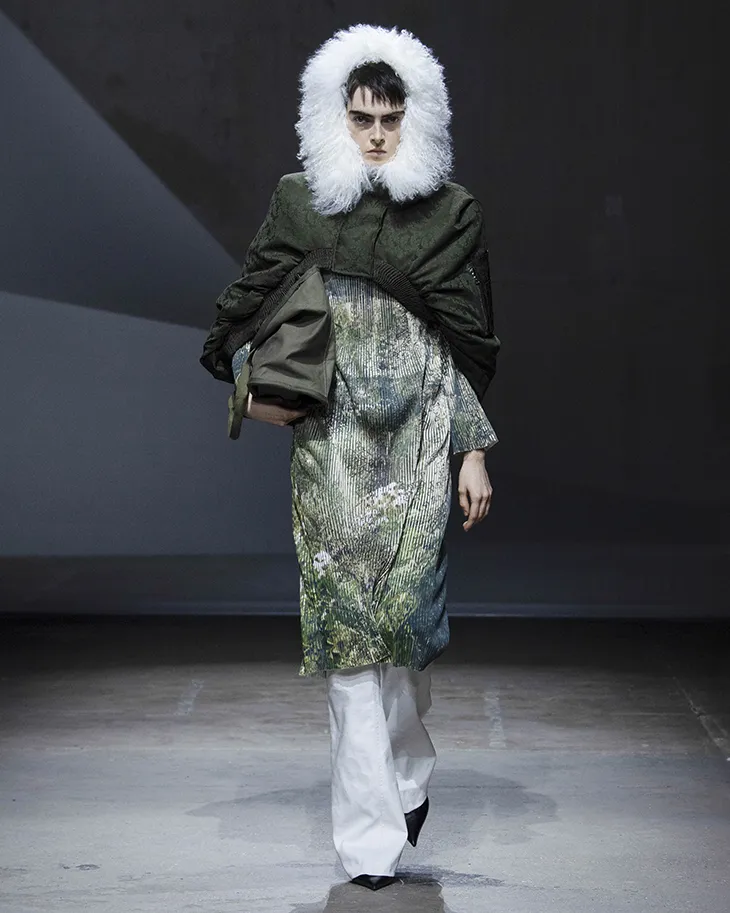
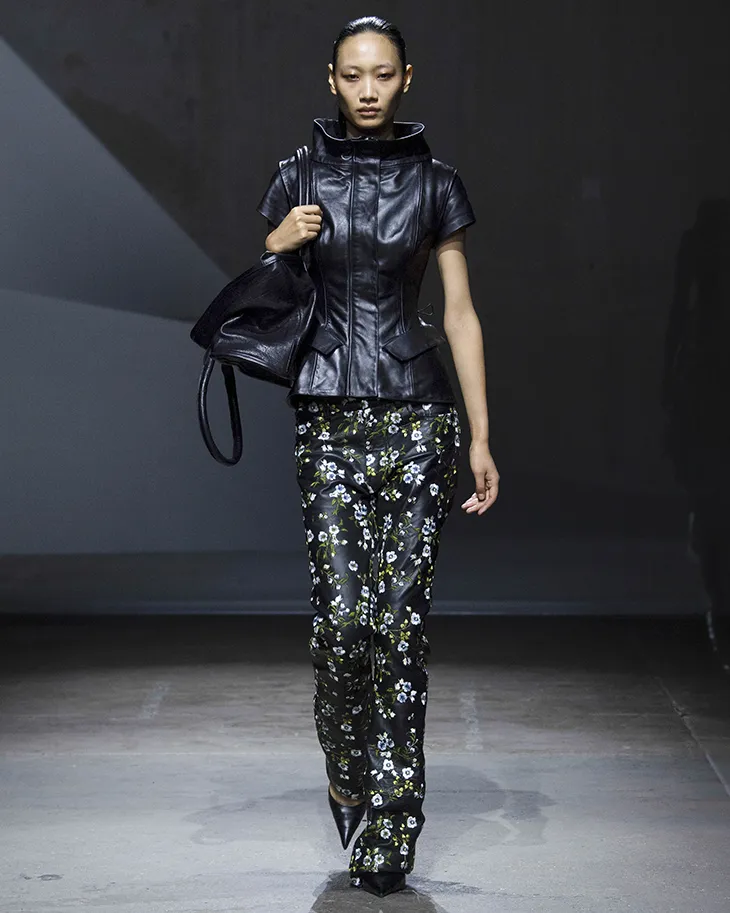
That approach leads to what Fagerström describes as “glitching.” She starts with familiar wardrobe conventions and disrupts their expected construction. Couture from the 1940s and 1950s provides several starting points. A version of Dior’s Bar jacket appears in closely fitted leather. Another piece takes the form of a parka that follows the body from the front while the rear develops pronounced volume. Its construction uses the double-front technique that has become part of the label’s visual vocabulary.
Technology also influences the collection. Fagerström responds to the speed and visual flatness she associates with AI-produced fashion imagery by emphasizing physical technique and material work. She uses digital processes as a source for ideas that require manual execution.
One trench coat began with an error produced by an AI image. Fagerström recreated that digital fault in physical form. She cuts the coat so that it remains open, separating a plain canvas outer section and exposing a leather layer underneath. Floral embroidery covers the leather body revealed inside.
The collection also introduces the label’s first handbag. Fagerström developed the piece with Eden Tan and ETMFG after the two designers met through the Paul Smith’s Foundation network. The bag translates Fagerström’s double-front construction into leather accessories and extends an existing clothing technique into a new category.
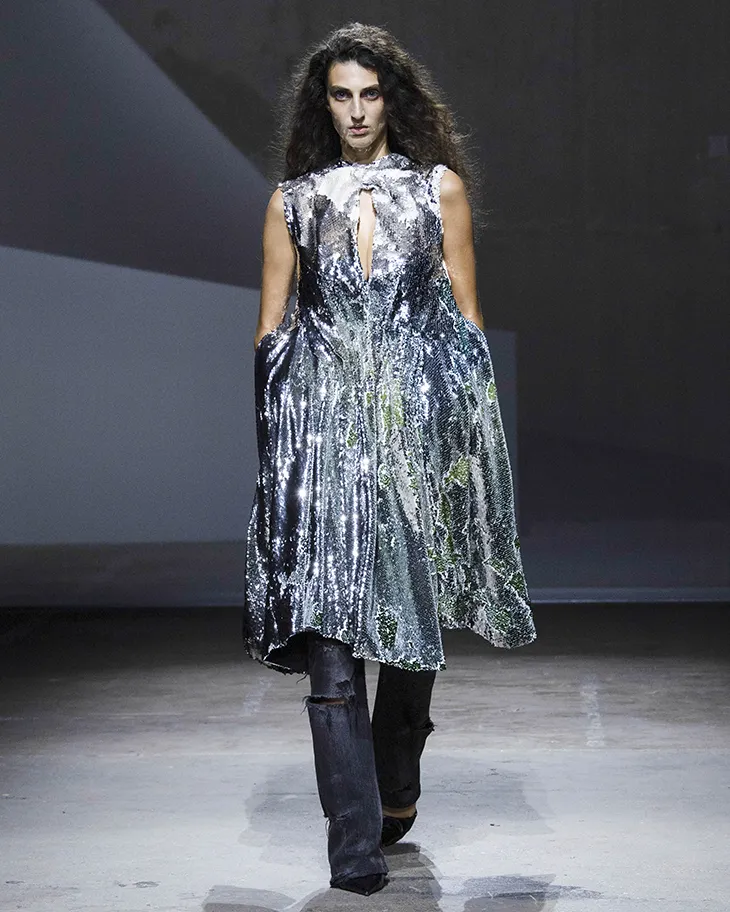
Ideas of exposure and concealment recur throughout the season. Cuts through black leather reveal portions of skin and sections of bonded red lining. A black sequined ensemble produces a surface reminiscent of latex under light. Fagerström repeatedly uses materials that initially suggest another substance, encouraging closer inspection.
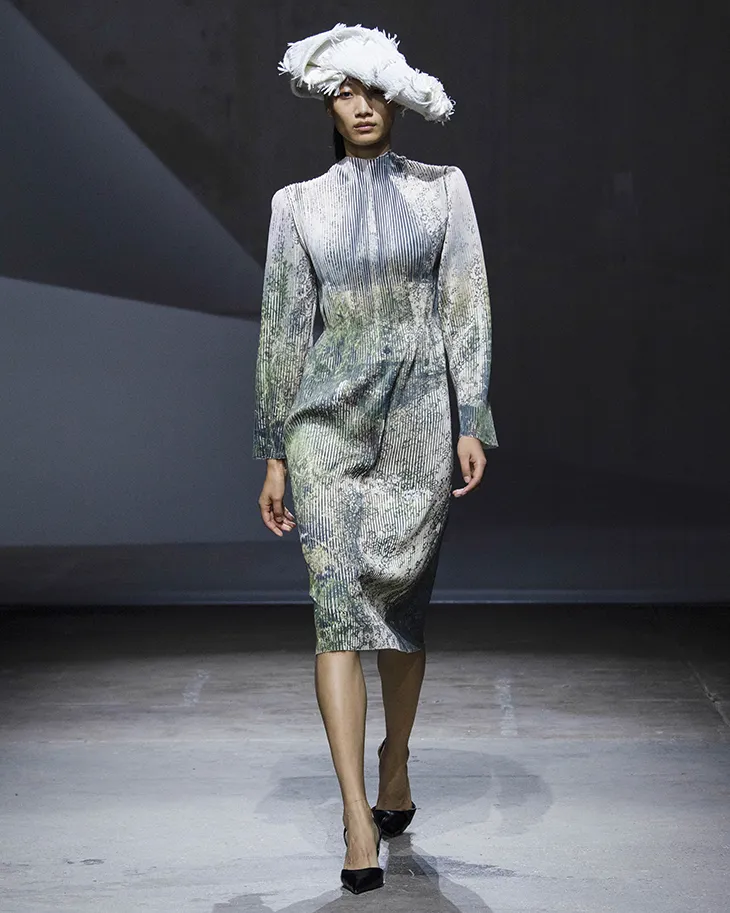
She extends that visual uncertainty through lenticular pleating, a proprietary technique that lets one garment display two different images depending on the viewer’s angle and the wearer’s changing posture. The studio creates drawings digitally, prints them, then constructs hundreds of pleats by hand.
One dress initially resembles a tweed suit. As the garment changes angle on the body, lingerie and lace become visible. Another design combines lingerie imagery with scenery from nature. Fagerström drew that piece from an anonymous fantasy published in Gillian Anderson’s Want, in which nature becomes associated with sexual freedom.
Throughout “Swedish Summer,” structured tailoring appears beside rounded forms, while covered surfaces alternate with exposed skin. Fagerström uses these shifts to examine how clothing can contain sensuality, severity and restraint within the same design. The resulting wardrobe gives its fictional wearer the freedom to determine which version of herself appears at any given moment.