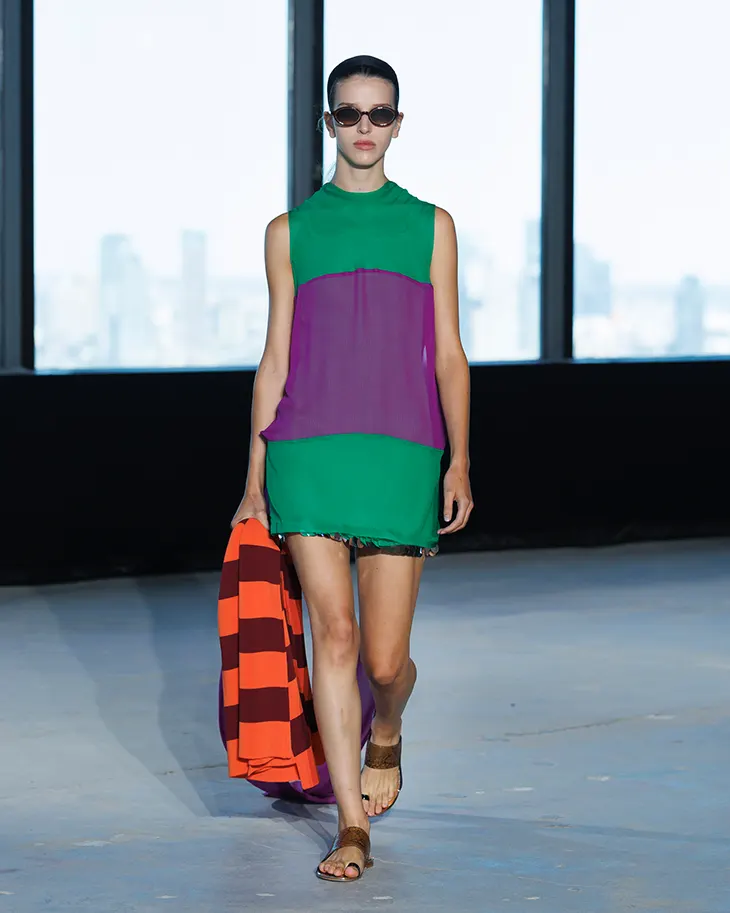



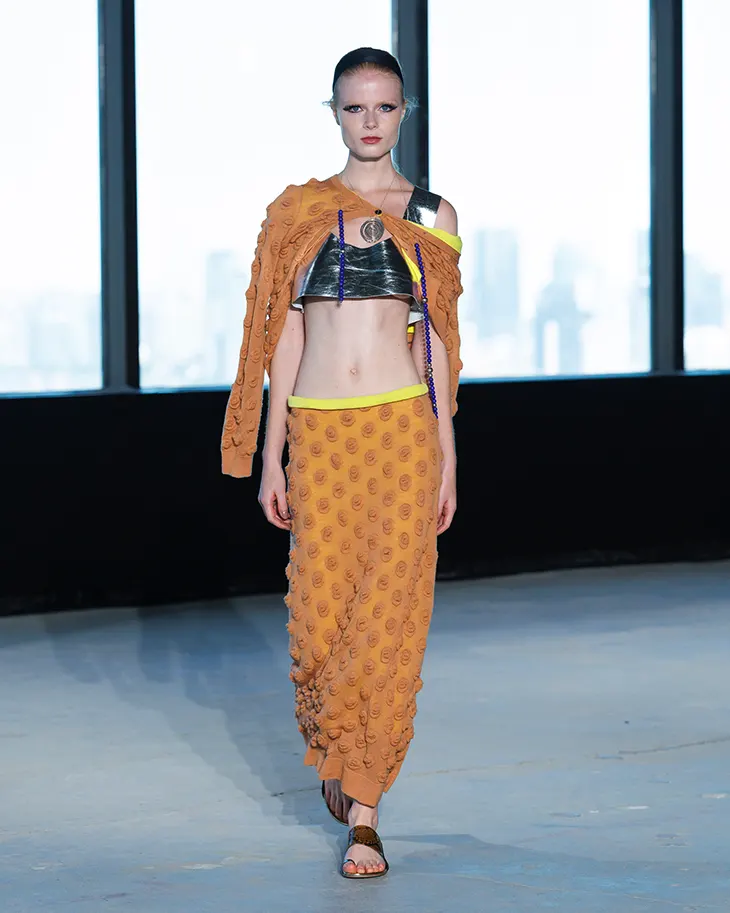
Henry Zankov begins Zankov Spring Summer 2027 with Jeanne Moreau’s 1962 recording of “Le Tourbillon.” Its charm, simplicity and raspy vocal quality led him to memories of his mother arriving in Saint Petersburg during the 1960s, dressed in purple corduroys, cropped wool sweaters and metallic silver platforms as she entered a new period in her life.
SPRING SUMMER 2027
That memory gives the collection its emotional and visual starting point. Zankov grew up in Soviet-era Russia, where the 1960s seemed preserved within another period. For Spring Summer 2027, he treats the decade as a time capsule while keeping the clothes firmly connected to the present. The collection considers a desire for analog textures and objects alongside an interest in what comes next, giving familiar references a slightly otherworldly character.
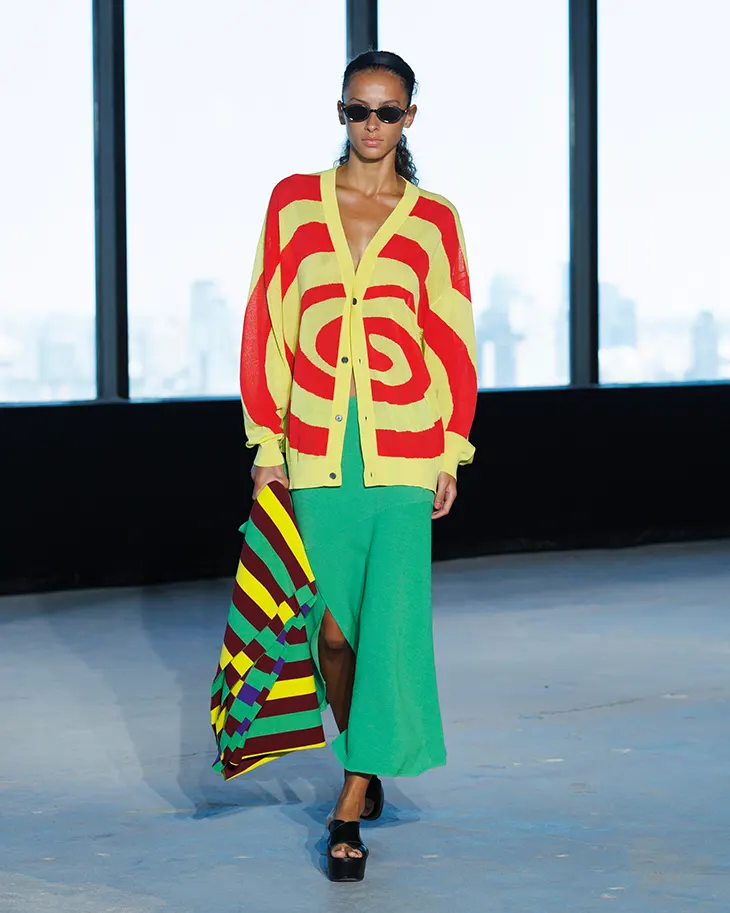
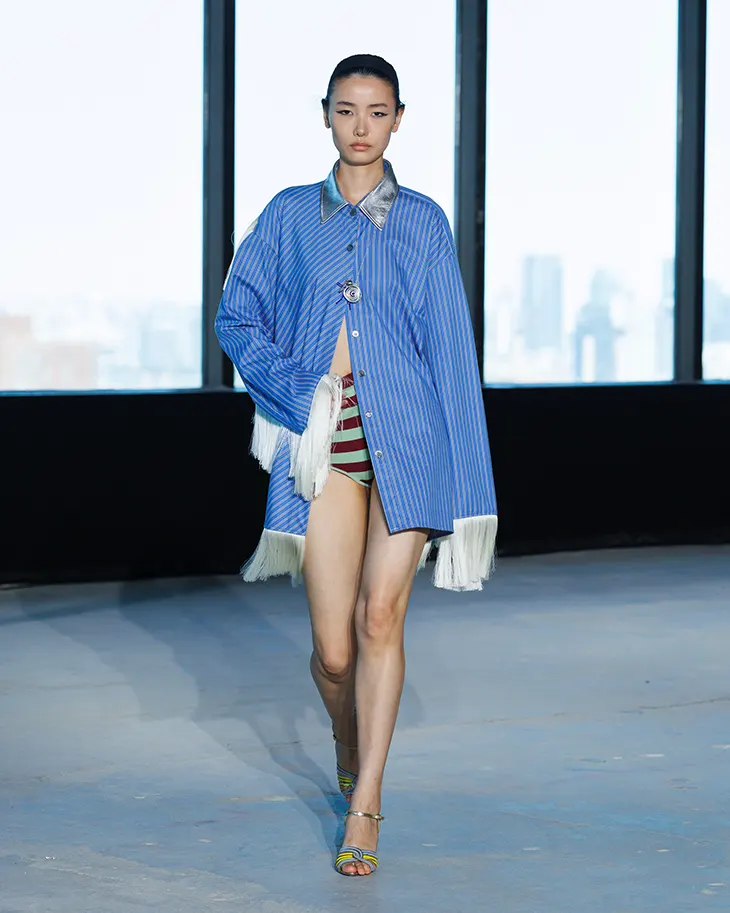
Color plays a major role. Saturated pink, yellow and green appear beside dirty ivory, peach, fuchsia and grey. French blue, burgundy, chamomile, tobacco, cobalt and lime extend the palette throughout the collection, while metallic silver provides a recurring accent.
Zankov builds texture through lurex, knitted chiffon fringe, layered paillettes, crochet and micro sequins. Silver patent leather and lamé velour refer to Soviet-era Russia and its fascination with the space age. Found upholstery fabrics from the 1960s become digital knitted jacquards, bringing period references directly into the construction of the clothes. Silkscreen prints, graphic stripes and geometric patterns add another visual layer.
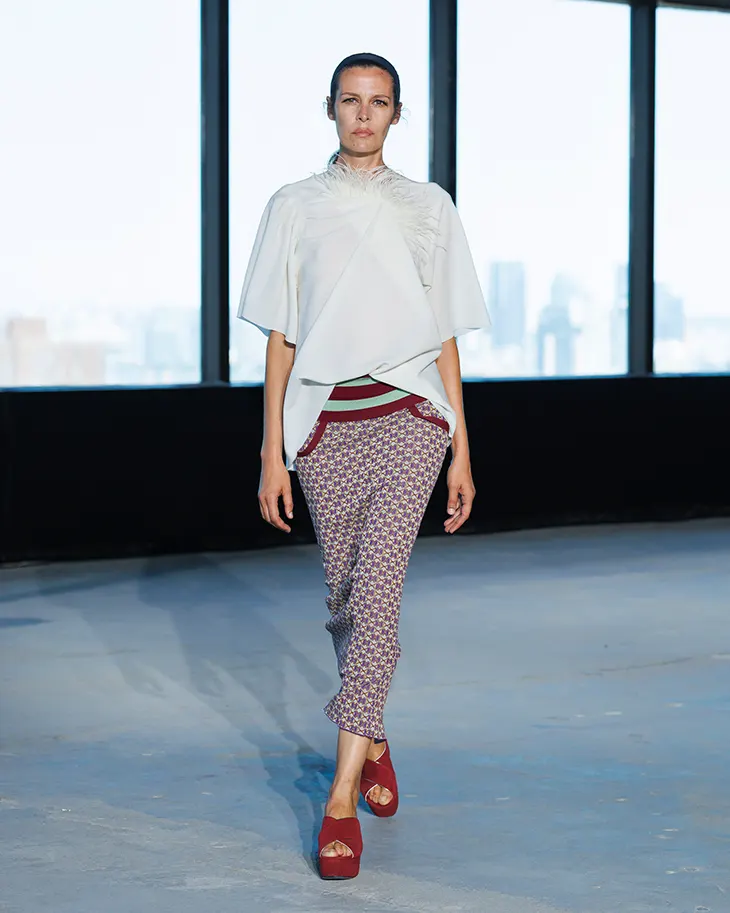
Lightweight fabrics keep the collection fluid. Zankov works with washed chiffon, cotton crêpe, silk charmeuse, organza and stonewashed cotton nylon. Bias-cut chiffon, satin and organza create softer lines throughout dresses, skirts, slips and kaftan shapes. Knitted pieces range from polos and rugby tops to cardigans, apron dresses, racer dresses and fitted gowns. Elsewhere, deconstructed jackets, chemises, shorts, tanks and draped skirts build out the wardrobe.
The paintings of Philippine de Richemont introduce humor through intarsia knitwear. Zankov translates her images into lightweight cotton crêpe pieces using vivid retro-inspired colors, placing the artwork within dresses, cardigans and other knitted forms.
Jewelry by Heath Wagoner takes a sculptural direction. Silver labyrinth forms appear with lapis and glass beads, while long chains carry found objects and travel-worn pieces. Blue accents run through the jewelry, complementing the collection’s broader color story.
Spring Summer 2027 also introduces a new category for Zankov. Henry Zankov presents the label’s first footwear collection in collaboration with Luís Onofre, part of APICCAPS, the Portuguese Footwear Association.
Zankov revisits the visual language of the 1960s through a personal memory of Soviet-era Russia. The collection connects that past with an interest in analog texture, experimentation and the possibilities of what comes next.