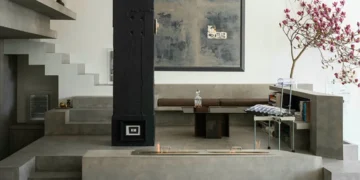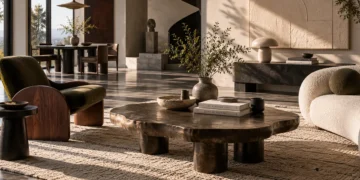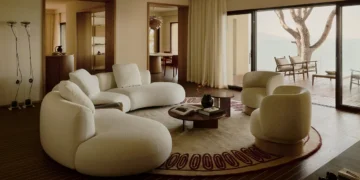



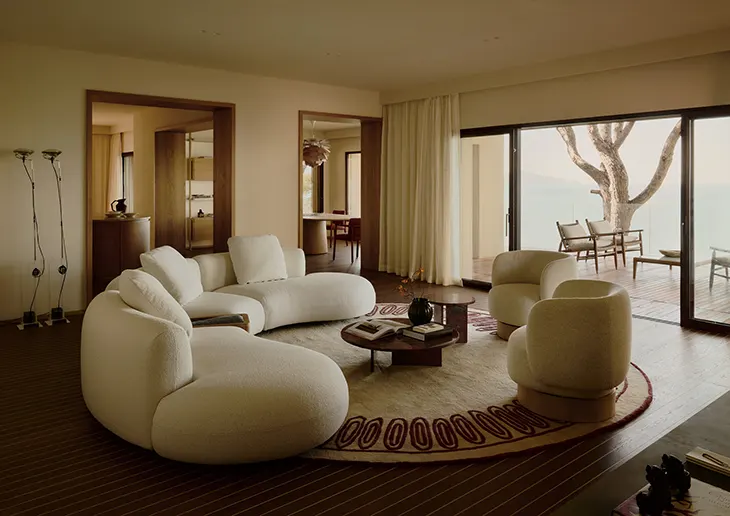
A fully traditional sofa, with deep tufting and carved wood, can make a compact modern apartment feel heavy. A fully contemporary room can feel bare in a house with crown molding and older architecture. Many people want something between the two, and transitional design is the style built for that gap.
What Is Transitional Furniture?
Transitional furniture combines traditional forms with contemporary restraint. From the traditional side it keeps soft curves, rolled arms, turned legs, and a little surface detail. From the contemporary side it takes clean lines, simple finishes, and fewer ornaments. A transitional sofa may have a classic shape but a tight, plain back. A transitional coffee table may have a traditional wood tone and a straight, uncluttered frame. That balance lets one room hold older and newer pieces without a visible split.
The appeal of transitional design lies in its flexibility and timelessness. Rather than committing to a single aesthetic, whether maximalist traditional or austere minimalist, transitional pieces offer a middle path that adapts to evolving taste and circumstance. A transitional dining chair works equally well in a formal setting or a casual kitchen. A transitional console table anchors a living room without demanding visual dominance. This versatility makes transitional furniture particularly practical for evolving homes, where design preferences shift, collections grow organically, and the need for cohesion outweighs the desire for stylistic purity. The result is a room that feels intentional and curated rather than frozen in time, a space where heritage and modernity coexist without tension.
Key Traits of Transitional Design
Transitional rooms look calm and layered. Three traits do most of the work.
Silhouettes and Scale
Shapes are softly curved or gently rolled, never fussy. Frames tend to be straight-lined, and proportions stay moderate. A transitional sofa is rarely oversized, and a transitional chair is rarely thin or skeletal. Everything in the room should look comfortable next to everything else.
Palette and Texture
The base is neutral: cream, warm gray, greige, soft white. Depth comes from texture instead of pattern or strong color. Bouclé, linen, velvet, and woven fibers give a pale room enough contrast to avoid looking flat.
Materials and Finishes
Mid-tone woods, glass, and stone appear often, along with metal accents in brass or black are seen in many interior design projects. Hardware stays simple. One or two metal finishes repeated across the room keep the look tidy.
Transitional vs. Traditional vs. Contemporary
The three styles overlap, so a side-by-side view helps.
| Traditional | Transitional | Contemporary | |
|---|---|---|---|
| Lines | Curved, carved | Soft curves with straight frames | Straight, sharp |
| Ornament | Heavy detail | Light detail | Little or none |
| Palette | Rich, dark, patterned | Neutral, textured | Neutral or bold, flat |
| Feel | Formal | Relaxed | Minimal |
Transitional design suits homes with mixed architecture, open floor plans, and owners who inherit or collect pieces from different periods. It gives those pieces a common language.
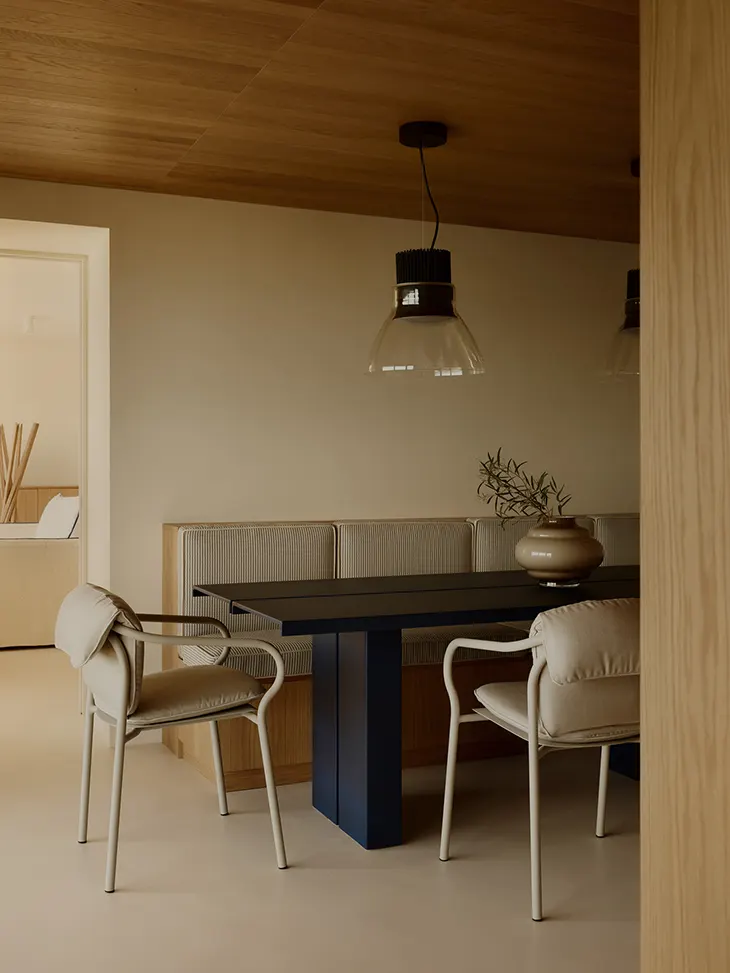
How to Design a Transitional Living Room
The steps below follow the order a designer would usually work in, from the largest piece to the smallest.
1. Anchor the Room With the Sofa
Start with a neutral upholstered sofa with a clean frame and a modest roll arm. It sets the scale for everything else, so measure the wall and the walkways before choosing a length. Leave enough room between the sofa and the coffee table to move through without turning sideways.
2. Set a Restrained Palette
Pick two or three base tones and one accent. The accent can be a deep blue chair or a rust throw. Keep everything else quiet and let texture carry the contrast.
3. Choose the Main Pieces
Once the layout and palette are set, compare pieces for scale, frame shape, and finish. When browsing transitional living room furniture, look at sofas, accent chairs, and tables together rather than one at a time, so you can judge whether arm shapes, leg styles, and wood tones work as a group.
Whenever possible, look at fabric and wood finishes in the room itself. Daylight and lamplight can turn a neutral toward yellow or gray.
4. Mix Shapes in the Tables
Pair a rectangular sofa with a round or oval coffee table to soften the layout. Add an end table in a different material, such as a wood-and-metal piece beside an upholstered arm. A slim console behind the sofa or along a wall adds storage without bulk.
5. Add Accent Chairs for Contrast
Two accent chairs do more for a transitional room than another sofa cushion. Choose a texture or tone that differs from the sofa and angle the chairs slightly toward the seating group. The tilt breaks up the straight lines.
6. Layer Rugs, Lighting, and Art
A low-pile or flat-weave rug in a quiet pattern defines the seating area. Add one sculptural lamp or fixture and a few decorative objects with space around them. Transitional rooms rely on negative space, so stop before every surface is filled.
Common Transitional Mistakes
- Buying matching sets. A sofa, loveseat, and chair in one fabric read as a showroom. Vary texture or tone.
- Adding too many patterns. One or two is enough when the palette is neutral.
- Choosing oversized pieces. Large rolled arms and deep cushions can push the room back toward traditional.
- Skipping texture. A neutral room without texture looks flat.
- Decorating every surface. Clear space is part of the style.
Transitional design works because it lets one room carry pieces from different periods without looking divided. For a transitional living room begin with a solid anchor, keep the palette quiet, and add contrast through shape and texture. A room built this way can take on new pieces over time and still feel consistent.
The anchor is often a sofa or a large case piece in a neutral tone, something substantial enough to ground the space without demanding attention. Once that anchor is in place, restraint becomes your tool. A quiet palette of grays, taupes, whites, and warm naturals allows individual pieces to breathe rather than competing for visual dominance. Within that calm foundation, contrast emerges through deliberate choices: a traditional wingback chair paired with a modern metal side table, a patterned rug that bridges eras, wood tones that range from light to deep. This layering of texture and form keeps a room visually interesting without becoming chaotic. The genius of transitional design is that it rewards slow curation. You are not obligated to buy a complete room at once, nor are you locked into a single stylistic moment. Each new piece can be evaluated against your anchor and your palette, rather than against a rigid design doctrine. Over years, a transitional living room becomes a genuine reflection of how you actually live, not a photograph from a catalog.