


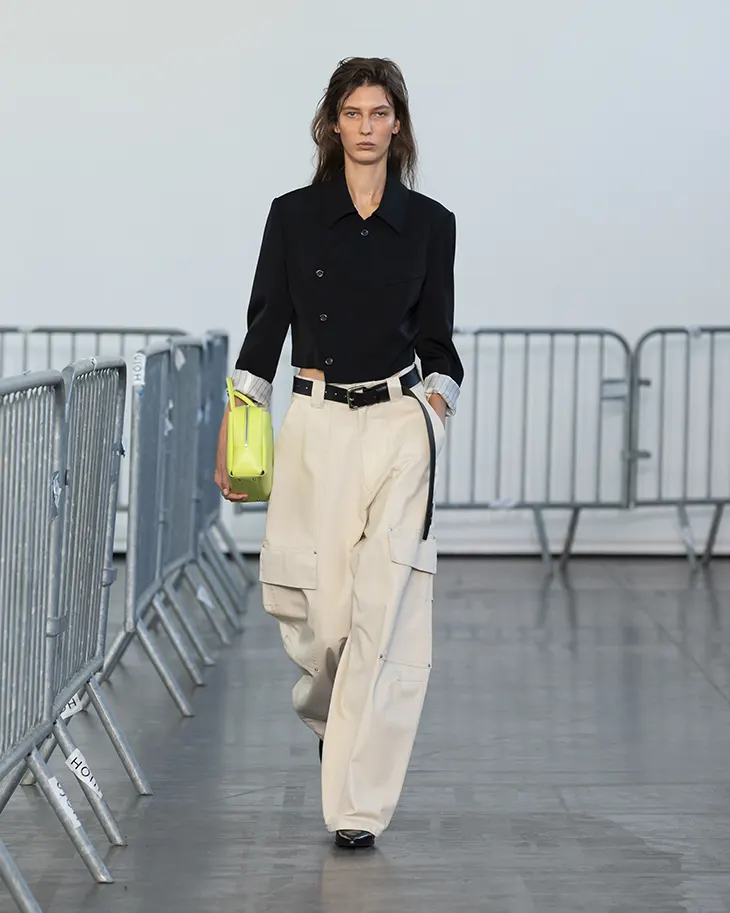
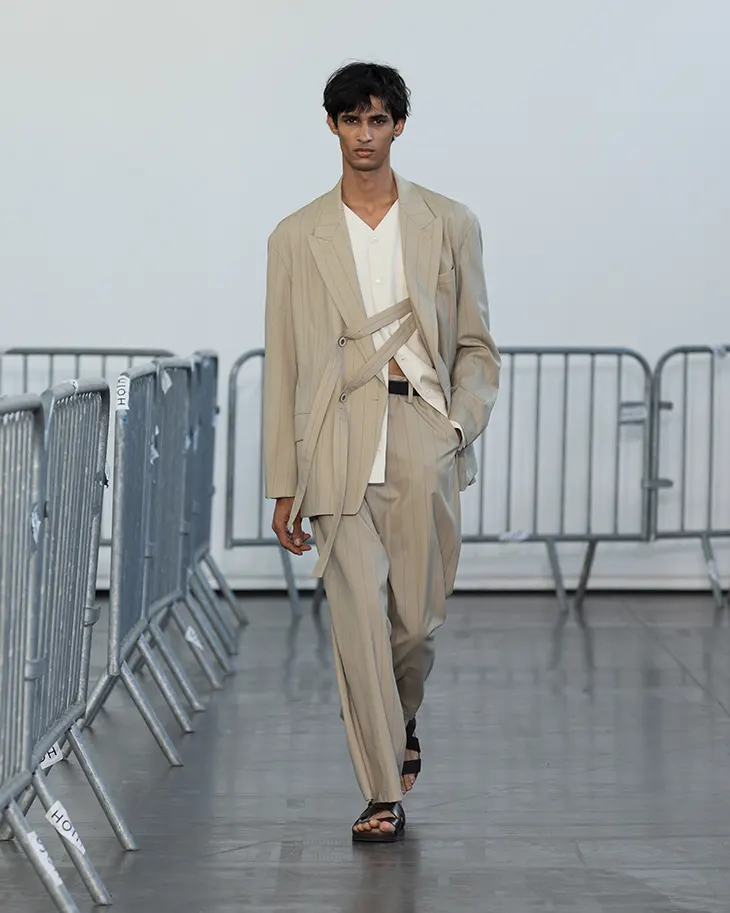
Ujoh Spring Summer 2027 loosens the divisions between familiar clothing categories, allowing tailoring, sportswear, casualwear and workwear to inform the same garment. The collection approaches function as something flexible, giving individual pieces several possible identities depending on construction and perspective.
SPRING SUMMER 2027
A single design can operate as a shirt from the back and a jacket from the front. Ujoh uses these shifts to question the expectation that one garment should belong to a fixed category. Front and back can communicate different ideas within the same piece, creating clothes that change according to how the wearer and viewer encounter them.
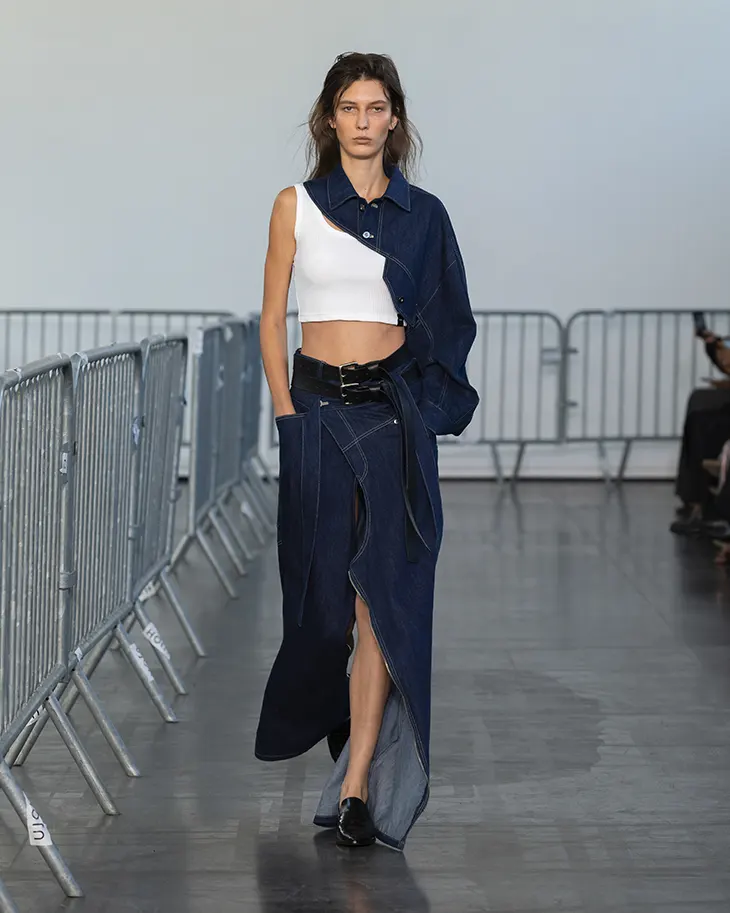
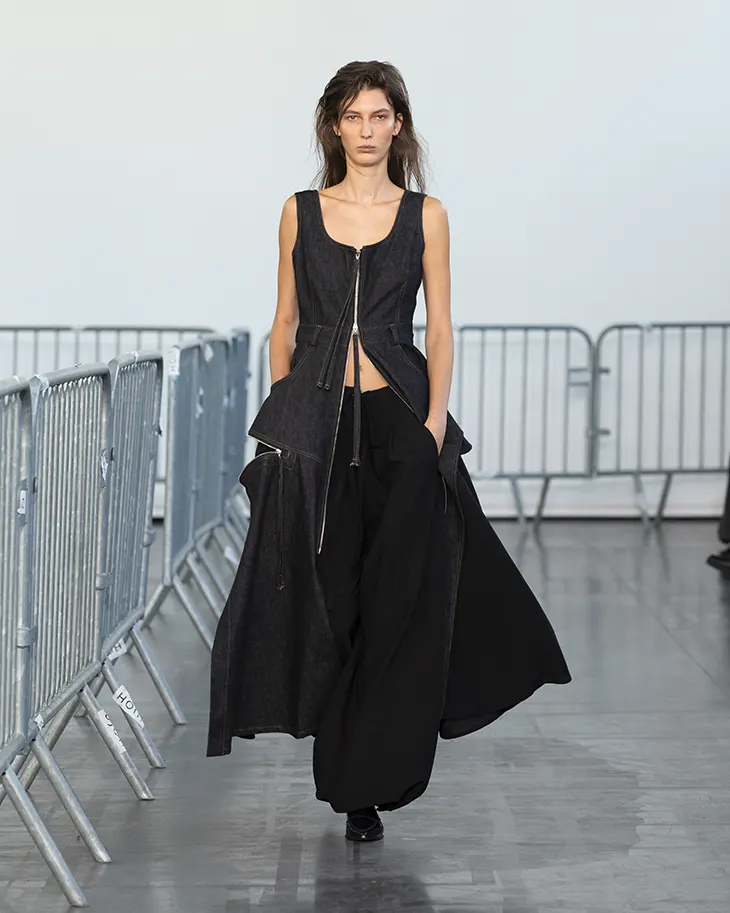
Denim receives a similar treatment. Asymmetric construction and cut-outs alter familiar forms, moving the material away from conventional expectations. Trousers grow into generous proportions with balloon-like volume, while jackets retain recognizable elements from their established construction and allow greater freedom of movement. Ujoh works with existing codes by adjusting their proportions, functions and details, asking the wearer to reconsider garments they already understand.
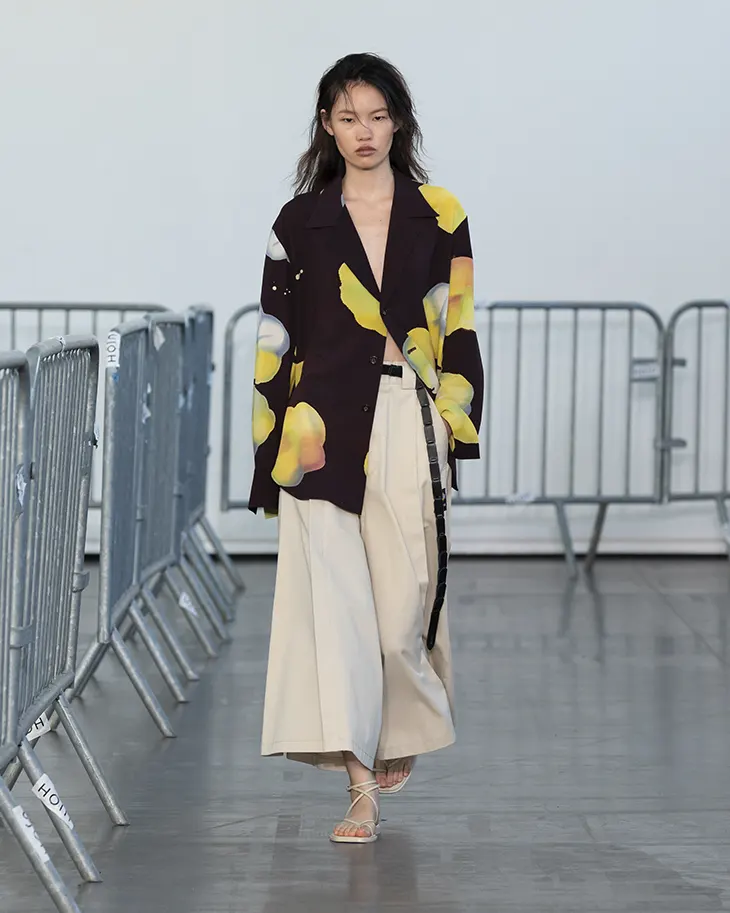
The collection extends this approach through its floral motifs. In Kyoto, artisans hand-paint flowers directly onto twenty-metre rolls of fabric, dedicating an entire day to the drawing process. Several additional stages follow. The fabric undergoes fixing and excess removal before steaming and another application of colour creates the surrounding field. The complete process takes almost a week.
Ujoh continues to seek traditional Japanese techniques across the country, working with people who continue to practice and preserve them. The floral designs once belonged to fabrics intended for kimonos. Spring Summer 2027 transfers them into a different wardrobe and gives the technique a new context through contemporary garments.
That process reflects a wider idea running through the collection. Ujoh places formal clothing beside everyday dressing and brings established Japanese methods into present-day design. The distinctions between categories become less fixed as garments take on multiple uses, references and forms.
Ujoh does not discard recognizable garment types. The brand adjusts their internal logic, changing how familiar pieces function and how the wearer perceives them. A shirt can acquire the front of a jacket, denim can depart from expected proportions, and kimono-related textile techniques can appear within another type of wardrobe.
Spring Summer 2027 also introduces Ujoh Synth, the second branch within the Ujoh universe. Synth shares the main line’s focus on construction and detail while developing a more athletic direction. The line takes cues from the technical vocabulary of performance wear and introduces stronger colours into its visual language.
Synth also changes the pace of the broader Ujoh approach. Its designs feel more direct and emphasize athletic references, while the main collection continues to work through fluidity, shifting functions and altered garment categories. The two lines establish different ways of developing Ujoh’s ideas around construction.
Ujoh treats categories as flexible tools. Tailoring, sportswear, workwear, denim and Japanese textile techniques enter new configurations, allowing garments to carry several identities at once. With the introduction of Synth, the brand extends that thinking into a second line shaped by performance references, technical design and a faster visual rhythm.