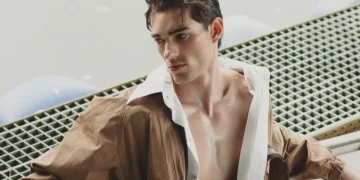





For Canali as one of the ultimate menswear brands from Milan, its step toward art comes naturally. Its dedication to craft is unparalleled in the market, built on generations of knowledge that live in the hands of its artisans. A single Canali jacket involves around two hundred sartorial steps, most of which the wearer will never see but will always feel.
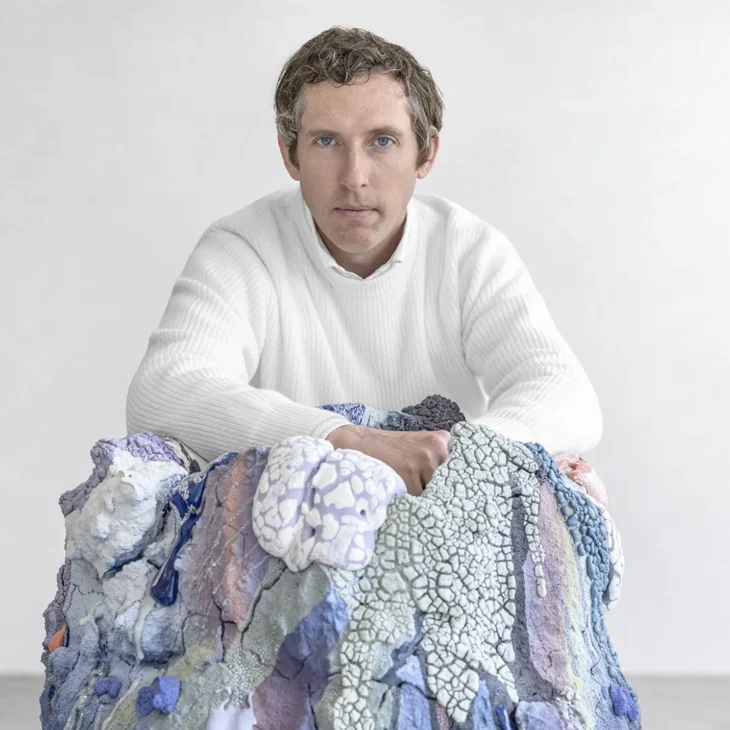
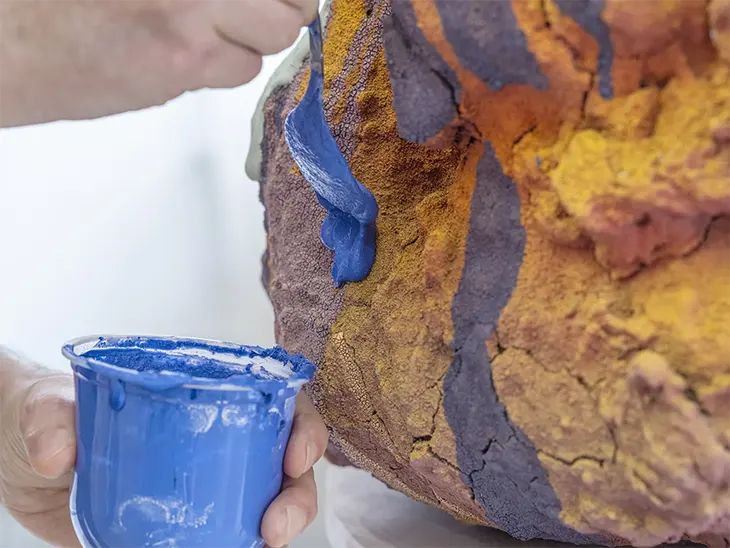
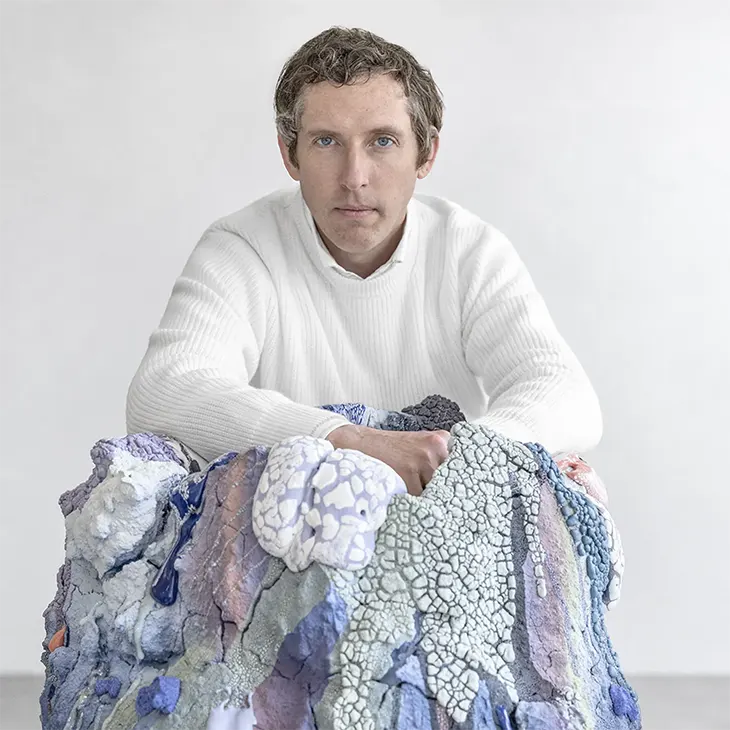
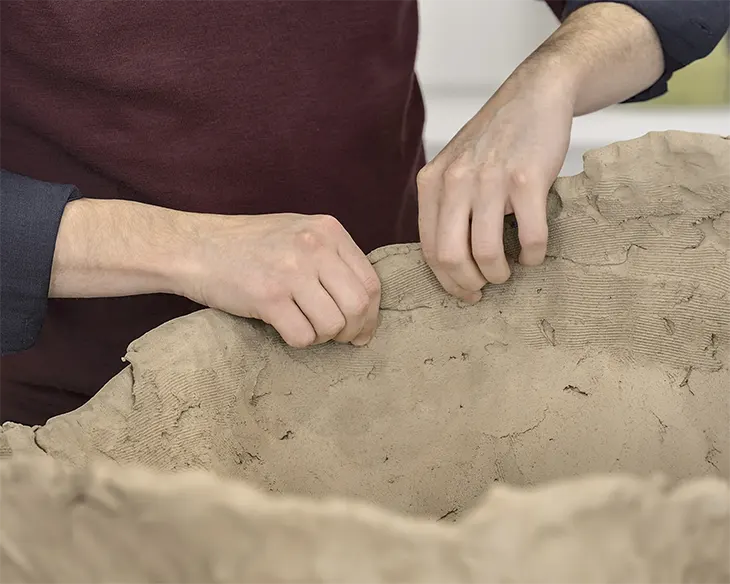
With Under the Surface, the house brings that hidden work into focus through contemporary art. The project runs in parallel in New York, Milan, Beijing and Mumbai, curated by art critic and professor Cloe Piccoli and documented in photo and video by Italian artist and filmmaker Yuri Ancarani. In New York, Canali partnered with sculptor Brian Rochefort, whose ceramics are built from successive layers of clay and glaze, fired repeatedly until texture and form emerge. The works were presented on November 4th.
DSCENE Editor in Chief Zarko Davinic spoke with Stefano Canali and Brian Rochefort about tailoring as a language of layers, the role of chance in the kiln, and what a finished object cannot disclose.
Canali Evening at Glasshouse Chelsea
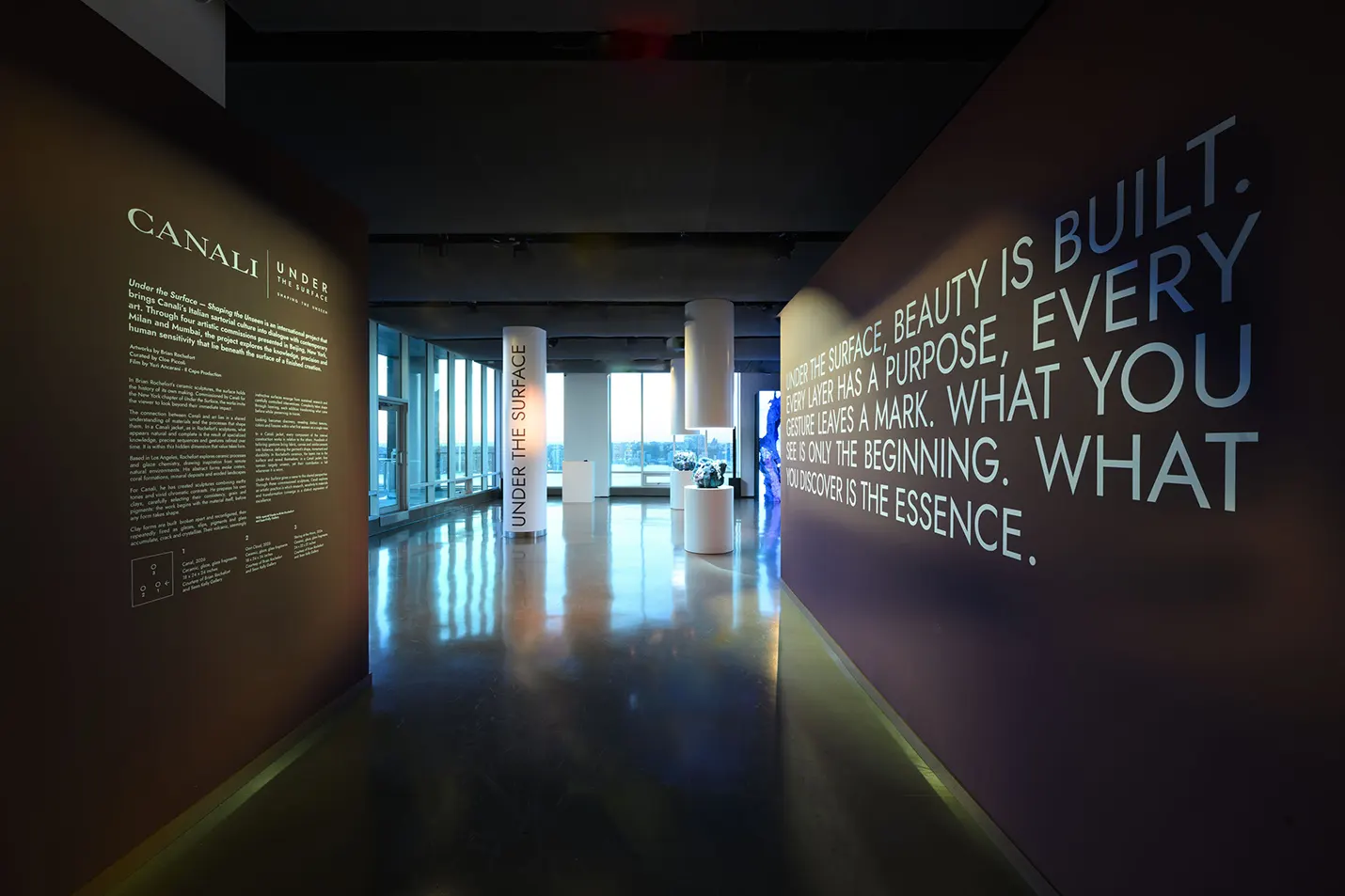
The New York chapter of Under the Surface opened on November 4th at Glasshouse Chelsea, inside the Chelsea Arts Tower. Canali used the setting to extend its long-standing ties to the art community, inviting guests to move between Rochefort’s sculptures and the tailoring mastery that inspired them. The evening unveiled the global project to a crowd of VIPs, press and personalities from fashion and art.
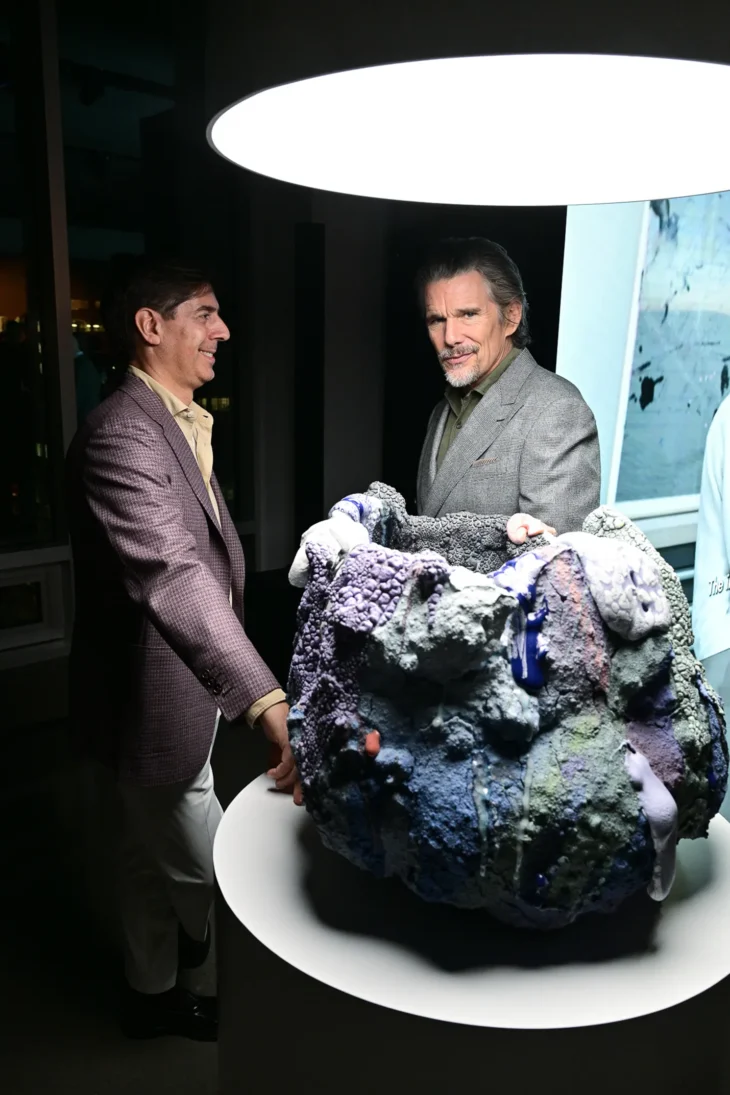
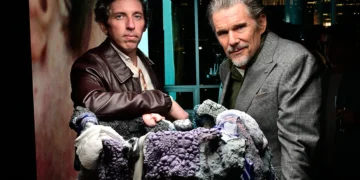
Among those present were Canali’s global brand ambassador Ethan Hawke, composer and pianist Eric Christian von Fricken, consultant Nick Wooster, chef Rōze Traore, creative director Mobolaji Dawodu, designer Timo Weiland, actor Tyler Lain, stylist Michael Fisher and creative director Josh Peskowitz.
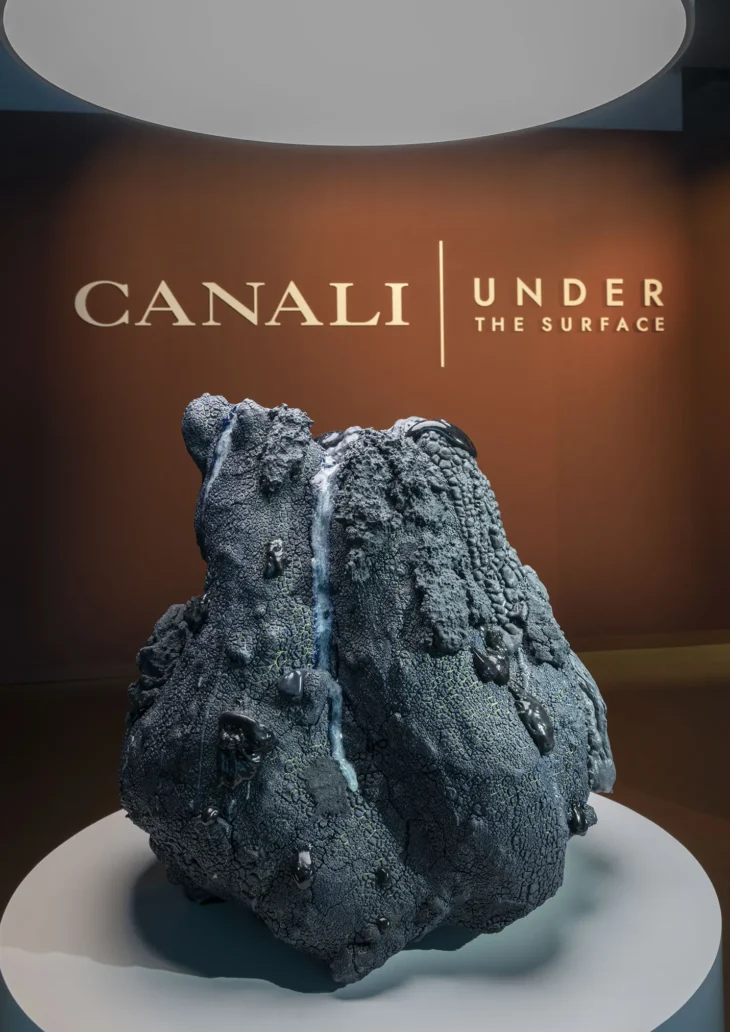
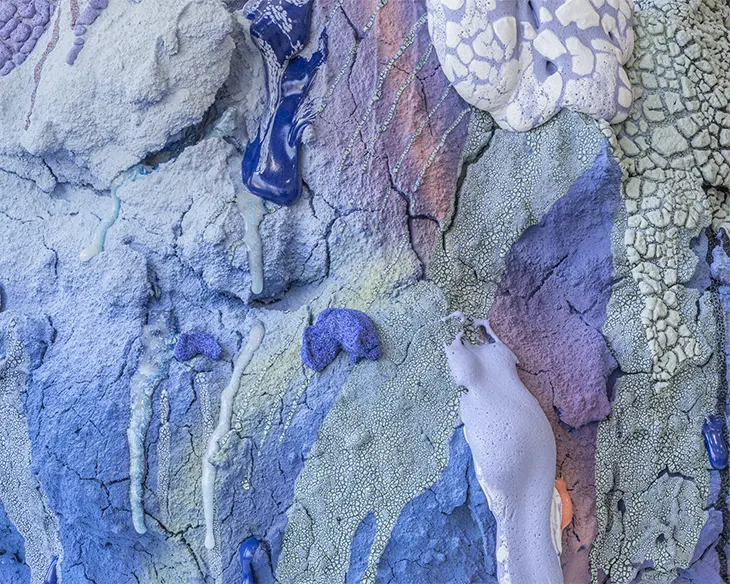
Rochefort’s original works anchored the room, each one built through carefully controlled layers of clay, glaze, slip, pigment and glass that pool, crack and crystallize in the kiln. Shaped by his travels from the Galápagos and the Amazon to East Africa, the abstract forms recall craters, coral formations, mineral deposits and eroded landscapes, here rendered in the earthy tones of the house. In New York, the exhibition stood alongside the work of Lihuai Qian in Beijing, Diego Perrone in Milan and Thukral & Tagra in Mumbai, each artist offering a distinct reading of what lies beneath the surface.
Find more images from the event:
In Conversation with Stefano Canali
“Under the Surface” turns attention to the hundreds of tailoring gestures hidden inside a jacket. What made you want to show the part of the process that the customer never sees? – We have always believed that the true character of a garment is defined by much more than its appearance. With a Canali jacket, there are two hundred sartorial steps behind its construction, from the internal structure to the smallest adjustments that determine how it feels and moves with the person wearing it. We wanted to bring that world into focus and give greater recognition to the expertise behind it. Under the Surface is an opportunity to share a side of our work that is not always visible but is essential to the experience of wearing the garment every day. Through the dialogue with contemporary art, we invite people to look more closely at how that quality is built. It reflects our belief that some of the most meaningful expressions of quality are felt before they are seen.
Canali recently introduced a rigorous, quantitative review of its manufacturing process, regulated by the EU. How has that visibility changed the way you protect Made in Italy quality across generations? – Transparency and responsibility are an important part of the future of our business. Craftsmanship has always been rooted in experience and knowledge, but we also need the ability to evaluate our practices objectively and understand their wider impact.
Within our CAre framework, we have measured our environmental footprint at both organisational and product level, through OEF and PEF assessments. These examine different stages of our activities, from the materials we source to production and logistics, giving us the information needed to evaluate our decisions and identify where further progress is possible.
At the same time, protecting Made in Italy means investing in the people, facilities and specialist relationships that keep this knowledge alive. Keeping our production entirely in Italy allows us to remain closely connected to the expertise behind every garment. For us, preserving tradition means giving it the conditions to develop and pass from one generation to the next.
Why sculpture as the medium to express tailoring, and what drew you to Brian Rochefort’s layered ceramic work in particular? – Sculpture felt like a natural language for this project because it shares an interest in structure, proportion and the relationship between materials. Both disciplines involve a process of transformation, where the result is shaped by a series of decisions that are not necessarily apparent in the finished object.
Working with curator Cloe Piccoli, we were particularly drawn to the way Brian experiments with materials and builds complexity through successive layers. His forms are built, broken apart and reconfigured, then fired repeatedly as glazes and other materials accumulate. There is a sense of spontaneity in his sculptures, but also sustained research and precise technical knowledge behind them.
We recognised a parallel with our own approach to tailoring. A jacket brings together different layers and elements, each with a specific purpose in determining its final form, balance and comfort. Brian’s work offers a distinct artistic perspective on this relationship between complexity, layering and construction.
The project runs in parallel in New York, Milan, Beijing and Mumbai, each with a different artist. What did you want each city to reveal about the brand’s savoir-faire? – We wanted the project to reflect the international dimension of Canali while remaining connected to the cultural context of each place. The artists were chosen for their ability to interpret the idea behind Under the Surface: Shaping the Unseen through their own practices.
In Milan, Diego Perrone‘s glass sculptures explore the transformation of matter and retain traces of their making. In New York, Brian Rochefort approaches complexity through layering and research. In Beijing, Lihuai Qian‘s bamboo weaving brings precision and inherited knowledge into a contemporary language. In Mumbai, Thukral & Tagra bring another perspective through their exploration of the relationship between the natural and digital worlds.
We were interested in how these different practices could open a dialogue with our own culture of making. Each work retains its artistic independence while offering a different way to consider the materials, processes and knowledge behind a finished form.
Yuri Ancarani shot the project in photo and video to capture transformations a finished object cannot disclose. What surprised you most when you saw your own craft through his lens? – What struck me was how Yuri brought attention to aspects of the process that we experience every day but rarely have the opportunity to observe from a distance. His approach encourages you to slow down and consider the individual gestures that contribute to the making of a garment. By following both our artisans and the artists, he allows connections between the two processes to emerge naturally.
What becomes evident is the relationship between the person and the material.
There is a level of intuition involved in tailoring that comes from years of experience, where even the smallest movement or adjustment is guided by an understanding that cannot be learned from instructions alone. Behind every finished jacket is a sequence of decisions, skills and interactions that give it its character.
Seeing these moments through his lens reminds us how much human sensitivity goes into creating something that ultimately feels so effortless.
In Conversation with Brian Rochefort
Your sculptures are built from successive layers of clay, fired repeatedly, with glazes that pool, crack and crystallize. How did you translate that process into a dialogue with the layered construction of a Canali jacket? – I think there is a connection between our processes. A Canali jacket goes through many different layers and processes that require precision and the shaping of material to conform to the body. Mine conform to an idea or a memory from the natural world, whereas Canali’s clothes are shaped to the human body. In both cases, there is a real sensitivity to material and how it can be manipulated to achieve a particular form. I think there is also a shared appreciation for the process itself, where every layer and decision contributes to the final result.
Your forms evoke craters, coral formations, mineral deposits and eroded landscapes, shaped by travels from the Galápagos to the Amazon and East Africa. Which of those places left the strongest mark on the works made for Canali? – I like to absorb these experiences rather than recreate a specific landscape or object. They become part of my visual language and eventually find their way into the sculpture. In that sense, the work is less about depicting a place than allowing the accumulated experience of being in the world to take form. Ultimately, the outcome also reflects whatever happens to be occupying my mind in the moment. That could be reading Carl Sagan‘s Cosmos while simultaneously building and glazing a few works that look like they came spinning through the atmosphere from outer space.
Glaze chemistry involves a degree of surrender, since the kiln never fully obeys. Where did you find the most tension between control and chance in this project? – I took one shot at the Canali piece, and it turned out really well. I think there’s always an element of chance and risk in making art, and I believe that is important, at least to me. Gerhard Richter‘s squeegee paintings are a great example of this. Dragging a squeegee across a massive canvas introduces an element of unpredictability, and that’s part of what makes the process exciting. Without that element of chance, I do not think there would be as much innovation or discovery. That said, the kiln isn’t a complete surrender to chance. There’s actually a lot of control involved in glazing, layering, and firing. I have developed an understanding of how materials behave, but I also have to leave room for some unexpected changes at high temperatures.
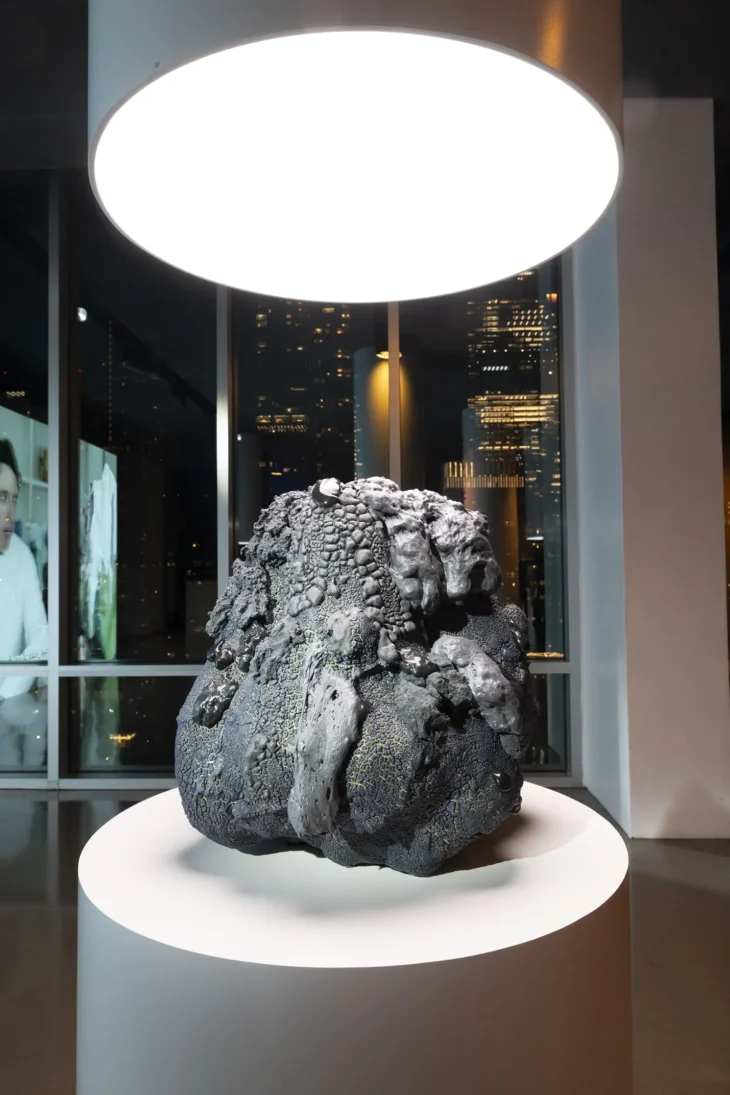
You worked with the earthy palette associated with Canali. How did you approach color so that the pieces feel true to your practice and still speak to the house? – I started with Canali Green, which is a softer, more muted green, and then just took it in the direction I normally would. I airbrushed some blues, mixed lighter greens into my crawl glazes, and brought in complementary colors, rather than having one shade of green take over. I was really just putting my own spin on an existing color palette. It was a fun project because I don’t typically like working within parameters.
Visitors in New York on November 4th will see only the finished sculptures. What would you want them to understand about everything that happened beneath the surface before they reached that final form? – Well, we did have a pretty extensive video interview where I went through most of the process, which was really informative. I don’t necessarily feel the need to explain everything that goes into making the work unless someone genuinely asks. I actually enjoy hearing people’s interpretations and the responses they have to the sculptures. A lot of people pick up on my references to barrier reefs and other natural wonders of the world, and I love seeing those connections happen on their own. I think there’s something nice about letting the work speak for itself. They are also visually generous, but materially ambiguous.