




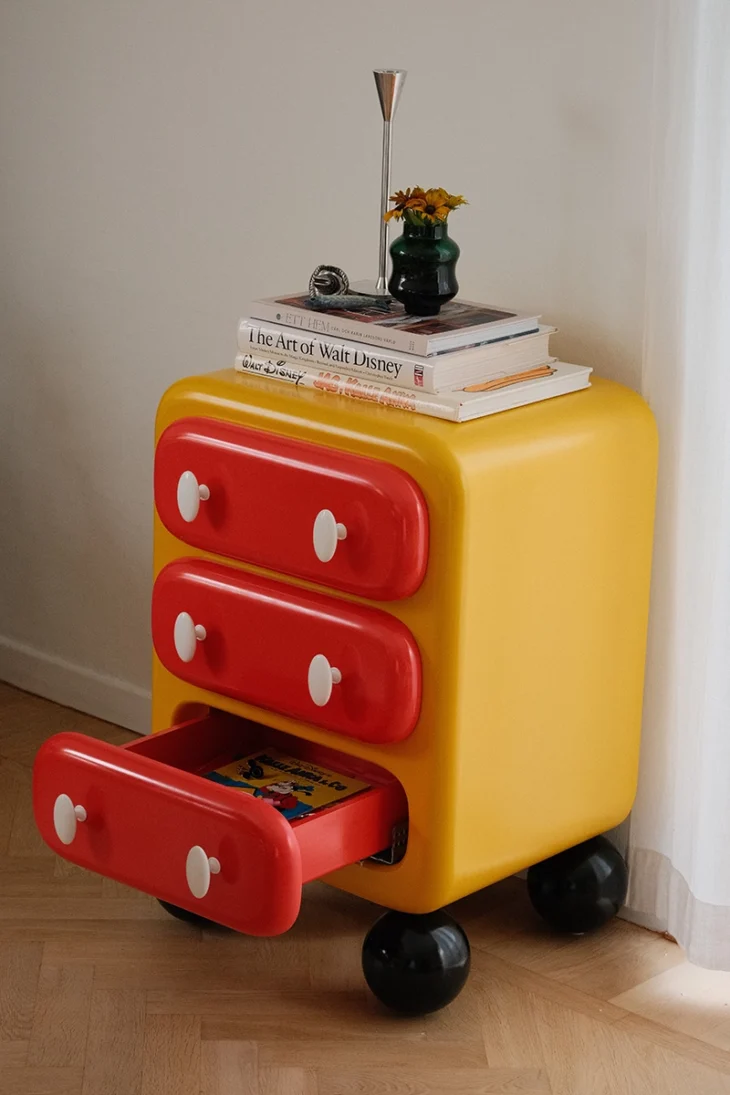
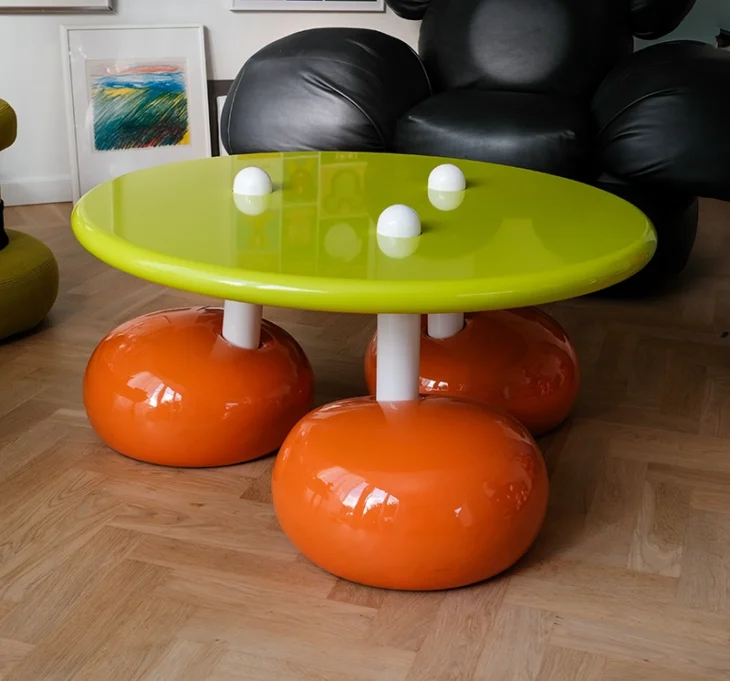
Gustaf Westman has built a design vocabulary that feels remarkably close to the language of animation. His furniture and objects feature exaggerated proportions, rounded silhouettes, and colors that seem to belong to a world where ordinary physical rules have become slightly negotiable. A cup can resemble a sculpture, a chair can look like a character, and the familiar objects of domestic life can suddenly seem amusing. His collaboration with Disney Mickey & Friends makes this connection explicit, bringing together two visual languages that share an interest in instantly recognizable shapes.
INTERVIEWS
For Westman, the relationship was obvious long before he began sketching the collection. “I feel like a lot of Disney characters are made in a similar style as I design my objects. It’s very recognizable shapes, bright colors, etc! Like something you understand in a second and I love that!”
There is something revealing about his emphasis on understanding an object in a second. Much of contemporary design surrounds itself with explanations, conceptual frameworks, and elaborate accounts of intention. Westman’s objects tend to communicate their ideas immediately. Their proportions invite curiosity, their colors attract attention, and their humor rarely requires interpretation. Mickey Mouse, whose silhouette has remained recognizable for nearly a century, offers an especially interesting subject for this approach.
I just take the recognizable parts and think about how I can use them in a different way or as a different function!
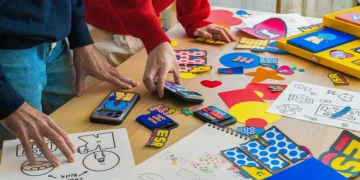
The Disney x Gustaf Westman collection translates the familiar visual codes of Mickey Mouse and his friends into furniture, ceramics, homeware, apparel, and accessories. The Mickey Tumbler transforms Westman’s signature Chunky Tumbler through the character’s red, yellow, and black palette, complete with two black ears. The black ceramic Mickey Cup takes a similarly direct approach, while the Mickey Sofa, produced in black leather as part of the made-to-order furniture range, introduces the character into the territory of collectible design.
The objects demonstrate how little information a familiar image needs to retain its identity. A pair of ears, a particular combination of colors, or an exaggerated silhouette can carry decades of cultural associations. Westman treats these elements as material for experimentation. “I mean that makes it easy! I just take the recognizable parts and think about how I can use them in a different way or as a different function!”
His answer suggests an approach to design that begins with recognition and develops through transformation. The challenge lies in deciding how much of the original image an object actually needs. Westman’s work frequently relies on reducing familiar forms to their essential characteristics, although achieving that apparent simplicity requires considerable consideration. “I think it’s always difficult to do something very simple that is still interesting! But it’s a challenge I like.”
The collaboration also raises a more complicated question about our relationship with objects associated with childhood. Mickey Mouse belongs to a shared visual memory, yet Westman’s interpretation enters a market where furniture can function as a collectible and where familiar cultural imagery carries significant commercial value. A €9,250 leather sofa shaped around a cartoon character creates an unusual meeting point between childhood nostalgia, luxury interiors, and contemporary design.
Westman approaches this relationship through the emotional familiarity of Disney’s characters. “I feel like everyone has a relationship with Disney and these objects hopefully bring out the inner child! But the collection has a big range and I do think there’s something for everyone in it!”
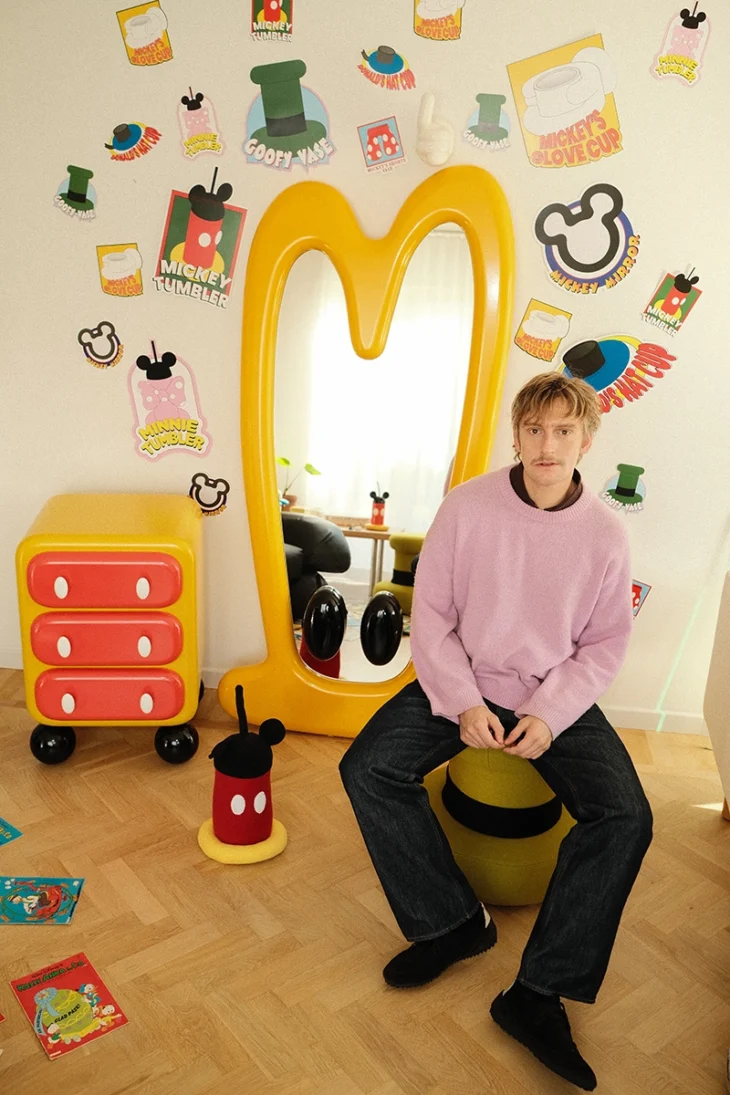
The idea of the inner child offers one way of understanding the growing presence of humorous, exaggerated objects in adult interiors. Furniture traditionally carries expectations of practicality, comfort, and longevity, while decorative objects often communicate taste and personal identity. Westman’s work introduces a more immediate emotional dimension. His designs encourage people to respond to an object before considering what it might communicate about their taste.
Humor plays an essential part in that response. It appears in the proportions of his furniture, the unexpected forms of his ceramics, and the way everyday functions become opportunities for experimentation. Yet Westman describes humor as an instinctive part of his thinking rather than an effect he adds at the end of the process. “I love to have fun, and I do accept humor as a part of my design! But it also, as you say, is a natural way for me to think about shape, I’m very curious to try different ways of using function and shapes in my design!”
That curiosity complicates the distinction between functional design and collectible objects. As contemporary furniture increasingly circulates through galleries, design fairs, and social media, the reasons people acquire particular pieces can extend far beyond their practical applications. Westman’s objects occupy this territory comfortably. They perform recognizable domestic functions while offering the visual identity of something a collector might want to possess.
When asked whether he considers the difference between designing something people want to live with and creating an object people desire for its cultural significance, he sees no necessary division. “I don’t think there has to be a difference in it honestly!”
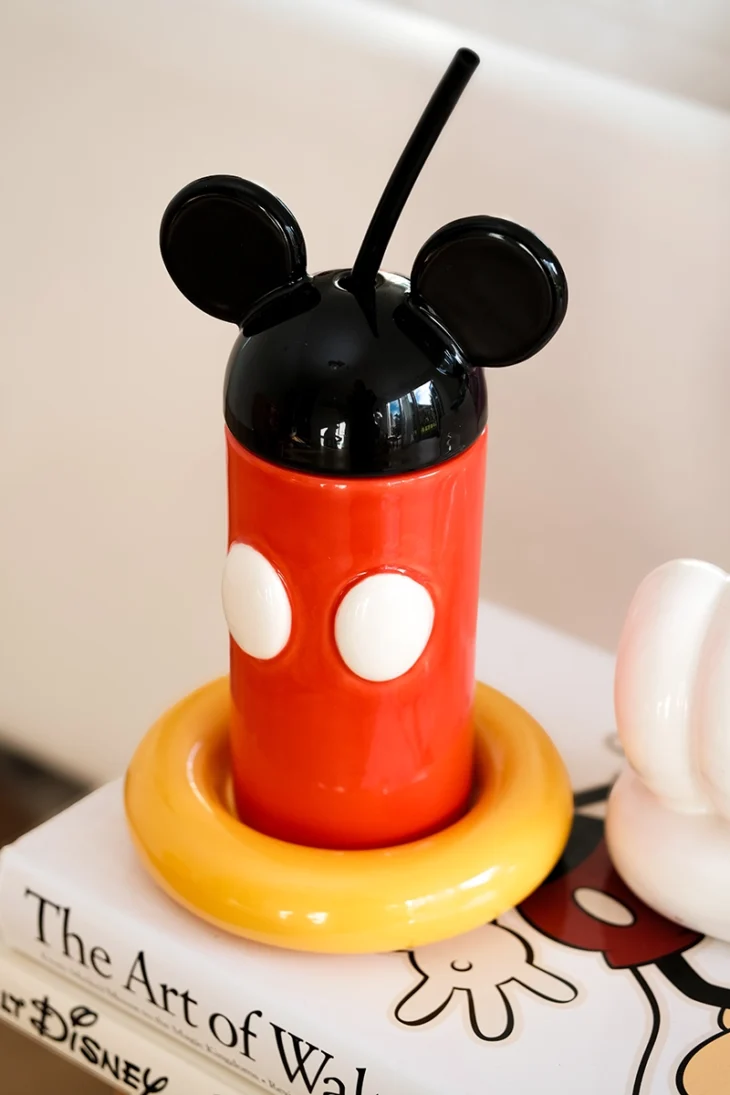
His response reflects a broader understanding of how design operates in contemporary culture. An object can serve an everyday function while carrying associations with art, popular culture, or personal memory. The Disney collaboration makes those associations particularly visible because the characters already exist within a vast network of images, merchandise, and collective experiences.
I feel like everyone has a relationship with Disney and these objects hopefully bring out the inner child!
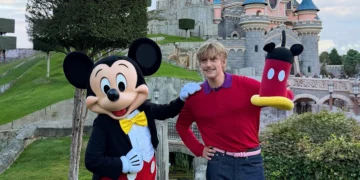
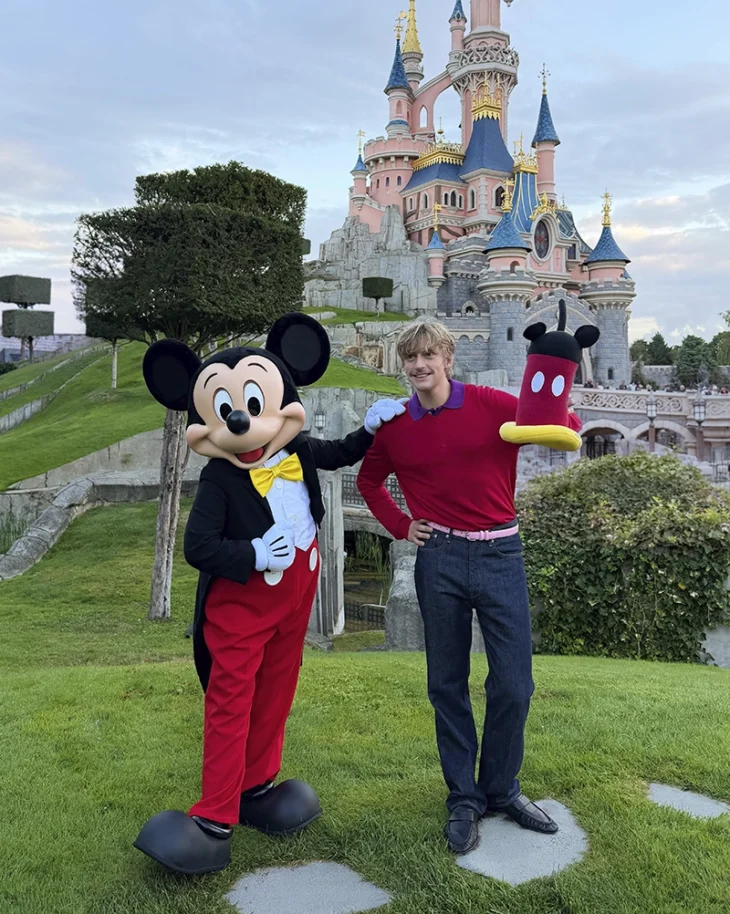
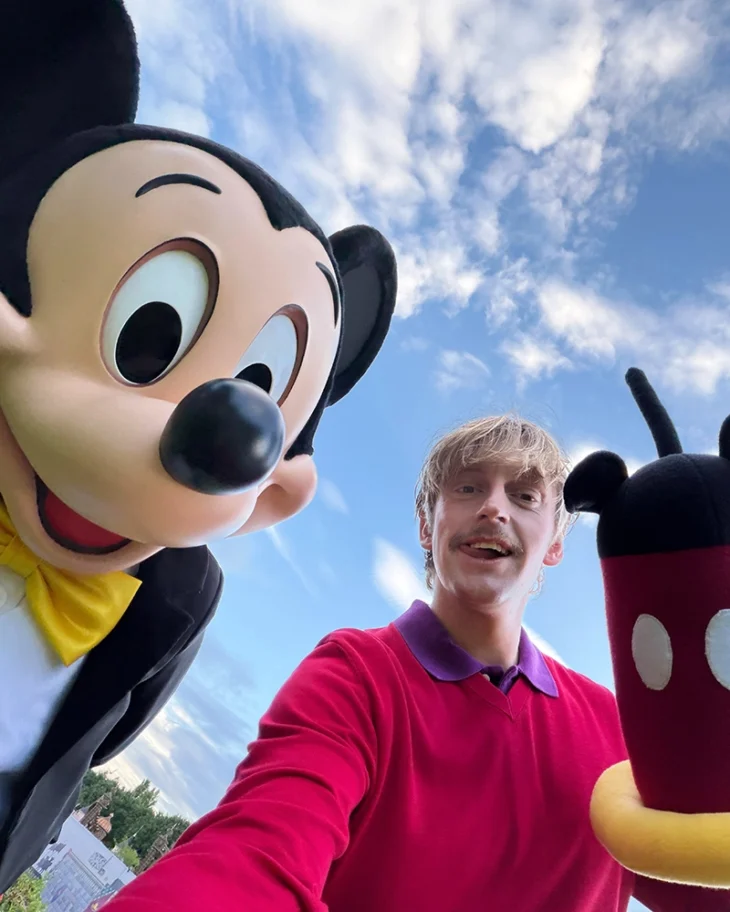
To develop the collection, Westman visited Disneyland Paris, immersing himself in the environments and visual details associated with Mickey & Friends. For a designer who originally trained in architecture, the experience offered an opportunity to encounter an entirely constructed world where color, scale, and recognizable imagery shape the visitor’s surroundings. “I found so much inspiration in Disneyland! What stood out the most was being surrounded by creative shapes and colors that reminded me of my favorite characters.”
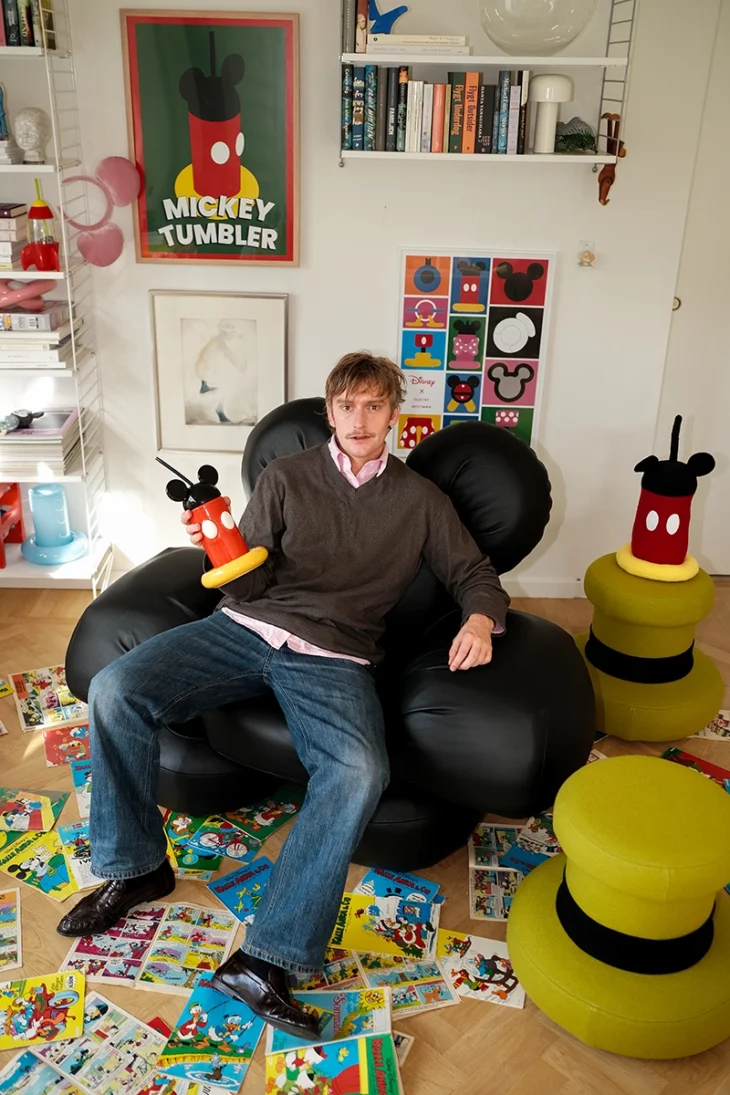
The park also became the setting for the collection’s campaign, photographed with Westman styled by Harry Lambert. The decision connects the finished objects to one of the environments that informed their development, placing the designer within the visual universe from which he drew inspiration.
I think it’s always difficult to do something very simple that is still interesting! But it’s a challenge I like.
Westman’s architectural background remains an important part of his professional history. After studying architecture, he established his Stockholm-based design studio in 2020, developing a practice that now encompasses made-to-order furniture, ceramics, glassware, and collaborations across different creative fields. His objects retain an interest in volume and spatial relationships, although his process increasingly follows the possibilities of shape and color. “What I learned from Architecture built my foundations, but when I create my designs, I lean more into being guided by the shapes, colors, and objects.”
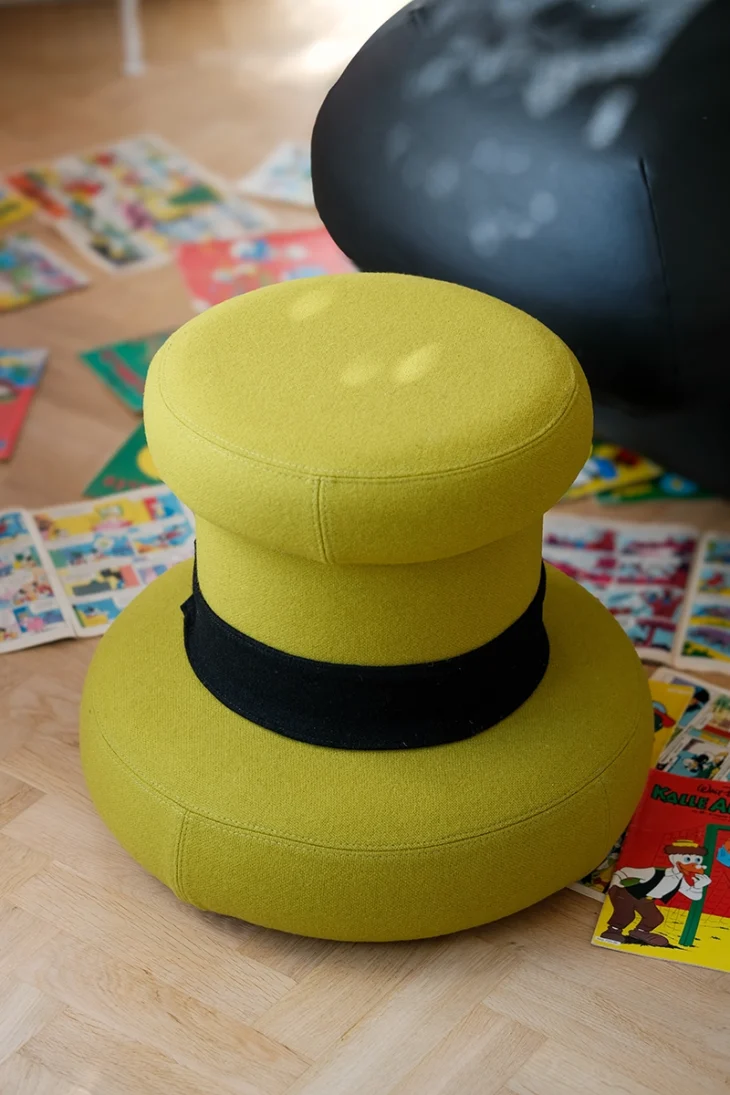
This emphasis on visual form has helped make his work particularly recognizable online. His objects often reach audiences first through photographs, where their distinctive silhouettes can communicate an entire design idea within a single image. The speed at which contemporary design circulates raises questions about how people experience objects that they may know primarily through screens.
Westman welcomes that visibility while maintaining that the process of creating the objects remains unchanged. “I love when people share my designs, it’s a part of the journey. Even if it gets consumed quickly, the design process doesn’t change. I’m still very precise and want to design good things.”
There is an interesting connection between this attitude and his attraction to Mickey Mouse. Both depend on the ability of a shape to establish an immediate relationship with its audience. A silhouette can become familiar long before someone encounters the physical object, and recognition can create an emotional response before any explanation becomes necessary.
For Westman, the value of that response seems more important than the elaborate arguments that frequently surround contemporary design. His Disney collection suggests that an object can carry cultural history, function within a domestic interior, and still communicate through something as uncomplicated as a smile. “Designs that feel warm and playful are the best. If our Mickey Mouse cup or plate brings extra joy throughout someone’s day, that’s the biggest win.”
The Disney x Gustaf Westman collection became available globally online on November 15, following presentations in Tokyo and New York. A further pop-up takes place in Paris from December 4 to 6, with selected pieces also available at Disneyland Paris.
If our Mickey Mouse cup or plate brings extra joy throughout someone’s day, that’s the biggest win.
For all the cultural associations attached to Mickey Mouse, Westman’s interpretation ultimately returns to a straightforward proposition: familiar objects can still surprise us. A cup can make someone laugh, a sofa can resemble a cartoon character, and the things we choose to live with can offer moments of amusement without needing to justify their existence.
Interview by Katarina Doric.