


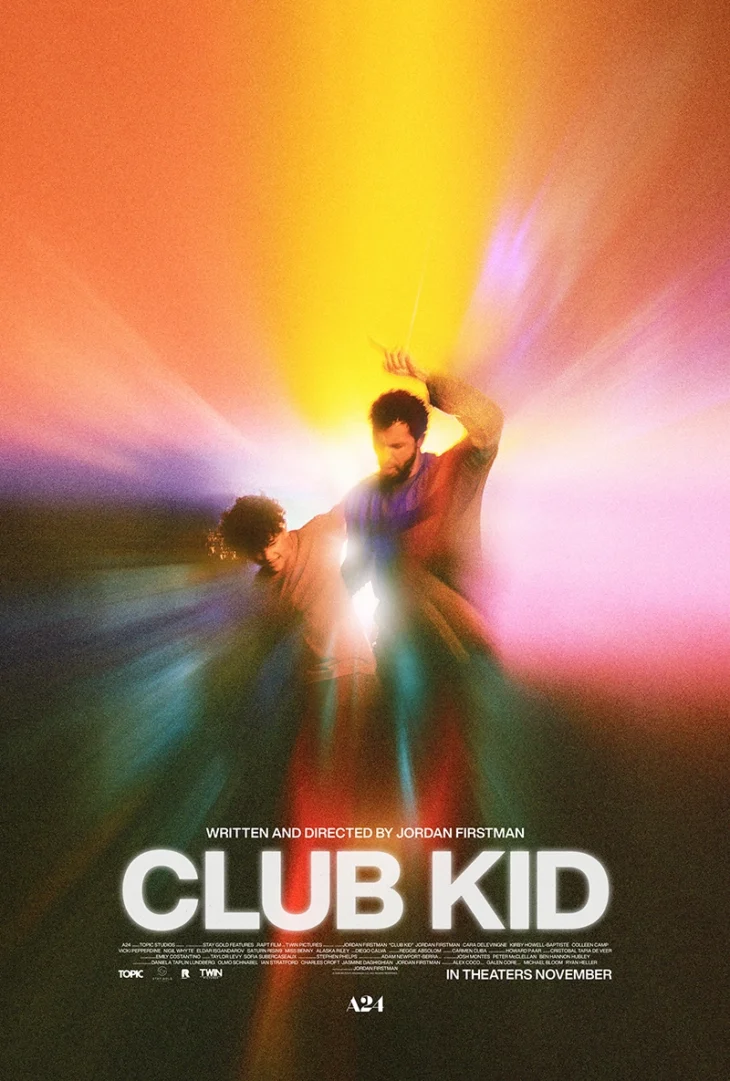
The audience at Belgrade’s Author Film Festival laughed through much of Club Kid. The cinema was full, the jokes landed, and there was a wonderful energy in the room. Then, somewhere along the way, the laughter gave way to tears. I watched people around me become increasingly emotional, and I understood exactly why. Jordan Firstman had made us care about a group of people who, in another film, might have existed entirely for comic relief. By the end, I was completely in love with them.
MOVIES
I have been thinking about the film since leaving the cinema. About Jordan Firstman’s performance, about the extraordinary little boy playing his son, about the casting, and especially about the generosity with which Firstman approaches his characters. Club Kid is one of the best films I’ve seen recently, largely because of its understanding of human behavior. It seems genuinely interested in why people are the way they are, and it approaches even their most embarrassing qualities with affection.
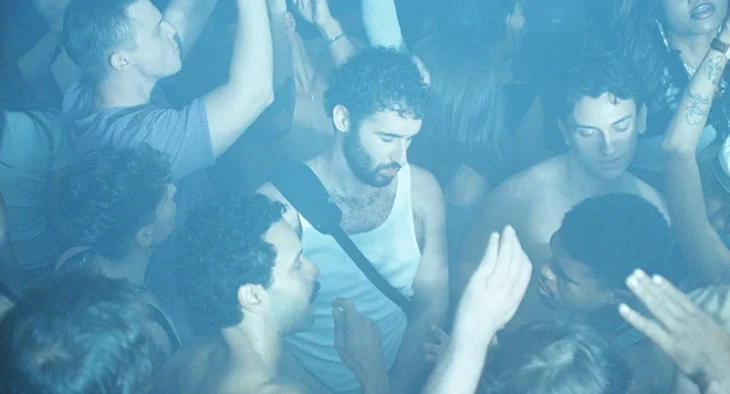
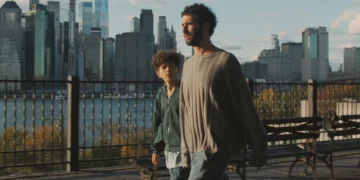
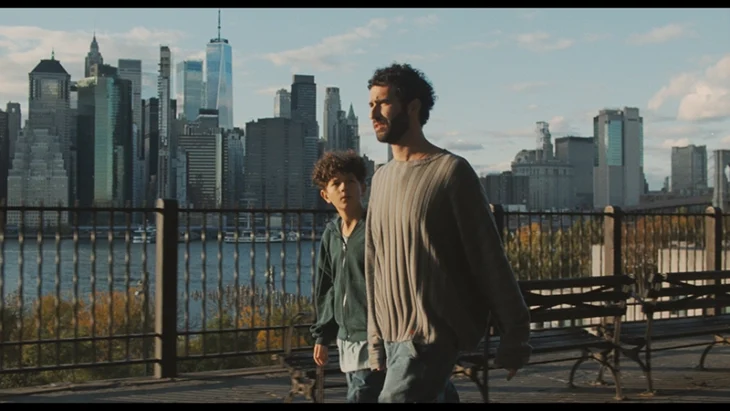
Firstman plays Peter, a New York nightlife promoter whose days and nights have become increasingly difficult to distinguish. He has built a life around parties, friendships, drugs, and the constant demands of a social world that values entertainment above almost everything else. Peter is funny, self-absorbed, frequently irresponsible, and often exhausting. Then he discovers that he has a ten-year-old son, Arlo, whose mother has died.
The circumstances are devastating, and Peter is spectacularly unprepared. He barely knows how to look after himself. His friends are hardly obvious candidates for helping raise a child. Their conversations, priorities, and daily routines belong to a world that seems completely incompatible with parenthood. Yet these are precisely the people who begin to create a home for Arlo.
I loved how naturally Firstman allows this to happen. Nobody undergoes an immediate transformation into a model adult. The characters continue behaving like themselves, with all their peculiarities and terrible judgment. They also begin paying attention to this little boy. They listen to him, become interested in what he likes, and find ways to include him in their lives. Their affection develops through ordinary interactions, and that makes it particularly convincing.
There is a tendency in contemporary culture to organize people into categories of acceptable and unacceptable behavior. We are quick to recognize irresponsibility, narcissism, selfishness, and immaturity, often with good reason. Peter and his friends provide plenty of material for such judgments. But Firstman seems to understand how little those categories can tell us about someone’s capacity to love.
We spend so much time discussing what is wrong with people that we sometimes forget how much goodness can exist alongside their flaws. Someone can make terrible decisions and still be extraordinarily generous. Someone can struggle with their own life and become a source of comfort to another person. People are rarely consistent, and their contradictions are often what make them interesting.
Firstman gives his characters the freedom to be contradictory. He has affection for their ridiculousness and understands the emotional intelligence that can exist beneath it. Their world contains vanity, insecurity, and a great deal of questionable behavior, but it also contains friendship, loyalty, and an instinctive willingness to welcome someone new.

The film’s understanding of chosen family grows naturally from this environment. Peter and Arlo have a biological connection, although they begin their relationship as strangers. The people around them have no formal obligation to participate in the boy’s life. They become involved because they care about Peter, and eventually because they care about Arlo himself.
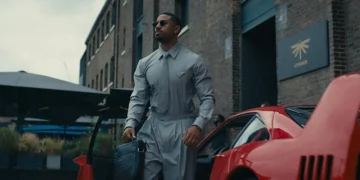
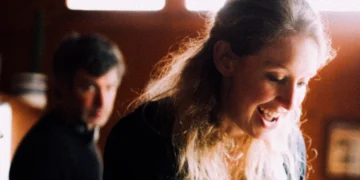
I was particularly interested in how Firstman treats this community. New York’s queer nightlife provides the film with much of its humor and personality, and the supporting cast gives it an extraordinary social energy. Cara Delevingne, Eldar Isgandarov, Kirby Howell-Baptiste, and Diego Calva contribute to a group of characters who feel like people with long histories together. They know one another’s weaknesses, tolerate one another’s eccentricities, and communicate through a particular mixture of affection and mockery.
The casting is wonderful. Everyone seems to understand the film’s tone, which allows its most absurd scenes to feel completely natural. Firstman has an excellent ear for dialogue, especially the way friends can communicate entire emotional histories through a few ridiculous remarks.
And then there is Reggie Absolom as Arlo. I cannot remember the last time I was so impressed by a child actor. Absolom has an extraordinary naturalness on screen. He listens, observes, and responds with the kind of spontaneity that makes you forget you are watching a performance. He gives Arlo a personality that exists independently of the adults surrounding him.
That matters enormously because Arlo could easily have become a device for Peter’s personal development. Instead, he feels like a real child experiencing grief, confusion, curiosity, and happiness. He has his own interests and ways of understanding the world. His relationship with Peter develops through the gradual discovery of who they are as individuals.
The scenes between Absolom and Firstman are among the film’s finest. Their chemistry is immediate, although the affection between their characters takes time to develop. They share awkward conversations, discover common interests, and begin to enjoy one another’s company. Music becomes an especially important part of their relationship, creating moments of connection that feel intimate and entirely believable.
He allows Peter to remain irritating, selfish, and occasionally impossible while gradually revealing the loneliness beneath his personality. There is a sadness to the way Peter has organized his life around constant activity. He seems surrounded by people and yet frequently disconnected from himself. Arlo’s arrival forces him to confront feelings and responsibilities he has spent years avoiding.
The film gives this development time. Peter makes mistakes. His priorities remain confused. He struggles to understand what Arlo needs from him. But he also begins to experience the pleasure of caring for another person, and that discovery changes the emotional direction of his life.
I appreciated how little the film relies on conventional ideas of redemption. Peter’s affection for Arlo develops through attention and experience. He begins to recognize another person’s needs and gradually learns to respond to them. The process feels human because it remains imperfect.
This is where I think Club Kid becomes particularly relevant to the way we live now. It offers a different way of looking at people. It suggests that understanding someone requires patience, curiosity, and the willingness to recognize qualities that may initially escape our attention. His characters rarely behave admirably in every situation. They can still be capable of extraordinary affection.
I also loved that Club Kid remains genuinely funny throughout. Its humor comes from an understanding of these people and their relationships. Even during its most emotional moments, the characters retain their personalities. They continue saying inappropriate things and responding to difficult situations in absurd ways. The comedy makes their vulnerability more convincing because it belongs to the same emotional world.
The screening had the atmosphere of a film that people were discovering together. Laughter travelled across the cinema, and the emotional scenes produced a different kind of collective response. I could hear people crying, and I found myself thinking about how extraordinary it is when a film manages to create that degree of shared affection.
The film also understands that caring for someone can change the way we see ourselves. I kept thinking about the kindness of it all. The kindness of the characters toward one another, certainly, but also the kindness of the filmmaker toward the people he has created. Firstman seems to love them even when they behave terribly. He allows us to laugh at them while encouraging us to understand them.
I loved Club Kid for its performances, its humor, its extraordinary young actor, and the warmth of its ensemble. I loved watching it in a cinema full of people who seemed equally affected. And I loved discovering this side of Jordan Firstman, whose understanding of human vulnerability feels every bit as accomplished as his comedy.
Club Kid makes a convincing case for kindness as a way of understanding the world. It is a beautiful film, and one I am very glad I experienced with a room full of strangers.