


In a city that takes its dining culture seriously, Addiert arrived quietly and then made impossible-to-ignore noise. Opened in June 2025 by chef Jaeho Jung and his wife, Yuni Kim, the intimate Korean contemporary restaurant on Franz-Josefs-Kai in Vienna earned a Michelin star in record time. It is a rare feat, and after an evening at the chef’s table, it is easy to understand why.
The answer is dedication. The two founders personally oversee every detail, and it shows. We had the pleasure of visiting during the summer downtime, when a couple of team members were on vacation. We did not notice. Service was seamless, the pacing was exact, and literally every element, from the tableware to the welcome, had been considered. Addiert is also not only about the food. The wine pairing was remarkable, matched to the nine-course journey with the same precision as the kitchen.
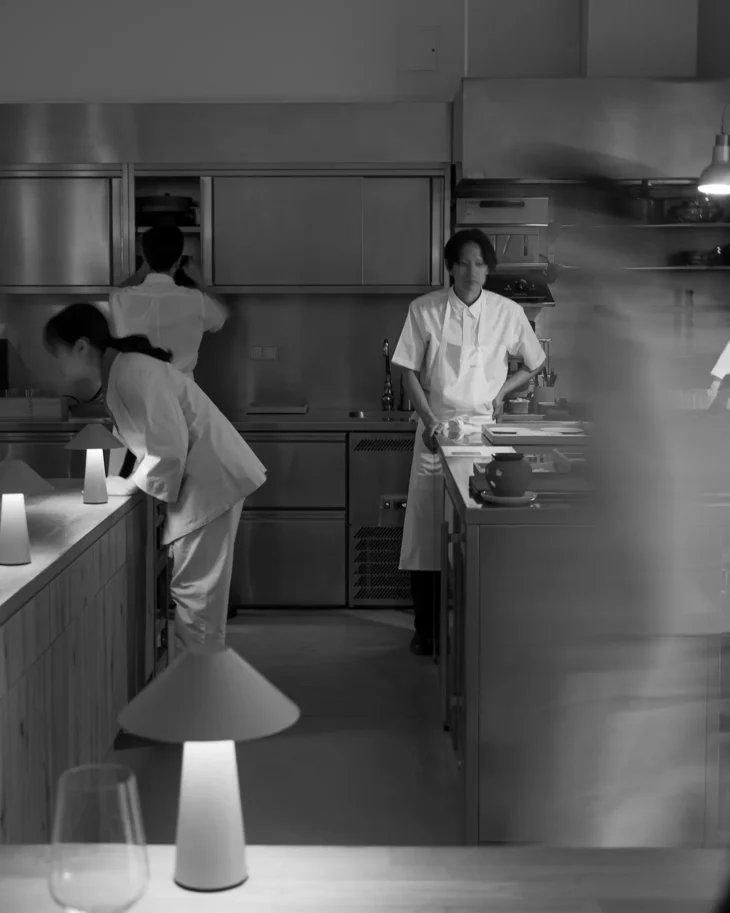
Inside the open stainless steel kitchen, about ten guests share an L-shaped chef’s table, where traditional Korean fermentation meets Austrian produce and European technique.
DSCENE Editor in Chief Zarko Davinic sat down with Jaeho Jung to talk about the name, the move to Vienna, the star, and what comes next.
Addiert means “to add” in German. When did you settle on the name, and what is the one thing you add to a dish that you would never take away? – The name Addiert has been with us for a very long time, long before the restaurant became a reality. It carries such a personal meaning that my wife and I even had it engraved on our rings.
For us, “to add” is much more than simply combining ingredients. It represents bringing together Korean culture, our culinary heritage, and the valuable experiences we have gathered while living and working abroad. It is also about the people who join us at our chef’s table, the connections created around it, and everything we hope to add to this journey in the future. That is why we chose the German word Addiert. It reflects both where we come from and what we hope to create.
When guests hold a bowl or touch a plate, they are also coming into physical contact with a small part of Korea.
When it comes to cooking, there are three essential ingredients I could never imagine removing from Korean cuisine: gochujang [Korean fermented chili paste], doenjang [fermented soybean paste], and ganjang [Korean soy sauce]. These traditional Korean jang form part of the foundation of our cooking. They carry generations of knowledge, fermentation, and flavour, and they are essential to how we express Korean cuisine in our own way.
Before Vienna, where did your culinary path take you, and which experiences shaped the way you cook Korean food today? – My culinary journey has taken me through Korea, Paris, Vienna, and Burgenland, as well as other places where I have had opportunities to experience different culinary cultures. Over the years, working in different kitchens and alongside chefs from various backgrounds has shaped the way I understand ingredients, techniques, and the possibilities of cooking.
Before opening Addiert, I also organised several pop-up events in Austria, collaborating with other chefs and friends. Those experiences were particularly meaningful to me. Seeing how people responded to Korean flavours made me realise how much more there was to share about Korean cuisine. I began to feel a strong desire to introduce not only the familiar side of Korean food but also its deeper traditions, techniques, and cultural significance. That feeling eventually became one of the driving forces behind Addiert.
Why Vienna? What made you choose Austria’s capital over Seoul, Paris or London for a Korean fine dining restaurant? – My wife, Yuni, has lived in Vienna for many years, so naturally, the city already had a special place in our lives. She was certainly one of the reasons Vienna first came to mind. But beyond that personal connection, we also saw an opportunity here.
Nothing is hidden, and we take that responsibility very seriously.
Vienna may be relatively small compared with cities such as Seoul, Paris, or London, but it has a rich culinary culture and an audience that is increasingly curious about different cuisines. As Korean food becomes more familiar internationally, we wanted to introduce another side of it: something more personal, refined, and deeply connected to its cultural roots. We felt that Vienna was the right place to tell that story in our own way.
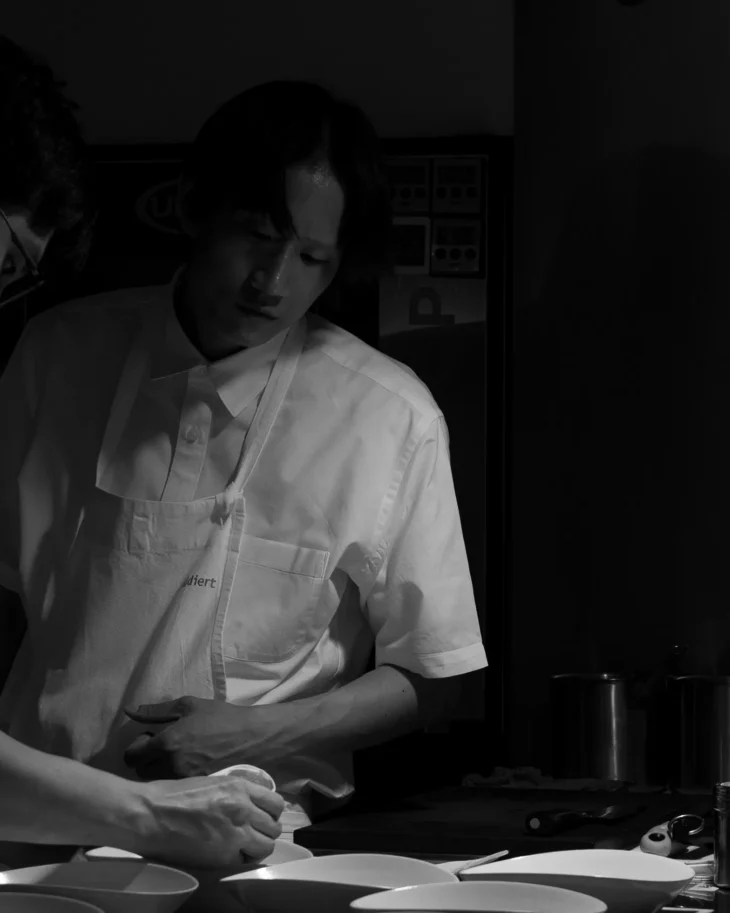
You opened in 2025 with your wife. How do the two of you divide the work, and what is it like building a restaurant as a couple? – At Addiert, I am responsible for the kitchen and the culinary direction, while my wife, Yuni, takes care of many of the other aspects of running the restaurant. Of course, building and operating a restaurant together as a couple is not always easy. We have both dedicated an enormous amount of time, energy, and emotion to Addiert, and there have been many long days along the way. But what keeps us moving forward is that we share the same vision and goals. We both believe deeply in what we are creating, and we continue to invest ourselves fully in it.
Addiert is also more than just the two of us. We collaborate with Korean designers and artists who help us express our identity beyond the food itself. From the tableware to the atmosphere and the smallest details, we want the restaurant to reflect a shared creative vision.
Addiert seats only about 10 guests at an L-shaped chef’s table with an open kitchen. Why did you choose such an intimate format, and what does it change about how you cook and serve? – The idea of creating a very intimate dining experience was part of our concept long before Addiert opened. We wanted guests to feel connected to the kitchen rather than separated from it. With an open kitchen and a chef’s table, they can observe how each dish is prepared, see the techniques behind the food, and experience the atmosphere of the kitchen firsthand. A fine dining experience often lasts around three hours, and we wanted that time to feel engaging and memorable, not only through the food but also through the process of watching it come to life.
At the same time, this format demands a great deal from us. With every guest facing the kitchen, cleanliness, precision, consistency, and the way we move and work become essential parts of the experience. Nothing is hidden, and we take that responsibility very seriously.
For me, these ingredients carry not only flavour but also family memories, tradition, and generations of knowledge.
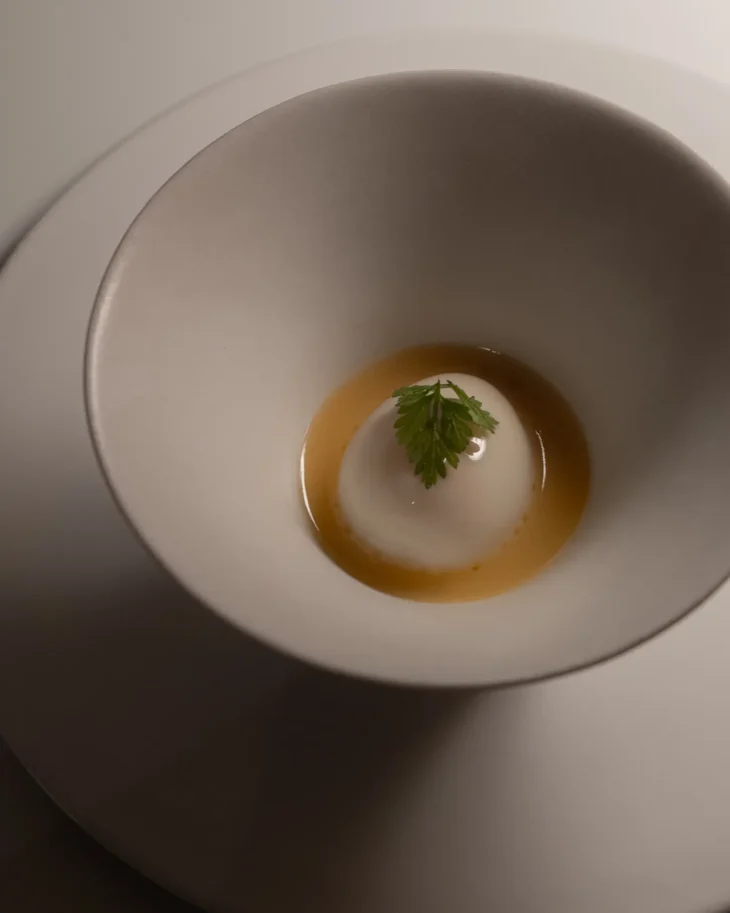
We also wanted to create a deeper connection with Korean culture through the senses. Guests experience food through taste and sight, but we believe touch can be equally meaningful. That is why we work with Korean ceramics and tableware made using traditional Korean clay. When guests hold a bowl or touch a plate, they are also coming into physical contact with a small part of Korea.
For us, the experience is not simply about serving a meal. It is about creating a connection between the food, the people, the craftsmanship, and the culture behind it.
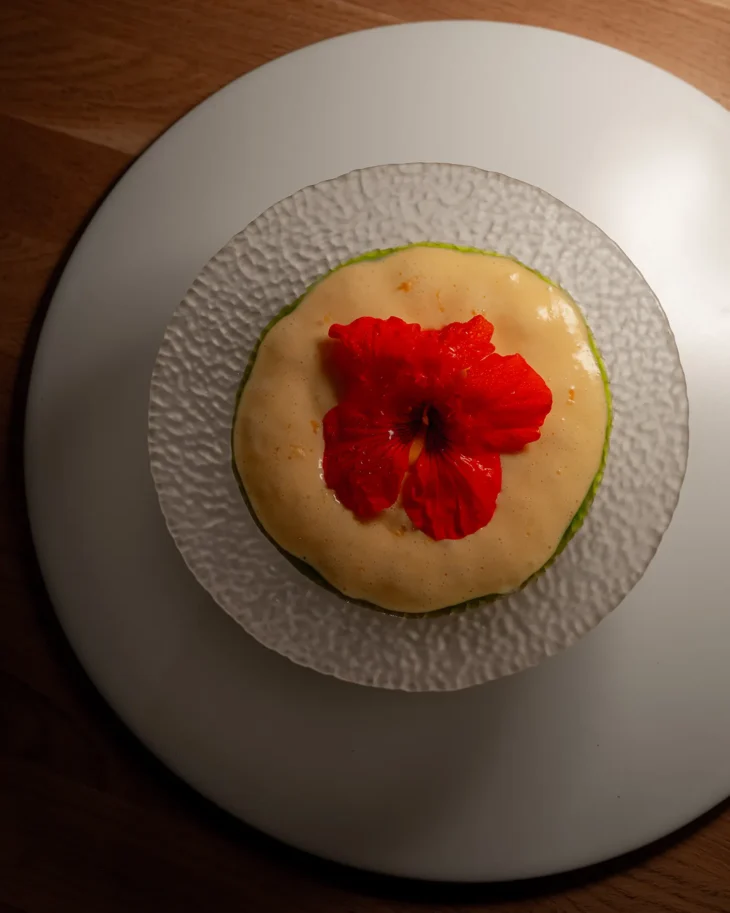
Fermentation is central to your cooking. Which Korean techniques or ingredients do you rely on most, and how do you adapt them to Austrian produce? – Fermentation is one of the most important foundations of Korean cuisine, especially our traditional jang culture. At Addiert, we want guests to experience this culture rather than simply hear about it. Before the meal, we introduce some of the traditional Korean fermented ingredients, allowing guests to see, smell, and taste them for themselves. We believe that experiencing an ingredient directly is often much more meaningful than explaining it only through words.
We also want to share the depth and complexity of traditional Korean fermentation beyond the products that are commonly available commercially. Some of the ingredients we use are brought directly from Korea, including fermented products handmade by my grandmother. For me, these ingredients carry not only flavour but also family memories, tradition, and generations of knowledge.
Our approach is to combine these Korean foundations with seasonal ingredients from Austria and elsewhere in Europe, creating a modern expression of Korean cuisine while respecting its roots. One example is our gochujang ceviche with Austrian trout. It brings together a local Austrian ingredient and a traditional Korean fermented chili paste. The dish has received a particularly warm response from our guests, which means a great deal to us. It makes us feel that the intention behind our cooking is being understood and appreciated.
How did the gochujang ceviche come about, and how do you decide where Korean authenticity ends and European technique begins? – Although our roots are Korean, much of our life and culinary experience has been shaped by living in Austria and Europe. Naturally, we wanted our food to reflect both worlds. The gochujang ceviche is a good example of that philosophy. We wanted to bring together Austrian trout [Forelle] and the depth of Korean gochujang in a way that felt balanced and natural.
The dish went through many trials and adjustments before we were satisfied with the result. We paid particular attention to the balance of spiciness, acidity, and the natural flavour of the fish. Gochujang has a strong personality, so the challenge was to allow its character to come through without overpowering the delicate trout.
More than anything, we want people to remember not only what they ate, but also how they felt while they were with us.
For me, Korean authenticity is not necessarily defined by using only Korean ingredients or following traditional recipes exactly. It is about understanding the foundations of Korean cuisine, respecting its flavours and techniques, and carrying that identity into something new. I do not really see Korean authenticity and European technique as two things that need to be separated. They can complement each other. The important thing is that every element has a purpose and that the final dish still expresses the Korean roots behind it.
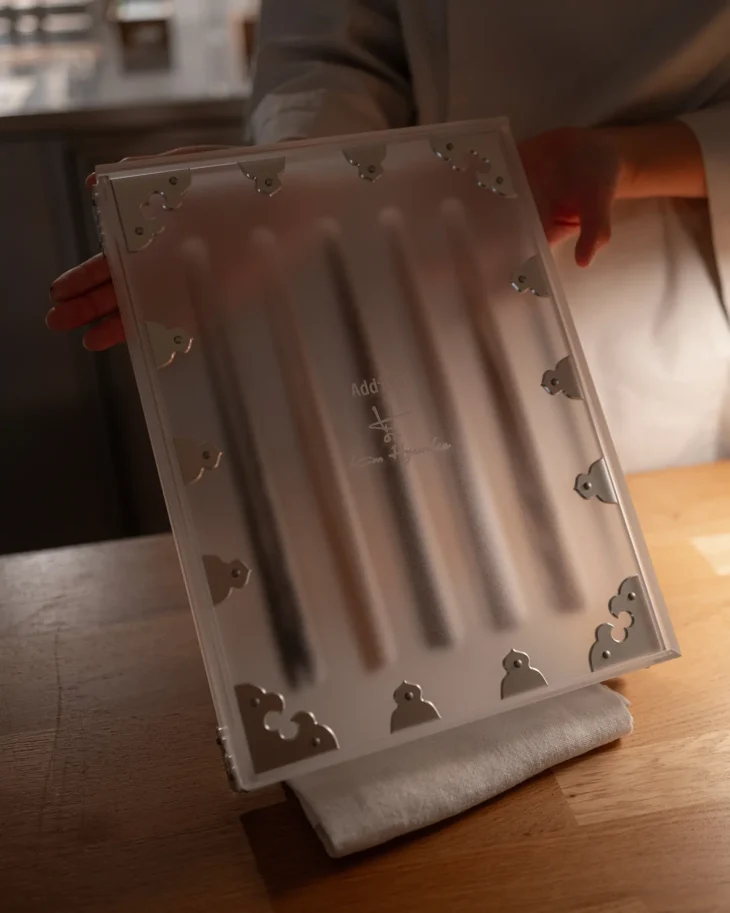
How do you introduce Viennese diners, who may be new to Korean cuisine, to flavours like heat, funk and fermentation without losing the integrity of the dish? – We believe that the best way to introduce unfamiliar flavours is through understanding and experience rather than simply changing them to make them more familiar. At Addiert, we often begin by introducing guests to the ingredients themselves, particularly traditional Korean fermented pastes and sauces. By seeing and tasting these ingredients before they appear in a finished dish, guests can better understand where the flavours come from.
Of course, balance is very important. Korean cuisine has many powerful and complex flavours, but that does not mean every dish needs to be intensely spicy or strongly fermented. We carefully consider how acidity, sweetness, saltiness, fermentation, and heat work together, especially when combining Korean flavours with European ingredients.
Our goal is not to remove the character of Korean cuisine to suit a different audience. Instead, we want to create a natural introduction to those flavours while preserving their identity. When guests discover something unfamiliar and genuinely enjoy it, that is one of the most rewarding parts of what we do.
How did you find out about the star? Take us through that moment, and who was in the room with you. – We opened Addiert in June 2025, and from the very beginning, we were completely focused on moving forward and giving everything we had to the restaurant. There was hardly any time to look back and reflect on how far we had come. Receiving the Michelin star so soon after opening was therefore an incredibly emotional and meaningful moment for us. We learned the news together with the team who had worked so hard and supported us throughout the journey.
I still remember the emotions in that room, the happiness, the tears, and the feeling that all those long days and difficult moments had led to something truly special. What makes this recognition even more valuable is the warmth and encouragement we receive directly from our guests. The star is a wonderful honour, but knowing that people genuinely connect with what we are trying to create makes it even more meaningful.
Receiving a star so soon after opening brings pressure and attention. What has changed in the restaurant since, and what have you deliberately kept the same? – The core philosophy of Addiert has not changed, and that is something we are very determined to protect. From the beginning, we have believed that a dining experience is about much more than the food alone. Every detail matters, from the ingredients and cooking to the tableware, atmosphere, and hospitality. Receiving a Michelin star has not changed that approach.
What has changed, perhaps, is the expectation that guests bring with them. When people visit a restaurant knowing it has a Michelin star, they naturally arrive with a certain level of anticipation. We feel a responsibility to meet those expectations while remaining true to ourselves. That creates a different kind of pressure, but we see it as motivation to keep improving. Our focus remains the same: to create an experience that feels thoughtful, precise, personal, and genuinely welcoming.
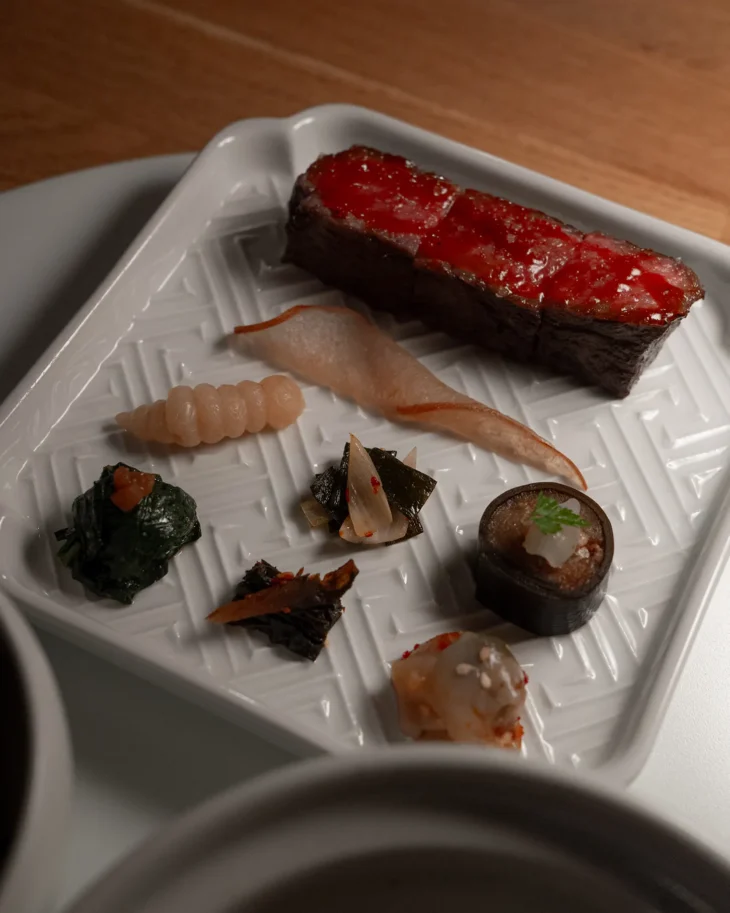
Where do you see Addiert in a year? A bigger room, a second star, new collaborations, or staying exactly as intimate as it is now? – We are not building Addiert simply to chase Michelin stars. Of course, recognition is meaningful, and we are grateful for it, but it is not the only measure of what we want to achieve. At the same time, we never want to become too comfortable or feel that we have already reached our destination. There will always be things we can improve, new ideas to explore, and new experiences to create.
Collaboration has been part of our philosophy from the beginning, and we want to continue working with chefs, designers, artists, and other creative people who share our curiosity and passion. In a way, this brings us back to the meaning of our name. Addiert means “to add,” and we want to keep adding new perspectives, collaborations, experiences, and meaningful connections to the restaurant. Whatever the future brings, we hope to continue growing without losing the intimacy and identity that make Addiert what it is.
That is why we chose the German word Addiert. It reflects both where we come from and what we hope to create.
If a guest could take away just one feeling or memory from an evening at Addiert, what would you want it to be? – Without hesitation, I would say Jeong (정). Jeong is a deeply rooted Korean concept that is difficult to translate into a single word. It describes a sense of warmth, affection, care, and emotional connection between people. For us, this is one of the most meaningful aspects of Korean culture, and something we want every guest to experience at Addiert.
We want to welcome people warmly and create an atmosphere where they feel comfortable, cared for, and genuinely connected. The meaning of Addiert comes to life here as well. We add ourselves to the guests’ experience, and at the chef’s table, guests also become part of one another’s evening. From the moment someone enters the restaurant until the moment they leave, we hope they can feel that Korean sense of Jeong. More than anything, we want people to remember not only what they ate, but also how they felt while they were with us.
Restaurant Addiert
Franz-Josefs-Kai 43, 1010 Wien, Austria
For reservations: +43 676 7760264
Website: addiert.at