


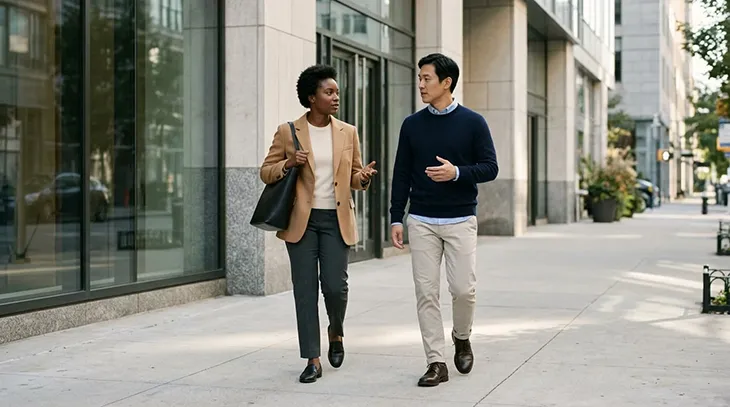
“Business casual” turns up on job offers, conference invites and the first-day email from HR, and it almost never comes with a definition. In short, it means polished but not formal: tailored pants or a skirt, a collared shirt or a fine knit, and leather shoes, with no suit or tie.
The term has been drifting for decades. In 1992 Levi Strauss mailed a pamphlet called A Guide to Casual Businesswear to some 25,000 American HR departments, largely to sell Dockers khakis. The dress-down Friday it championed slowly spread to the rest of the week. Tech offices loosened it further, and the years of working from home loosened it again. What’s left in most offices today is a fairly stable middle ground, and once you can see its edges it’s one of the easiest dress codes to get right.
Where Business Casual Sits
In practice, business casual is everything between a suit and what you’d wear on a Saturday.
The edges matter as much as the middle. A tie or a full suit goes past it. Hoodies, gym clothes, graphic tees, shorts and flip-flops fall short of it. Everything between those two lines is open to negotiation.
It helps to know the neighbors too. Business professional is the suit, usually with a tie for men. Smart casual sits a step below business casual: dark jeans, clean sneakers and an unstructured jacket are more welcome, and it’s the usual code for dinners, events and creative offices.
Within business casual, take your cue from someone a level or two above you. Dress the way they do on an unremarkable Tuesday and you’ll rarely be wrong. A creative studio and a law firm can both print “business casual” in the handbook and mean quite different things.
The Formula, Piece by Piece
The same four parts work for everyone. Only the pieces inside them change.
| Women | Men | |
|---|---|---|
| Bottom | Tailored pants, a midi skirt, or a dress that reaches the knee | Chinos or wool trousers |
| Top | A blouse, shirt or fine knit | An oxford shirt, button-down, polo or merino crewneck |
| Layer | A blazer or a cardigan | A blazer, worn when it’s needed |
| Shoes | Loafers, flats, low block heels or slim ankle boots | Loafers, derbies or leather boots |
For women, hems sit best at the knee or below, and fabrics should still look pressed at five o’clock. Closed-toe shoes are the safe default, and sleeveless tops usually want a cardigan or blazer over them.

For men, the small things carry the outfit. Match the belt to the shoes and the socks to the pants, and tuck the shirt in. Keep to navy, gray, stone and brown and every piece will go with every other.
Fit counts for more than price here. Inexpensive chinos taken in at the waist look better than an expensive pair that pools at the ankle, a point DSCENE made in its recent piece on tailoring over fast fashion.
The Gray Areas
Most business casual mistakes happen in the same five places.
Jeans. Dark denim gets through the door at a lot of offices, Fridays especially. Wear it the way you’d wear dress pants: a dark, even wash and a straight leg, with leather shoes and something tailored on top. Faded or ripped jeans belong to the weekend. When a client is coming in or you’re presenting, pants are the safer call, whatever the handbook says.
Sneakers. A slim, plain leather sneaker in white or black passes in many offices, as long as the rest of the outfit is doing the tailoring. Anything built for a gym or a trail doesn’t. When you can’t tell, loafers or boots never get a second look.

Polos. A knitted polo or a plain piqué one counts, worn with chinos or trousers. It’s the summer stand-in for a shirt and sweater.
Leggings. On their own they read as gym or couch. Ponte pants are cut like tailoring from a thick stretch knit, so they keep most of the comfort and still look like proper trousers.
The first day. Aim a notch above what you expect: trousers, a blazer, a pressed shirt or blouse, and leather shoes. Dressing down in week two is easy. Recovering from a first impression made in a hoodie is harder.
Business Casual in Winter
Cold weather is where business casual tends to fall apart, because the warmest things in most wardrobes are also the most casual. Keep the shape of the outfit and change what it’s made of. Flannel or wool trousers take over from cotton chinos. Merino or cashmere goes over the shirt. A wool overcoat goes on top, and leather boots replace loafers on wet days.
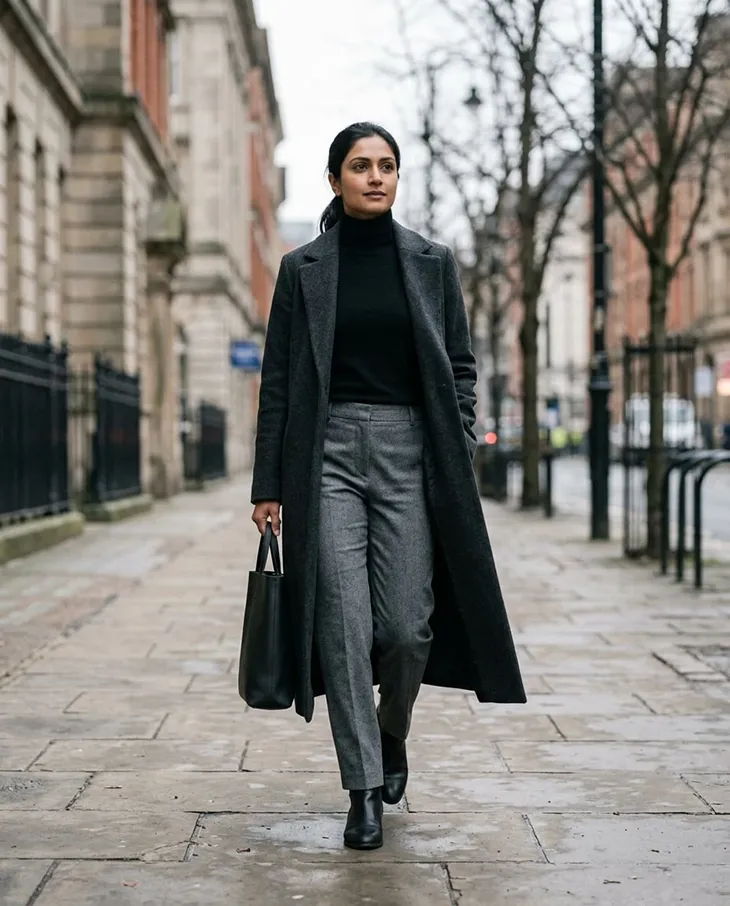
The turtleneck is the season’s most useful piece. Worn alone or under a blazer, it reads as business casual for women and men alike, and there’s no shirt collar to fuss with under a sweater.
Build It From Eight Pieces
The easiest way to dress business casual every day is to own fewer things that all work together. Start with neutrals that combine freely: two pairs of pants, one dark (navy or charcoal) and one light (stone or camel), four tops, a blazer, and one good pair of leather shoes or boots. Let a knit or a shirt bring the color.
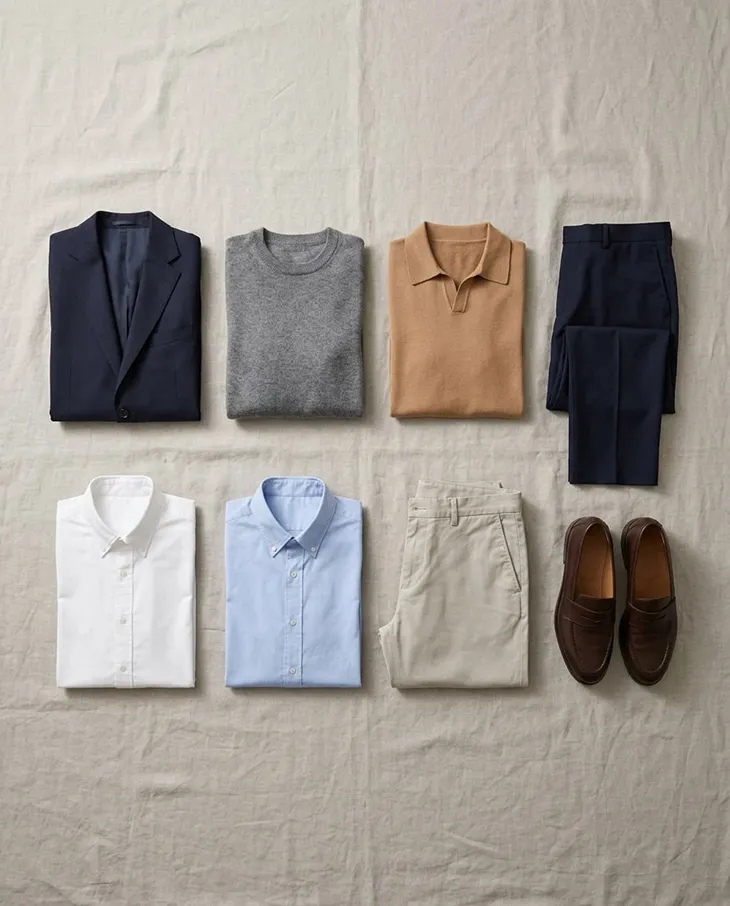
That’s eight pieces. Two pairs of pants and four tops make eight combinations, and wearing the blazer on some days and not others stretches that past two working weeks. If your wardrobe leans casual today, you can build on it; DSCENE’s earlier piece on modernizing your style without starting from zero covers how.
Seeing the pieces together helps more than any list. Wholefit’s business casual looks show complete outfits for women and men, with every piece priced and linked to the store that sells it, so you know what the whole look costs before buying. Typical combinations include a navy sweater with brown pants and brown shoes, or a cardigan over a midi dress with loafers, and many come in under $300 in total.
The Short Version
- Business casual sits between a suit and your Saturday clothes.
- The core: chinos or tailored pants, a collared shirt or knit, an optional blazer, leather shoes.
- Dark, clean denim can work. Faded jeans and running shoes don’t.
- In winter, switch to warmer fabrics and keep the shape.
- On day one, dress slightly up, then match the room.
Get those right and the dress code stops being a guessing game. What’s left is a uniform you chose yourself.