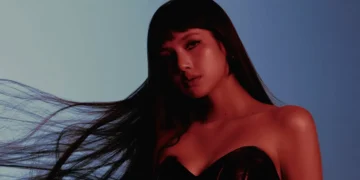



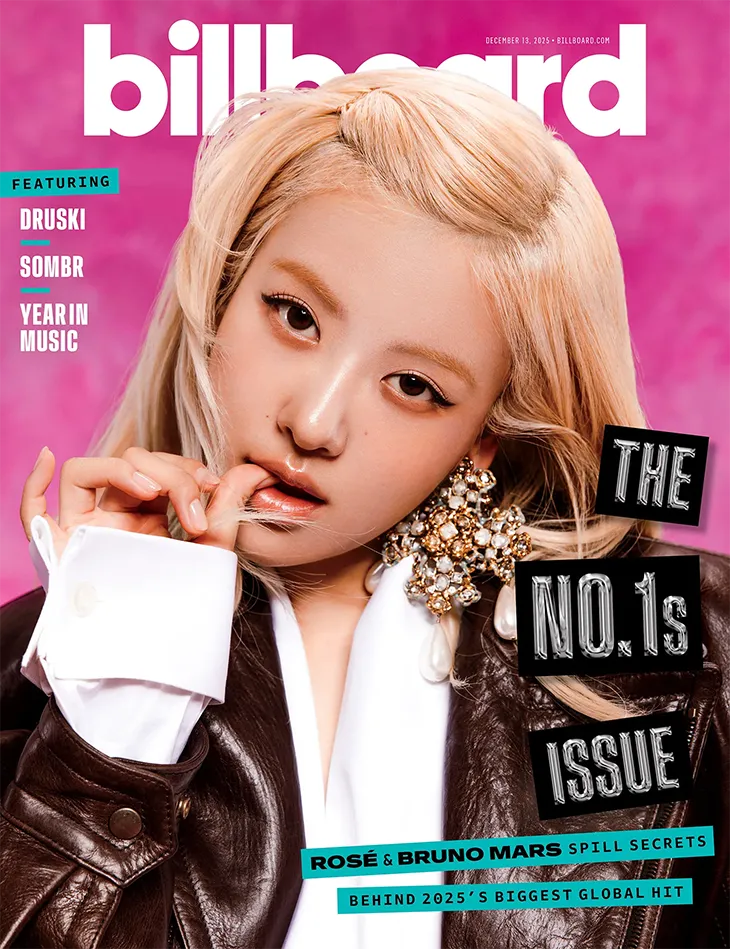
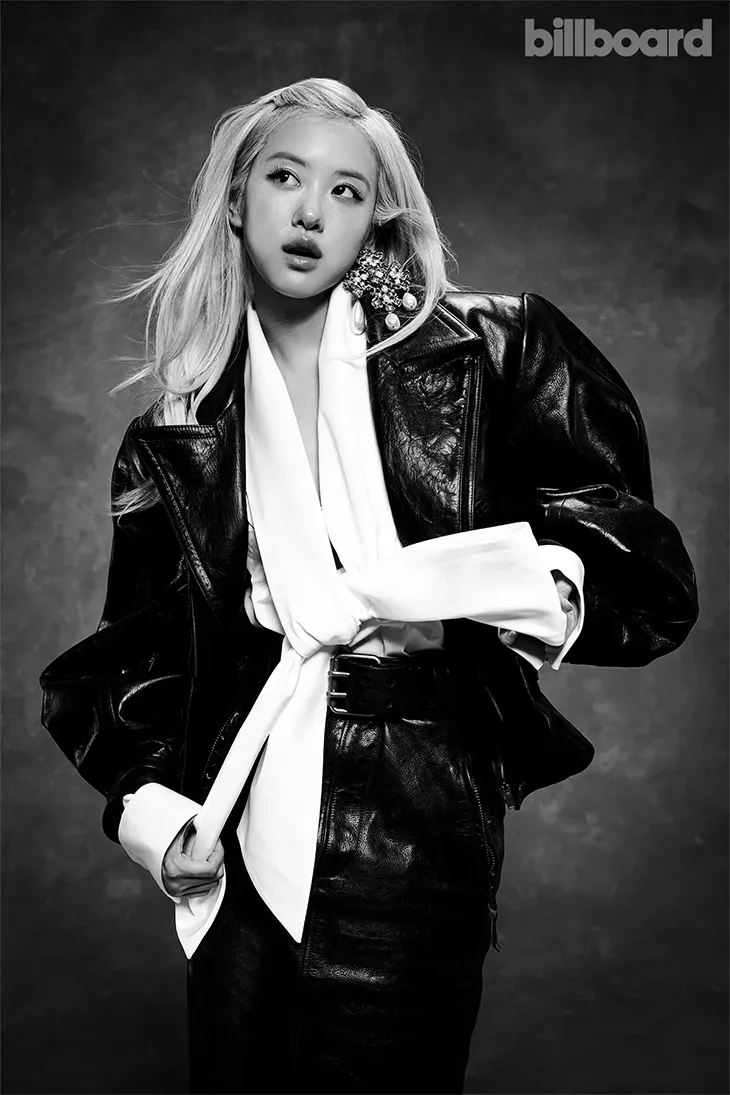
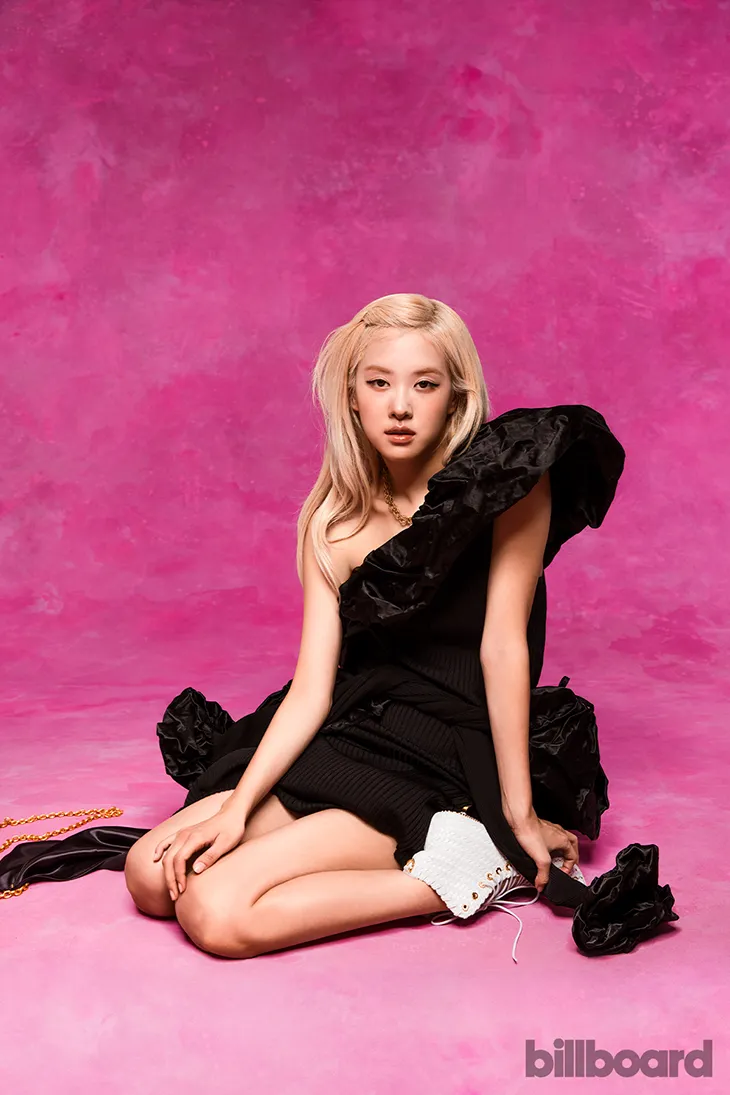
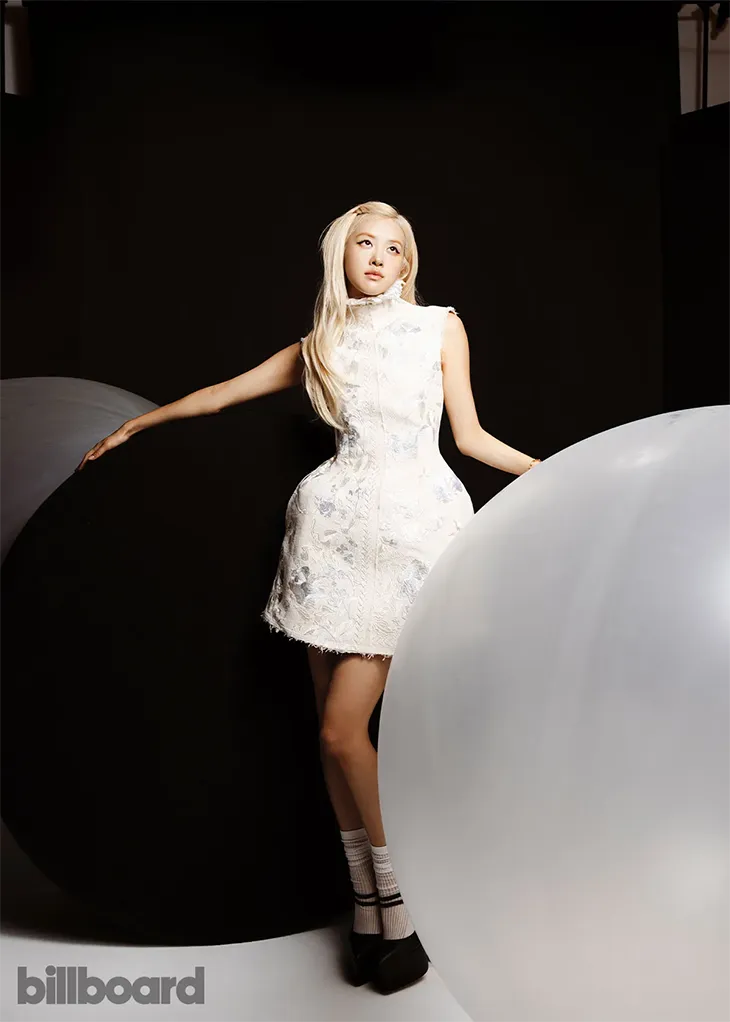
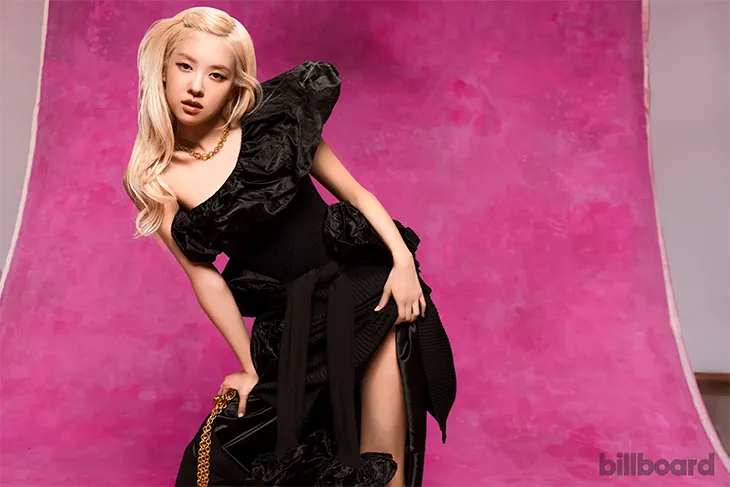
Blackpink member Rosé takes the cover story of Billboard Magazine‘s N0. 1s edition lensed by fashion photographer Joelle Grace Taylor. In charge of styling was Aeri Yun, with set design from Isaac Aaron. Beauty is work of hair stylist Seyoung Kim at Agency Garten, makeup artist Makeup by Jungyo Won at Bit & Boot, and manicurist Betina Goldstein at The Wall Group. K-pop superstar’s duet with Bruno Mars, “APT.”, closes 2025 as the year’s biggest song worldwide, leading both the Billboard Global 200 and Billboard Global Excl. U.S. year-end charts.
In the accompanying interview, Rosé speaks alongside Mars, offering a detailed account of how a casual idea rooted in a familiar social ritual evolved into a record-setting release. Before “APT.” reached global audiences, the concept existed as Rosé’s preferred drinking game, something she introduced to collaborators as a point of connection rather than strategy. She describes it as the most direct and accessible idea she could share, one grounded in humor and immediacy.
Mars recalls responding first to Rosé’s voice and delivery of the hook, which shaped the direction of the song from the outset. Their exchange reflects a dynamic built on curiosity and openness. Even when speaking from opposite sides of the world, Rosé in Seoul, Mars in Los Angeles, the conversation carries ease, familiarity, and a shared sense of authorship.
The two artists first met during an Atlantic-arranged session at Mars’ Los Angeles studio in the summer of 2024. At the time, Rosé stood at a crossroads, preparing her solo debut album Rosie after years as part of Blackpink. She approached the meeting with urgency, asking detailed questions about creative control, career structure, and the realities of navigating a solo path after global group success. Mars remembers her focus and intensity, noting her determination to extract as much knowledge as possible from what she assumed might be a single meeting.

That initial encounter set the foundation for a creative partnership that extended beyond “APT.” Mars later co-wrote and co-produced “Number One Girl,” the opening track on Rosie, offering guidance during a period Rosé describes as pivotal. She frames his role as both collaborator and supporter, someone who helped her resolve creative questions she could not answer alone at the time.
Released in October 2024 as the lead single from Rosie, “APT.” gained traction rapidly. By early 2025, it became the first No. 1 song by a K-pop artist on Billboard’s Pop Airplay chart. In April, it reached a record-extending nineteenth week atop the Billboard Global Excl. U.S. chart, later securing the top position on both major global year-end lists. According to Luminate, the track recorded nearly 4.9 billion official on-demand global streams through November 27.
Awards recognition followed the song’s chart success. In September, “APT.” won song of the year at the MTV Video Music Awards, marking a first for a K-pop act. Two months later, the track earned three Grammy Award nominations, including record and song of the year. The nominations made Rosé the first lead K-pop artist to receive recognition in any of the Grammys’ main six categories.

Throughout the interview, both artists emphasize trust as the core element of their collaboration. Mars describes the songwriting process as a puzzle built through shared instinct, while Rosé reflects on the importance of cultural specificity in shaping the song’s identity. Mars points to the Korean roots of the idea as central to his connection with the track, noting that Rosé did not approach him with a generic pop concept but with something distinctly her own.

The conversation also touches on the music video, which the pair developed through a series of jokes and informal exchanges that later informed its details. Both recall the shoot as intense and playful, shaped by time pressure and experimentation. Despite the challenges, Rosé describes the experience as the most enjoyable video shoot of her career, marked by constant laughter and trust in the process.
As the discussion turns to longevity and recognition, Mars frames success less as awards accumulation and more as alignment between song, artist, and presentation. For Rosé, the collaboration reinforced her understanding of music’s ability to connect across language and culture when grounded in authenticity.
Read full interview on billboard.com