




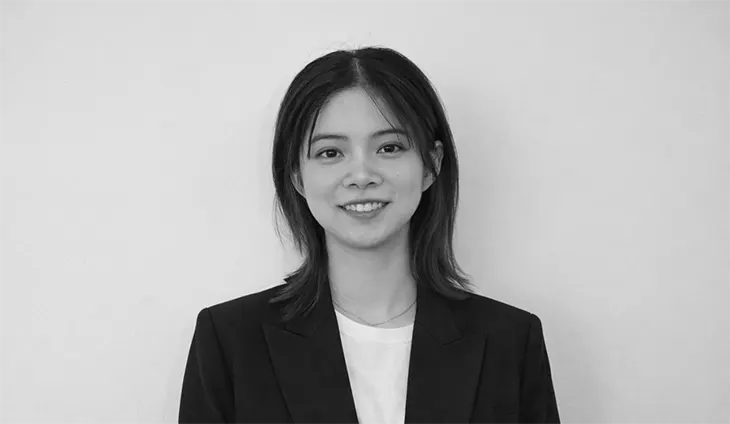
Design rarely announces its values directly. More often, they surface quietly, through what systems accelerate, automate, or leave to human judgment. In a digital culture shaped by efficiency and algorithmic decision-making, Qiqi Zhao’s work is defined by restraint. Rather than optimizing behavior, she approaches design as a reflective practice, using technology to expose how everyday systems shape attention, care, and expression.
DESIGN
Working across product, service, and system design, Qiqi Zhao is a UX Innovator in Urban Mobility & Intelligent Environments, currently leading design for large-scale infrastructure products at Parking Management Company (PMC), a U.S.-based parking technology and services provider recognized on the 2025 Inc. 5000 list of Fastest-Growing Companies. As the lead designer, Zhao shapes a frictionless parking ecosystem spanning end-user mobile and web experiences alongside operator and administrative systems, embedding design directly into everyday urban movement across hospitality, commercial, and event environments in more than 250 cities nationwide. Alongside her commercial practice, Zhao has led multiple award-recognized projects, receiving international recognition from the European Product Design Award, MUSE Creative Awards, International Design Awards, and the UX Design Awards. Across both commercial and innovation-driven work, she approaches technology as inherently non-neutral, designing systems that quietly structure time, responsibility, and behavior long before users become aware of their influence.
“I design with people in mind because great products start with human needs,” Qiqi notes. In her practice, this belief is expressed not through sentiment, but through structure, how information is framed, how choice is preserved, and how systems resist deciding on behalf of users.
Design for Anticipation, Not Overwhelm
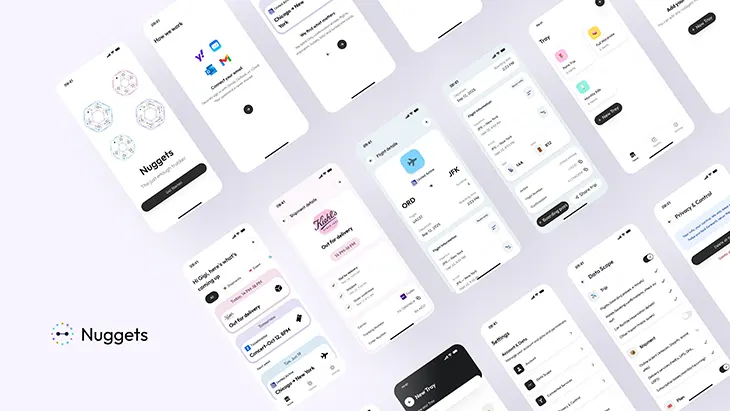
As founding designer of Nuggets, Zhao designed for people navigating everyday commitments, travelers, commuters, and anyone managing the quiet logistics of modern life. The project begins with a simple observation: the inbox has become a space of constant obligation. Built to process information as quickly as possible, it collapses future into urgent tasks, encouraging reaction over understanding. Zhao approaches this condition not as a problem of efficiency, but of agency.
Instead of instructing users what to do, Nuggets reframes emails as signals of what is coming next, trips yet to happen, packages on the way, events waiting to arrive. Information is reorganized into calm, legible structures that surface context without prescribing action. By preserving choice and resisting automation, the system avoids deciding on behalf of users, allowing anticipation to replace anxiety.
Zhao’s work shift in how time is perceived and managed. Recognized by the European Product Design Award, MUSE Creative Awards, and International Design Awards, Nuggets has entered a broader design conversation around attention, mental load, and digital well-being, demonstrating how thoughtful information architecture can influence behavior without asserting control, and how design can shape experience by changing structure rather than sentiment.
Care Without Automation
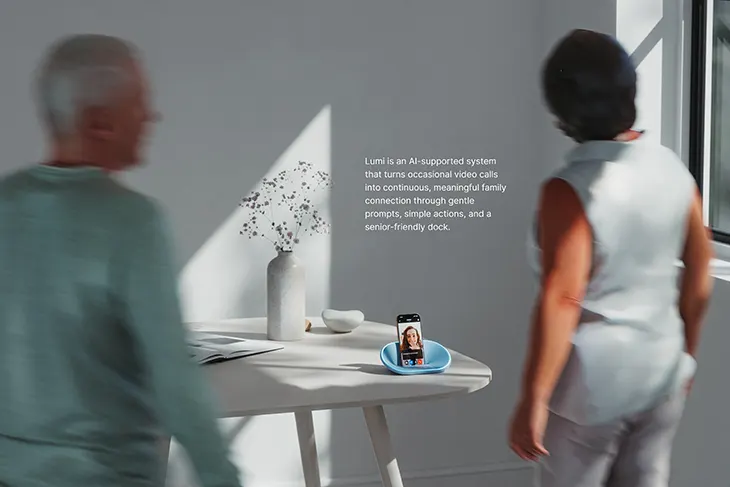
This perspective extends into Zhao’s collaborative work on Lumi, where her practice turns toward questions of care, memory, and continuity. The insight behind the project emerged from lived experience. During weekly video calls with her grandparents, Zhao noticed a recurring tension. “After every call, I felt this mix of closeness and helplessness,” she recalls. “They wanted to stay connected, but the tools we were using weren’t built for how memory and attention change with age. The moments were there, but they disappeared too easily.” What struck her was not a generational gap, but a systemic one, technologies optimized for speed struggling to support continuity and dignity.
As a core designer and co-founder, Zhao focused on interaction models that respond through structure rather than automation. Instead of accelerating communication or delegating responsibility to AI, Lumi supports human follow-through, allowing people to mark what matters and revisit it later. Intelligence remains present but restrained, reinforcing memory and intention without asserting control.
Recognized by the UX Design Awards, the project reflects Zhao’s broader design approach: using systems to prompt reflection, preserve dignity, and sustain care over time.

Designing the Invisible
Zhao’s commercial work situates the same design philosophy within everyday urban life. At Parking Management Company (PMC), a U.S.-based parking technology and services provider recognized on the 2025 Inc. 5000 list, she leads design for large-scale systems that quietly govern how cities move.
As lead designer, she shapes a frictionless parking ecosystem spanning end-user and operational platforms across hospitality, commercial, and event environments in more than 250 cities nationwide. Parking, here, is rarely noticed as a system, only felt when it fails. PMC leadership has described Zhao as an exceptional addition to the team, noting her ability to bring clarity and human-centered thinking to complex operational environments.
By prioritizing legibility over automation, her systems reduce cognitive load while preserving choice. Applied at infrastructure scale, this reflective approach demonstrates how design can support millions of daily interactions without asserting control, extending its value beyond interfaces into the lived rhythms of urban movement.

Zhao’s work across Nuggets, Lumi, and large-scale urban infrastructure articulates a consistent position on the role of design in an increasingly automated society. treats systems not as neutral utilities, but as cultural forces that shape how people experience time, responsibility, and agency. By resisting unnecessary automation and designing for clarity rather than control, her practice reframes technology as something that should support human intention, not replace it. In an era increasingly defined by speed, scale, and algorithmic authority, Qiqi Zhao’s work offers a quieter, more durable measure of progress, one where design’s greatest value lies not in what it optimizes, but in what it helps people notice, understand, and ultimately choose to care about.
Words by Maya Lane.