


Jonathan Anderson’s haute couture debut for Dior arrived with an undeniable sense of occasion. Expectations ran high, and the Spring Summer 2026 collection met them on a technical, visual, and emotional level. The work demonstrated control, intelligence, and an intimate understanding of couture as a discipline built on patience, handwork, and precision. At the same time, the show raised a quieter, more complicated question: did this moment demand the full force of Anderson’s imagination, and if so, at what cost to Dior’s women’s and men’s ready-to-wear?
COUTURE COLLECTIONS
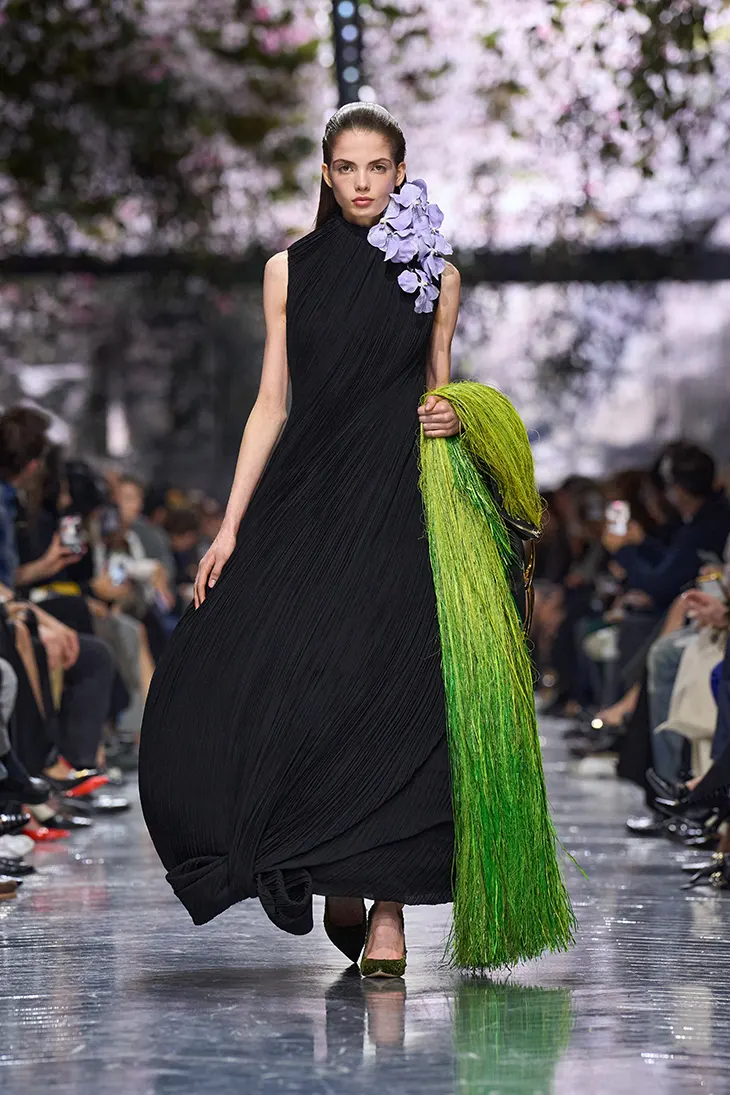
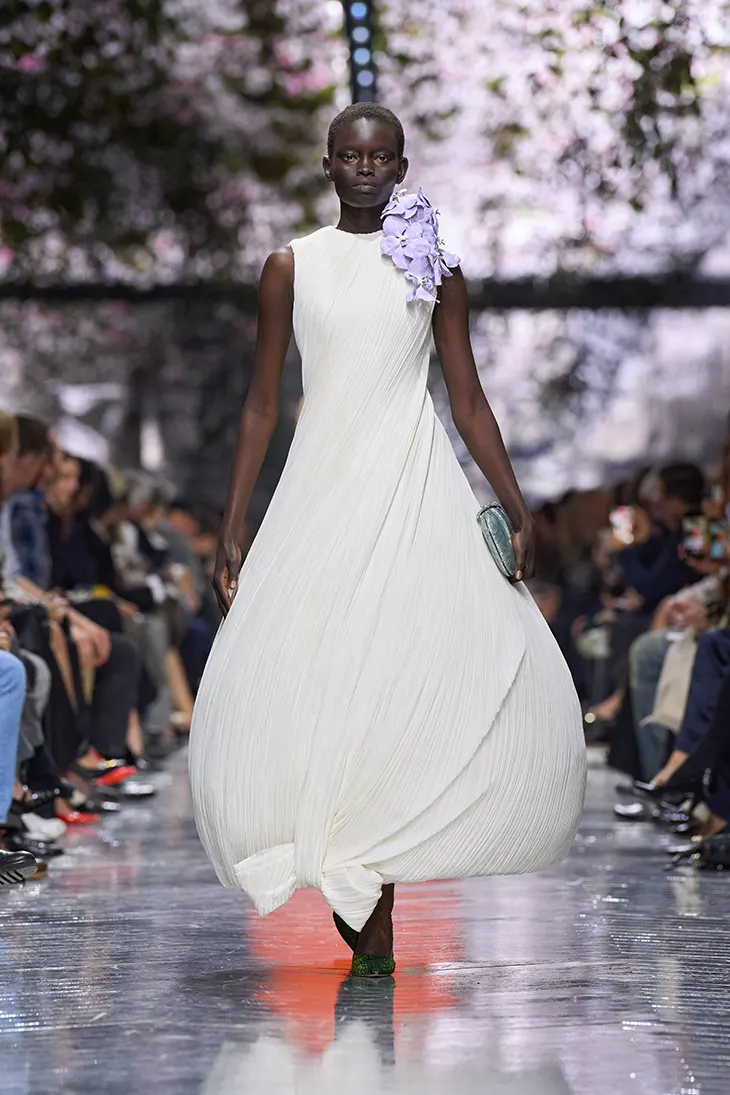
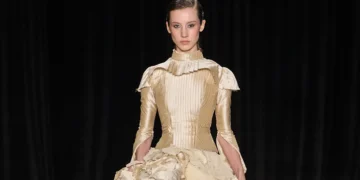
The collection opened with a sequence of long, hand-pleated silk georgette dresses twisted over lightweight tulle structures. Black, ecru, and vivid orange variations set the tone early. These looks, restrained in palette and exacting in construction, introduced a language of tension and release that ran through the entire show. Fabric rarely fell freely. Instead, it gathered, twisted, looped, and projected outward, giving the impression that the garments resisted gravity through internal architecture rather than surface decoration.
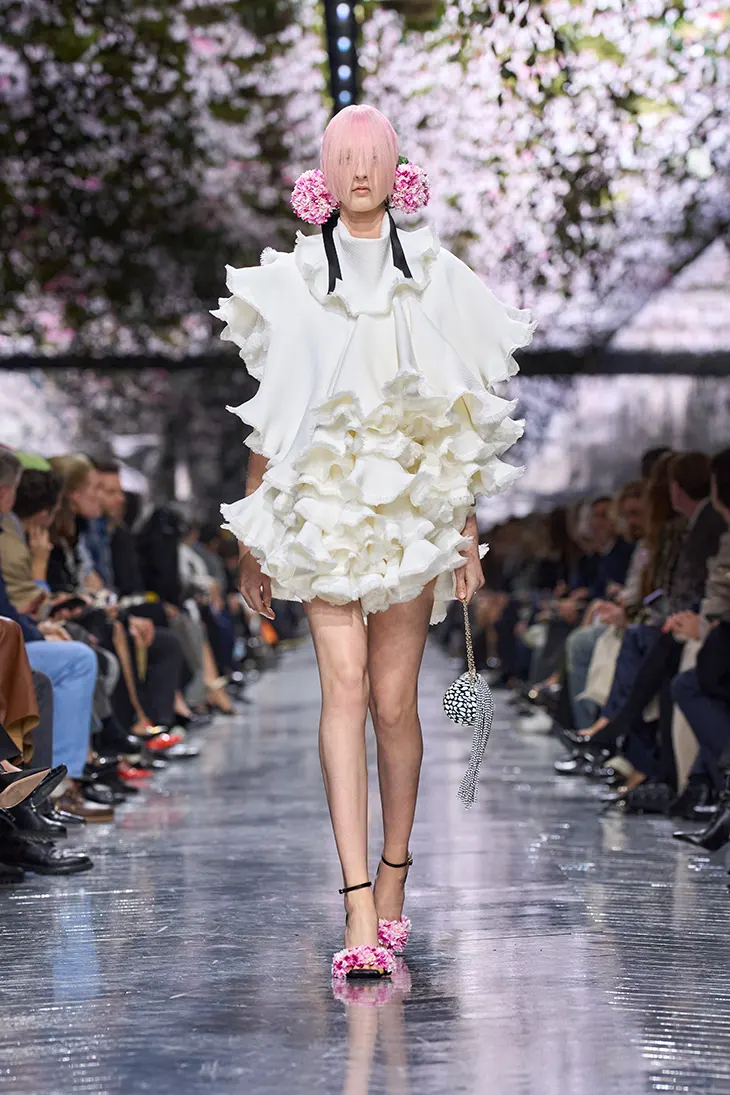
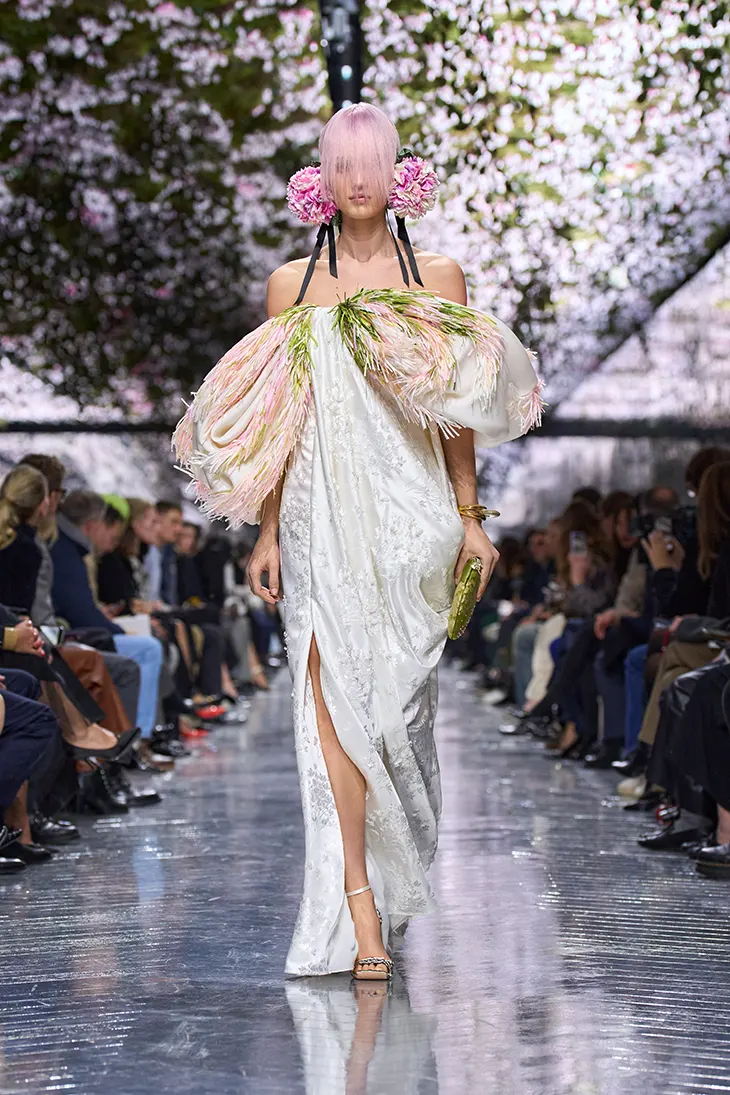
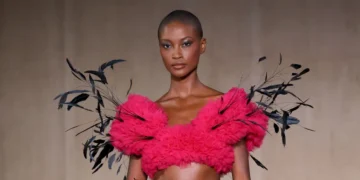
Throughout the collection, Anderson returned to the idea of couture as sculpture. Technical knit ensembles appeared like inflated bubbles resting on hand-crafted frameworks. Draped skirts carried embroidery that felt intentional and measured, never ornamental for its own sake. Velvet flowers, featherwork, and micro-floral motifs appeared repeatedly, often concentrated on asymmetrical constructions that redirected the eye away from traditional balance. These gestures showed Anderson’s ability to choreograph complexity without losing control of silhouette.
References emerged quietly and with confidence. Works by Magdalene Odundo informed abstract floral motifs and surface treatments, while echoes of Dior’s own history surfaced in reworked Bar jackets, corolla dresses, and cyclamen embroideries inspired by archival pieces from the late 1940s. Anderson handled these references with care. He avoided nostalgia, using the archive as structure rather than script. The result felt rooted without becoming reverential.
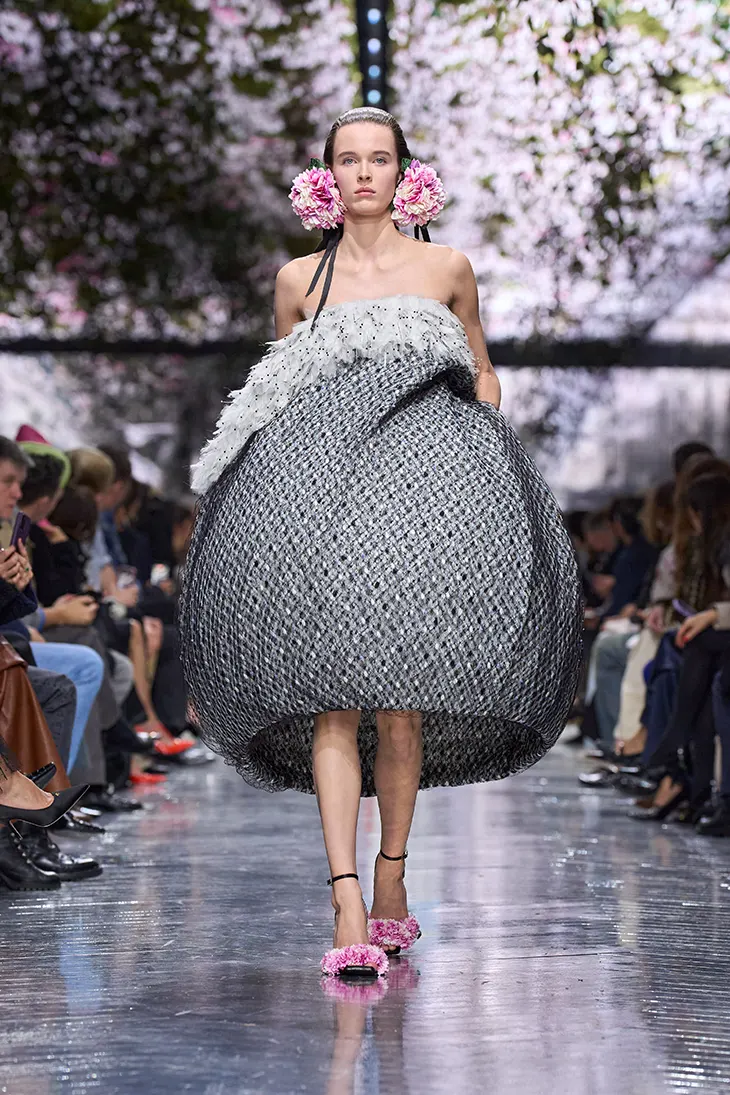
The middle section of the show leaned into tailoring and outerwear. Trompe-l’œil jackets with inverted fronts and backs challenged the logic of construction, while oversized coats in handwoven tweeds, python, lambskin, and cashmere asserted physical presence. These looks reinforced Anderson’s fluency in volume and proportion, a skill he has refined across years of experimentation. Even at their most imposing, the garments remained precise, held together by sharp pattern work and disciplined finishing.
As the collection progressed, embellishment grew more elaborate. Feathers cut like scales formed armor-like surfaces. Organza petals clustered into dense bouquets. Beads, sequins, and silk threads traced cyclamens, nasturtiums, wildflowers, and forget-me-nots across sculpted dresses and skirts. Despite the sheer volume of technique on display, the work rarely tipped into excess. Each look carried a clear intention, and the repetition of certain motifs created cohesion rather than fatigue.
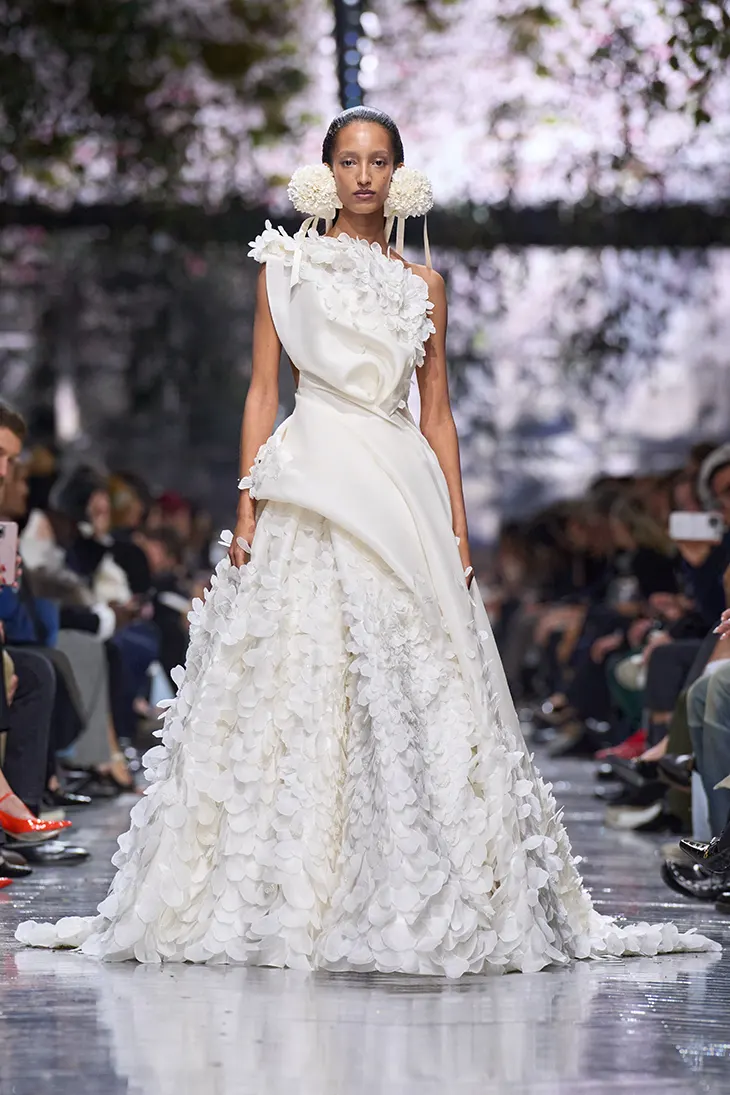
The final bridal look closed the show with restraint rather than spectacle. A twisted bustier gown in gazar, enveloped in layered drapery and embroidered with a gradual bloom of petals, offered a controlled, almost meditative ending. It reinforced the sense that this debut prioritized clarity over theatrical closure.
Taken as a whole, the collection stands as a strong and confident couture debut. It confirms Anderson’s ability to work at the highest level of construction and conceptual rigor. Yet its success also sharpens a broader question facing the industry. Anderson currently oversees Dior women’s ready-to-wear, Dior men’s, and now haute couture, while continuing to lead his own label, JW Anderson, alongside an ongoing collaboration with Uniqlo. Each of these platforms operates on different rhythms, expectations, and scales. Couture demands immersion. Ready-to-wear requires continuity and market awareness. A personal label depends on risk and experimentation. Collaborations rely on accessibility and repetition.
This couture collection suggests a level of concentration that recent ready-to-wear offerings at Dior have not always matched. That imbalance invites reflection rather than criticism. The question is not whether Anderson is capable. The work proves that he is. The question is whether the current fashion system asks too much of a single creative director, expecting one mind to sustain multiple identities without dilution.
If couture becomes the primary outlet for Anderson’s most resolved thinking, the challenge ahead lies in redistributing that intensity across Dior’s women’s and men’s collections, without flattening it. At the same time, maintaining a personal brand and commercial collaborations raises further questions about sustainability, authorship, and creative depth. Couture thrives on focus. Whether that focus can coexist indefinitely with such an expansive creative workload remains one of the most pressing questions raised by this otherwise accomplished debut.



I am just not a fan of this, if i wanted something like this i would go to Commes Des Garcons or Junya Watanabe where Rei and her team already do an amazing job. It is like poaching on that aesthetic… i am also not sure the dior woman is really happy with this. Are they ?