


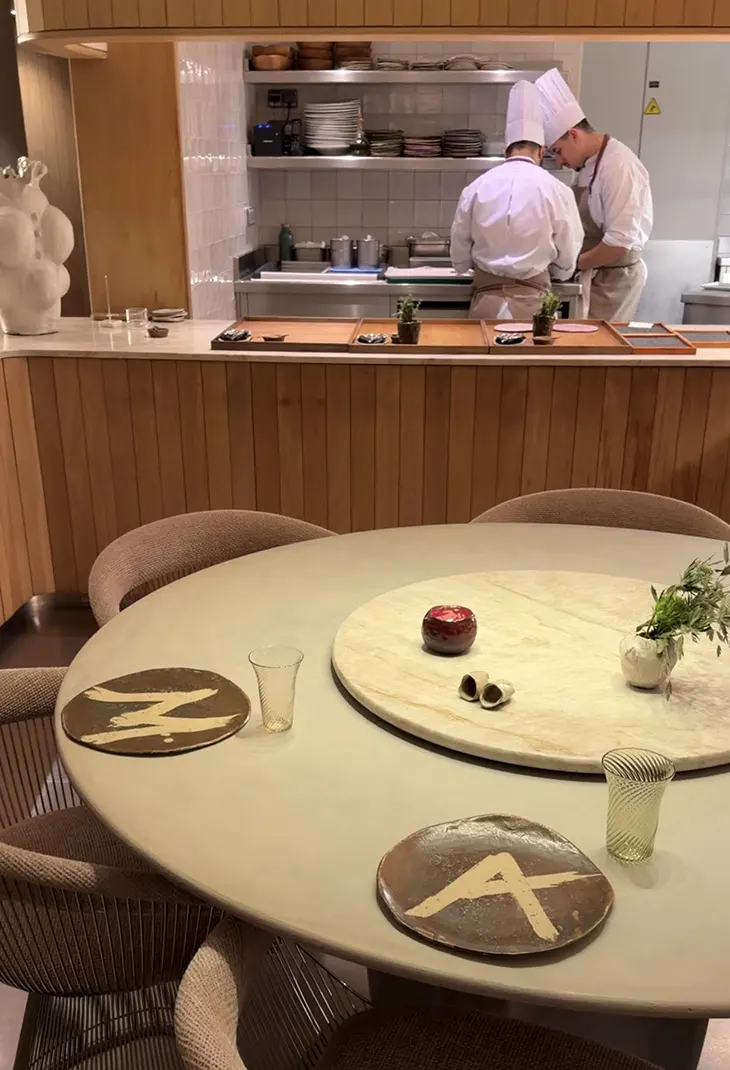
Paris during Fashion Week compresses time. Days blur into shows, fittings, dinners, conversations, and late returns to hotel rooms that feel briefly borrowed. In the middle of that accelerated rhythm, dining at Marsan par Hélène Darroze felt like stepping into a different register entirely, one defined by authority, memory, and calm precision.
RESTAURANTS
Hélène Darroze belongs to a rare category of chefs whose careers do not need introduction yet continue to deepen with time. A fourth-generation cook from Landes, trained in discipline before ambition, she has built a body of work that spans continents without ever losing its center. From her early years alongside Alain Ducasse to her long stewardship of kitchens in Paris, London, Provence, and beyond, Darroze has never chased reinvention. Instead, she has refined a language rooted in origin, trust, and emotional clarity. Marsan is the clearest expression of that language.
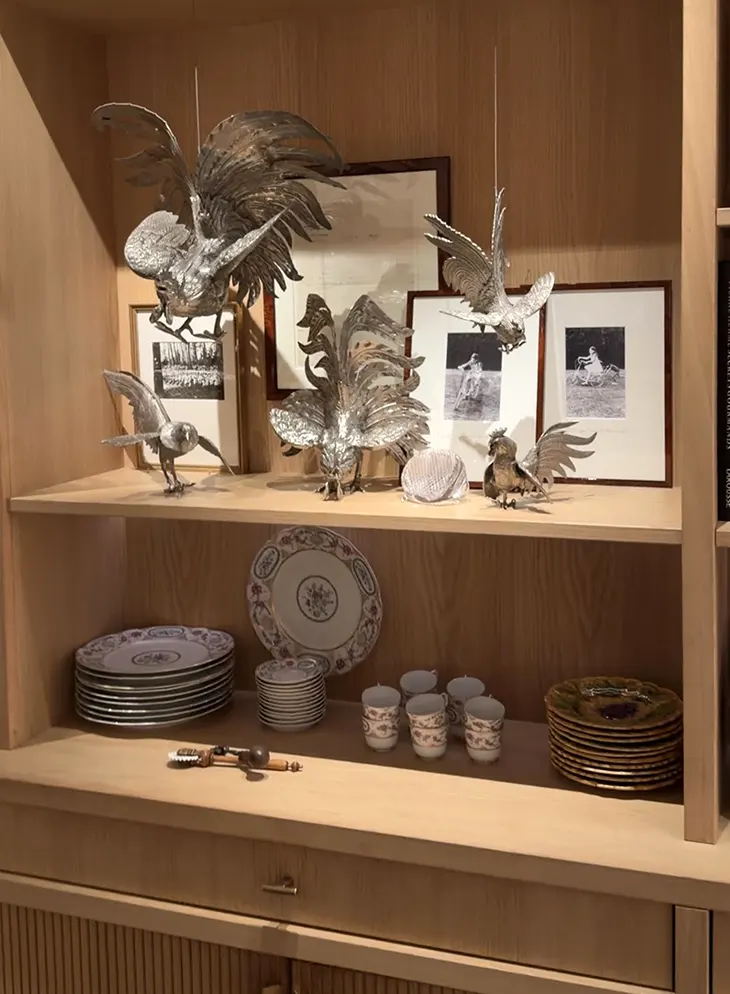
Twenty years after opening her first restaurant on rue d’Assas, Darroze returned to the same address with intent rather than nostalgia. Marsan, named after the capital of her home region of Landes, reopened in 2019 following an eleven-month transformation that redefined the space without erasing its history. Awarded two Michelin stars in 2021, the restaurant does not read as a victory lap, but as a statement of arrival, a moment where personal history, professional mastery, and creative freedom finally align. For Darroze, cooking has always been an act of autobiography. At Marsan, that autobiography unfolds with unusual clarity.
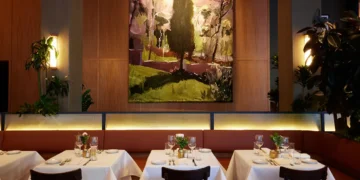
We arrived on an evening shaped by the familiar intensity of Fashion Week, moving from the spectacle of the day into a dining room that resists spectacle altogether. The interiors, designed in close collaboration with architect Patrice Gardera, feel deliberate and grounded. Oak panelling references the pine forests of Landes, while light-filled spaces and restrained materials create a sense of continuity rather than performance. On the ground floor, private dining rooms offer intimacy without exclusion; upstairs, the main dining room opens onto the kitchen, where a six-seat chef’s table reinforces proximity over display. Personal objects, family photographs, heirloom cookware, handwritten recipes, appear throughout the space, not as décor, but as evidence. This is a restaurant shaped by lived experience.
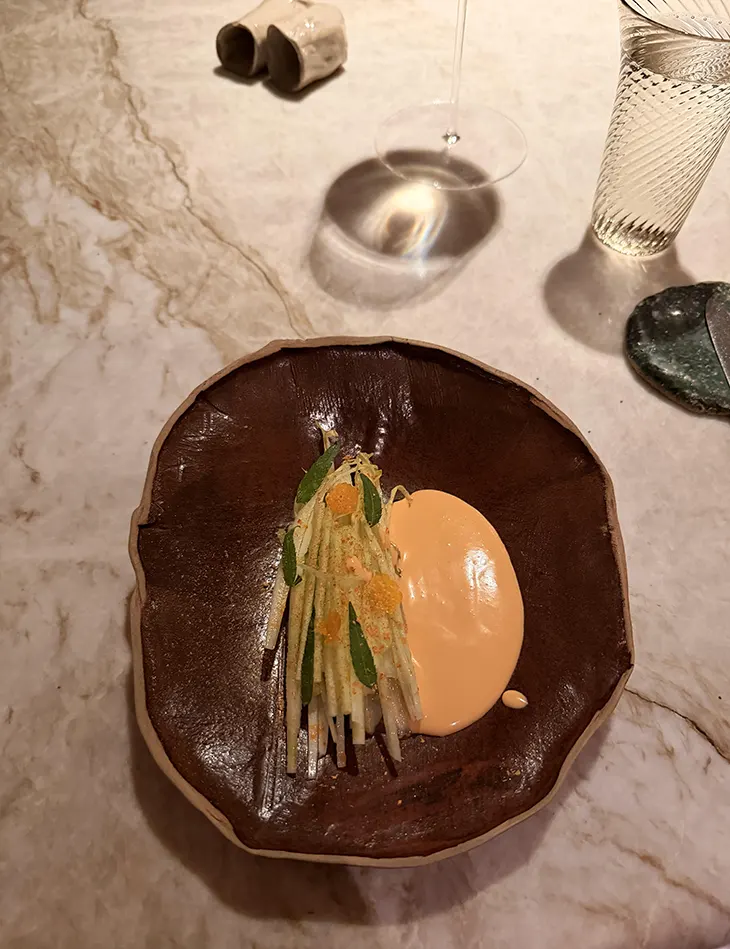
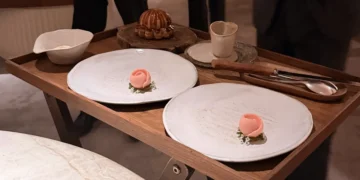
The tasting menu we shared unfolded with confidence and restraint. It began with Erquy scallops and Galician sea urchin, presented as a delicate tartare layered with open-field endives, kohlrabi, and green apple. Yuzu zest lifted the dish, while marigold and a sea urchin coral cream anchored it in depth. The balance was exacting: clean, saline, and quietly complex. It set the tone for a meal that consistently favoured precision over excess.
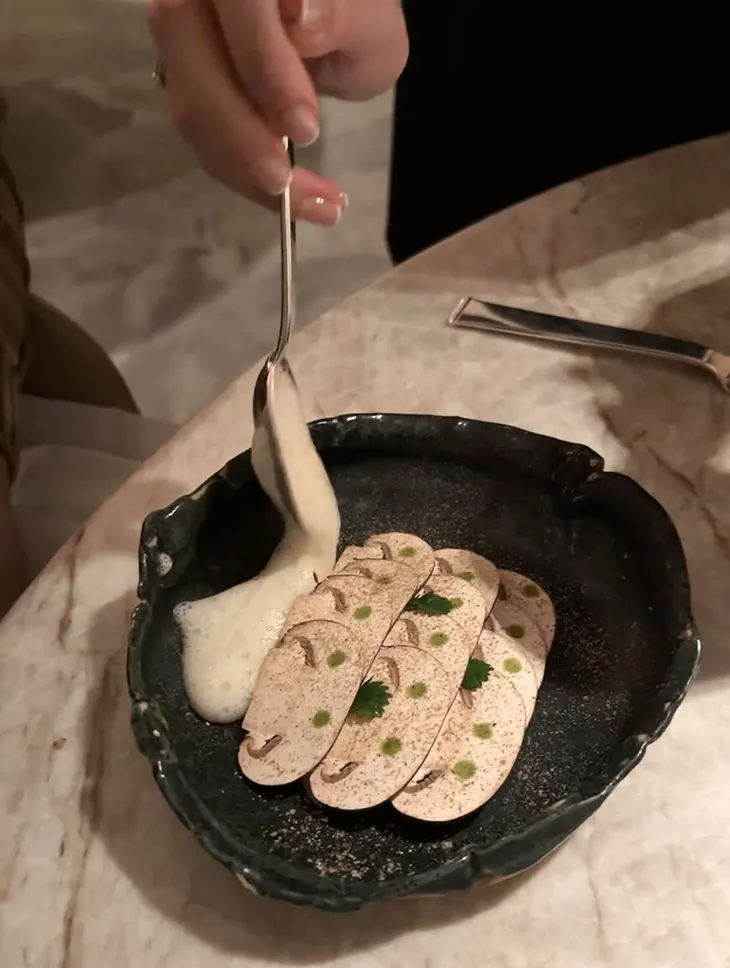
A homage to Parisian terroir followed in the form of Grégory Spinelli’s “champignon crème,” enriched with fresh walnuts from Périgord and a vin jaune emulsion. Earthy and measured, the dish leaned into familiarity while subtly expanding it. Darroze’s strength lies in this tension, the ability to make something deeply comforting feel newly articulated.
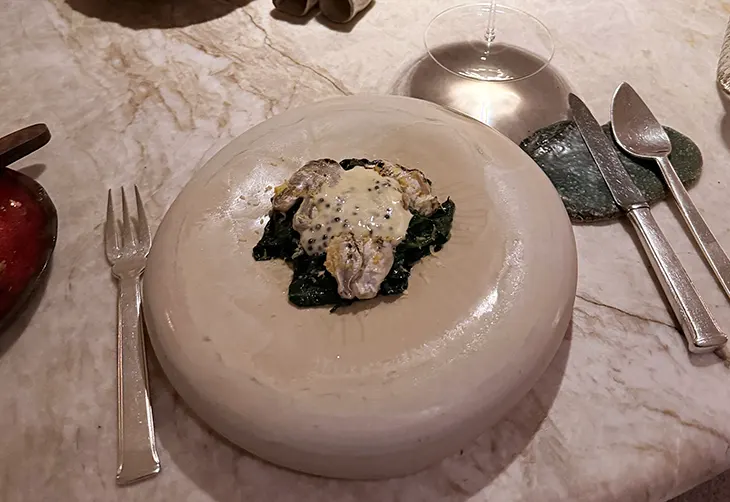
From the Saint-Jean-de-Luz fish market came hake kokotxas, grilled over binchotan charcoal and served with piquillo pepper sauce, egg yolk confit with miso, and Baeri caviar from Aquitaine. Smoke, sweetness, and umami moved in careful alignment, never competing. It was a dish that reflected Darroze’s long dialogue with global cuisines, integrated rather than quoted.
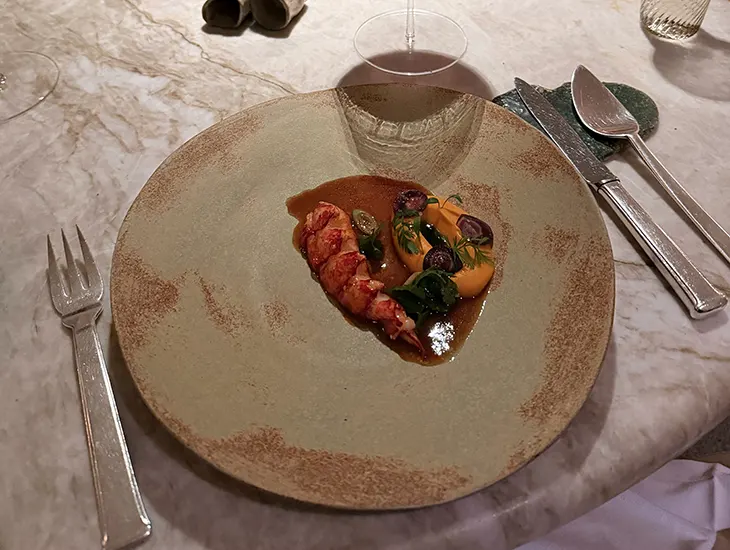
The blue lobster tandoori arrived as one of the most expressive courses of the evening. Paired with carrot and confit citrus mousseline, Lampong pepper reduction, fresh coriander, and beurre noisette, it spoke to Darroze’s deep engagement with Indian flavours. The spice was present yet controlled, allowing the lobster to remain unmistakably itself. Nothing overwhelmed; everything held.
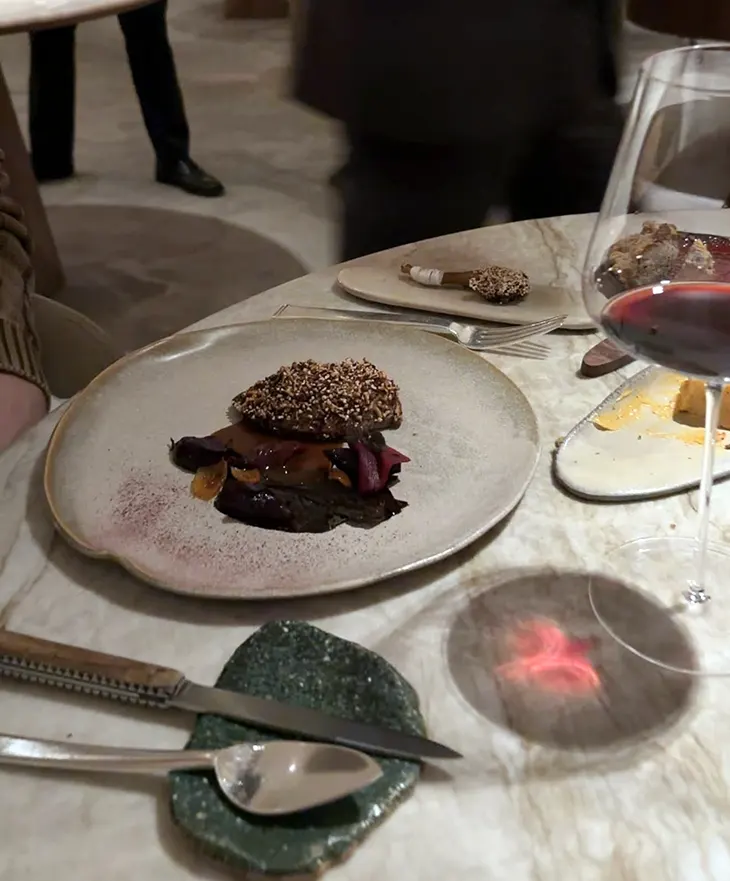
The emotional center of the meal arrived with free-range pigeon from Landes, raised by the Dublanc family in Magescq. Stuffed under the skin with offals, cooked in its own blood, and flambéed with Capucin, it was served alongside cooked and raw beets, confit kumquat, and an intense mole poblano jus. This was Darroze at her most personal. The dish carried weight without heaviness, bitterness without aggression. It felt ancestral rather than dramatic, a plate shaped by soil, family, and repetition.
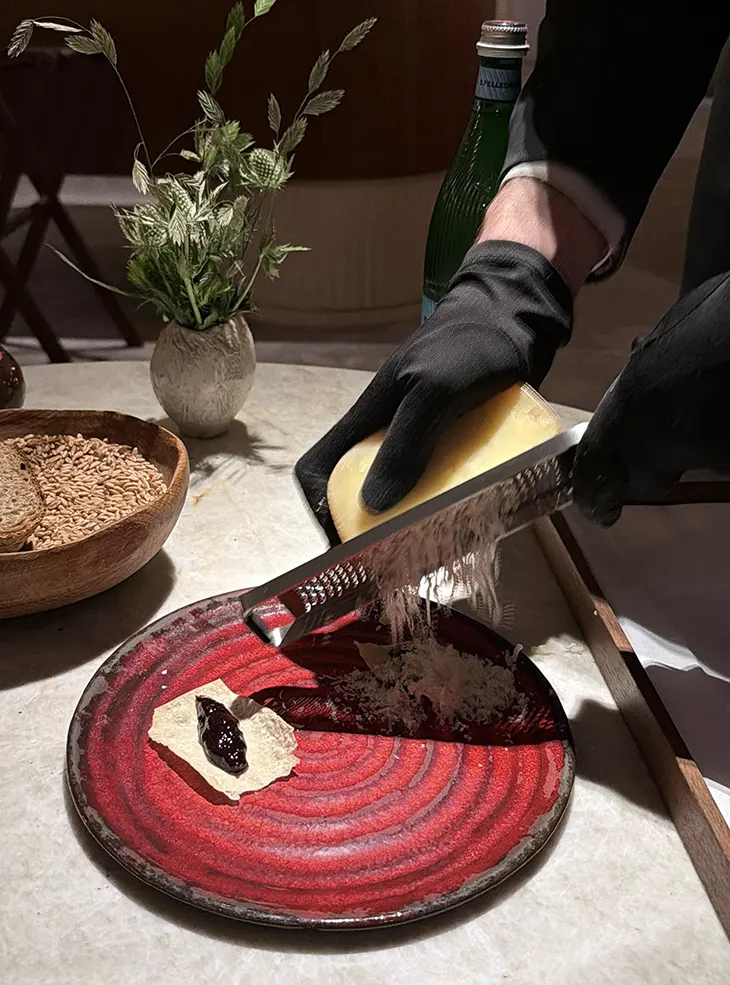
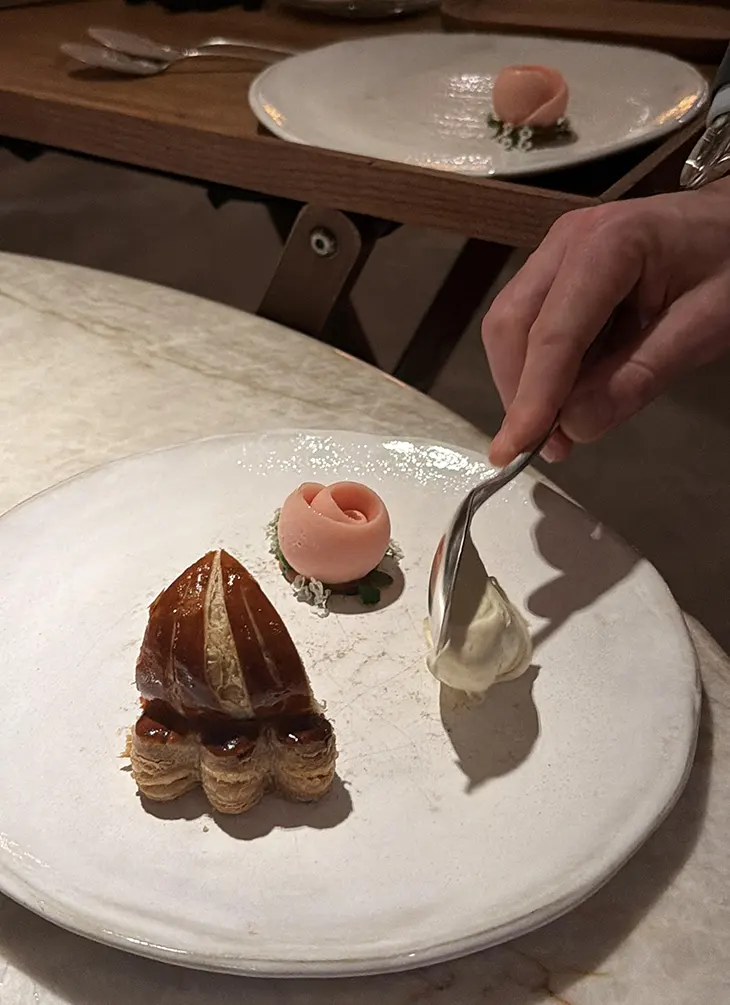
Cheese followed with matured Ardi Gasna from the Urkulu Valley, selected by Bénat, Darroze’s longtime cheesemonger in Saint-Jean-de-Luz, paired with black cherry jam from Itxassou. Desserts closed the evening with quiet generosity: a pithiviers layered with quince confit, verbena berries, apple poached in IPA beer, rare vanilla cream, and a sorbet made from reduced apple and quince juice; followed by Darroze’s signature baba soaked in Armagnac, served with citrus fruits from Schaller, orange blossom sorbet, and cassia-infused chantilly.
Dining at Marsan during Fashion Week clarified the difference between velocity and permanence. Outside, Paris accelerated through shows, schedules, and constant motion; inside, Darroze’s kitchen held its ground with precision and composure. Marsan commands attention through clarity of purpose, through dishes anchored in memory, technique, and trust. The restaurant stands as a return to origin and to craft, shaped by a chef whose voice carries weight because it has been earned over time.
Marsan par Hélène Darroze
4 Rue d’Assas, 75006 Paris, France
reservation@helenedarroze.com
+33 1 42 22 00 11
www.marsanhelenedarroze.com