


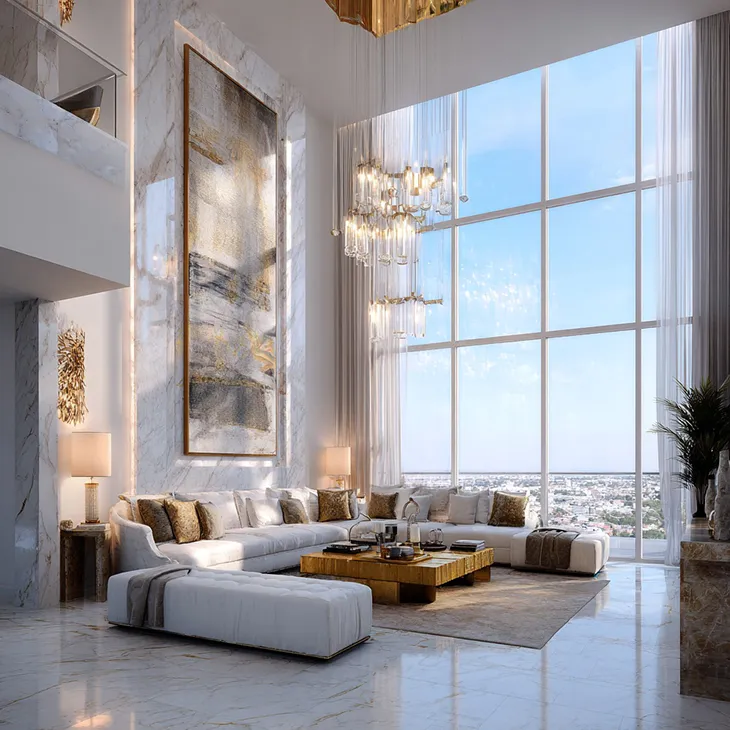
Luxury real estate has moved beyond marble floors and skyline views. Buyers now read a penthouse the same way they read a wardrobe: through texture, taste, status, restraint, and a clear sense of identity. The gap between fashion and interiors is smaller than it used to be. A sofa, a dressing room, a staircase, and a private gallery can all speak the same design language. This is why 3d architectural renderings now matter so much in branded property marketing. They let developers show a residence as a finished lifestyle before the site is fully built. With 3D architectural rendering services, a home can be staged with couture furniture, custom lighting, art, and private collections long before a buyer steps inside.
This shift also follows the market. Savills reported that global branded residence schemes were expected to grow from 764 in December 2024 to 910 by the end of 2025, a 19% rise. Knight Frank also reviewed more than 1,000 live and pipeline branded residence schemes across 83 countries in 2025. That scale says something clear. Luxury buyers buy square footage, taste, identity, and a designed environment that feels edited, recognizable, and personal. For developers, photorealistic rendering creates the bridge between an architectural shell and a branded lifestyle.
The Power of Pre-Styling: 3D Architectural Rendering Design Services for Virtual Luxury
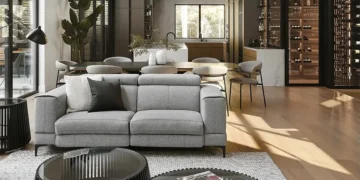
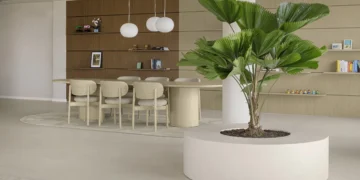
Empty rooms ask buyers to work too hard. A bare penthouse may show volume, but it rarely shows desire. Pre-styling changes that. Instead of asking a buyer to picture how a large salon might feel, the developer can show the finished room with a sculptural B&B Italia sofa, Roche Bobois seating, custom millwork, a quiet bar niche, and art placed at the right scale. A studio that provides 3d architectural renderings services can build this environment without moving a single physical object.
This approach works as a sales tool. High-net-worth buyers often react faster when a space already feels curated. They can see how the home supports dinner parties, wardrobe rituals, private work, and slow weekends. The floor plan becomes a story. And the story feels expensive because every visual cue has been chosen with intent. The buyer is not looking at a box. They are looking at a possible version of themselves.
Digital Craftsmanship: How Photorealistic Rendering Replicates Luxury Textures
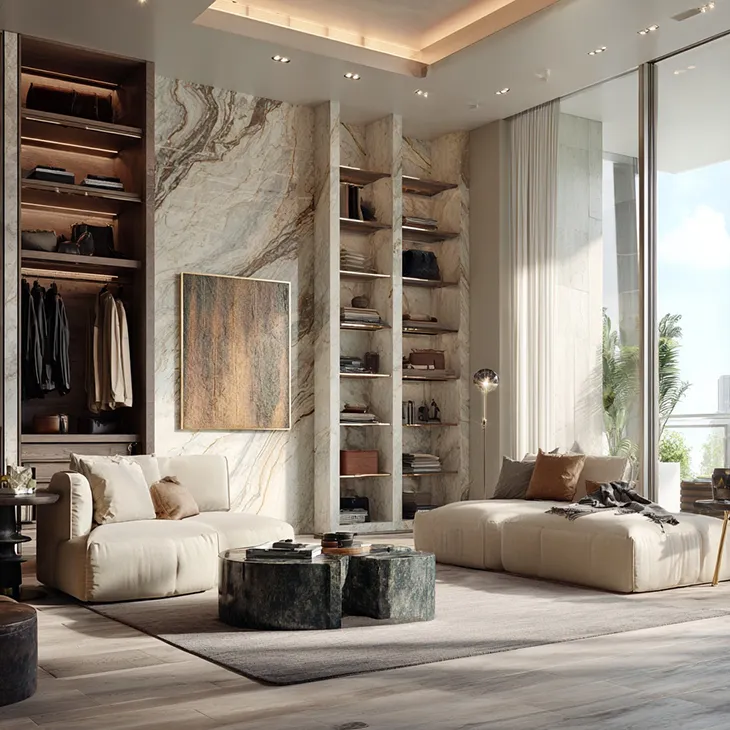
Luxury interiors depend on small details. A weak render can flatten a silk wallcovering, cheapen a polished metal surface, or turn a leather chair into plastic. Strong 3D architectural visualization depends on material behavior and visual judgment. The renderer has to understand how light travels, how finishes absorb or reflect it, and how designer objects retain their character in pixels.
- Material accuracy: capturing the grain of high-end leather, the weave of boucle, the sheen of marble, and the soft depth of silk wallcoverings.
- Lighting dynamics: showing how morning sun, low evening light, and artificial scenes change glass, stone, brass, and lacquered finishes.
- Brand authenticity: keeping the exact proportions of designer furniture so a digital piece still feels like the physical original.
- Art integration: placing gallery-grade works at the right scale so collectors understand wall height, sightlines, and viewing distance.
- Wardrobe visualization: designing dressing rooms where couture, watches, shoes, and accessories belong to the same visual system as the home.
This is where 3D rendering services become a refined form of digital craft. The strongest results create atmosphere through material depth, scale, light, and proportion. Luxury appears in the way leather absorbs shadow, marble catches reflection, fabric holds texture, and every object feels placed within a real interior.
Bespoke Environments: Tailoring Architecture to the Resident’s Wardrobe
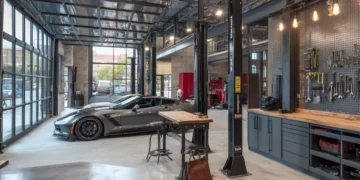
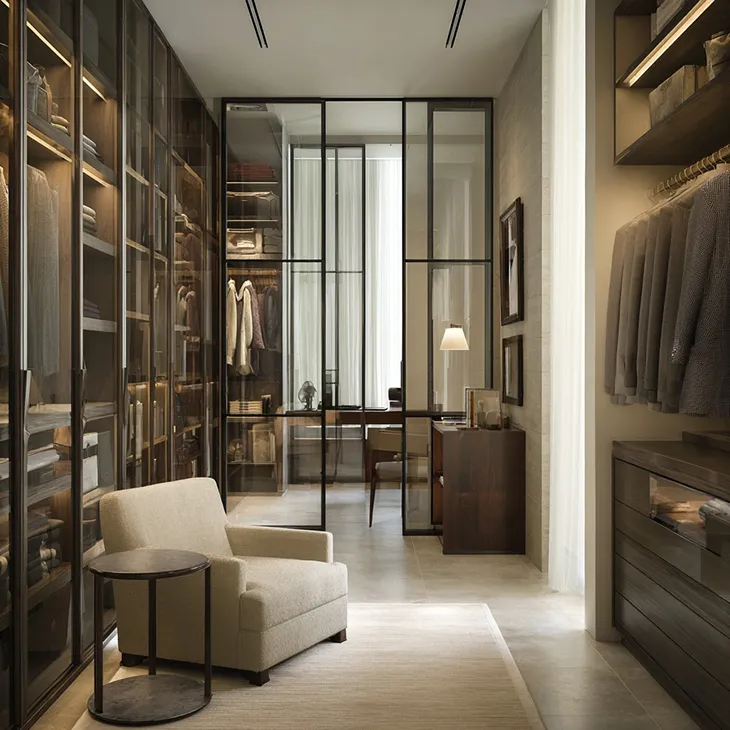
Bespoke design reaches far past furniture selection. In luxury real estate, architecture itself can respond to the owner’s collection. A client with museum-level gowns needs a dressing room with climate control, controlled lighting, and surfaces that make daily use feel private and ceremonial. A watch collector may need secure display drawers, soft lighting, and a calm seating area. A car enthusiast may want a showcase garage that feels less like storage and more like a gallery.
A skilled architecture rendering service helps architects test these decisions before the build phase becomes expensive. It can compare closet layouts, lighting temperatures, glass partitions, cabinetry finishes, and display zones. It can also show how these rooms connect to the bedroom, spa bathroom, private lift, or terrace. For international clients, 3D visualization services make the process clearer, since they can review every design revision from afar. The rendering becomes a shared language between the buyer, architect, developer, and interior team.
The real value is lifestyle fit. A luxury home serves personal collections, social identity, and private habits. When the design reflects those habits, the residence feels specific, complete, and personal.
From Concept to Conversion: The Business Value of 3D Design for Developers
For developers, high-fashion interiors carry business value. They can influence sales performance. Off-plan buyers must trust a property before they can touch it, and that trust depends on visual clarity. Strong 3D rendering services reduce the imagination gap by showing what a lobby, penthouse, dressing suite, or private dining room will feel like upon completion.
The business case is helped by the wider market. Market Research Future estimated the luxury furniture market at USD 30.67 billion in 2024 and projected it to reach USD 52 billion by 2035. Custom Market Insights also projected the luxury home decor market at USD 151.82 billion in 2025. These numbers support a simple point: affluent buyers already spend heavily on interiors, so a property that presents a clear design point of view can feel complete from the first contact.
A capable 3d architectural rendering company can also prepare visuals for investor decks, private sales rooms, digital campaigns, and printed brochures. The image quality has to match the expectations of a luxury audience. If the brochure feels like a fashion editorial, the residence can borrow some of that emotional weight. This does not replace architecture. It makes the architecture easier to understand, sell, and remember.
The Future of Interior Branding and Virtual Immersion
The next stage will bring deeper immersion. VR and AR already allow buyers to walk through unbuilt spaces, yet the luxury sector now looks toward a stronger level of personalization. A buyer may soon review a digital twin of a penthouse with several branded furniture schemes, then swap materials, art, lighting, and wardrobe storage in real time. The goal comes down to confidence.
Luxury brands also have a reason to care. Their home collections need context. A chair or console can look strong in a showroom, but it becomes more persuasive when shown inside a private residence with the right ceiling height, floor finish, view, and lighting. Exclusive digital assets may become part of a collaboration between fashion houses, furniture makers, architects, and developers. A branded residence could then be sold with both physical design intent and a controlled digital presentation that protects brand quality.
This trend suits projects where identity shapes the purchase. In the ultra-luxury segment, identity often carries direct value. Buyers want a home that feels rare before it exists.
Finally, fashion and architecture now meet in a practical place: the rendered image. A buyer can see how a penthouse holds couture, art, furniture, light, and private rituals before construction reaches completion. That matters because luxury comes from coherence. The room, the wardrobe, the view, and the brand references all need to feel like they belong together.
For developers, this changes the sales conversation. A residence is no longer presented as a blank shell waiting for imagination. It can be shown as a finished lifestyle with a clear point of view. Photorealistic technology makes that possible, while the project remains flexible enough to adapt. The future of premium real estate belongs to teams that can sell complete branded environments. For that work, 3D architectural rendering design services remain one of the strongest tools available.