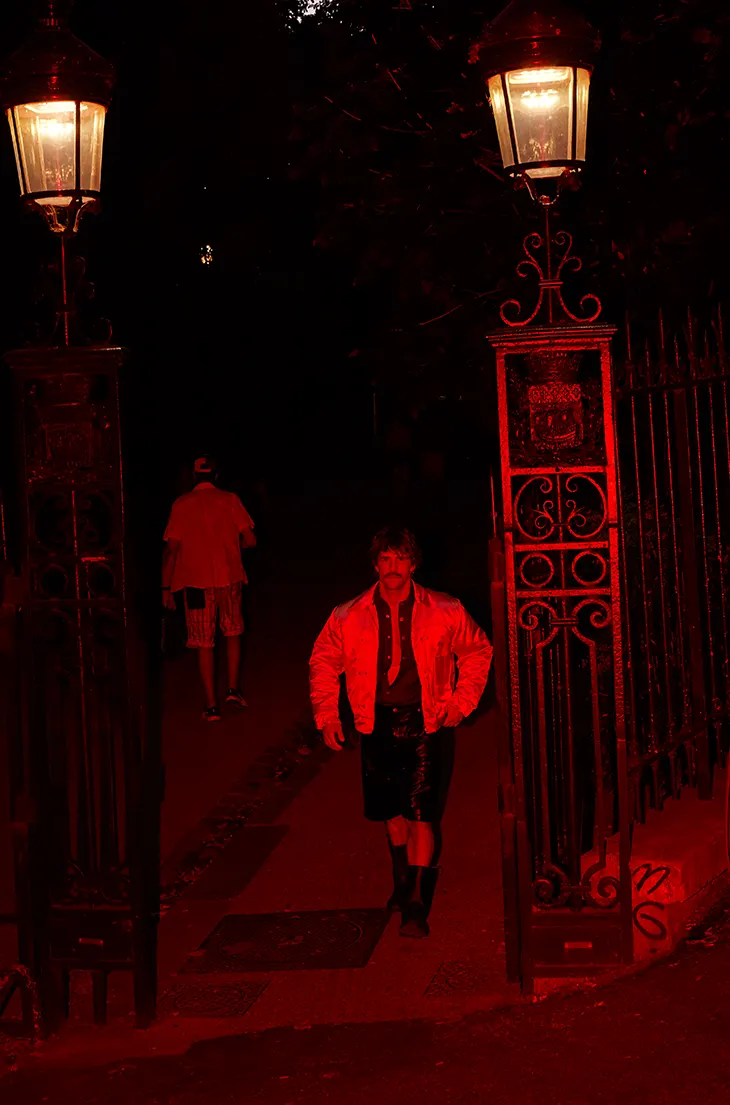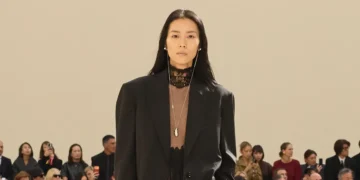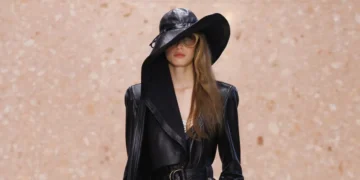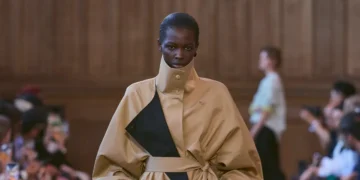



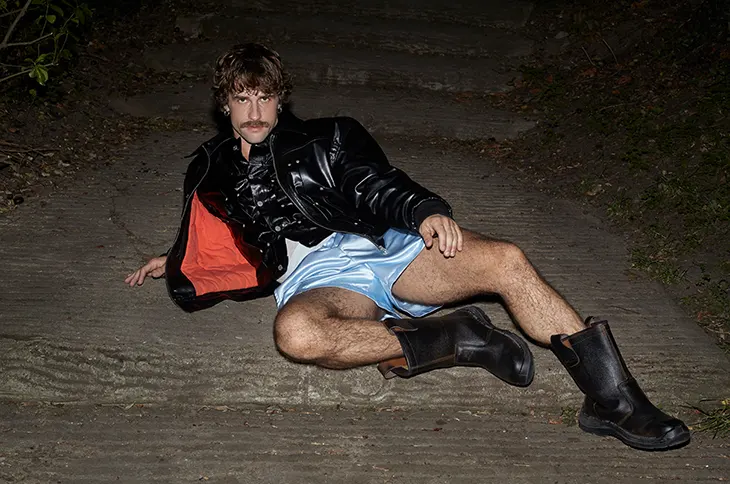
OUEST Paris Spring Summer 2027 begins with heat, city light, and the image of young men taking over spaces left behind. The collection looks to a June atmosphere shaped by New York photographs from Stanley Stellar and Alvin Baltrop, where abandoned piers and construction sites became places for sun, meetings, leisure, and private forms of freedom. Their subjects wore a direct uniform: denim, athletic shorts, and fitted T-shirts.
SPRING SUMMER 2027
The Paris reference comes through Philippe Heurtault, whose photographs moved between Le Palace and La Main Bleue. In those rooms, “clones” and fashion figures shared the same charged air. The attitude matched New York in its looseness and openness, yet it also carried the quiet pressure of the years before the AIDS crisis.
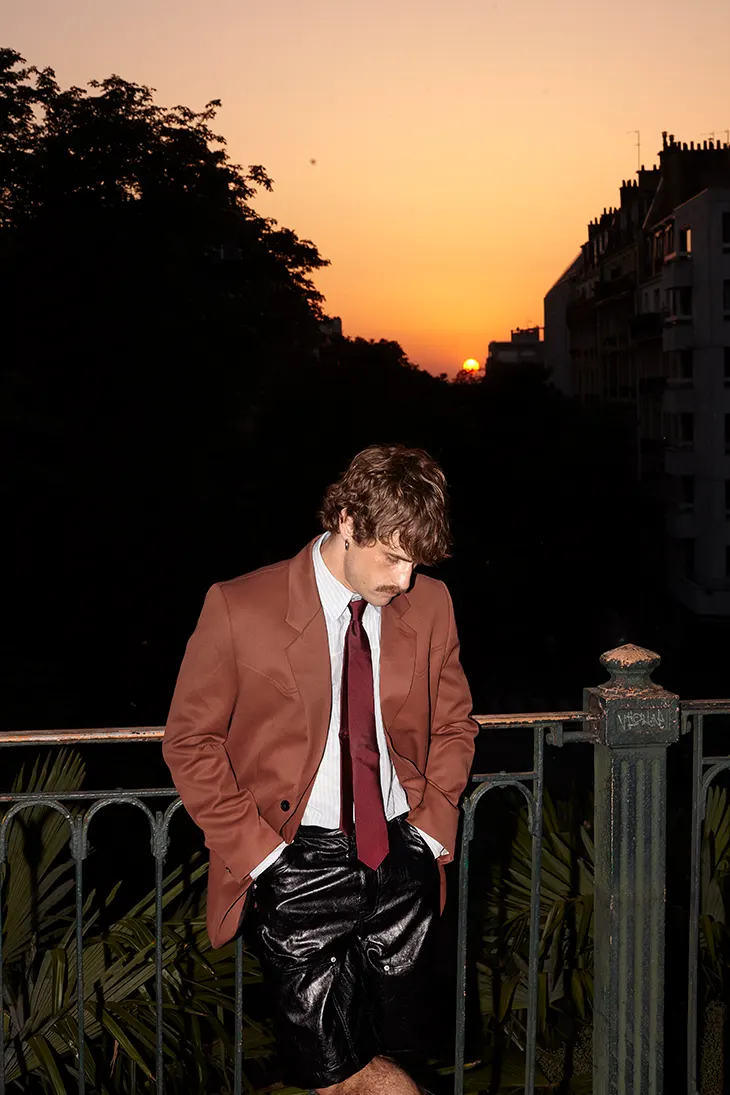
Claude Montana stands as a central figure in the collection’s thinking. He took the clone uniform and pushed it into couture territory through color, sharpness, and power. His own look centered on colorful bomber jackets and leather trousers, while his work and personal style drew from Americana and denim wear. The designer’s presence stayed vivid for OUEST Paris founder Arthur Robert, who recalls seeing Montana on Rue Saint-Honoré around fifteen years ago, at the beginning of his own design career.
OUEST Paris returns to workwear, a language the brand has already built through rugged utility pieces, rivets, and Western-style lettering. For Spring Summer 2027, those codes shift through pastel color. The move changes the pressure of the garments without removing their strength. Heavy references become lighter. Utility softens. Masculinity opens itself to another reading.
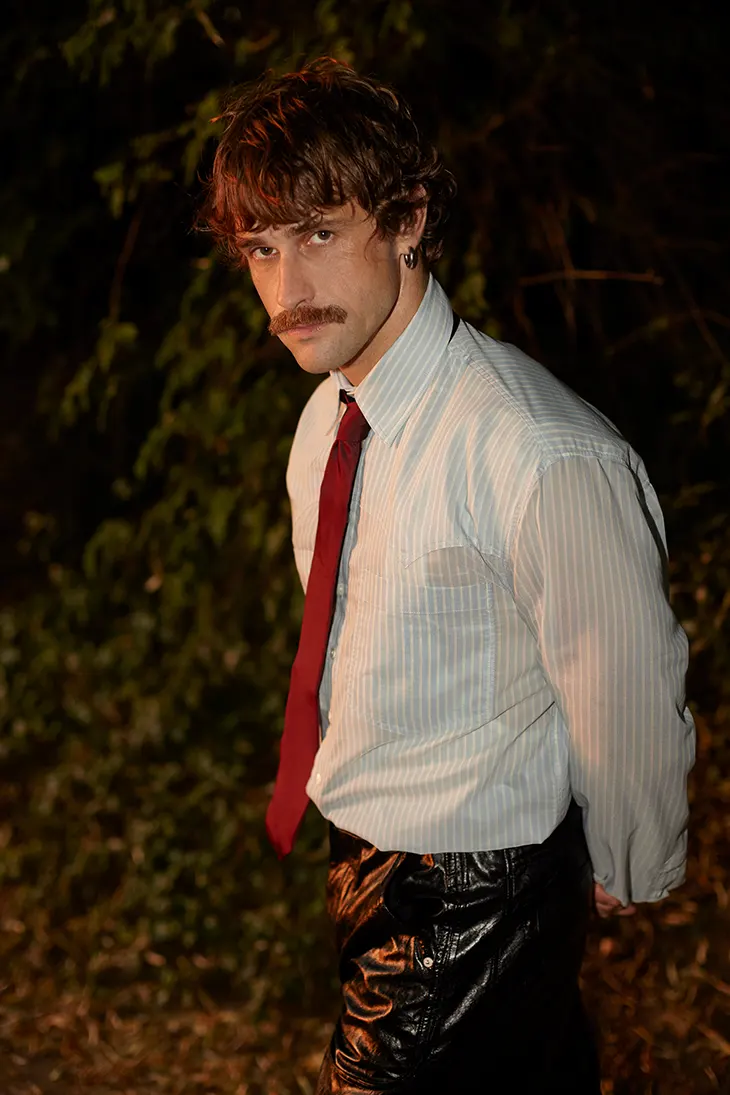
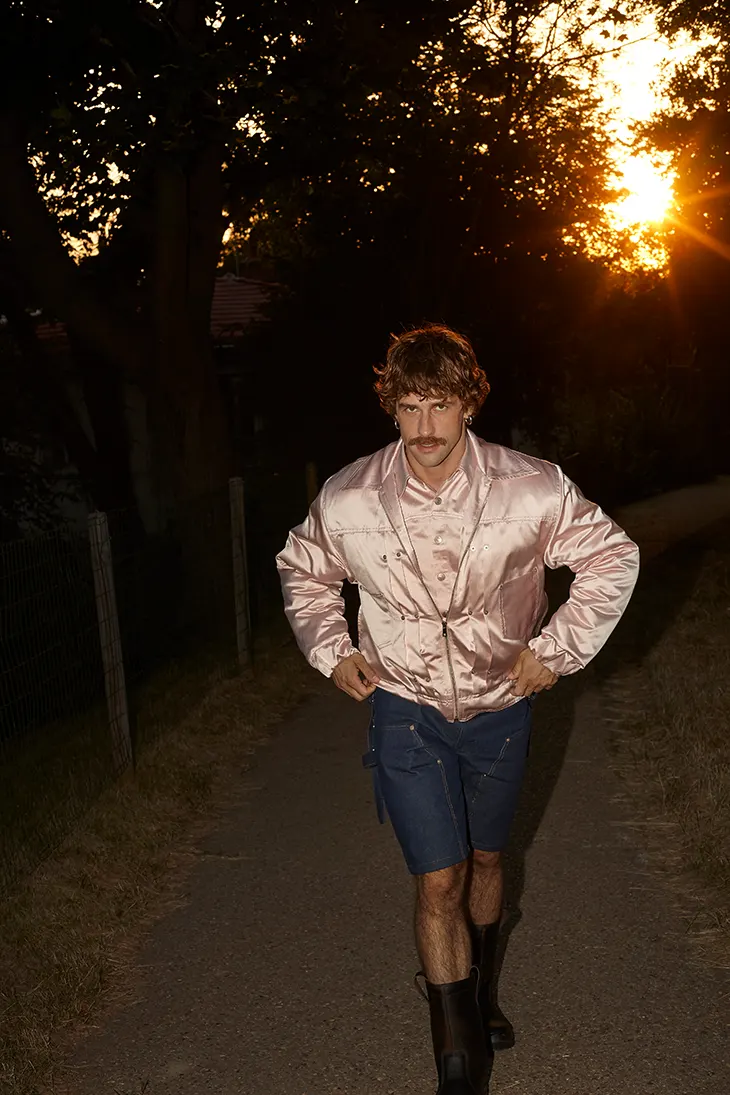
In a moment when expressions of masculinity appear to harden across the world, OUEST Paris treats pastel shades as an act of resistance. The choice does not erase the toughness of the workwear base. It redirects it. Riveted pieces, Western markings, and utility shapes remain present, yet the palette unsettles their usual associations.
OUEST Paris Spring Summer 2027 connects several visual histories without flattening them. New York pier culture, Paris nightlife, the clone uniform, Claude Montana’s personal mythology, and the brand’s own workwear codes all inform the collection.