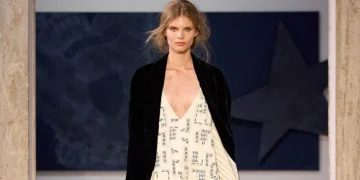



Maria Grazia Chiuri begins her tenure at Fendi Couture with desire. For Fall Winter 2026, she treats it as a physical and emotional force, something carried through posture, touch, movement, and the way fabric meets the body. The collection avoids presenting desire as provocation alone. Instead, Chiuri links it to sensuality, freedom, pleasure, and the possibility of dressing without restriction.
COUTURE COLLECTIONS
The starting point comes through Histoire d’eau, Jacques de Bascher’s 1977 film commissioned by Karl Lagerfeld for his first Fendi ready-to-wear collection. Its image of a German woman moving through Rome with an air of innocent sensuality gives Chiuri a historical reference without turning the collection into a direct revival. The film provides an attitude: free, playful, self-possessed, and uninterested in rigid definitions of femininity.
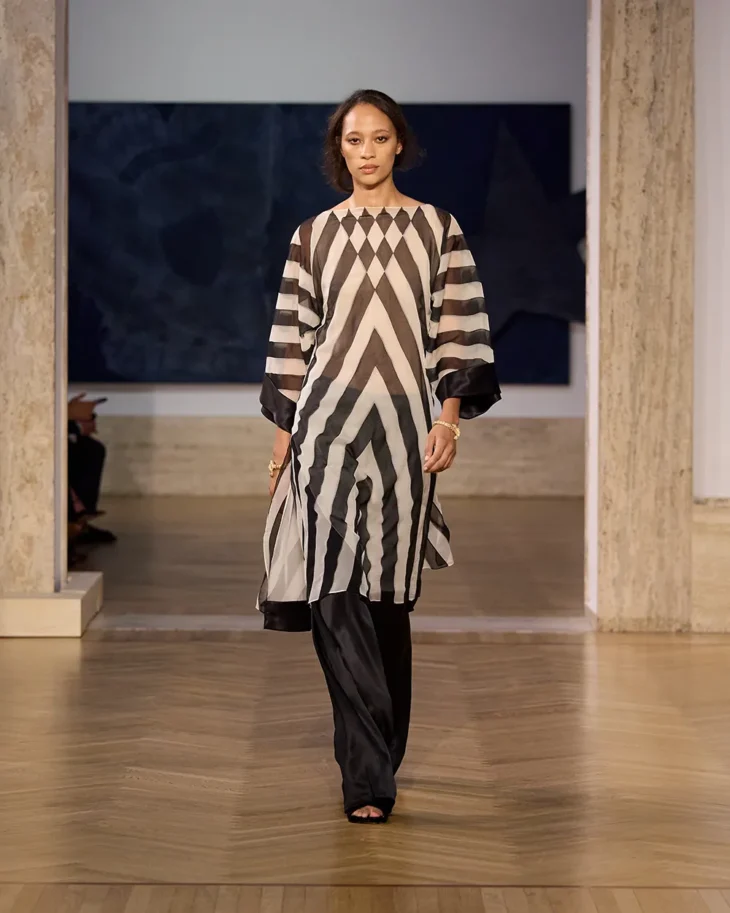
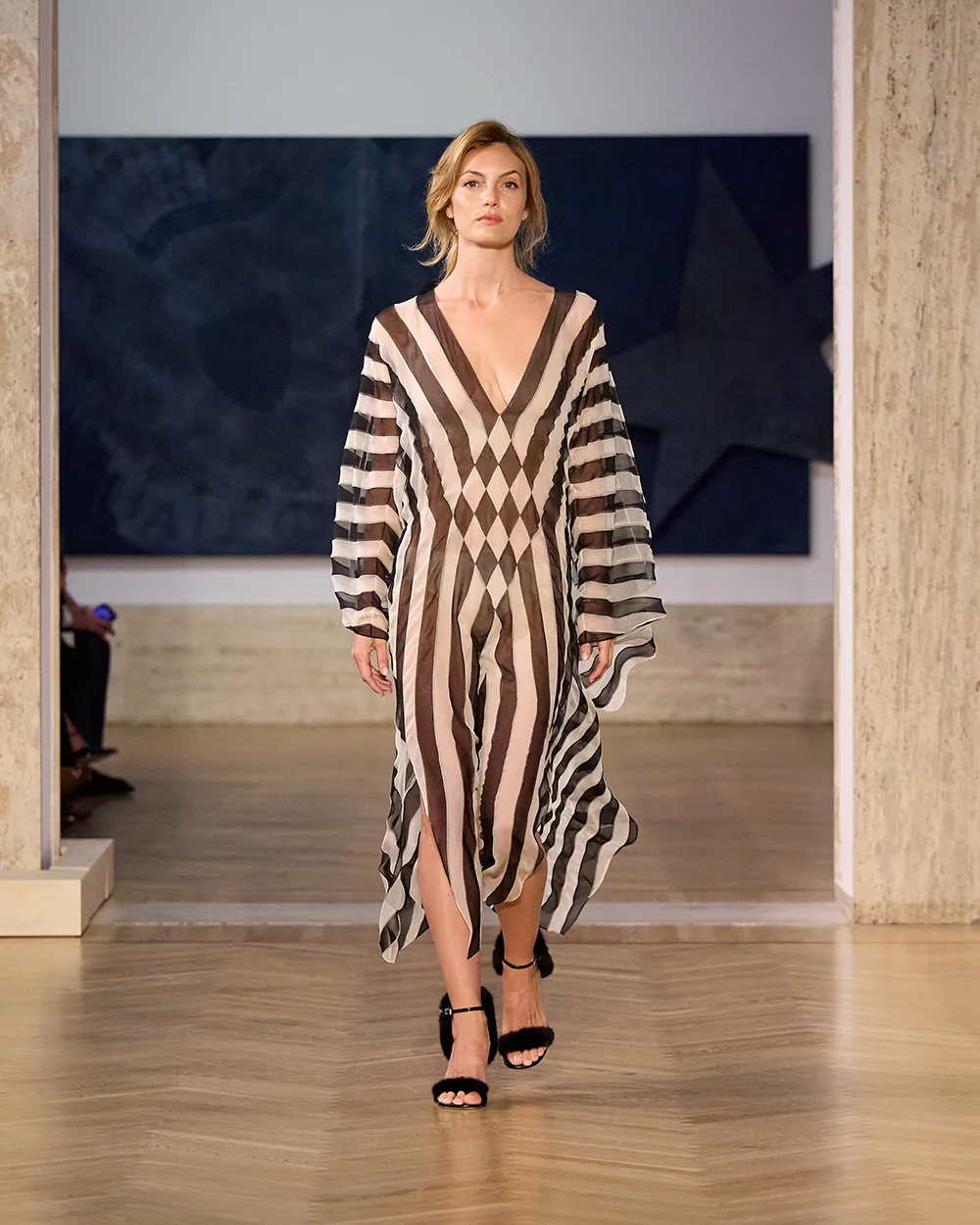
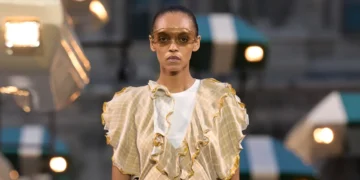
Chiuri builds the collection around clothes that follow the body instead of disciplining it. Chiffon dresses with black-and-white striped inlays glide across the figure, while draping creates shape without corsetry. This refusal of visible constraint becomes one of the collection’s clearest ideas. The garments sculpt through fall, weight, and movement, allowing form to emerge through the wearer rather than through an imposed internal structure.
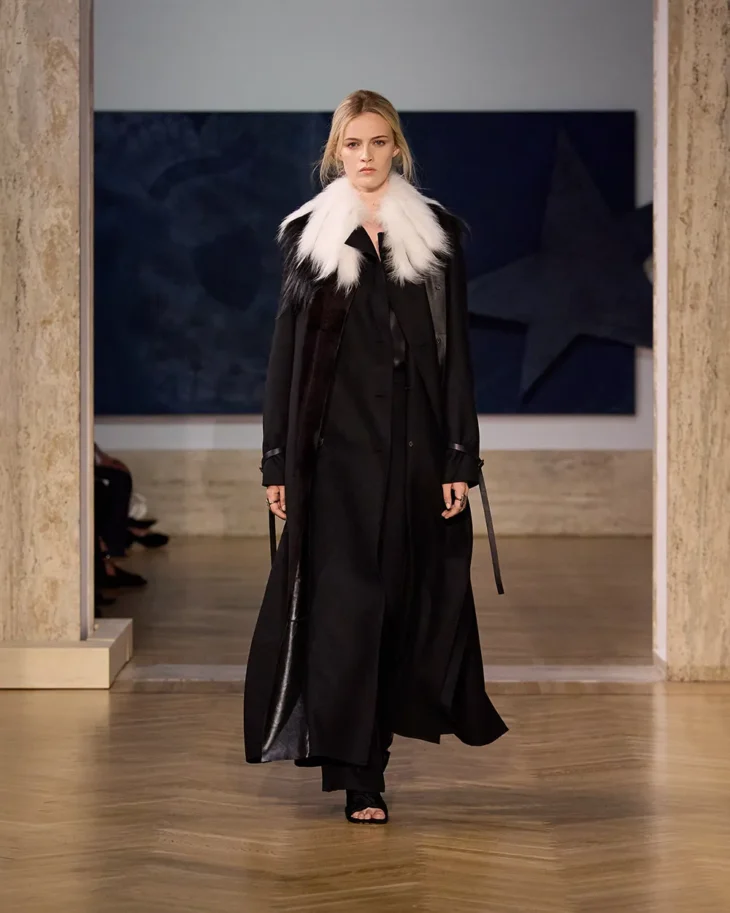
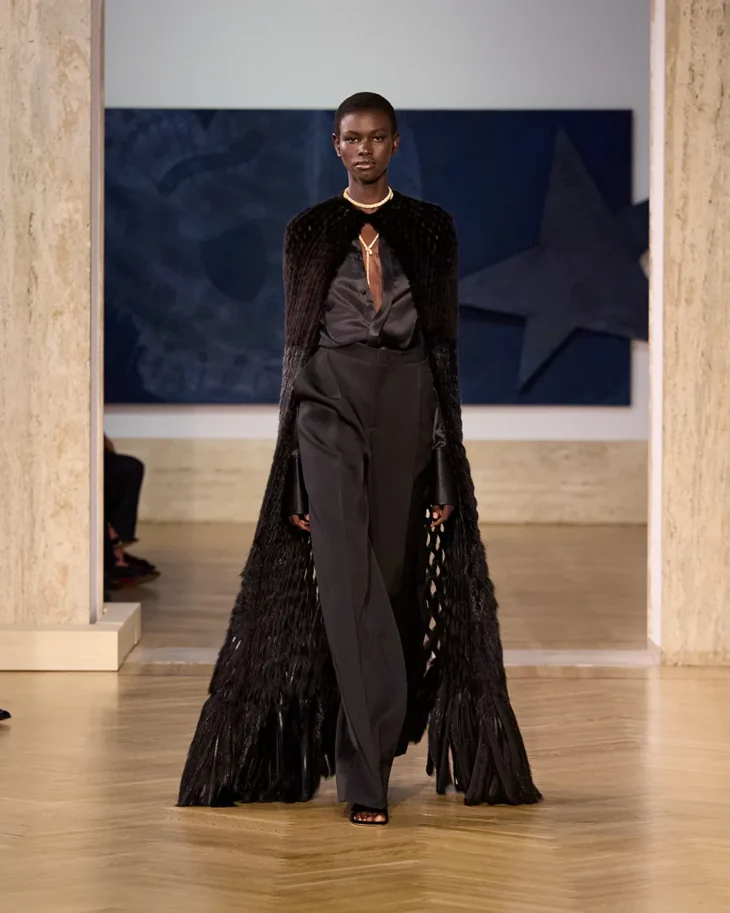
The kimono perimeter appears across jackets and coats for women and men, extending Chiuri’s argument for fluid dressing. Velvet and grain de poudre give these pieces weight, though the construction avoids stiffness. The shapes remain open and generous, creating a wardrobe that moves between genders without turning fluidity into a decorative theme.
The collection becomes more convincing when Chiuri directs attention toward the ateliers. She treats couture production as a collaborative system where different forms of expertise confront and reshape one another. Fur, leather, fabric, tulle, and embroidery do not sit in separate categories. They exchange functions. Fur becomes feather. Tulle becomes structure. Leather turns into a drawing that travels across cashmere.
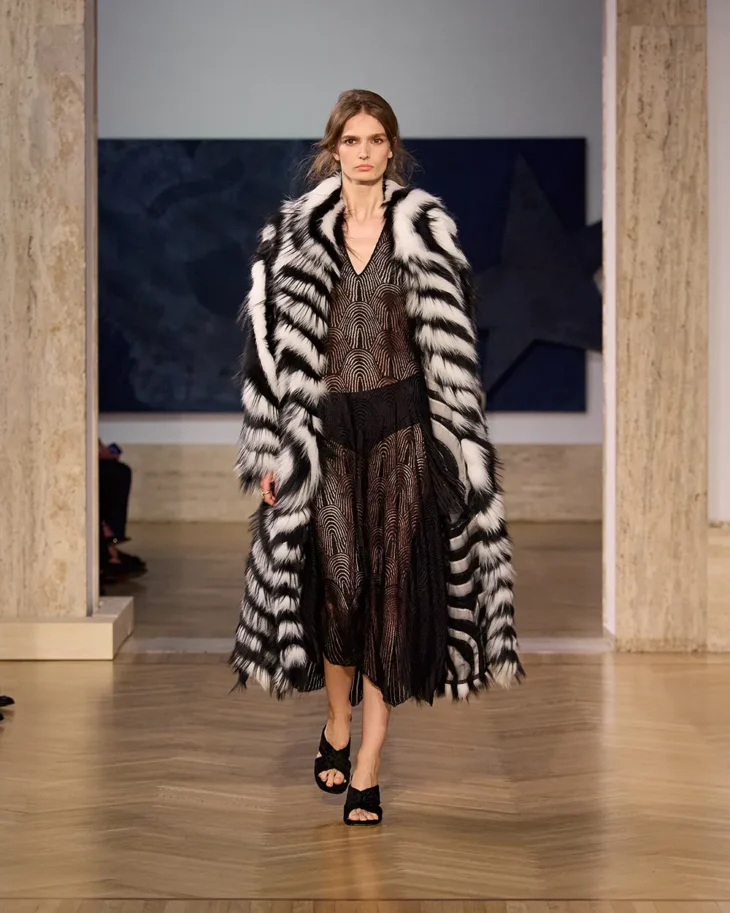
This material instability produces several of the collection’s strongest images. Black-and-white fur stripes held by tulle reduce volume until fur appears almost weightless. Cloaks and capes carry arabesques that develop into leaves, feathers, and flowers made from leather, fur, and fabric. On men’s shoulders, these forms take on the protective quality of blankets or shelters. Elsewhere, variations in fur suggest butterfly wings, while leather traces labyrinthine lines across a white double-faced cashmere coat.
Chiuri’s language remains clearest when material and concept support one another. The idea of subtraction gives fur an unfamiliar lightness, while the absence of corsetry gives draping a direct relationship with the body. At times, however, the collection’s language of desire risks becoming broader than the clothes themselves. Sensuality, freedom, pleasure, and bodily autonomy carry considerable conceptual weight, and the strongest looks succeed because they translate those ideas into construction instead of relying on them as explanation.
Her first Fendi Couture collection establishes a measured position. Chiuri does not chase shock or theatrical excess. She proposes couture as a responsive practice shaped by the people who make the clothes and the bodies that inhabit them. The result feels less concerned with fantasy as escape and more interested in physical presence.
For Fendi, that direction gives couture a new intimacy. Desire appears through movement, surface, and contact. It does not demand exposure or restriction. It exists in the freedom to inhabit a garment on one’s own terms.



wow who is she designing for ? is there anyone at Fendi able to tell her how actually bad this is ? If you are tired it is really ok to go and retire, i am sure Maria will be well off even she didnt have to work