


Peet Dullaert begins Fall Winter 2026 couture with two portraits and a question about how fashion records its own era. Rembrandt van Rijn’s paintings of Marten Soolmans and Oopjen Coppit guide the collection. The Louvre Museum and the Rijksmuseum jointly acquired the works, and the Louvre currently displays them. Dullaert studies their scale, surface, individuality and social meaning, then turns those qualities into a contemporary couture vocabulary.
COUTURE COLLECTIONS
The collection treats portraiture as an exchange between maker and subject. Rembrandt defined his subjects through paint, fabric, gesture and light. Dullaert uses draping, textile development and handwork to examine the same relationship through dress. His silhouettes follow the realities of modern life and give the wearer an active place in the final image. Each look records a woman, a period and the technical knowledge that produced it.
During Rembrandt’s lifetime, rare pigments could exceed the value of gold. Their value came from scarcity, labour, specialist knowledge and the skill required to prepare them. Dullaert connects that system of value with haute couture, where time, invention and human work shape every garment. Colour therefore functions as evidence of process, expertise and cultural exchange.
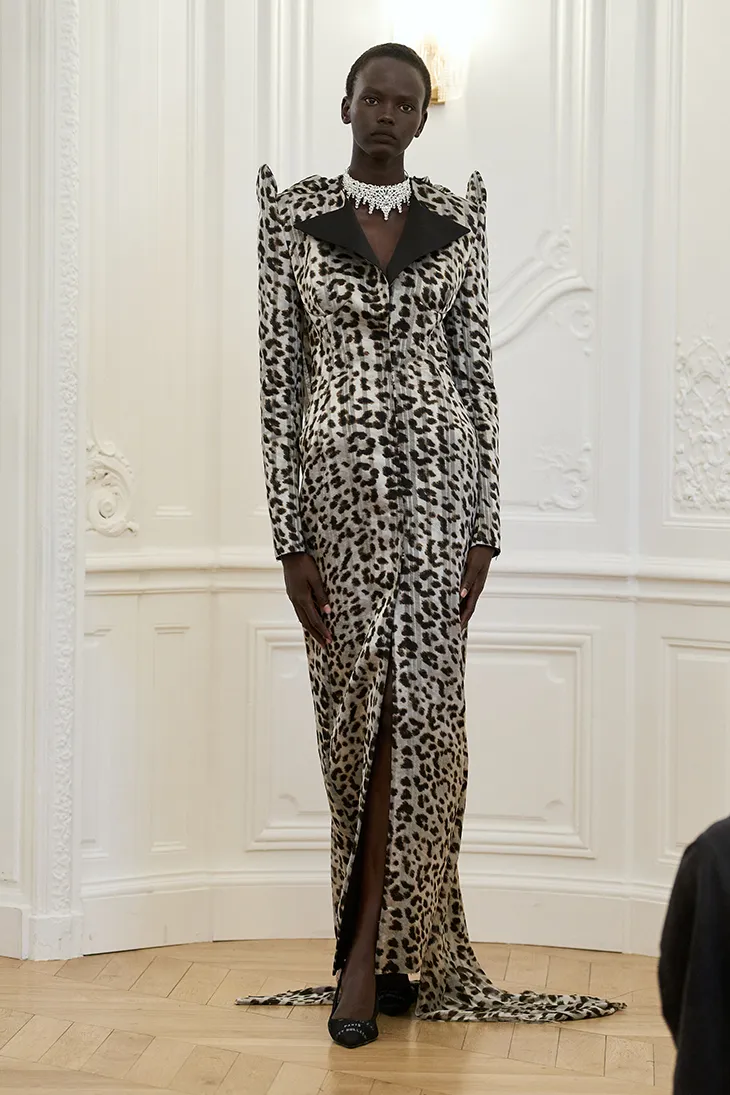
Historical construction enters through specific references. Dullaert returns to the robe à la française and interprets the Watteau pleat through current techniques. He also draws from the liberated glamour of the 1920s, using refined leopard treatments to introduce a different register. These references support the collection’s broader study of how designers translate older forms through present materials.
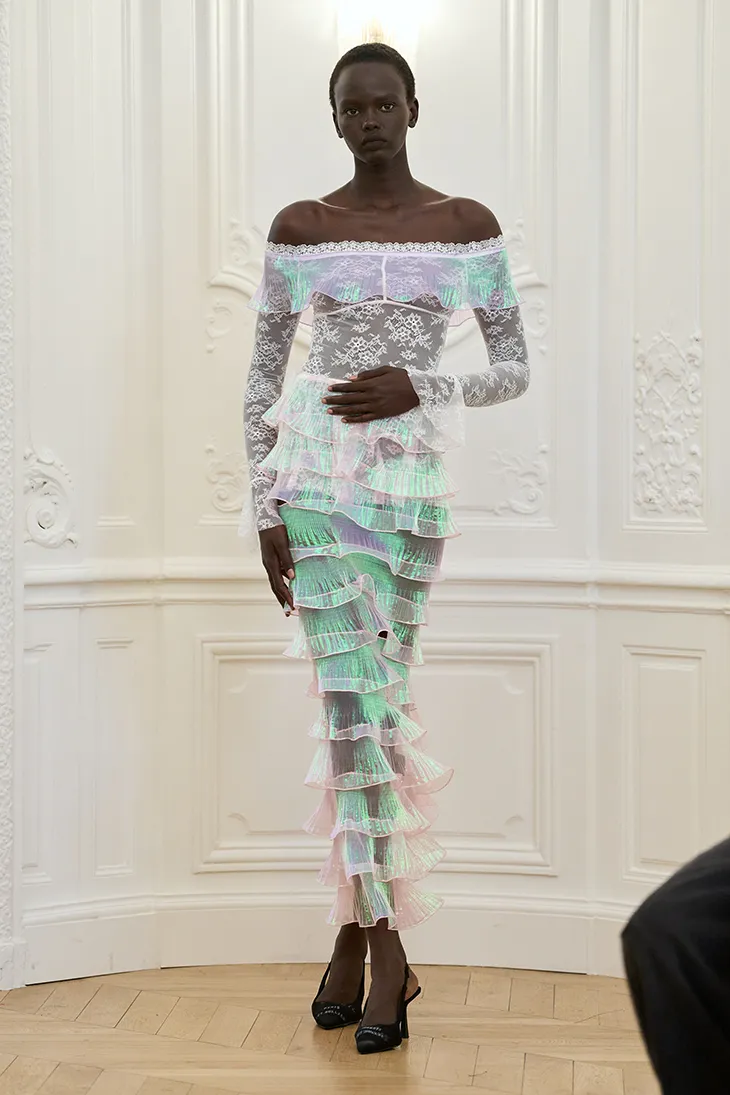
The Paris atelier develops velours de panne, lace coupé, macramé and silk embroidery entirely by hand. The silk work takes inspiration from the luminous irregularity of historical chiné fabrics. These textiles also acknowledge the long exchange between Eastern and Western traditions that shaped couture over centuries. Dullaert treats every surface as a carrier of knowledge, labour and memory.
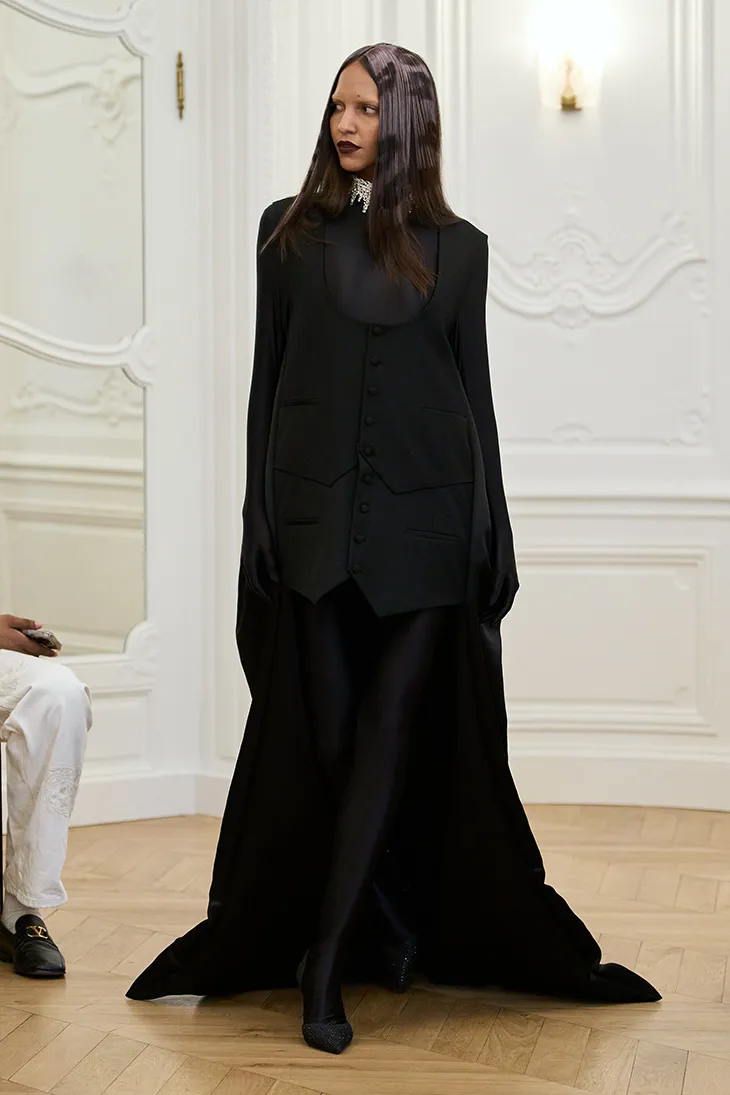
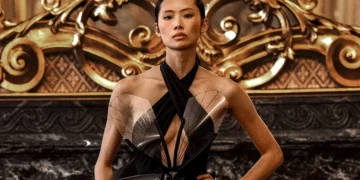
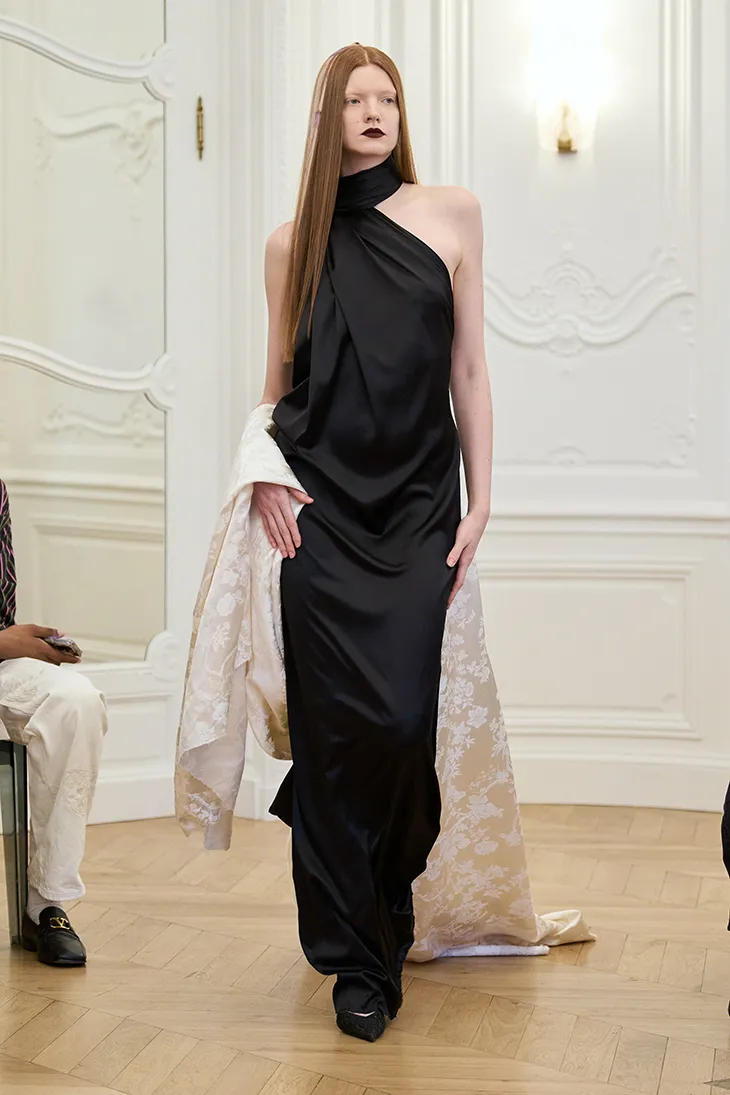
Sculptural draping gives several looks their strongest form. Gia Bab wears an entirely black couture creation where folds, texture and light create the full image. Knitted construction and technical stretch textiles appear beside established atelier methods, bringing materials associated with current innovation into the collection. They support the body and respond to the way women live today.
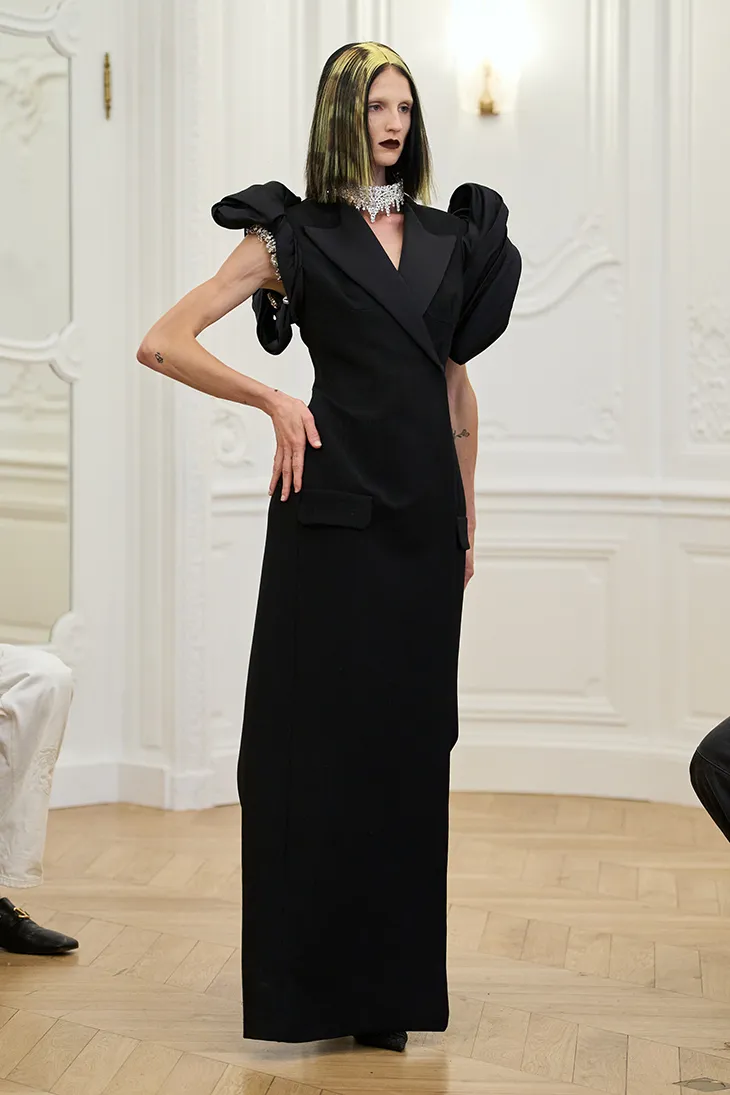
Some garments continue into sculptural hair arrangements, linking dress, hair and wearer in a single visual idea. This treatment extends couture beyond the garment while keeping the individual visible within the design.
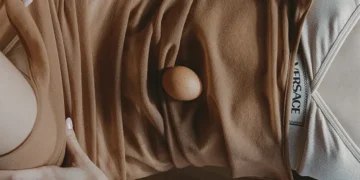
The casting develops the collection’s intergenerational theme. House muse Anastasia opens the presentation, bringing independence and self-authority to the first look. Jade Parfitt closes it. Her career includes Steven Meisel’s Avalon campaign for Versace, an image closely tied to 1990s fashion. Dullaert links Oopjen Coppit, Anastasia and Parfitt as women whose images enter cultural memory and define their respective periods.
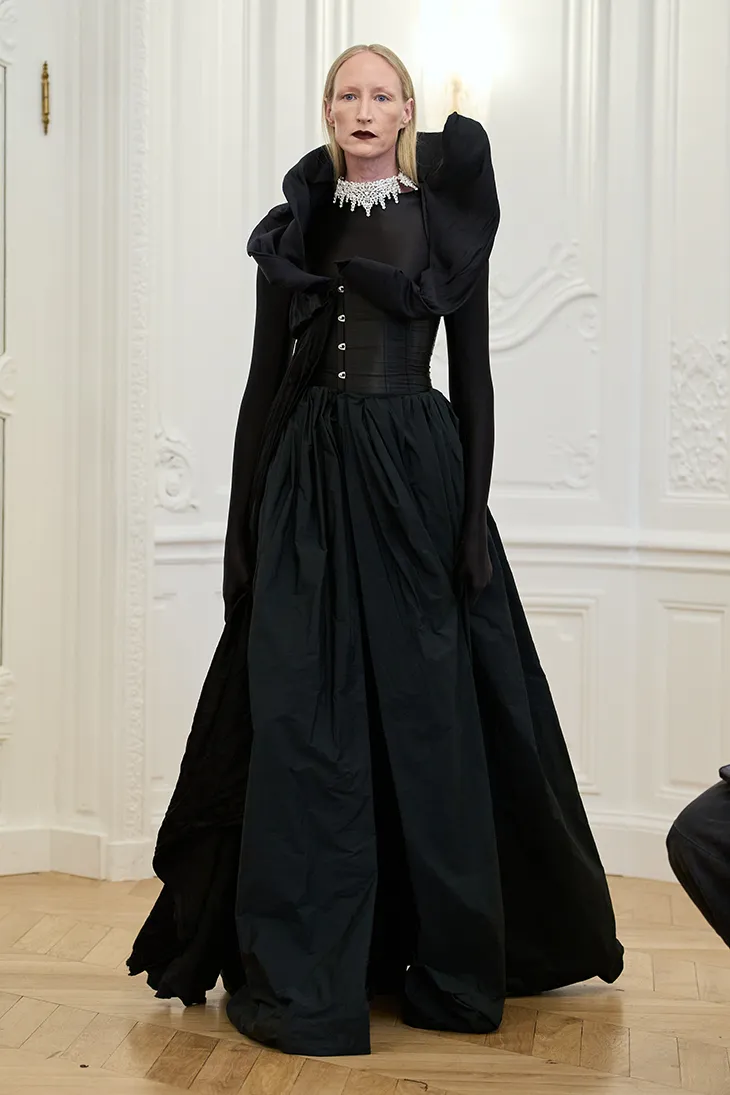
Every generation leaves behind its own portrait. Museums preserve them in paint; haute couture preserves them in movement. Every generation defines luxury through the innovations of its own time. Beauty exists in the relationship between creator, craftsmanship and the individual who embodies creation. Haute couture exists to honour craftsmanship while embracing the reality of how we live today. – Peet Dullaert
The collection also recognises the patrons and institutions that sustain couture. Dullaert names Mouna Ayoub and Yu-Chi Lyra Kuo as women who support a designer’s vision and the labour of the atelier. He places their role beside the work of the Louvre, the Rijksmuseum and the Fédération de la Haute Couture et de la Mode. Each contributes to the preservation of artistic knowledge and specialist practice.
The Paris atelier creates every look entirely by hand. Dullaert uses history as a source for invention, then defines luxury through the skills, textiles and ideas of the present. The result presents couture as a living portrait. The hands of the atelier shape it, and the women who wear it give it meaning.